AmCham China lists US-China tensions as top business challenge in white paper
By Published: Apr 25, 2025 05:54 PM

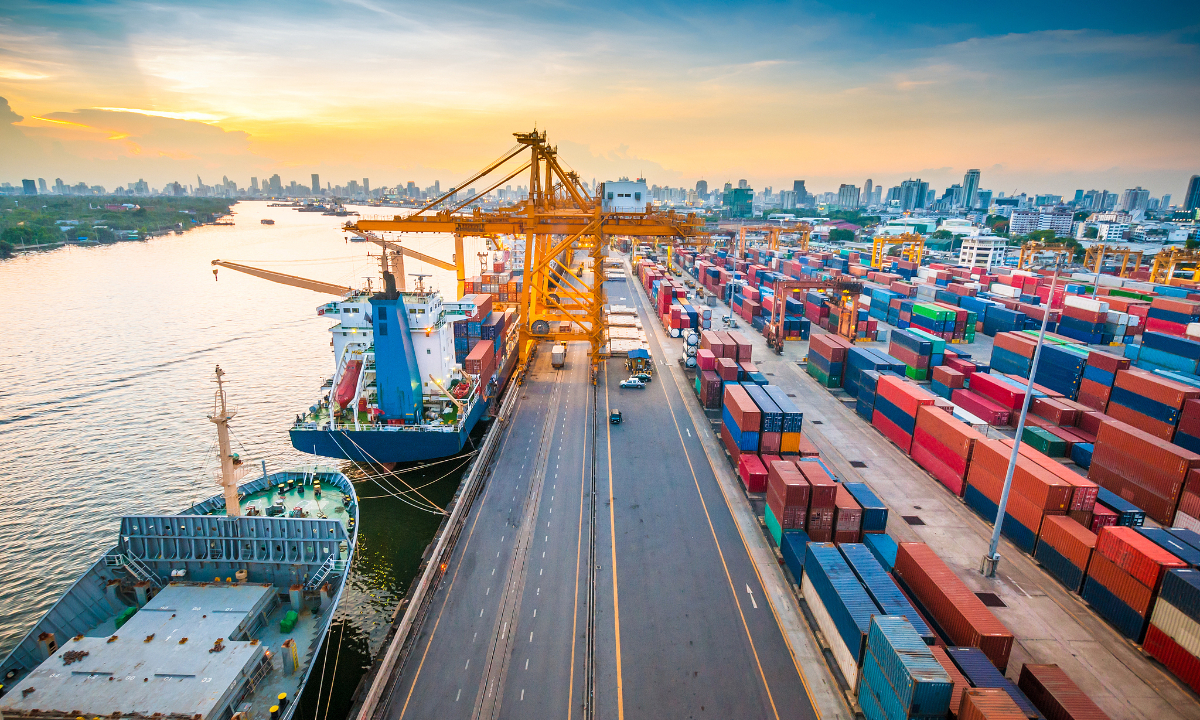
Tariff Photo:VCG
A white paper released Friday by the American Chamber of Commerce in China (AmCham China) identified escalating US-China tensions as the top challenge facing American businesses operating in China, a concern that has ranked No.1 for five consecutive years.
According to the 2025 American Business in China White Paper released on Friday, prior to the latest tariff increases, 63 percent of AmCham China members ranked US-China tensions as their top business challenge in China, with over half expressing concern that bilateral relations could deteriorate further.
The survey was conducted before the latest rounds of tariff hikes between the US and China. Due to numerous uncertainties surrounding the tariff issue, AmCham China didn’t update its report as people need time to “wait to understand where we are,” President Michael Hart told reporters on Friday.
“One of the reasons we haven't yet done a sort of an additional survey is the fact that we are waiting for the dust to settle, because if you survey companies on a Monday, the situation could be very different by the Tuesday,” Hart said.
The report revealed that in 2024, 46 percent of member companies were profitable, 36 percent broke even, and 18 percent operated at a loss. It commended the Chinese government's efforts to improve the investment environment, such as updating the Special Administrative Measures for Foreign Investment Access and introducing new initiatives aimed at regulatory reform.
When asked about China’s investment environment, 33 percent of member companies reported an improvement from the previous year, an increase of 5 percentage points. Meanwhile, the proportion of companies perceiving a deterioration in the investment environment has decreased by 7 percentage points to 28 percent, according to the AmCham report.
Nevertheless, while 49 percent of companies still rank China among their top three global investment destinations, the percentage designating China as the primary investment target dropped by 6 percentage points compared to the previous year, the report showed. Alarmingly, 21 percent of companies no longer prioritize China as an investment destination, doubling the pre-pandemic figure.
"Previously, American firms concentrated on China’s domestic business environment improvements, such as intellectual property protections and tendering reforms, where we’ve made tangible progress," Huo Jianguo, a vice chairman of the China Society for World Trade Organization Studies in Beijing, told the Global Times on Friday. "Now, concerns are dominated by US-China tariff conflicts. There is no winner in such a tariff war.”
It's not just Chinese exporters who are affected. Many American companies in China, which also serve as exporters, have products that need to be exported – some to the US market, and others to different markets, Huo explained. As a result, businesses on both sides are facing widespread uncertainty and challenges.
Despite challenges, foreign businesses remain confident in China’s long-term growth prospects. In the strategic cooperation agreement with the Shanghai municipal government, Toyota has committed to invest a total of 14.6 billion yuan ($2 billion) to establish a plant for manufacturing electric vehicles under its Lexus marque in the city.
Hart also acknowledged that China’s economic rise, growing consumer demand, and advanced manufacturing capabilities still make China a very attractive place for global investors.
Huo stressed the importance of China’s domestic economic stability. "If we can maintain steady growth amid the US-China tariff war, foreign investors will stay engaged in the Chinese market. Economic prosperity naturally attracts capital," he said, noting that "the key lies in our ability to manage domestic priorities and doing our own work well."
RELATED ARTICLES