Chinese bicycle makers find new growth points amid challenges from US tariffs
By in Shanghai Published: May 06, 2025 12:27 AM

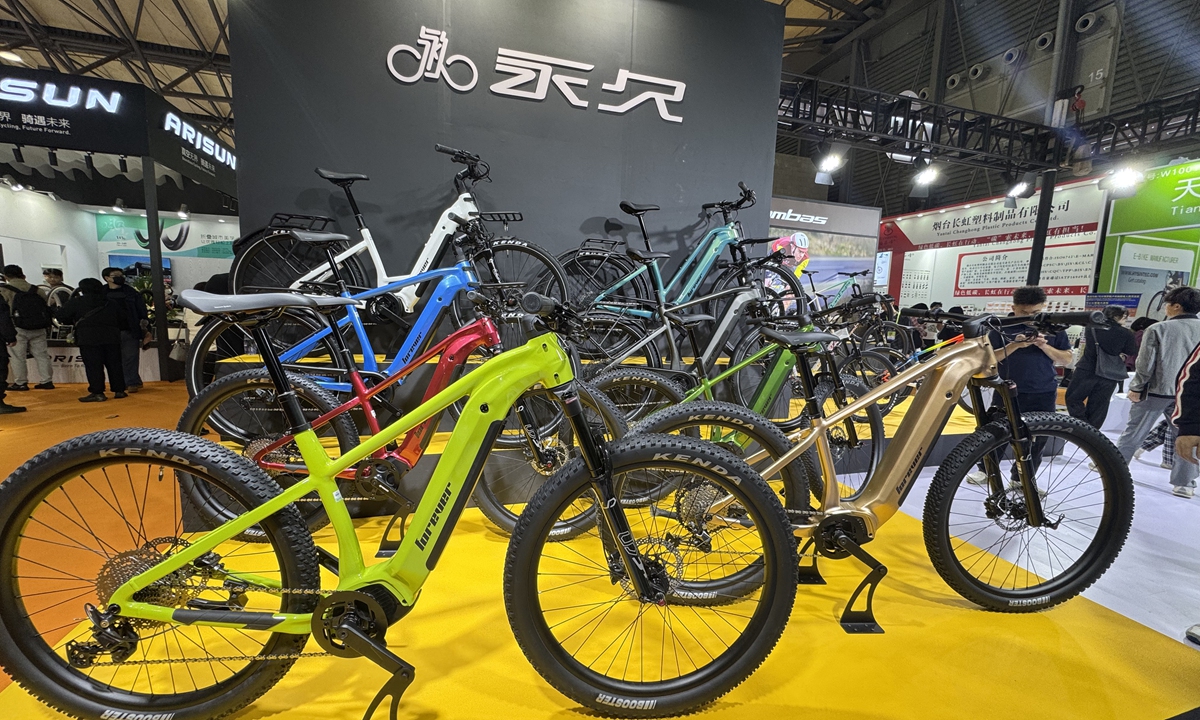
China's historic brand Shanghai Forever Bicycle showcases its new series of e-bikes at the China Cycle 2025 in Shanghai on May 5, 2025. Photo: Liu Caiyu/GT
China's largest bicycle industry expo kicked off in Shanghai on Monday, bringing Chinese manufacturers and overseas buyers together to sign deals and seek opportunities despite uncertainties brought by the US-provoked tariff war.
The Global Times learned from the China Bicycle Association that as one of the most critical export destinations, the US has imposed multiple tariff hikes on Chinese goods this year, severely affecting bicycle exports.
However, the industry achieved overall export growth in the first quarter of 2025 by actively exploring emerging markets, including European and Belt and Road Initiative partner countries, as well as having a focus on deepening the domestic market, according to the association.
The bustling scenes at the expo also provided a snapshot into the resilience of the industry. The China Cycle 2025 event continues through May 8, with 1,582 exhibitors from 26 countries and regions.
At the expo, the stall of Winspace, a Xiamen-based bicycle company, was crowded with visitors. Zhang Xiaoli, a manager, said that "many US buyers are still placing orders aggressively, almost like tactical gambles. They're hoping that US-China negotiations will wipe out tariffs by the time their orders ship. It's a high-stakes wait-and-see game for American buyers."
Liu Yinpeng, a general manager from Hongyang, a Hebei-based tire company, told the Global Times that many of his US customers also made purchases despite high tariffs, and his folding tires in the warehouses of Amazon are all sold out. "American consumers have to foot the bill themselves," he said.
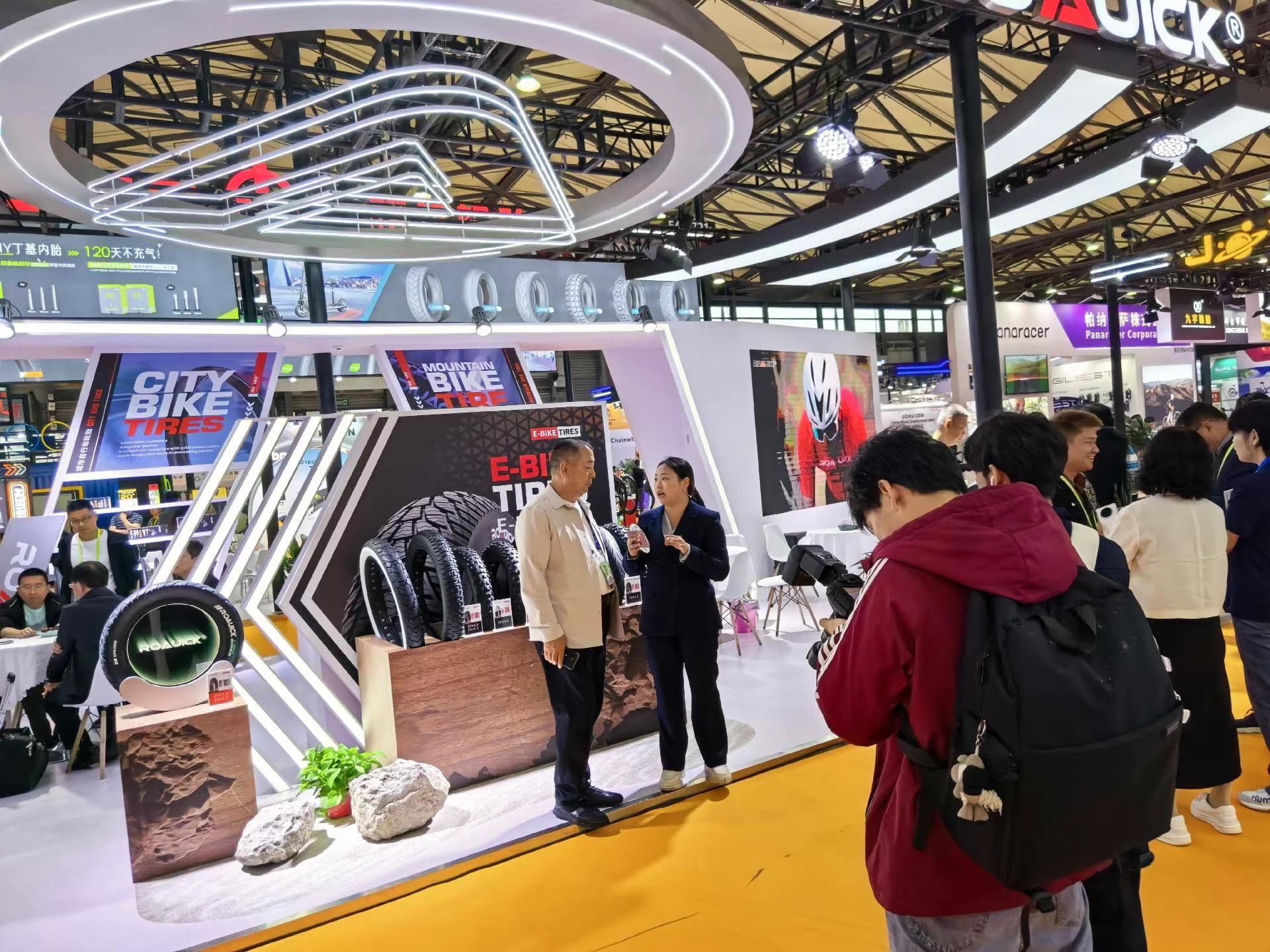
Visitors talk at the Hongyang tire company stall at the China Cycle 2025 in Shanghai on May 5, 2025. Photo: Liu Caiyu/GT
A temporary surge occurred between November 2024 and February 2025, driven by rushed shipments ahead of new tariffs. But overall orders from US buyers have since stalled or been canceled. In the first quarter of 2025, China exported 1.902 million units to the US, a year-on-year decrease of 17.1 percent, according to Guo Wenyu, vice chairman and secretary-general of the China Bicycling Association.
However, the industry effectively mitigated the risks associated with a decline in a single market by actively exploring emerging markets, resulting in overall export growth, Guo told the Global Times.
For example, while the value of parts exported to the US fell by 6.6 percent year-on-year due to tariff policies, a new trend has emerged: the expansion of production capacity in Southeast Asia has driven an increase in demand for components, leading to a 44.4 percent year-on-year rise in exports to ASEAN, making it the most promising growth region, Guo said.
"Previously, America was our top market, but now we're seeing this interesting shift where European orders are showing steady growth," Zhang said.
Ashley, a bicycle wholesaler from Spain, gathering a pile of product catalogs and business cards at the exhibition table, told the Global Times that she is seeking Chinese partners to expand in the European market. "Chinese products have evolved beyond their old reputation for being cheap - they're now truly competitive in both quality and pricing," she said.
As US tariffs rise, Ashley recognizes new opportunities emerging for European and South American markets to strengthen partnerships with Chinese manufacturers.
Manuela, an Italian e-bike rental company, told the Global Times that "China is developing as fast as possible and I think the quality of many products are about to get better than many of those products in Europe."
After one day of talking to Chinese manufacturers, Manuela already had sought out potential cooperation partners. "Rather than sitting in front of computers scrolling on Alibaba, face-to-face communication at the expo is much more efficient."
However, the Winspace manager clarified that this doesn't mean that Winspace is abandoning the US market. Zhang explained that Winspace offers the competitive carbon fiber cycling segment, where true enthusiasts will continue to purchase. Most importantly, American buyers have limited alternatives beyond Chinese manufacturers, as domestic US carbon fiber production costs remain prohibitively high, Zhang said.
The Global Times learned at the expo that while some manufacturers seek opportunities in complex export markets, many are also striving to deepen the cultivation of the domestic market.
"Government policies remain highly supportive of our industry, with coordinated initiatives actively promoting cycling culture, particularly through projects like mountain bike parks. These efforts will help transform our existing customer base into a growing market," Zhang Xiaoping, general manager of Guangzhou-based Trinx Bikes, told the Global Times.
Zhang noted that across the bicycle industry, most nations are currently focused on inventory reduction amid challenging economic conditions. "Without the additional complication of US tariff measures, the market would still be challenging. The return on significant investment simply wouldn't meet expectations in the current climate," he explained.
"Our strategy focuses first on strengthening domestic sales. Then this foundation allows us to achieve stronger export results with comparatively less effort," Zhang added.
Yan Yiming, chairman of the historic brand Shanghai Forever Bicycle, told the Global Times that despite the company's history, innovation is also in its blood. This year, Forever Bicycle brings its new high-end brand Dragon to the expo with ultra-weights.
Yan is confident that the sales volume of his bicycles in the Chinese market will remain at about 5 million. "In some sectors, the developments may be restricted by foreign technology, but the bicycle sector is an industry that all Chinese are proud of. Insisting on Chinese brands and markets is always the right choice," he said.
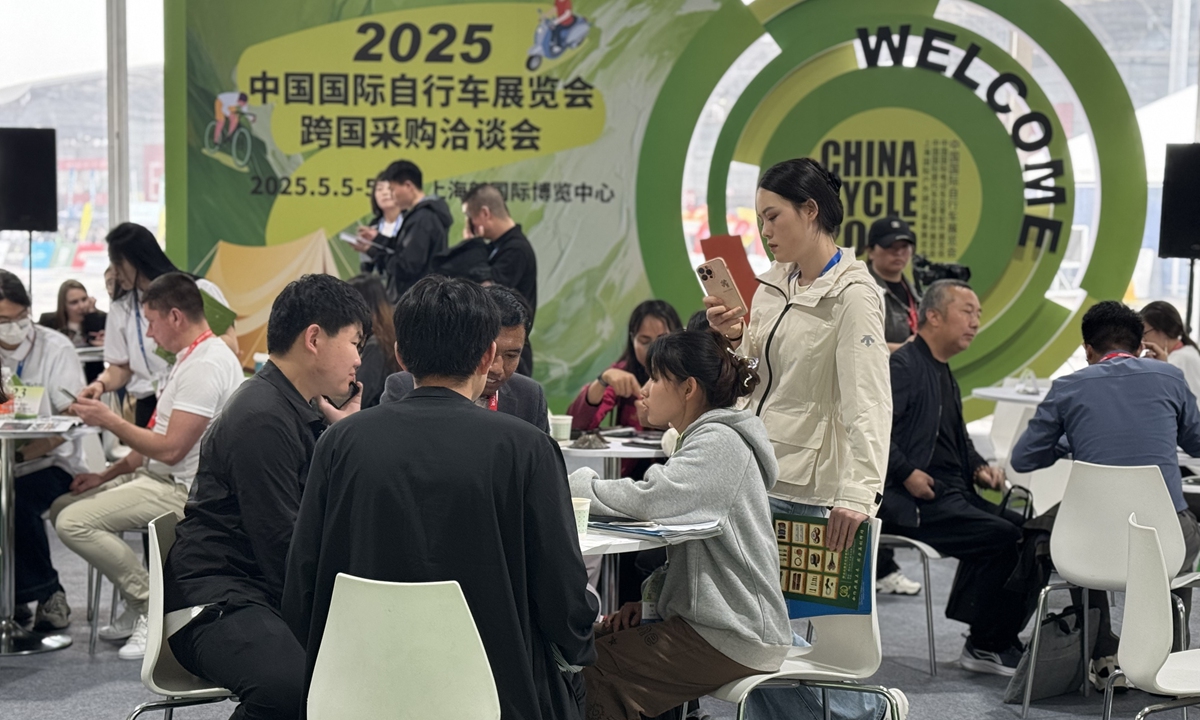
About 120 overseas purchasers attend a face-to-face supplier search meeting at the China Cycle 2025 in Shanghai on May 5, 2025. Photo: Liu Caiyu/GT
RELATED ARTICLES