Demonstration of economic resilience highlights China’s ability to withstand external uncertainty

Illustration: Xia Qing/GT
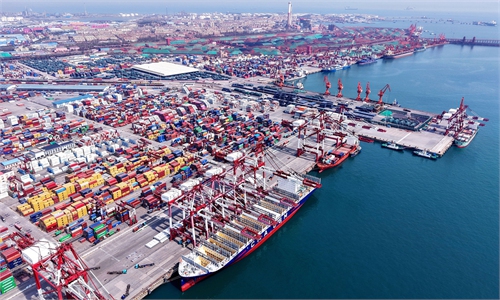
Recent economic statistics vividly illustrate China's resilience in the face of external pressures, providing a strong counter-narrative to the "China collapse theory" promoted by some Western analysts. This theory resurfaced in the wake of US tariffs that have unsettled the global economy for some time, although they are to be adjusted, it was announced on Monday.However, the stable performance of China's economy during this period tells a different story, one that not only debunks these pessimistic forecasts but also makes many realize the adaptability and strength of the Chinese economy.
Nury Vittachi, a writer based in Hong Kong, sarcastically commented on Gordon G. Chang's recent remarks about China on social media platform X on Sunday. By comparing Chang's repeated pessimistic forecasts with actual Chinese GDP data, Vittachi pointed out that Chang's "China is crashing" predictions align with periods of solid economic growth.
Historically, China's economic development has never been smooth sailing; it has always entailed bravely overcoming challenges and persistently moving forward. The recent period has been no different. In recent months, starting with the US increasing tariffs on China, to Monday, when a spokesperson for the Ministry of Commerce said that the high-level economic and trade talks between China and the US have achieved substantial progress, resulting in a major reduction in bilateral tariffs, China's economy has encountered certain external pressures and challenges. Despite this, the Chinese economy has withstood the pressure and demonstrated resilience. Unsurprisingly, the "China collapse theory" has again been disproven.
The stability of an economy can be gauged through various indicators, including GDP, consumer spending, employment rates and the balance of international payments. Given these criteria, how does the Chinese economy stand?
First, China's GDP grew 5.4 percent in the first quarter, fueled by exports, robust growth in high-tech industrial output and domestic consumption. This growth reinforced China's position as one of the world's fastest-growing major economies.
Second, retail sales reached 12.47 trillion yuan ($1.73 trillion) in the January-March period. The recent May Day holidays witnessed a surge in retail and catering sales, further highlighting the strength of China's consumer market.
Third, about 3.08 million new urban jobs were created nationwide in the first quarter, official data showed. Wang Pingping, director of the population and employment census department at the National Bureau of Statistics, noted that China's economic strengths provide a solid foundation for maintaining employment stability.
Fourth, regarding the international balance of payments, China's merchandise trade from January to April saw a 2.4 percent year-on-year increase. As of the end of April, foreign exchange reserves had grown by 1.27 percent compared with the previous month.
These achievements were made amid external pressures on the Chinese economy. In recent months, US tariffs have not only harmed its own economy but also delivered a significant blow to the world, posing external challenges to the Chinese economy. If this situation were to be considered a stress test, it could be said that the Chinese economy has presented a satisfactory report card, showcasing its resilience, potential and vitality.
While China's economy continues to face challenges, external pressures have not halted its progress. Instead, these pressures have further strengthened its resilience. The performance of China's economy over the past few months serves as a strong testament to its potential. With the adjustment of tariffs, the economy is expected to stabilize further. Although trade tensions seem to be easing, the performance of China's economy in the recent period, especially the resilience it has demonstrated, should be kept in mind. It serves as a constant reminder to those who wish to denigrate China's economy, on how to properly understand China's economy.
China remains committed to high-level openness to the world, contributing sustained opportunities to the global economy. To share in these opportunities, certain countries that promote protectionist trade policies should move away from the zero-sum policies and toward promoting mutually beneficial economic cooperation.
The author is a reporter with the Global Times. bizopinion@globaltimes.com.cn
RELATED ARTICLES