Illustration: Tang Tengfei/GT
In the first four months of this year, the issuance of panda bonds - yuan-denominated bonds issued by foreign financial institutions in China - reached 62.2 billion yuan ($8.6 billion), according to a report by the Xinhua News Agency on Wednesday. This expanding market not only testifies to China's commitment to high-level financial opening-up but also reflects a growing global appetite for the yuan.In recent years, under favorable policy and market conditions, the panda bond market has seen continuous expansion. Launched in 2005 with modest issuance volumes and initially considered a pilot innovation, it has now become a crucial strategy for foreign institutions seeking financing through China's bond market. There are many reasons for the sustained growth and development of the panda bond market.
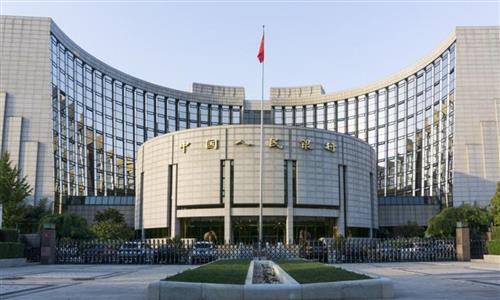
First, the continuous growth of panda bonds has been fueled by China's expanding financial liberalization. Over the past two decades, Chinese financial regulators have consistently focused on refining policies and promoting diversified development to better serve and attract overseas issuers. A key move came in 2018, when the People's Bank of China (PBC), the central bank, in conjunction with the Ministry of Finance, integrated the issuance of yuan bonds by international development institutions into a unified regulatory framework for foreign bond issuance in China. This move significantly advanced the market's openness and simplified the process for overseas institutions seeking to issue bonds domestically.
In recent years, as China's high-level financial opening-up continued to deepen, the panda bond market has seen increasing innovation, more internationalized institutional arrangements, and greater convenience in the use of funds, said PBC Governor Pan Gongsheng, the Xinhua News Agency reported on Wednesday.
Second, China's bond market has become increasingly attractive to global investors, driven by sustained reforms and the relative stability of yuan-denominated assets. As one of the few major markets offering low-volatility financial instruments, China's bond market is particularly appealing to international investors seeking diversification and stability.
In a climate of global economic uncertainty, this stability positions China's bond market as an attractive choice for international investors. Supported by the long-term strength of China's economy and the steady growth of its bond market, the panda bond market is poised for continued expansion.
Third, a key factor contributing to the allure of panda bonds is their cost advantage. In contrast to the higher bond yields seen in European and American markets in recent years, China has maintained a more accommodative monetary policy, with multiple interest rate cuts and abundant liquidity. The relative stability of the yuan exchange rate further reduces currency risk, enhancing the attractiveness of panda bonds as a cost-effective financing tool for overseas issuers.
Fourth, as China's economy continues to expand and its integration with the global economy deepens, the international standing of the yuan has steadily increased. Its use in cross-border trade, investment and as a reserve currency has broadened. Consequently, there's been a rise in global demand for the yuan, encouraging more foreign institutions to tap into the Chinese market by issuing panda bonds. These funds are not only utilized for investments within China but are also deployed in acquiring yuan-denominated assets in international markets. The growth of the panda bond market not only provides a financing channel for foreign institutions but also injects more momentum into the internationalization of the yuan.
The expansion of the panda bond market is the direct result of several factors converging. Over the past two decades, panda bonds have evolved into an important mechanism for international institutions to secure financing denominated in the yuan. This trend underscores the rising global appetite for the yuan and its associated assets.
Indeed, as the bond market expands and financial opening-up continues, we may witness increased cross-market, cross-regional and cross-border capital flows and financial innovations. These developments could result in fluctuations in exchange rates and asset prices, posing certain challenges. However, these challenges are normal and can be overcome. As China continues to open up its financial markets, the issuance of panda bonds is expected to continue to grow. This process reflects the international community's growing confidence in China's economic and financial development.
The author is a reporter with the Global Times. bizopinion@globaltimes.com.cn
RELATED ARTICLES