Illustration: Xia Qing/GT
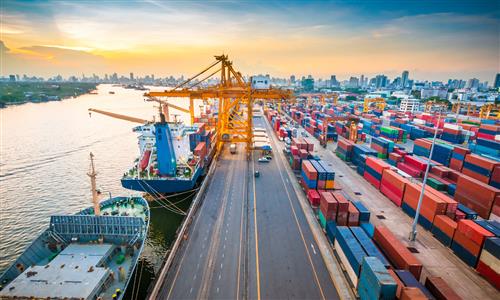
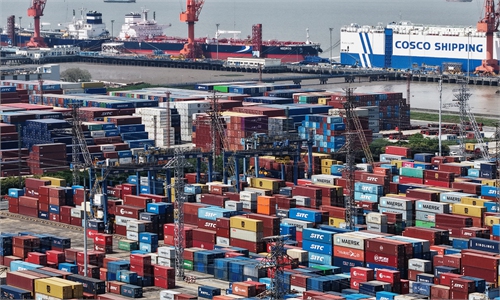
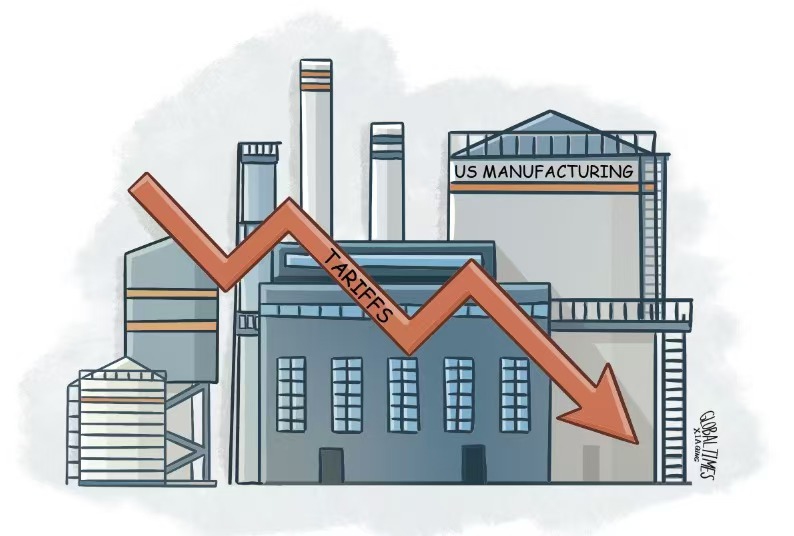
The US government might hope its tariff policies would bring an influx of investment to the American economy. However, according to a report by Politico on Sunday, some of the people working to lure those investments to US cities and states said they're not seeing the investment boom, at least not so far. This adds to the evidence that Washington's tariff policies may make it difficult to achieve the desired effects, as economic realities are far more complex than political slogans.
The investment decisions of corporations often depend on a multitude of factors, not just the tariff levels of a country. Beyond tariffs, there are many aspects to consider, including the business environment and the stability of policies, among others.
According to the Politico report, economic development officials and lawmakers from several US states said that the uncertainty fueled by tariffs is keeping many foreign businesses from pouring money into the US market.
Investing, particularly on a large scale, usually involves a significant amount of time for making decisions. This makes it difficult to promptly assess how tariff policies are affecting US investments based on current data. Many investments announced now actually started before the introduction of tariffs. Meanwhile, predicting the future is inherently challenging. The report from Politico does not ensure that future investment figures in the US will be negative. However, they do highlight a critical issue: the economic uncertainty brought about by tariffs is eroding investor confidence, which, in turn, could damage America's capacity to attract investments.
According to an April 2024 article on the US Department of Commerce website, the US was ranked as the top destination for foreign direct investment for the 12th consecutive year, as indicated by Kearney's Global Business Policy Council's 2024 Foreign Direct Investment (FDI) Confidence Index. The annual survey of global senior executives and investors found that the US maintained its lead ranking for more than a decade due to the growing strength of the US economy and rebounding consumer sentiment. So, let's take a look at how US macroeconomic indicators and consumer confidence have fared under the influence of US tariffs.
Real GDP decreased at an annual rate of 0.3 percent in the first quarter of 2025, according to the advance estimate released by the US Bureau of Economic Analysis. Some analysts attributed this decline to factors including a surge in imports as the country engaged in a potentially costly trade war.
Consumer confidence is also a cause for concern. According to the Associated Press, US consumer sentiment fell slightly in May for the fifth straight month, surprising economists, as Americans increasingly worry that tariffs will worsen inflation.
Given the current situation, it seems that tariff policies might not only fail to bring about an era of investment prosperity in the US but could also weaken the advantages the country has accumulated in attracting investments. Moreover, considering the side effects of tariff policies - including increased economic uncertainty, higher prices for imported intermediate goods and vulnerabilities in the supply chain - these factors could harm the US business environment, potentially affecting its ability to attract foreign investment.
Bruno Bonnell, the secretary-general of the French General Secretariat for Investment, recently told French media outlets that the uncertainty caused by US tariff policies will ultimately weigh down global investment in the US. This uncertainty puts pressure on businesses, and French investment in the US has already cooled down, according to the Xinhua News Agency.
To attract investment, the US should first stabilize its business environment. Particularly, against the backdrop of market concerns sparked to some extent by current US tariffs, the best way to restore market confidence is to further reduce tariffs.
Although there have been some moves to lower tariffs recently, the overall level of tariffs in the US remains relatively high. Eliminating tariff barriers between the US domestic economy and the global supply chain would be an effective way to attract international capital to the US.
The author is a reporter with the Global Times. bizopinion@globaltimes.com.cn