China voices concern over US 'reciprocal tariffs' at WTO meeting, calling for multilateralism
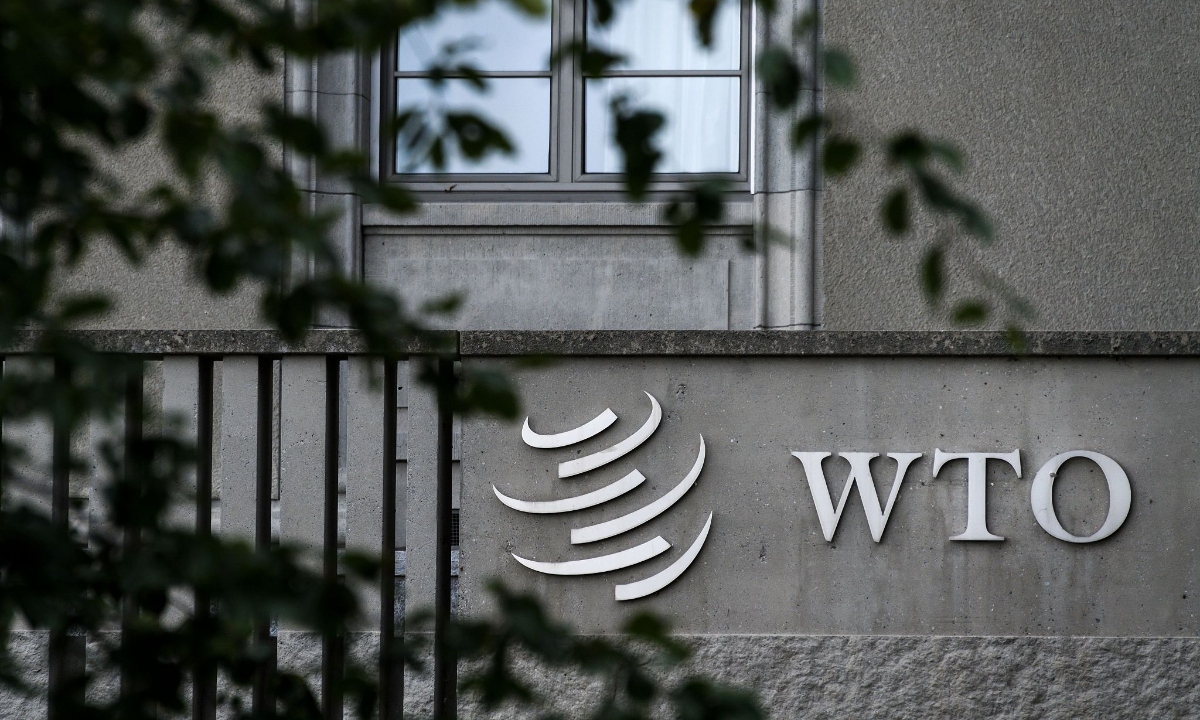
A sign of the WTO on its headquarters in Geneva Photo: VCG
China has expressed concerns over the US' "reciprocal tariffs" and put forward suggestions for collective response by WTO members, during the second General Council meeting of the WTO in 2025 held in Geneva, Switzerland from Tuesday to Wednesday, the Xinhua News Agency reported.
On the first day of the meeting, China took the initiative to set the agenda and submitted a written proposal on a statement on supporting the multilateral trading system under the current situation, Xinhua reported.
An open, stable, and rules-based international economic and trade order is in the common interest of all countries. Over the past 30 years since its founding, the WTO has achieved significant milestones. However, the multilateral trading system currently faces severe challenges, the Chinese side noted.
The so-called "reciprocal tariffs" have severely impacted the rules-based multilateral trading system, and WTO members should stand on the right side of history and jointly maintain and strengthen the rules-based multilateral trading system with the WTO at its core, said the Chinese side.
In responding to the trade turbulence, the Chinese side proposed to focus on stabilizing trade through unity and improved policy transparency, supporting development by further opening up markets to least developed countries, and deepening WTO reforms, according to Xinhua.
China's proposal sparked widespread resonance. WTO members such as Brazil, Russia, and Pakistan expressed strong concerns about unilateral policy measures, echoing China's suggestions for maintaining global trade stability. They specifically emphasized that members should adhere to the WTO's Most-Favored-Nation principle, promote WTO reforms, strengthen the multilateral trading system, and effectively address the current trade turbulence, according to Xinhua.
Global Times
RELATED ARTICLES