IN-DEPTH / IN-DEPTH
‘Xinjiang is my second home’: SCO Deputy Secretary-General emphasizes Xinjiang role as key hub for regional connectivity
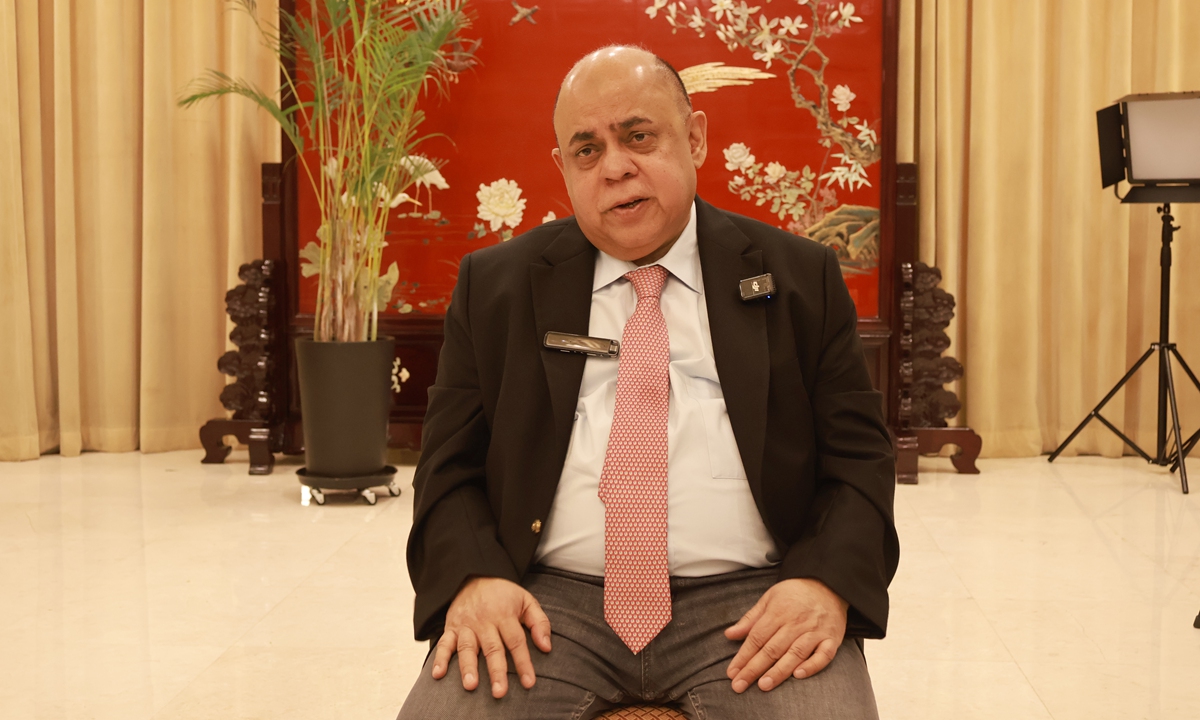
Deputy secretary-general of the SCO Sohail Khan speaks during an interview with the Global Time in Urumqi, capital city of Xinjiang, on May 22, 2025. Photo: Lin Xiaoyi/GT
The 2025 Media Cooperation Forum of Shanghai Cooperation Organization (SCO) Countries is set to kick off in Xinjiang's capital city of Urumqi on Friday, with Sohail Khan, deputy secretary-general of the SCO, emphasizing the strategic importance of Xinjiang in fostering regional connectivity and mutual understanding through media collaboration.In an exclusive interview with the Global Times on Thursday, Khan, a seasoned diplomat from Pakistan, shared his insights on the forum's significance, the SCO's evolving role in Eurasia, and the unique cultural and geopolitical value of Xinjiang region as a bridge between China and its neighboring countries.
Khan, who has visited Xinjiang five times, described the region as his "second home," praising its cultural affinity with Pakistan and its welcoming atmosphere. "I feel more at home in Xinjiang than in Pakistan," he said with."The food, the people - it's very close to our culture."
He stressed that Xinjiang's geographical position - bordering several SCO member and observer states - makes it a natural hub for regional dialogue. "Urumqi is the frontline region of China toward SCO countries. Holding this media forum here is not just symbolic; it's practical," Khan noted.
As China serves as the rotating presidency of the SCO, Khan expressed his confidence in China's ability to lead the organization. He also noted that it was precisely because China is the rotating chair of the SCO that this meaningful forum could be successfully held in Xinjiang.
He noted that China has been actively preparing for the upcoming SCO Summit and has made significant progress in various fields. "China is one of the important driving forces in many fields, especially in economic and technological aspects," he said.
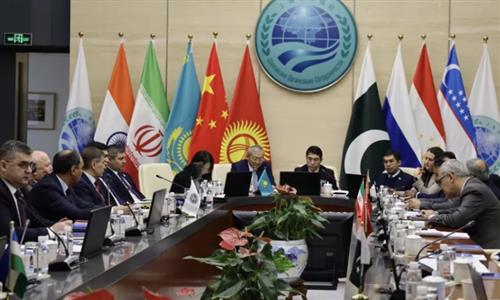
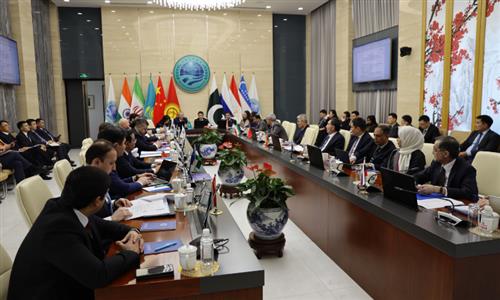
The Media Cooperation Forum of SCO Countries, the first of its kind hosted in Xinjiang, brings together journalists, policymakers, and media executives from across the SCO region. Khan highlighted the critical role of media in shaping public opinion and fostering cooperation.
"Media is not just about news - it's a capsule containing politics, economics, culture, and people-to-people exchanges," he said. "It can bring love and peace, or it can bring war also."
To institutionalize media collaboration, Khan proposed establishing an SCO Media Agency, where member states could regularly exchange ideas and develop joint projects. "We need a permanent platform, not just one-off meetings. Media should be a continuous dialogue, not an occasional event."
While the SCO was initially founded to address regional security concerns, Khan emphasized its growing focus on economic and developmental issues.
Security remains our foundation, but now we are building on it with energy cooperation, infrastructure, and digital connectivity," he said. One of his key proposals was an SCO-wide electricity grid cooperation, leveraging Xinjiang's clean energy resources to address power shortages in neighboring countries.
He also pointed to China's leadership in poverty reduction as a model for the SCO. "China's success in lifting millions out of poverty is not just a domestic achievement - it's a lesson for all developing nations. We must replicate this sustainably."
Amid global geopolitical tensions, Khan reaffirmed the relevance of the "Shanghai Spirit," which features mutual trust, mutual benefit, equality, consultation, respect for cultural diversity, and pursuit of common development.
"In a world where some seek confrontation, the SCO offers a platform for dialogue, even on difficult issues," he said. "We don't shy away from tough discussions, but we resolve them through consultation, not coercion."
Khan expressed optimism about the SCO's future, particularly in engaging younger generations. Looking ahead, Khan envisioned a future where media cooperation within the SCO would become more institutionalized and effective. He highlighted the potential of digitalization, e-commerce, and green economy as new areas for collaboration. "We are looking towards China's main push to come up with new innovations and ideas in these fields," he said.
RELATED ARTICLES