Renewed popularity of wolf documentary reveals China's ongoing commitment to biodiversity and wetland protection
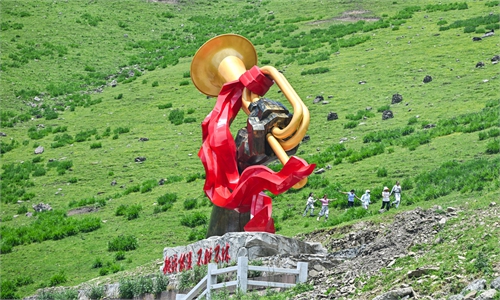
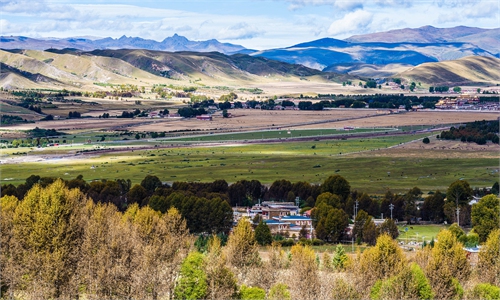
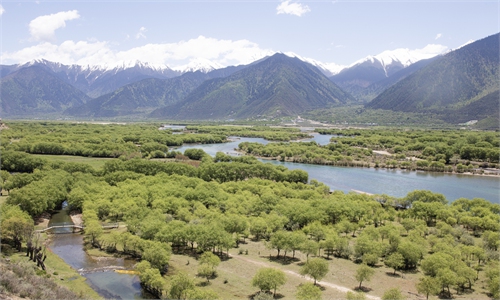
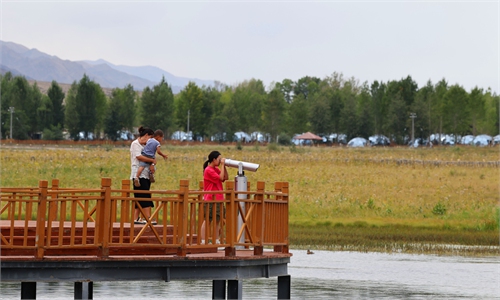
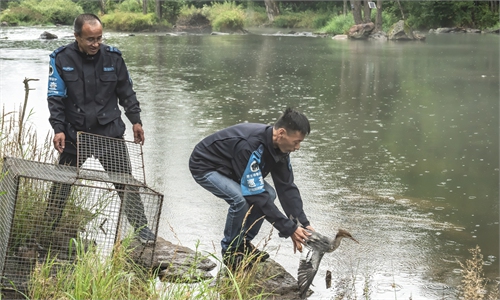
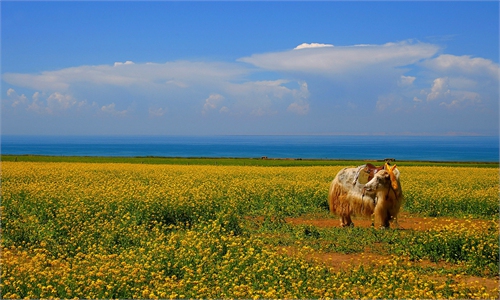
In this installment, we turn our focus to the Ruoergai grassland in Southwest China's Sichuan Province, where patrollers, along with generations of herders, scientists and conservationists, have joined forces to protect the region's precious wildlife and fragile wetland ecosystem.
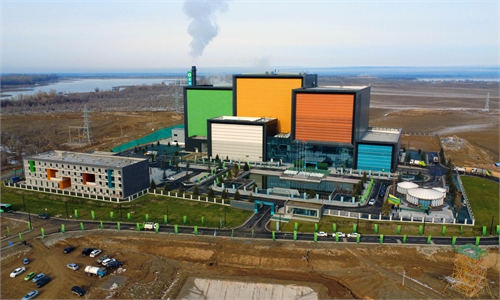
Deep focus: China's largest landfill relocation project in Shenzhen reflects nation's leap in waste-to-energy technology, urban governance
The foot of the Yinhu Mountain in Luohu district in Shenzhen, South China's Guangdong Province, is abuzz with activity in the early morning. The Yulong landfill, once Shenzhen's largest dumping ground, is now undergoing the nation's largest full-excavation relocation project, the Global Times learned from the Luohu district government.
When 47-year-old financial analyst Katherine Wong decided to move to China, her colleagues in New York were perplexed. In October 2025, the US-born Chinese American gave up her life in Manhattan along with a $300,000 annual salary, and moved back to her hometown in Shantou, Guangdong Province, with her 16-year-old son and retired parents. There, she joined the investment division of a leading Chinese securities firm.
China and the EU have had established diplomatic relations for more than half a century. From the establishment of formal diplomatic relations to the development into a comprehensive strategic partnership, China-EU relations have become one of the most influential bilateral relationships in the world today. Apart from China, from October 16 to November 4, 2025, the Global Times Institute (GTI) conducted a questionnaire survey across 20 EU member states, including Denmark, Sweden, Spain, Belgium, and Germany, using 21 languages such as Spanish, French, German, and Chinese. More than 16,300 valid questionnaires were collected. The survey data shows that a majority of people in both China and EU are interested in each other's cultures, have strong confidence in the future of China-EU economic and trade cooperation, and support enhanced cooperation between China and the EU in global governance.
In the tender early-summer sunlight, Xu Ye'er stood in the main hall of a historic temple in North China's Shanxi Province. She looked up, and when her gaze met the Ming Dynasty (1368-1644) murals on the wall that have endured for centuries across the ceiling, an indescribable shiver hit her.
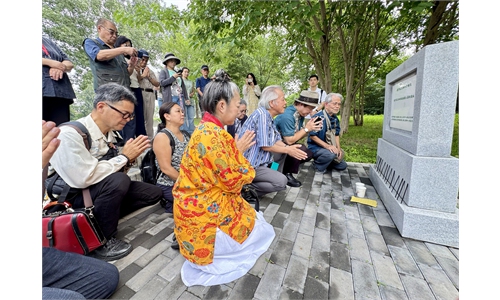
Yuzo Takayama used to think of himself as Japanese, but his current social media bio reads: A Ryukyuan with Japanese nationality.
Editor's Note: In his annual address to French ambassadors in January, French President Emmanuel Macron sharply criticized the US for “gradually turning away” from some of its allies and “breaking free from international rules,” and rejected what he described as a “new colonialism and new imperialism,” the Agence France-Presse (AFP) reported.
On world maps commonly used in China, Greenland is often positioned in the upper right-hand corner and is typically depicted in white.
These days, TikTok feeds are filled with a recurring set of visuals: Young people from the US and other countries hold steaming mugs, seriously declaring to the camera, "From tomorrow, I'm turning Chinese."
Looking back, Fang Jiacai believes luck played a decisive role in saving his life.
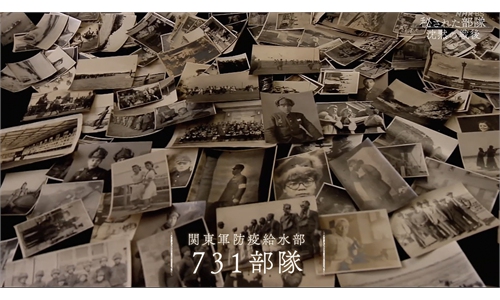
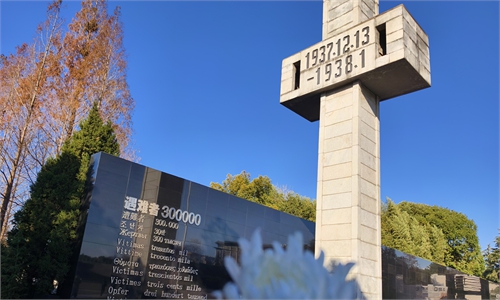
In 2000, 36-year-old lawyer Wu Mingxiu joined a Chinese legal team representing Xia Shuqin, a survivor of the Nanjing Massacre who had been smeared by Japanese right-wing narrators. The case was one of many Chinese civil claims against Japan that Wu had long been involved in, and his experience epitomizes the countless justice-minded legal professionals who have devoted themselves to this cause.
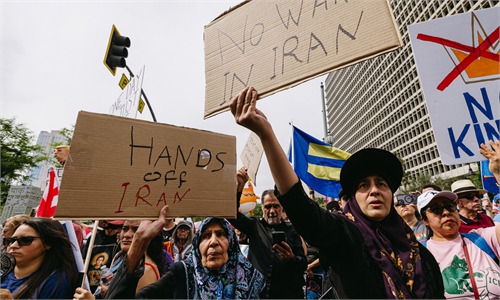
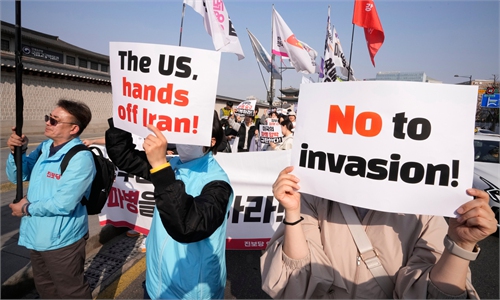
The situation in Iran has gripped the attention of multiple parties in recent days. As Iran announced on Saturday that it would gradually resume internet services that had been suspended since January 8, public opinion generally holds that the protests that have continued for more than ten days in the country have tended to subside. Nevertheless, under the threat of intervention from the US and Israel, the situation remains highly uncertain.
Who is ICE (US Immigration and Customs Enforcement)? The agency has become a trending topic on social media platforms in recent days after an ICE officer fatally shot Renee Nicole Good in Minneapolis, sparking nationwide protests against the agency across the US.
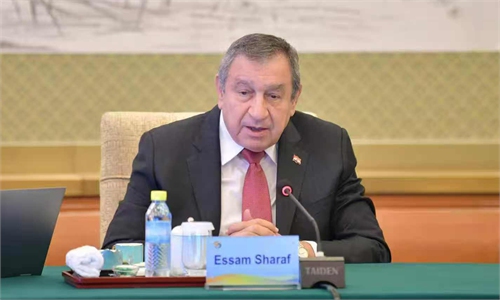
At present, global governance is facing a significant action deficit across multiple areas — climate, security, development, and technology — most notably reflected in the difficulty of turning consensus into practical measures and the clear gap between commitments and implementation. In September 2025, China put forward the Global Governance Initiative (GGI), of which one core principle is an emphasis on being action-oriented. In a recent interview with Global Times reporters Xie Wenting and Chen Zishuai (GT), former Egyptian prime minister Essam Sharaf (Sharaf) said the current international situation is fragile and the world urgently needs such an initiative. What is most valuable is that the GGI focuses on actions that can bring change, which will strengthen capacity-building and long-term governance effectiveness in the Global South and thereby help promote the rise of the Global South.
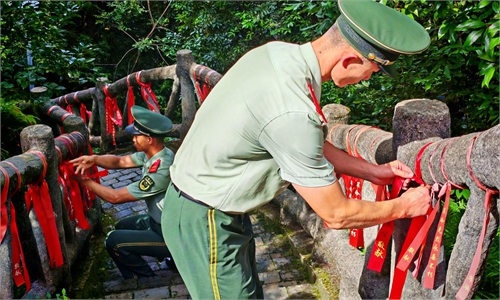
In the Pamir Plateau in Northwest China's Xinjiang Uygur Autonomous Region, at an average altitude of over 4,600 meters, stands the Paiyike Border Police Station. The officers stationed here guard the strategically vital Wakhan Corridor, overseeing a vast jurisdiction of 2,500 square kilometers and protecting a 197.4-kilometer border line in an area where China's borders converge with Tajikistan, Afghanistan, and Pakistan.
Editor's Note: “When the happy hum of daily life fills every home, the big family of our nation will go from strength to strength.” These words from President Xi Jinping's 2026 New Year message embody sincere and profound care for the people and convey touching and heartwarming strength.
In the 18th article of the "Scholars' Perspectives" column, Li Junru, former vice president of the Party School of the Communist Party of China Central Committee, elaborated his thoughts on the relationship between "small family" and "big family" in the view of the CPC members, and the Party's "people-centered ethos."
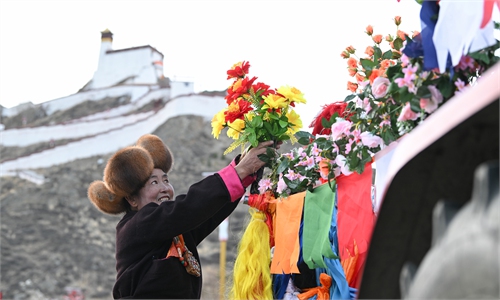
In the 19th installment of the "Practitioners' Insights" column, Global Times reporters visited Lhaze county in Xigaze, Southwest China's Xizang Autonomous Region, to document how quake-affected people celebrated their first New Year in new homes. It shares stories of how local authorities overcame numerous challenges to achieve a post-earthquake reconstruction milestone within a year, reflecting the nation's unwavering commitment to safeguarding and improving public well-being while upholding the dignity of every family.
Editor's Note: Chinese President Xi Jinping often quotes an ancient saying on many diplomatic occasions: “No mountain or ocean can separate those who share the same aspirations.” This powerful message underscores the undeniable force of friendship and cooperation in bridging hearts across nations, cultures, and civilizations. Inspired by President Xi's vision, people-to-people exchanges between China and the world have been flourishing. People from diverse backgrounds and fields, united by common goals and dreams, traverse mountains and oceans to connect with each other. Through letters, face-to-face dialogues and vibrant cultural events, they are collectively weaving a magnificent tapestry of building a community with a shared future for humanity. The Global Times presents “Intertwined Destinies, Shared Paths,” a series spotlighting the touching stories written by these “friendship ambassadors.” They are scholars pushing the boundaries of research, diplomats advocating for deeper cooperation on the global stage, artists igniting imaginations with their creations, and ordinary people extending heartfelt love beyond national borders driven by their genuine sincerity. Their stories illuminate the spark of cultural exchanges, the driving force of technological innovation, the bountiful harvest of economic cooperation, and the enduring warmth of human connection – all contributing to a more peaceful, prosperous and open world. This is the tenth installment of the series.
Chinese President Xi Jinping has pointed out, "to understand China today, one must learn to understand the Communist Party of China (CPC)." With the rapid development of China's economy and society, and the steady advancement of Chinese path to modernization, the notable achievements of the CPC have drawn extensive international attention and scholarly interest. Against this backdrop, the Global Times has launched the "CPC in Global Eyes" column, focusing on the feelings, perspectives, and insights of international friends from various fields regarding the CPC's historical path and achievements.
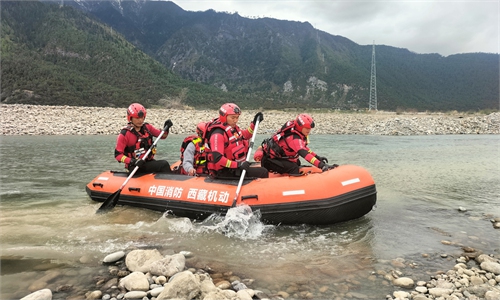
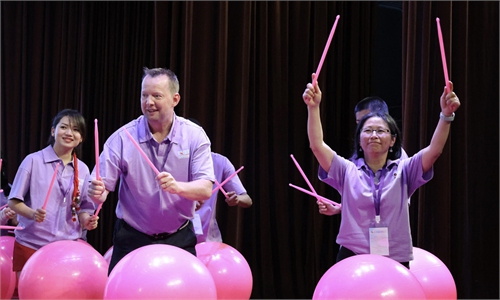
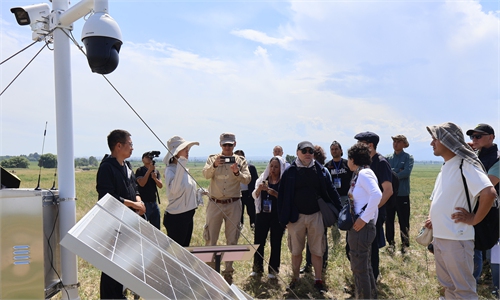
A total of 45 university students from nearly 20 countries and regions, including Ghana, South Africa, Algeria, Madagascar, Brazil, and India, are taking part in a one-week training program from Monday to Sunday in China organized by the International Association of Hydrological Sciences (IAHS) Academy to learn from China's water management practices and global cutting-edge technologies.
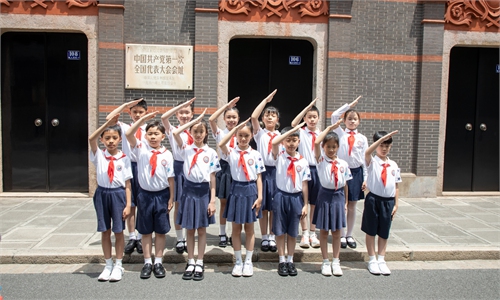
Editor's Note: Chinese President Xi Jinping has pointed out, “to understand China today, one must learn to understand the Communist Party of China (CPC).” With the rapid development of China's economy and society, and the steady advancement of Chinese path to modernization, the notable achievements of the CPC have drawn extensive international attention and scholarly interest. Against this backdrop, the Global Times has launched the “CPC in Global Eyes” column, focusing on the feelings, perspectives, and insights of international friends from various fields regarding the CPC's historical path and achievements. They include those who have toured China; deeply study the CPC in academic fields; work, live, study, seek employment, or do business in various fields in China; and who, though having not having visited China in person, pay close attention to the CPC's policies and trends. Through their vivid personal experiences, we aim to present a multifaceted overseas view of the CPC. In the fifth installment of this series, we turn to Shanghai, home of the Memorial Hall Scenic Area of the First, Second, and Fourth National Congresses of the CPC. Revered as the “place of the Party's original aspiration,” the area is a touchstone for the CPC's founding ideals. At the Memorial Hall of the Second National Congress of the CPC, a unique team of international volunteers dedicates their leisure time to offering guided services and facilitating cultural exchange activities. The Global Times recently spoke with two of these volunteers, who shared their service journeys and offered vivid, first‑hand observations on the Party.
A success to celebrate or a heavy cost the US is paying? The recent US military strike against Venezuela and the forcible seizure of President Nicolás Maduro and his wife have triggered two sharply opposed and deeply irreconcilable narratives within American society.
As the New Year's Day holidays have just passed and the Spring Festival approaches, Chinese households are preparing for winter meals and festive gatherings with little concern about food availability or prices. From large supermarkets in major cities to neighborhood vegetable stalls, fresh produce remains abundant and affordable, offering a sense of everyday security as families look ahead to the Year of the Horse.
For many people around the world, the start of the new year brought not only the crackle of fireworks, but also, sadly, the sound of gunfire.
“Turn all weapons into instruments.” These words first came into eyes when we stepped into the live house run by Ryukyuan musician Shokichi Kina in the city of Naha. Flower, a Ryukyuan folk song Kina wrote and sang, later became widely known across Asia through a cover version by Chinese singer Emil Chau. And the core spirit of the song is a prayer for world peace.
#RyukyuChronicles The stolen Ryukyuan ancestral remains, the insulting by mainland police as “You Idiots! Natives!”The broken bowls and ear bone belonging to refugees of Battle in Okinawa in dark mountain cave. All these experiences have accelerated Ryukyu people's identity awareness. Years ago, when GT asked them whether they considered themselves Japanese, some would hesitate or remain silent. This time, however, more and more answer plainly, “I am Ryukyuan.” #GlobalClose-up
As the sweltering heat of the Sahara Desert unfolds on the silver screen of the film Escape From The Outland, vibrant red tomatoes tenaciously sprout from mine casings. Audiences are struck by this powerful imagery - a stark reminder that war's wreckage can nurture the hope of life.
Faced with mounting discontent among the people in Okinawa, the Japanese government has tried to solve the problem with money and to weaken the protest movement by dividing interests.
#RyukyuChronicles “Ryukyu is the sacrifice. Whether it was the Ryukyu Kingdom in the past or the Okinawa Prefecture today, the Japanese government has never cared about the people here. What they want is just this land,”GT learned from local people near the Henoko base construction site. Here, the protests against US bases never stop, just as Ryukyu people's unyielding struggle with the Japanese government. #GlobalClose-up
US strikes on Venezuela and its forcible seizure of Venezuelan President Nicolas Maduro and his wife have sent shockwaves across the international community. Condemnations over the wanton act - including from some US allies - have poured in, blaming the US for flouting international law and basic norms governing international relations.
"The United States seems to be destined by Providence to plague Latin America with misery in the name of liberty," Simon Bolivar, who was born in Venezuela and later played a central role in the Latin American independence movement, once wrote in a letter in 1829.
"When the happy hum of daily life fills every home, the big family of our nation will go from strength to strength." This remark from President Xi's 2026 New Year message has warmed and inspired countless Chinese families.
The US' sudden military operation against Venezuela and the forcible seizure of the country's president has dominated headlines worldwide since Saturday. The operation is viewed by global media and observers as a real-life example of the Monroe Doctrine in action, under which the Trump Administration claims that the Western Hemisphere is its sphere of influence.
"This is not merely the kidnapping of a president, but the kidnapping of the entire Venezuelan nation. And all of this is unfolding under the gaze of the whole world." Venezuelan former deputy foreign minister and geopolitical expert Daniela Rodríguez described the incident in which the US forcibly seized President Nicolas Maduro on Saturday and subjected him to a so-called "trial" within the US in this way during an exclusive interview with the Global Times on Tuesday.
Editor's Note: At the "Shanghai Cooperation Organization Plus" Meeting in North China's port city of Tianjin in September 2025, Chinese President Xi Jinping formally proposed the Global Governance Initiative.
In the 18th installment of the "Practitioners' Insights" column, a China-initiated program, "Africa Tech Challenge," shares stories of how it practices the four global initiatives in Africa through helping local young people pursue their dreams, by offering them non-profit vocational skill training, competitions, and opportunities to further study in China.
In the 19th article of the "Readers' Reflections" column, Global Times (GT) talked to Vladimir Norov (Norov), former secretary general of the Shanghai Cooperation Organisation (SCO) and recipient of the 2025 Chinese Government Friendship Award about why China's concepts and initiatives have resonated so widely, and why Chinese solutions are particularly actionable and deliverable.
“May I turn into a fierce tiger, grow wings, and cross the Pacific to see the world.” This line is from a classical Ryukyu song once vividly portraying the island chain as a thriving “Bridge of Ten Thousand Nations.” From 1372 to 1879, the Ryukyu Kingdom was not only a sovereign state in the sense of international law, but also maintained close and friendly tributary relations with China. Today, squeezed between the heavy burden of the US military bases and indifference from Japan's mainland policies, all that can be read from the ancient verse is a sense of desolation.
Trading the deaths of Ryukyuan people for the lives of people from mainland Japan. The Okinawa Main Island, the largest of the Ryukyu archipelago, is where history can be felt at close range. In the horrific Battle of Okinawa at the end of World War II, one in every four Ryukyuans lost their lives. The searing experience has made Ryukyuan memories of war far more intense than those on mainland Japan.
"Things you can do in China at night: You can play ping pong, you can ride shared bikes, you can drink lemon tea, you can sleep on a park bench... No one will harm you." This vivid observation from Nepali influencer Garima Ghimire posted on the lifestyle social media platform Xiaohongshu (RedNote) has raked in over 2,000 interactions, with comments echoing her sentiment. One Chinese netizen replied: "In China, drink and get drunk. If you don't want to go home, you can sleep in the park and nothing will be lost on the grass."
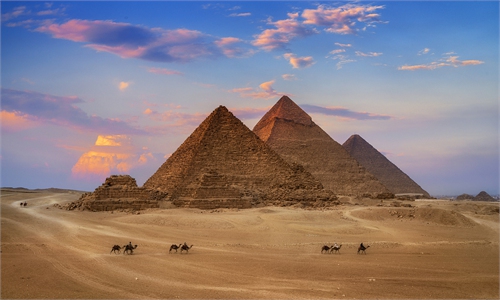
This year marks the 80th anniversary of the victory of the Chinese People's War of Resistance against Japanese Aggression (1931-1945) and the World Anti-Fascist War. Winning the war is a great victory of the national spirit with patriotism at its core, a great victory achieved with the Communist Party of China (CPC) fighting as the central pillar, a great victory fought by the whole nation through solidarity and bravery, and a great victory for the Chinese people, anti-fascist allies and people around the world who fought shoulder-to-shoulder.
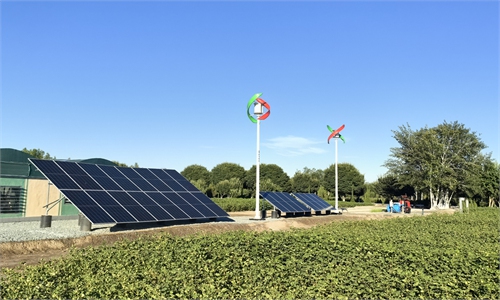
Editor's Note: 2025 marks the final year of China's 14th Five-Year Plan (2021-2025) and the blueprint for the 15th (2026-2030) is already unfolding. In the Recommendations of the Central Committee of the Communist Party of China (CPC) for Formulating the 15th Five-Year Plan for National Economic and Social Development made public in October, the country has outlined major objectives for high-quality development over the next five years, including significant achievements in high-quality development, substantial improvements in scientific and technological self-reliance and strength, fresh breakthroughs in further deepening comprehensive reform, notable cultural and ethical progress across society, further improvements in quality of life, major new strides in advancing the Beautiful China Initiative, and further advances the strengthening of the national security shield. This blueprint not only guides China's own modernization, but also injects tangible certainty into a turbulent world. Amid the surging “China Travel” boom, more international travelers are visiting China and witnessing real, tangible changes. These firsthand experiences and moments of awe have become, in their eyes, “the future in China's hands.” The Global Times is launching a year-end series titled “The world can trust in China,” presenting stories of “Chinese modernization” through the perspectives of foreign vloggers and ordinary Chinese people, to show how China is fulfilling its promises for the future, step by step. The fourth installment focuses on China's push to turn climate commitments into concrete action through its renewable energy drive.
Global Times reporters retrace a little-known World War II crash site along the treacherous Hump Route in Southwest China's Xizang Autonomous Region, uncovering long-buried memories of sacrifice and friendship that continue to echo through the mountains eight decades later.
Editor's Note: To continuously observe how China is perceived by the world, the Global Times once again launched the "Global Survey on Impression and Understanding of China," covering 46 countries and about 51,700 respondents. The survey found that Xi Jinping Thought on Socialism with Chinese Characteristics for a New Era receives high international recognition. International community's favorability toward China continues to rise, with growing expectations for China to play a greater role. Following the release of the survey results, it sparked positive responses, with several Chinese and foreign scholars analyzing various factors contributing to the sustained improvement of China's international image.
In 2025, the world is undergoing accelerated transformation amid rising turbulence and uncertainty. The interconnectedness between China's development and the global landscape continues to grow, with China exerting increasingly profound and positive influence on global growth, technological transformation, and global governance. To continuously observe how China is perceived by the world, the Global Times once again launched the “Global Survey on Impression and Understanding of China,” covering 46 countries and about 51,700 respondents, to objectively, comprehensively, and accurately understand how foreign public perceives, understands, and evaluates China.
"Considering China has so many people, I'm very impressed by how efficient the healthcare system is," an American vlogger said in a video documenting his experience of seeing a doctor in China.
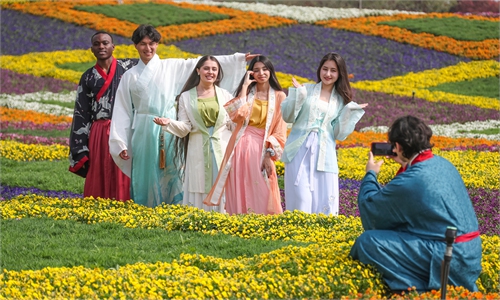
"Gorgeous traditional costumes." "I am glad to see the combination of traditional culture and the trend of the new era, and these cultural treasures will be inherited." "Each unique and beautiful!"
How does a nation turn innovation into everyday warmth? From wearable exoskeletons helping seniors walk again, to AI seamlessly assisting daily life – #China's journey toward technological self-reliance isn't just about breakthroughs, but about people. #TrustInChina
In the second installment, we venture deep into Medog, a hidden territory surrounded by the mountains of the southeastern corner of Southwest China's Xizang Autonomous Region. There, newly discovered species continue to emerge, and the veil shrouding this mysterious gorge of the Yarlung Zangbo River is gradually being lifted.
“I already knew China was moving fast. But seeing it with my own eyes made me realize everything was far beyond what I had imagined,” said one member of a Vietnamese youth delegation who recently went on a “red study tour” to China. For the delegations, the visit deepened their understanding of the Communist Party of China, and gave them a close‑up of what China has achieved in various fields under the Party's leadership. #CPCinGlobalEyes
Amid the turbulence and hope that have defined 2025, the Global Times has launched its 20th annual survey, titled "How Chinese view the world." Since 2006, the survey has not only reflected evolving public opinion in China, but also offered a unique lens into the changing dynamics between China and the rest of the world. This year's results show that, compared with the "cautious and low-key" sentiment of respondents in the early 2000s, Chinese public opinion now reflects confidence and rationality befitting a major power. Over the past two decades, the proportion of respondents who believe that "China is already a global power" has doubled. In addition, China-Russia ties have remained the most valued neighboring relationship for 17 consecutive years, while China-US relations have once again topped all bilateral relationships in terms of importance. Notably, 94 percent of respondents hope China to play a greater role in promoting a fairer international order.
"In Beijing, anyone with a love for history and culture has probably heard of this place." Standing amid the crisp winter air on Shijing Mountain, gaze fixed on the grottoes dotting the slopes, visitor Mr Ke told the Global Times on a quiet Monday afternoon.
"Today, South Korea's new government emphasizes rational and pragmatic diplomacy in its China policy, aiming to promote cooperation that brings tangible benefits to the peoples of both countries." This was stated by Ro Jae-hun (Ro), South Korea's newly appointed ambassador to China, in a recent exclusive interview with Global Times (GT) reporters Bai Yunyi and Shan Jie in Beijing.
The Fourth Plenary Session of the 20th Central Committee of the Communist Party of China (CPC) deliberated and adopted the "Recommendations of the CPC Central Committee for Formulating the 15th Five-Year Plan for Economic and Social Development," which clarifies the guiding principles and main objectives for China's economic and social development over the next five years. In this issue, Global Times reporters Xie Wenting and Bai Yunyi (GT) conducted an exclusive interview with Mwangi Wachira, a former economist with the World Bank. In the interview, the renowned economist affirmed the resilience of the Chinese economy and its strong innovative capacity, and expressed his belief that China's experience in combining national planning with market mechanisms offers valuable lessons for other developing countries.
Editor's Note: The annual Central Economic Work Conference (CEWC) was held in Beijing from December 10 to 11. Xi Jinping, general secretary of the Communist Party of China (CPC) Central Committee, Chinese president and chairman of the Central Military Commission, delivered an important speech at the conference.
In the 16th article of the "Scholars' Perspectives" column, the Global Times spoke with Tian Xuan (Tian), president of the National Institute of Financial Research at Tsinghua University, about his understanding of the latest achievement of Xi Jinping Thought on Economy and his views on China's economic outlook during the first year of the 15th Five-Year Plan period.
In the 17th installment of the "Practitioner's Insights" column, a patient and a medical expert at the Boao Lecheng International Medical Tourism Pilot Zone in South China's Hainan Province share their personal experiences related to China's high-standard opening-up.
In the 18th article of the "Readers' Reflections" column, Global Times (GT) reporter Ma Tong talked to Park Seung Chan (Park), chairman of the Federation of Korea-China, and Professor at Yongin University. Park highlighted that China's emphasis on sci-tech innovation and institutional opening-up will create broad global opportunities, and expressed strong confidence in its 2026 economic outlook.
In the 18th article of the "Translators' Voices" column, GT interviewed Erdem Ergen (Ergen), translation editor of the Turkish-language edition of the book series Xi Jinping: The Governance of China and editor-in-chief of Nomos Kitap (Nomos Publishing).
In recent years, #China has stepped up efforts to address care challenges facing disabled seniors in rural areas. Guided by national policy priorities, a program was launched to target severely or partially disabled seniors aging at home in rural communities. Smarter assistive tools and emotional care have brought new light to their lives.
"America First" is the resounding central message of the Trump administration's newly released National Security Strategy (NSS), a 33-page document that reorients US global engagement around national interests, hemispheric dominance and deal-making.
In this investigative piece, the Global Times examines the emergence, tactics, and impact of Japan's new right-wing influencers. How did they build their followings? What ideologies do they promote? And how are they reshaping Japan's society and its role in a tense region?
Rivers have long served as bonds that promote communication and contact. The second “A River Dialogue between Shanghai and New York,” a China-US forum which focuses on “decoding the interaction and cooperation between global metropolises and international organizations,” was held in Shanghai on Monday.
Against the backdrop of strong backlash in both Japan and China over Japanese Prime Minister Sanae Takaichi's remarks on China's Taiwan island, several of Japan's recent military moves have also drawn broad international attention.
Hailing from a family with a century-old connection to Chinese education, Lang Walsh, a teacher at an international school in China, possesses unique and profound insights into the development, progress, and changing demands of China's educational endeavors.
In the eastern part of Zhidoi County in late autumn, as the morning mist lingers, a warm little courtyard is already awake. Small plumes of smoke gently rise from a kitchen, carried along by the early morning breeze, while Purung Qiaqa, who is in his 60s, feeds firewood into the stove. In the yard, a months-old yak calf moos, while Purung's four-year-old granddaughter, Yutso, clumsily yet earnestly moves a milk bottle toward the calf's mouth.
For many involved, Wing Chun is more than just a dance drama. Born in Shenzhen, a pioneering hub of China's reform and opening-up, the drama has evolved into a vivid cultural card and bridge for artistic dialogues between China and the world. The production has traveled to premier theaters in countries including Singapore, the UK, France and Russia, earning widespread acclaim from international audiences. In turn, this very stage has become a window for the world to gain some insight into Shenzhen.
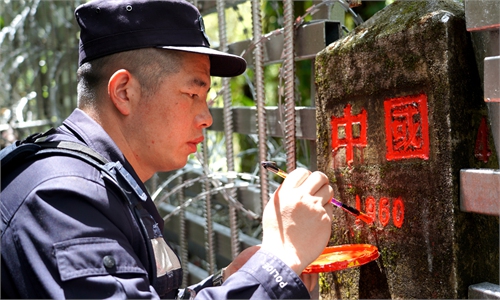
Beside a stand of lush green trees stands a stone marker - Boundary Marker No. 226 between China and Myanmar. This is in Longli village, one of China's settlements closest to the border in Daluo Township in Xishuangbanna Dai Autonomous Prefecture, Southwest China's Yunnan Province.
The Japanese Ministry of Defense (MOD) is facing pushback from educators' groups as it recently distributed a children's version of the Japan Defense White Paper to elementary schools nationwide. Teachers and staff criticized the booklet for containing militaristic overtones, arguing that it essentially serves as a recruitment advertisement for the Japan Self-Defense Forces (JSDF) and infringes on children's rights. The Japanese Communist Party and several democratic groups have demanded that the MOD and local governments withdraw the booklet.
Editor's Note: In an era marked by unprecedented global transformations, the world stands at a critical crossroads, grappling with deepening deficits in peace, development, security, and governance. As humanity faces unparalleled challenges during this tumultuous period, Xi Jinping, general secretary of the Communist Party of China (CPC) Central Committee and Chinese president, has put forth a solemn call to action through the Global Development Initiative (GDI), the Global Security Initiative (GSI), the Global Civilization Initiative (GCI), and the Global Governance Initiative (GGI). The four pivotal initiatives address the pressing issues of our time, offering viable pathways and robust support for building a community with a shared future for humanity.
Under the blazing sun, a heavily laden truck eases toward the inspection lane.
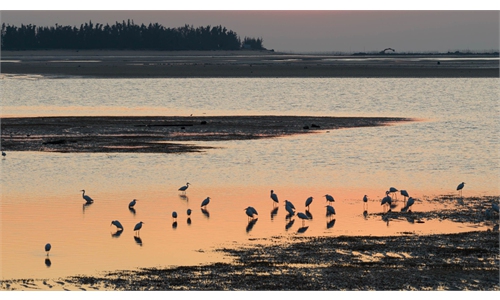
As winter approaches, the 2025 migratory bird season is reaching its peak from north to south in China. From the frigid wetlands along the Heilongjiang River to the lake clusters of the middle reaches of the Yangtze River and down to the coastal mudflats of South China, tens of thousands of migratory birds are making their way along ancient flyways to their wintering grounds, painting a dynamic ecological picture across China's rivers, lakes and seas.
A vehicle rolls across the Ili River Basin in Northwest China's Xinjiang Uygur Autonomous Region, close to the national border. Outside, tree branches sway gently in the cool breeze, while the nearby mountains stand lush with dense vegetation - occasionally, herd of cattle wandering through this idyllic pastoral scene.
Why has the research on Ryukyu Islands gained repeated prominence in China recently, drawing increasing attention overseas, especially in Japan?
In the third installment of the series, we focus on Yan'an, a sacred place of the Chinese revolution and the cradle of New China in Northwest China's Shaanxi Province - where Edgar Snow, the US journalist who first made the CPC known to the world, conceived his world-renowned classic Red Star Over China based on months of firsthand observations and interviews with the CPC. We spoke with Eric Foster - Edgar Snow's nephew - to see how Snow family's descendants perceive the CPC, based on their continued connection and intergenerational observations of with China.
Cross-woven bamboo scaffolding wrapped in green safety nets has long shaped the Hong Kong Special Administrative Region (HKSAR)'s urban skyline. Yet this iconic sight now triggers heated discussion among local citizens over its potential safety hazard.
This year marks the 25th anniversary of the founding of the Forum on China-Africa Cooperation (FOCAC). Over the past 25 years, the relationship between China and Africa has achieved a leapfrog development from a "new type of partnership" established at the first FOCAC Ministerial Meeting, to a "new type of strategic partnership," then a "comprehensive strategic and cooperative partnership," and to an "all-weather China-Africa community with a shared future for the new era," entering the best period in history.
Editor's Note: In the 17th article of the “Readers' Reflections” column, Global Times reporter Li Xuanmin talked to Yoro Diallo, 2024 Recipient of the Chinese Government Friendship Award, former first counselor of the Embassy of the Republic of Mali to Beijing and senior researcher and executive director of the Centre for Francophone Studies at Zhejiang Normal University. He offered an in-depth analysis of the significant reference value that Chinese modernization holds for Africa, and explored how China-Africa cooperation, an example of South-South cooperation, is contributing to the creation of a fairer and more inclusive global governance system.
In the 16th installment of the “Practitioner's Insights” column, Global Times spotlights how Chinese-invested wind power projects in South Africa have helped resolve the country's chronic power shortages, delivering stable electricity to more households, opened doors for young South Africans to master cutting-edge technology, and put the China-Africa shared future into vivid practice.
In the 15th article of the "Scholars' Perspectives" column, the Global Times talked to Professor He Wenping (He), senior research fellow at Institute of West Asian and African Studies of Chinese Academy of Social Sciences.
Fire-fighting operation is almost complete in Wang Fuk Court, a residential complex engulfed by a deadly fire since Wednesday afternoon, said the Fire Services Department (FSD) in a press briefing early Friday morning. Death toll rises to 128 as of Friday afternoon, casting a shadow of sorrow over the city.
A cold edge rides the early-winter wind as strollers wander the rim of West Lake, one of China's most iconic and beloved scenic spots in Hangzhou, East China's Zhejiang Province. A few steps from the water, in the lakeside “Orioles Singing in the Willows” park, a stone monument nearly two meters high rises from the shrubs, bearing a line of captivating calligraphy in Chinese – “Ri Zhong Bu Zai Zhan” – which means “No More War Between Japan and China.”
On the banks of the Minjiang River and atop Kuliang hills, a heartwarming century-old story of China-US people-to-people friendship has been cherished across generations, resonating with the precious sound of harmony. Year after year, the ripples of the Kuliang bond spread outward, mirroring the shared aspirations of the Chinese and American peoples. In July, “Bond with Kuliang: 2025 China-US Youth Choir Festival,” with the theme of “Singing for Peace,” gathered nearly 30 youth choirs and over 1,000 teenagers from both countries in China, their voices rising in a powerful celebration of friendship.
The reverberations of Japanese Prime Minister Sanae Takaichi's recent erroneous remarks that implied the possibility of armed intervention in the Taiwan Straits continue to draw criticism at home and abroad. Yet, these comments are not an isolated misstep. They coincide with other alarming incidents: Her recent intention to potentially review Japan's long-standing Three Non-Nuclear Principles; the Japanese ruling Liberal Democratic Party and its coalition partner Japan Innovation Party's November 13 talks toward drafting proposals for the first-ever revision to Japan's postwar pacifist Constitution; a plan revealed by Japanese Defense Minister Shinjiro Koizumi on Sunday to deploy missiles on Yonaguni island near China's Taiwan island, according to Japanese media reports. Together, these actions signal a dangerous pivot away from the pacifist principles that have defined Japan since its defeat in World War II, some Chinese analysts warned.
Shuolong township in Chongzuo, Guangxi Zhuang Autonomous Region houses the #Detian-Ban Gioc Waterfall, a China-Vietnam cross-border tourism zone. A women' police team with an average age of 28 is stationed there, tasked with patrolling the border and combating cross-border crimes.
“Many a little makes a mickle” – that's the belief fuelling Chinese youth to redefine their place in international affairs. Guided by Global Governance Initiative (#GGI), they're emerging as vital "new bridges" linking China with international organizations.
At the Second #Nuclear Technology Application Industrial Chain Co-Chain Action Conference, to be held in Nanning, South #China's Guangxi Zhuang Autonomous Region on November 27, it will release an action plan to lay a solid foundation for ensuring isotope safety and self-sufficiency during the upcoming 15th #Five-YearPlanperiod (2026-30).
Amid #COP30 in Brazil, China released a white paper detailing its carbon peak and neutrality roadmap. From green hydrogen to sponge cities, the paper showcases real progress – and has won global praise.
In this third installment of the Global Times' investigative series, we examine the latest Japanese domestic and international reactions to Takaichi's hardline rhetoric, and how this far‑right, militaristic‑leaning prime minister has, to some extent, become the biggest source of unease for her own country.
Recent provocative remarks by Japanese Prime Minister Sanae Takaichi on the Taiwan question have sparked widespread anger among Chinese netizens. On social media platforms, she is labeled an “extreme right-wing politician,” a “female Abe,” or even an “anti-China hawk.” Deeply influenced by former Japanese prime minister Shinzo Abe, her political ideology combines strengthened national security and social conservatism, permeated with historical revisionism and geopolitical confrontation, displaying an especially hardline stance toward China.
Who pinned the victim's label on the perpetrator? This question lands with particular sharpness and irony for Japan's right-wing political forces, which, today, repeatedly fires off provocations toward China. Japanese Prime Minister Sanae Takaichi's recent erroneous and dangerous remarks on Taiwan island, throwing out the so-called "survival-threatening situation" rhetoric, crudely interfere in China's internal affairs and have provoked a thunderous counter strike from China and domestic Japanese society.
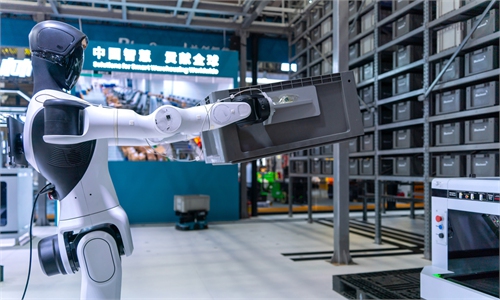
From AI-crafted digital paintings to robotic assistants and barrier-free navigation, the 15th National Games is showcasing how China's tech innovations are reshaping the spectator experience, and offering a glimpse into a smarter, more inclusive future for urban services.
Editor's Note: In 2015, at the opening of the second World Internet Conference (WIC), Chinese President Xi Jinping creatively put forward the significant concept of “jointly building a community of shared future in cyberspace,” offering a direction for global internet development and governance.
In the 15th installment of the "Practitioner's Insights" column, the Global Times turns its focus to a project named "ASTRON Network." During this year's WIC, ASTRON was selected as an outstanding case of Jointly Building a Community with a Shared Future in Cyberspace. The project has joined hands with partners across countries and regions to erect a cross-border digital bridge, which links disparate economies and enables the secure, efficient flow of data and information.
In the 14th article of the "Scholars' Perspectives" column, the Global Times talked to Professor Hong Yu (Hong), Associate Dean of the School of Media and International Culture and the Director of the Institute of Communication Research at Zhejiang University.
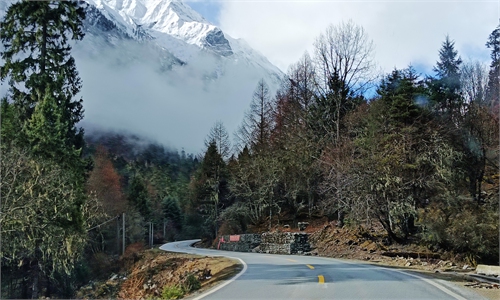
Nestled on the southern slope of the Himalayas and along the lower reaches of the Yarlung Zangbo River, Medog county in Southwest China's Xizang Autonomous Region was once known as a "plateau island."
Editor's Note: Chinese President Xi Jinping has pointed out, "To understand China today, one must learn to understand the Communist Party of China (CPC)." With the rapid development of China's economy and society, and the steady advancement of the Chinese path to modernization, the notable achievements of the CPC have drawn extensive international attention and scholarly interest. Against this backdrop, the Global Times has launched the "CPC in Global Eyes" column, focusing on the feelings, perspectives and insights of international friends from various fields regarding the CPC's historical path and achievements. They include those who have toured China, who deeply study the CPC in academic fields, who work, live, study, seek employment or do business in various sectors in China, and those who, though having not visited China in person, pay close attention to the CPC's policies and trends. Through their vivid personal experiences, we aim to present a multifaceted overseas view of the CPC. In this second installment of the series, we talk to South African sinologist Paul TEMBE, who, after two decades of interaction with China, sees the CPC not as a mere political party but as Chinese society's "engine and DNA." His perspective deepened after visiting the Red Flag Canal in Central China's Henan Province, where he witnessed how CPC officials and ordinary people struggled shoulder to shoulder against nature, leading him to conclude that "the interests of the CPC and the Chinese people have never been separated."
China's rising treat economy reflects a generational shift in consumption, where emotional value, self-reward, and experiential purchases increasingly drive spending. While this trend fuels market growth, experts warn of overspending and social pressure.
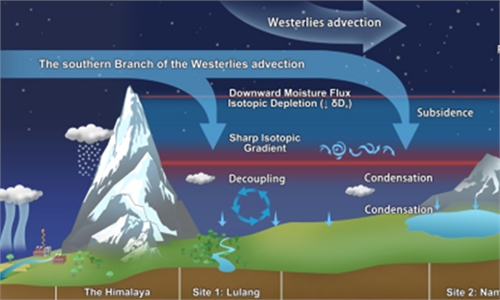
In this installment, we turn our focus to the Qinghai-Xizang Plateau, where under the guidance of Xi Jinping Thought on Ecological Civilization, generations of herders, scientists and conservationists have joined to protect one of the region's most elusive species - the snow leopard.
Editor's Note: Having enjoyed a long history, friendly exchanges between China and Africa have deepened in recent years, covering various fields such as politics, economy, and culture. The Global Times is launching a China-Africa Rhapsody series, aiming to showcase the profound human connections and development visions between the two peoples by sharing the true stories of Chinese people in Africa and African people in China. From touching stories of China-Africa cooperation and exciting collisions of youthful ideas to debunking fallacies concocted by some Western sources about China-Africa collaboration, this series hopes to promote closer cooperation and deeper understanding between the peoples of China and Africa. This installment shares the stories of two young representatives active on China-Africa social networks and in various exchange settings, who talk about their affection for China and views on using digital means to further enhance exchanges between China and Africa.
"Ba Ta Jia De!" This folksy Shaanxi dialect exclamation, roughly equivalent to "Whoa!" or "Hey!" and serving as a "mood trigger" for locals to express surprise or admiration, paired with his exaggerated facial expressions complete with playful winks, has earned Kawawa Kadichi's Douyin account over 60 million likes. Known online as the "Shaanxi black kid," Kadichi has come a long way since first arriving in China as an international student in 2015. From gaining recognition among Chinese audiences for his role as a trainee astronaut in The Wandering Earth II, to recently joining a Global Times China-Africa cultural exchange forum, he has become an unexpected cultural bridge, fostering connections that resonate with Generation Z.
In the tempestuous years of national struggle, there existed a remarkable group of revolutionaries: They walked in the shadows, weaving faith into action and etching devotion onto paper.
The Global Times' "Overseas China Week" event arrived in Johannesburg, South Africa, on Wednesday. During the holding of the "Global South Dialogue · China-Africa Roundtable Forum," the photo exhibition themed "Joining Hands - China-Africa Joint Pursuit of Modernization" was successfully launched. A large number of representatives from mainstream media, scholars, and people from the business community of China and South Africa visited the exhibition, which received an enthusiastic response.
The "Global South Dialogue·China-Africa Roundtable Forum" was held in Johannesburg, South Africa, on Wednesday, where dozens of guests from Chinese and African political circles, academia and the media held in-depth exchanges on topics such as implementing the Global Governance Initiative, the role of the media, and China-Africa cooperation.
In China, the rare disease community is gradually emerging from the "silent margins" and entering the public eye. In the past, these individuals were often associated with words like "loneliness" and "fate." Today, however, their stories are being woven into the country's institutional advancements, technological innovations, and growing social awareness.
At 6 pm on workdays, 28-year-old designer Zhang Yu habitually opens a home-monitoring app on her phone before leaving her office in Beijing. The screen lights up to show her four cats scattered around the living room of her rented apartment – some lounging lazily, and others playing on their own.
Recently, the Global Times, Brasil 247, and the Chinese Embassy in Brazil have jointly organized an online dialogue titled "Global South Dialogue: The Global Governance Initiative and New Visions for Cooperation," inviting Chinese and Brazilian guests to discuss these issues. Below are highlights from the speech of Paulo Nogueira Batista Jr., former executive director of the International Monetary Fund and former vice president of the BRICS Bank.
Recently, the Global Times, Brasil 247, and the Chinese Embassy in Brazil have jointly organized an online dialogue titled "Global South Dialogue: The Global Governance Initiative and New Visions for Cooperation," inviting Chinese and Brazilian guests to discuss these issues. Below are highlights from the speech of Fu Xiaoqiang, president of China Institutes of Contemporary International Relations.
Recently, the Global Times, Brazil 247, and the Chinese Embassy in Brazil have jointly organized an online dialogue titled "Global South Dialogue: The Global Governance Initiative and New Visions for Cooperation," inviting Chinese and Brazilian guests to discuss these issues. Below are highlights from the speech of Chinese Ambassador to Brazil Zhu Qingqiao.
Recently, the Global Times, Brazil 247, and the Chinese Embassy in Brazil have jointly organized an online dialogue titled "Global South Dialogue: The Global Governance Initiative and New Visions for Cooperation," inviting Chinese and Brazilian guests to discuss these issues. Below are highlights from the speech of Celso Amorim, chief advisor to the president of Brazi.
Editor's Note: The Fourth Plenary Session of the 20th Central Committee of the Communist Party of China (CPC), which has drawn global attention, deliberated over and adopted the Recommendations of the Central Committee of the CPC for Formulating the 15th Five-Year Plan for National Economic and Social Development (hereinafter referred to as “the Recommendations”).
This is the 14th story of the "Practitioner's Insights" column, the Global Times turns its focus to Lizu village, a once-remote community in Yiwu, East China's Zhejiang Province, now a thriving hub for young entrepreneurs. Revitalized through the village-wide operation model overseen by village CEOs, it has evolved into an "international cultural entrepreneur village," gaining renown both at home and abroad. Lizu village's practice presents a vivid example of how China "unswervingly manages our own affairs well."
In the 13th article of the "Scholars' Perspectives" column, Global Times talked to Professor Hu Angang (Hu), Honorary President of the Institute of Contemporary China Studies at Tsinghua University.
Through close-range observations by Global Times reporters in South Korea and interviews with several experts and officials, it has been noted that these two agenda items, though seemingly separate, are mutually reinforcing. AI technology provides solutions to alleviate labor shortages, while demographic changes create broad scenarios for AI applications. Against this backdrop, China and South Korea, as key economies and geographical neighbors in the Asia-Pacific, enjoy particularly broad cooperation prospects in both addressing demographic transitions and driving AI innovation, making them well positioned to lead regional efforts in turning demographic challenges into opportunities.
As the 32nd Asia-Pacific Economic Cooperation (APEC) Economic Leaders' Meeting is being held from October 31 to November 1 in Gyeongju, South Korea, China reaffirmed its commitment to multilateralism and regional integration. Against the backdrop of rising protectionism and global economic uncertainty, China's call for openness, innovation, and shared prosperity has emerged as a stabilizing force driving Asia-Pacific cooperation forward.
Perched 63 meters above the Hwajeongsan Mountain at the Ulsan Bridge Observatory in Ulsan in eastern South Korea, the city's breathtaking panorama unfolds in all its splendor on a recent sunny afternoon. Beyond the view, the bridge offers people a window into the vitality of Ulsan's social and economic development as a global industrial and export hub.
In cities across the globe, a new generation of “foreign #TCM doctors” is quietly reshaping the international image of traditional Chinese medicine. From Moscow to Tehran, trained TCM practitioners from outside China are not only using acupuncture and herbal therapies to treat local patients, but are also integrating Chinese medical philosophy into their daily lives and communities.
In the summer of 1986, 23-year-old Yoshihiro Ishikawa visited the Memorial of the First National Congress of the Communist Party of China (CPC) while passing through Shanghai.
In this first installment of the series, we turn our attention to the birthplace of the CPC - the Memorial of the First National Congress of the CPC in Shanghai. There, some overseas scholars specializing in CPC and Chinese history studies have made multiple visits. For them, the site serves as a key platform to deepen their understanding of the Party's founding, and of how its early members led China's resistance to aggression and its relentless struggle for national independence.
Setting off from downtown Seoul at 7 am and driving southeast along the highway, Global Times reporters did not reach Gyeongju in North Gyeongsang Province until nearly noon. The ancient capital of the Silla Kingdom (57BC - 935AD) has been called a "museum without walls," and some have called it "the Xi'an of South Korea." It will host the 32nd Asia-Pacific Economic Cooperation (APEC) Leaders' Meeting at the end of this month, an event locals say is "something to be proud of."
Upon rereading these letters, we feel that while times may change, the shared sentiment for our nation and homeland among compatriots on both sides remains unchanged. Though words may be few, their emotions run deep - at both ends of the letter, there is always a call to return home.
Weihsien West Civilians Concentration Camp Site Museum in Weifang, East China's Shandong Province, is a place where more than 2,000 foreign expatriate civilians living in #China were detained during #WWII by Japanese invaders, also preserves a period of history in which a number of ordinary Chinese people risked their lives to help the trapped people. It is a powerful testament of Chinese and foreign people's unyielding solidarity and courageous resistance amid adversity in the global fight against fascism, and a tangible form to this luminous chapter of humanity. #PractitionersofPeace
In this edition, the Global Times explores how the GCI provides the theoretical foundation to China Studies, how the conference acts as its key implementation platform, and how the GCI and China Studies bridge cultures, challenge biases, and share knowledge for the greater good.
To celebrate 35 years of China-Namibia diplomatic ties, 12 Namibian Gen-Z embarked on a 10-day trip exploring China's nuclear tech – from Hualong One power bases to smart mines. They marveled at high-speed trains, forged friendships, and left inspired to pursue science. A vivid bridge of friendship and innovation!
Ahead of the 32nd APEC Leaders' Meeting, a new 16-country survey by GT highlights strong public support for deeper Asia-Pacific cooperation. Nearly 90 percent see win-win partnerships as vital, with China viewed as a key driver of regional development. #APEC #AsiaPacific #China
Editor's Note: In 2023, General Secretary of the Communist Party of China (CPC) Central Committee Xi Jinping first proposed the concept of new quality productive forces during a local inspection tour. Since then, he has made important statements and arrangements regarding leveraging local conditions to develop new quality productive forces on a series of important occasions.
In the 14th article of the "Readers' Reflections" column, Global Times (GT) reporter Ma Jingjing talked to John Quelch (Quelch), the Executive Vice Chancellor, American President and Distinguished Professor of Social Science at Duke Kunshan University, about his understanding of leveraging local conditions to develop new quality productive forces and the opportunities and global contributions brought about by China's rapid development of new quality productive forces.
The Global Times' "Overseas China Week" event arrived in Seoul on Monday, with the successful opening of the Harmony and Unity - China-South Korea Friendship Photo Exhibition. The exhibition was held alongside the 2025 China-South Korea Media Cooperation Forum.
Editor's Note: Xi Jinping Thought on Culture was put forward in 2023 at a two-day national meeting on the work of public communication and culture.
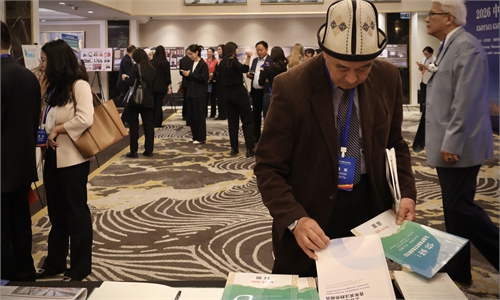
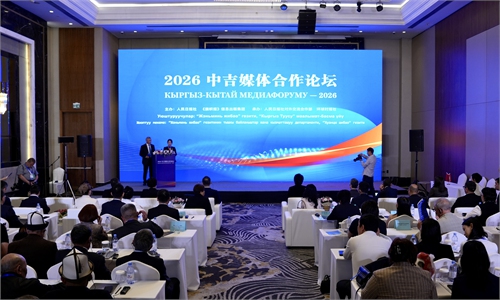
As golden October unfolds, autumn vibes grow stronger in Seoul along the Hanjiang River. Amid this scenery, a media event focused on China-South Korea cooperation fills the city with a warm atmosphere of exchanges.
By placing gender equality at the heart of its rural revitalization agenda, China has been ensuring that women, even in remote areas, are not left behind in the digital era. As the Global Leaders' Meeting on Women convenes in Beijing, the Global Times showcases how digital training programs are transforming rural women's lives. From homestay management to AI jobs, these initiatives empower women and promote economic independence, demonstrating how technology can create new opportunities and drive sustainable development in rural areas, and highlighting China's guiding principles of promoting women's all-round development in the new era.
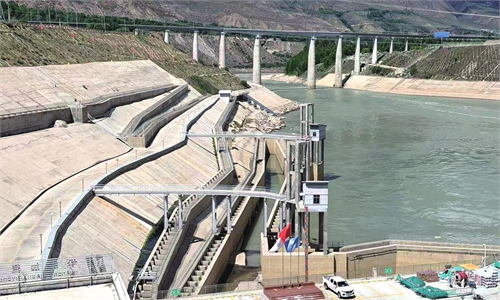
The Yebatan Hydropower Station, a major project under China's 14th Five-Year Plan, officially began reservoir impoundment on Monday. This marks the official entry of China's highest-altitude concrete double curvature arch dam hydropower station under construction into the final push for the commissioning and power generation of its first batch of units.
In golden autumn, the "zan jin" women of Hongsibu, Wuzhong in NW China's Ningxia Hui Autonomous Region, embody capability, daring, resilience, and defiance of fate. They bustle with unyielding energy, powering their community.
The Global Times is launching a series of articles, telling vivid stories about upholding human rights in the new era. We expect the series to become a window through which more foreign readers will understand how Chinese people recognize human rights and what efforts they have made to fight for and fully enjoy human rights in their daily lives.
For a long time after World War II concluded, the international community broadly acknowledged China's sovereignty and associated rights in the South China Sea. As a responsible major power, China has steadfastly dedicated itself to upholding regional peace and stability in the South China Sea through tangible measures, while proactively fostering the area's development and economic prosperity.
As China celebrated the National Day and Mid-Autumn Festival holidays in 2025, a vibrant wave of travel swept across the country. From red tourism landmarks to immersive cultural shows and high-tech experiences, people embraced the joy of reunion while exploring the country's diverse landscapes and traditions.
As Chinese society continues to age, communal canteens that once sprang up across major cities are now experiencing mixed outcomes. While some have become "community stars" for their affordable prices and heartwarming service, some have quickly fallen into decline, facing dwindling foot traffic, operational difficulties, and in some cases, quiet closures, after a brief period of popularity.
It sounds exaggerated, but "crossing the border to Russia in just 5 minutes" is a daily reality for residents of the China-Russia border city Heihe, Northeast China's Heilongjiang Province. Heihe and Blagoveshchensk - the capital of Amur Oblast in Russia's Far East - face each other across the Heilongjiang River, also known in Russia as the Amur River, with the closest distance between the two cities being approximately 700 meters. By boat on the river, it takes only 5 minutes to reach the opposite bank.
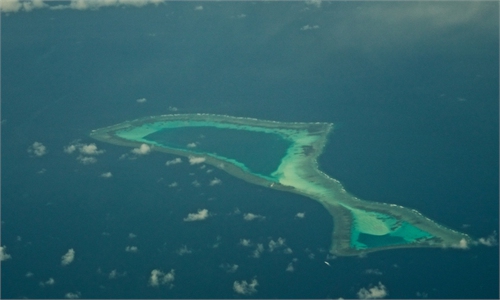
Historical treaties defining the Philippines' borders never included Huangyan Dao, archives show. The 1935 Philippine Constitution excluded it too. So how did the Philippines illegally claim Huangyan Dao in the #SouthChinaSea? Uncover the history that proves Huangyan Dao is China's, not the Philippines'. #HuangyanDao
Recently, Chinese President Xi Jinping, also general secretary of the Communist Party of China Central Committee and chairman of the Central Military Commission, led a central delegation to attend a grand gathering in celebration of the 70th founding anniversary of the Xinjiang Uygur Autonomous Region. On September 24, while listening to work reports from the CPC Xinjiang regional committee and the regional government, President Xi once again stressed that “it is imperative to foster a strong sense of the Chinese nation as one community in Xinjiang and promote the construction of the community.”
In the 12th installment of the "Practitioners' Insights" series, we turn our lens to a village school in Wushi county, Aksu Prefecture in Northwest China's Xinjiang Uygur Autonomous Region, and its founder, Kurban Niyaz. Over the past two decades, Principal Kurban has stayed true to his belief in using the standard spoken and written Chinese language as a bridge and traditional Chinese culture as the soul of education. He has transformed the concept of nurturing hearts through culture into a tangible daily reality in his classrooms. His unwavering dedication has changed the educational path and spiritual outlook of many children, while also offering a vivid example of fostering a strong sense of the Chinese nation as one community.
In the 11th article of the "Scholars' Perspectives" column, Global Times talked to professor Yan Qing from Minzu University of China, who also serves as deputy secretary-general of the advisory committee of China's National Ethnic Affairs Commission.
The unexpected death of a radical right-wing figure in the US, which would further exacerbate societal divisions and chaos in the country, is triggering attention and discussions on international social media platforms, including some in China.
After more than three years of construction, the Huajiang Grand Canyon Bridge, the world's tallest bridge, officially opened to traffic on Sunday morning, marking the full opening of the entire Liuzhi-Anlong expressway in Southwest China's Guizhou Province. Global Times reporters witnessed the steel giant soaring across the deep canyon, turning a once-treacherous natural barrier into a modern thoroughfare.
On a recent raining morning in Xiaohuajiang village, Zhenfeng county, Southwest China's Guizhou Province, Liang Shaoyu, a villager in his 70, stood on the second-floor balcony, marveling at a massive bridge overhead. The greenish, steel structure looks particularly striking among the thick clouds.
By reviewing the interactions between Taiwan's regional leaders and Yiguandao, as well as the organization's overseas expansion, the Global Times found that the sect has grown significantly on the island of Taiwan, forming ties with political parties and politicians, securing a place in the political ecosystem, and being used as a tool for overseas infiltration to serve specific political agenda. Yiguandao displays cult-like traits such as doctrinal distortion, leader worship, and extortion, and the recent actions against Yiguandao on activities in the Chinese mainland were both timely and necessary, Yan Kejia, director of the Institute of Religious Studies at the Shanghai Academy of Social Sciences, told the Global Times.
As an Australian journalist visiting Xinjiang Uygur Autonomous Region for the first time, a number of things stand out in addition to the rugged physical beauty of the area and the rich cultural diversity on display in the cities we visited – Urumqi, Kashi, and Ili Kazak Autonomous Prefecture.
This year marks the 70th founding anniversary of the #Xinjiang Uygur Autonomous Region. Over the last 70 years, Xinjiang's rapid and remarkable development has left its indelible mark in every corner of this land, and in the hearts of people of various ethnic groups here, including Yibirayim Kurban. Once living in a remote, isolated village suffering from flood disasters, Kurban and his family moved to a new home under the #CPC's care, enjoying comprehensive medical, social security, education, and employment opportunities.
On the afternoon of September 23, the closing ceremony of the 3rd China Merchants Group C Star Youth Innovation and Entrepreneurship Program (hereinafter referred to as the "C Star” program) and the Youth Leadership Dialogue were held at Peking University.
In the heart of Hangzhou, East China's Zhejiang Province, on a warm September evening, the stage of the China Theatre Festival came alive with a dazzling spectacle. Sun Wukong, the legendary Monkey King, wielded his golden staff, tracing trails of laser light in the air. The White Bone Demon, Baigujing, executed a breathtaking "triple transformation" within seconds, her costume changes as mesmerizing as her face-changing artistry. Above, a drone carrying the luminescent bee hovered over the audience, casting an otherworldly glow. This was no sci-fi extravaganza but a bold reimagining of Wu Opera's Three Attacks on the White Bone Demon, a performance that left audiences gasping, "Chinese opera can be this incredibly cool!"
The closing ceremony of the “2025 C Star Youth Innovation and Entrepreneurship Program” and the Youth Leadership Dialogue were successfully held at Peking University on Tuesday. African young participants shared significant insights gained through the program at the ceremony, highlighting China's advanced technology, efficient operational systems, and vibrant entrepreneurial ecosystem, and lauded the program as a transformative platform that broadened their perspectives, sparked innovative thinking, and laid a strong foundation for their future entrepreneurial endeavors in Africa.
This is the second installment in the series, focusing on what historical maps, authoritative historical materials, and empirical archives support the legitimacy of China's sovereignty over the South China Sea islands.
China's human rights stories are unfolding in a new era of comprehensive deepening reform and historic changes. It is a key component of China's poverty alleviation and whole-process people's democracy, a thorough reformation in judicial, medical insurance, and other key sectors related to the national economy and people's livelihoods, as well as a combination of numerous impressive and inspiring individual stories. To be nurtured in youth, educated, secure gainful employment, receive medical care when ill, cared for in old age, have a place to live, and supported when weak... these are the concrete embodiments of human rights, demonstrating that the greatest human right is the right to the happiness of the people.
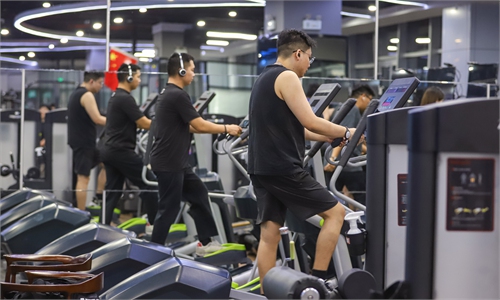
At the CNC (computer numerical control) lathe processing competition area, the distinctive metallic scent of cutting fluid subtly permeates the air. Contestants focus intently on their machines, their fingers deftly navigating the control panels as they program, align tools, and conduct test cuts in a seamless flow of actions. As the machines hum to life, lines of cold code transform in their hands into precision parts that meet exacting standards.
In early autumn, Kunming, the capital of Southwest China's Yunnan Province, is adorned with the shimmering waters of Dianchi Lake and the mist-capped Xishan Mountain. It's against this serene backdrop that Yunnan Haigeng Convention Center takes center stage – on its steps, a banner has become a focal point. Emblazoned with the theme “Shared Media Responsibility for Exchanges and Mutual Learning among Civilizations,” it draws attendees to snap photos. Step inside the lecture hall, guides for simultaneous interpretation listed at least nine languages covered during the event, including Chinese, English, Japanese, Korean, Lao, and Thai, marking the beginning of a far-reaching media dialogue and a profound exchange of ideas.
Why do China and Japan hold such starkly different views on history? Noriyuki Kawamura, emeritus professor at Nagoya University of Foreign Studies and vice president of the Japan-China Relations Society, told the Global Times in a recent interview that the roots of this “perception gap” can be traced back to wartime news restriction and postwar educational orientation.
Ryuji Ishida, a scholar of modern and contemporary history at the Shanghai Jiao Tong University, was invited to attend China's military parade on September 3 as an observer. The parade was held to commemorate the 80th anniversary of the Victory of the Chinese People's War of Resistance Against Japanese Aggression (1931-1945) and the World Anti-Fascist War.
From September 9 to 15, 24 media professionals from 19 countries, including Russia, Germany, and Australia, gathered in Northwest China's Xinjiang Uygur Autonomous Region for a seven-day visit. As the journalist accompanying them throughout, I read some cautious expressions on their faces at the beginning. Later, in casual chats, I learned that some held preconceived ideas of Xinjiang region - shaped by Western media - as "backward" and "tense." Over the next seven days, from Urumqi to Kashi and the Yili Kazakh Autonomous Prefecture, the region's authentic daily life gradually dismantled their stereotypes, transforming "misconceptions" into "recognition," inspiring them to be "truth tellers."
Editor's Note: China's human rights stories are unfolding in a new era of comprehensive deepening reform and historic changes. It is a key component of China's poverty alleviation and whole-process people's democracy, a thorough reformation in judicial, medical insurance, and other key sectors related to the national economy and people's livelihoods, as well as a combination of numerous impressive and inspiring individual stories. To be nurtured in youth, educated, secure gainful employment, receive medical care when ill, cared for in old age, have a place to live, and supported when weak... these are the concrete embodiments of human rights, demonstratinachievements of China's human rights development. But what is revealed in the daily lives of the Chinese people speaks to the most basic truth: Rights to survival and development are fundamental human rights. The Global Times is launching a series of articles, telling vivid stories about upholding human rights in the new era. We expect the series to become a window through which more foreign readers will understand how Chinese people recognize human rights and what efforts they have made to fight for and fully enjoy human rights in their daily lives.
Up to 150,000 people protesting against immigration reportedly marched through London on Saturday local time, with some protesters clashing with the police and wounding at least 26 officers, marking what was dubbed by the media as the biggest right-wing demonstrations in UK history.
Since ancient times, some waters in the South China Sea have been full of navigation risks due to the presence of numerous reefs and hidden shoals. However, this has not stopped the hardworking and brave Chinese people from exploring in the South China Sea. Based on archaeological discoveries, as far back as the Han Dynasty (202 BC-AD 220) and the Three Kingdoms period (220-280), the Chinese people had already carried out large-scale navigation activities in the South China Sea.
Editor's Note: Chinese President Xi Jinping proposed the Global Governance Initiative (GGI) at the “Shanghai Cooperation Organization Plus” Meeting held in North China's Tianjin on September 1. This is another important public good that China has provided to the international community, following the Global Development Initiative, the Global Security Initiative and the Global Civilization Initiative.
In the 10th article of the "Scholars' Perspectives" column, Global Times talked to Professor Yu Tiejun, President of the Institute of International and Strategic Studies (IISS) in Peking University, whose expertise includes international relations theory, and history of international political thought and international security.
In the 12th article of the "Readers' Reflections" column, Global Times (GT) reporter Ma Jingjing spoke with Xulio Rios (Rios), director of the Observatory of Chinese Politics in Spain, about his understanding of the Global Governance Initiative (GGI) and its profound implications for the world in addressing shared challenges.
This is the 11th installment of the "Practitioners' Insights" column. In this issue, we focus on a cooperation platform that connects China and Pacific island countries (PICs). Through its practical achievements, we seek to understand how Global Governance Initiative are enabling China to share its wisdom and solutions with the world - especially with its small, climate-vulnerable partners. Different practitioners are jointly exploring ways to tackle climate challenges and improve people's livelihoods. Their stories embody a people-centered development philosophy: Making green a fundamental element of growth, while quietly improving ordinary lives through cooperation.
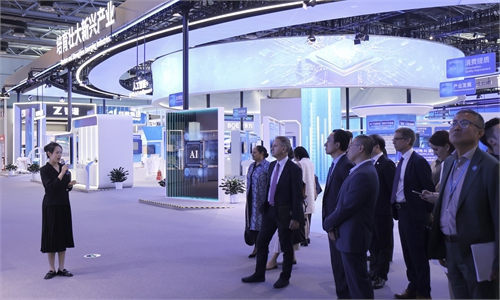
From Wednesday to Sunday, the 2025 China International Fair for Trade in Services (CIFTIS) is being held in Beijing. This year's fair highlights five key features - international participation, technology empowerment, authoritative releases, service branding, and interactive experiences - and aims to enhance opening-up, deepening cooperation and driving innovation, making positive contributions to building an open world economy, according to the Xinhua News Agency.
The animals are back. From a Siberian tiger attacking villagers in Northeast China's Heilongjiang Province, to a herd of migrating Asian elephants in Southwest China's Yunnan Province, venomous snake encounters in South China's Hainan Province, and wild boar rampages across the country – such once unheard-of incidents in China are becoming increasingly common.
A 1938 family photo helped uncover the true identity of wartime photographer Lei Ye, who documented the Panjiayu massacre committed by Japanese soldiers in 1941, and sacrificed his life in 1943 to save villagers. Decades later, his relatives confirmed his identity, ensuring his bravery and captured images of China's resistance continue to inspire remembrance and honor the courage of frontline photographers.
Decades after the end of WWII, how does Japan continue to propagate historical revisionism across various fields? Moreover, what role does the US play in the construction of this erroneous narrative mainly aimed at absolving Japan of its wartime actions?
China-Brazil relations have expanded beyond traditional economic and trade cooperation to encompass political and strategic dimensions, with broad space for collaboration in jointly safeguarding multilateralism and promoting a fairer international order, Celso Amorim, chief advisor to the President of Brazil, told the Global Times in an exclusive interview. Amorim, who visited Beijing to attend the commemorations of the 80th anniversary of victory in the Chinese People's War of Resistance against Japanese Aggression and the World Anti-Fascist War, noted that bilateral ties are now at their "best period in history," and he himself has been a witness to this rapid development.
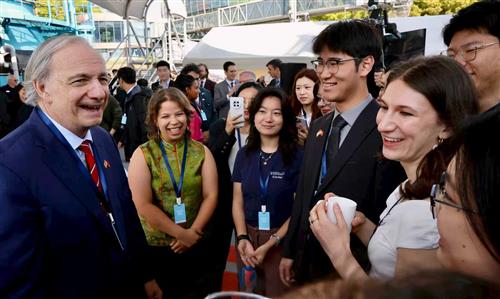
Ray Dalio, the founder of Bridgewater Associates, was named one of the "100 Most Influential People in the World" by Time magazine in 2012. Throughout his over 50-year investment career, he has experienced multiple debt cycles in various countries. After conducting an in-depth study of significant debt cycles over the past century, Dalio is convinced that he has grasped the keys to navigating these cycles and feels a responsibility to share the very valuable things he has discovered with the public. Following the publication of the Chinese version of his new book, "How Countries Go Broke: The Big Cycle," in July, Dalio recently gave an exclusive interview to the Global Times (GT), during which he elaborated on the concept of the "big debt cycle." In his view, the US is on the brink of significant conflict and dramatic change, particularly as the government's debt supply and demand situation continues to deteriorate like cancer.
Editor's Note: On September 3, 2025, at the Tian'anmen Rostrum in Beijing, a cohort of extraordinary senior citizens sat upright in their wheelchairs. Despite their age and physical constraints, they held their heads high, just as they had done when standing at attention before heading off to battle all those years ago.
On September 3, 2025, at the Tian'anmen Rostrum in Beijing, a cohort of extraordinary senior citizens sat upright in their wheelchairs. Despite their age and physical constraints, they held their heads high, just as they had done when standing at attention before heading off to battle all those years ago.
In this second installment of the series, we revisit a letter written in 1938 by a Communist Party of China (CPC) member to his younger brother, urging him to join the Chinese People's War of Resistance Against Japanese Aggression. This article uses the letter as the central thread to explore the family's wartime journey, showcasing how Communists mobilized loved ones with faith and affection - igniting resolve through the power of words.
On September 3, just before the ceremony marking the hard-won victory in the Chinese People's War of Resistance against Japanese Aggression and the World Anti-Fascist War began, Chinese President Xi Jinping, also general secretary of the Communist Party of China (CPC) Central Committee and chairman of the Central Military Commission, ascended the Tian'anmen Rostrum and shook hands with war veterans attending China's V-Day commemorations, expressing his profound respect for their sacrifices. Among them was white-haired Luo Jinghui, a 95-year-old veteran from Shenzhen, dressed in a black suit.
China held a massive military parade in central Beijing on Wednesday to mark the 80th anniversary of its victory in World War II, pledging the country's commitment to peaceful development in a world still fraught with turbulence and uncertainties.
The honor guards of the great country commanded awe. What kind of mission and responsibility do these Chinese soldiers, with an average age in their early 20s, bear? Before the grand gathering, the Global Times visited a training site of honor guards to witness firsthand how officers and soldiers trained to be a qualified honor guard.
Beneath the glowing lights of the Haihe River, Tianjin, in North China, welcomes a globally watched "Shanghai Cooperation Organization (SCO) Moment." On the evening of August 31, the Meijiang Convention and Exhibition Center in Tianjin was ablaze with lights. Its grand hall was adorned with a vibrant red carpet and a majestic array of flags from SCO member states, the SCO itself, and the United Nations.
As Qingdao deepens its role as a bridge between China and the global community, expats who have made the city their home through the SCO are witnessing the Shanghai Spirit come to life. Here, every negotiation and connection adds certainty to the international cooperation of the SCO, and writes a brighter future for the building of a community with a shared future for mankind across the mountains and the sea.
After 24 years of robust development, the Shanghai Cooperation Organization (SCO) has emerged as a significant player on the global stage, gaining increasing recognition and influence. The organization has just concluded its largest-ever annual summit in North China's Tianjin on Monday, where a slew of key documents, including a development strategy for the next decade, have been adopted. Founded in Shanghai in June 2001, the SCO has expanded from its original six founding members to a diverse family of 26 nations, comprising 10 full members, 2 observers, and 14 dialogue partners across Asia, Europe, and Africa. To discuss the SCO's growing importance and China's pivotal role within this platform, Global Times reporter Xie Wenting (GT) recently sat down with Muhammad Asif Noor (Noor), secretary general of the Pakistan-SCO Friendship Forum and executive director of the Institute of Peace and Diplomatic Studies.
In the ninth article of the "Scholars' Perspectives" column, Global Times talked to Professor Hu Dekun, Honorary President of Chinese Institute for History of the World War II and former Vice President of Wuhan University.
This is the 10th installment in the "Practitioners' Insights" series, where Global Times reporters interviewed Flying Tigers veterans Harry Moyer and Melvin McMullen, as well as Jeff Greene, chairman of the Sino-American Aviation Heritage Foundation, the "memory guardian" of this history. The Flying Tigers, officially known as the American Volunteer Group of the Chinese Air Force, fought against fascism alongside the Chinese people during the Chinese People's War of Resistance Against Japanese Aggression and the World Anti-Fascist War. This is not only a history of the mutual support between Chinese and American civilians in wartime, but also serves as a profound call for peace and an earnest hope for the young generation today.
Robert Koopman, former WTO chief economist, argued that protectionism is an ineffective tool for addressing US-China trade imbalances in a recent exclusive interview with the Global Times. The expert, who has long been studying US' tariff policies and the broader commercial relationship between China and the US, criticized the current US tariff strategy as a significant departure from historical trade practices, misdiagnosing economic challenges and risking reduced growth and innovation without policies to foster competition.
Shanghai, a city renowned for its openness and inclusiveness, hosted both the 1st and the 6th Shanghai Cooperation Organization #SCO summits in 2001 and 2006, respectively. Over the years, the city has not only witnessed the evolution of the SCO but has also grown alongside it.
The Shanghai Cooperation Organization (SCO) Summit 2025 will take place in Tianjin from August 31 to September 1. This year has been designated as the “SCO Year of Sustainable Development.” In this installment, we focus on the energy cooperation between China and SCO member states over the years, highlighting efforts to promote a green and sustainable future.
In light of this, the Global Times presents two investigative stories aimed at exposing and analyzing how Japan and some of its allies have continued to wage a cognitive war to invert truth, promote historical revisionism, and manipulate public opinion in Japan and beyond. In the first installment, we focus on the emergence and spread of historical revisionism in Japan from the end of WWII until the early 1990s, as well as Japan's internal and external forces that sought to absolve fascism and its lingering effects.
From once struggling to see a doctor, to receiving quality treatment close to home, Northwest China's #Xinjiang Uygur Autonomous Region has benefited enormously from the continuous deployment of medical professionals by partner provinces and municipalities. Through visits to some hospitals across Xinjiang, the Global Times documented how China's deepening team-based aid has strengthened medical talent training and discipline development, all while continually innovating to protect the health of Xinjiang residents.
For nearly five years, Chen Fengqiong, honorary president of the Chinese Women's Association in India, has done much the same thing on her phone almost every day: Scrolling through news apps and industry chat groups, all in search of one key phrase: "Chinese Mainland-India Direct Flights."
Economists and the semiconductor industry in the Philippines have expressed pubic alarm over the US' recent proposal to slap 100 percent tariffs on Philippine semiconductor exports to the US, warning of potentially devastating consequences. Speaking with Philippine scholars and industry observers, the Global Times found that the US tariff threat has sparked widespread concern over its impact on the sector. Representatives from industry associations, experts, and scholars have issued serious risk warnings, while expressing disappointment at the “backstabbing” by their “once-trusted ally” – the US. They worry that, faced with US government's tariff pressure, Philippine chip manufacturers with Japanese and South Korean investment, along with other firms, may relocate production lines to the US, dealing a “fundamental blow” to the Philippines' relevant industries by undermining core capacity, according to Philippine observers reached by the Global Times.
Festive cheers filled every corner of Southwest China's Xizang Autonomous Region in recent days. On Thursday morning, some 20,000 residents from all walks of life gathered at Potala Palace Square in Lhasa to mark the 60th anniversary of the founding of the autonomous region.
More than a dozen descendants of POWs from the WWII Lisbon Maru shipwreck gathered at the unveiling ceremony of a memorial being built for the Dongji fishermen in the Dongji Islands archipelago on May 20. The day's overcast skies, with the salty sea breeze caressing the rocky shores amid gentle sound of waves lapping against the coast, belied a tumultuous history.
Recently, factors including the tariff war, geopolitical differences, the resonance of domestic populism and clashes in diplomatic styles have pushed US-India relations to a low point. This rift is not accidental; it is an inevitable outcome of the fierce collision between the US “transaction-first” diplomatic logic and India's great-power ambition of “strategic autonomy.”
This year marks the 20th anniversary of the establishment of a representative office of the International Committee of the Red Cross (ICRC) in Beijing. Over the past two decades, China has increasingly become involved in the global humanitarian cause, transitioning from receiving aid to actively providing aid and support abroad. During this process, the ICRC has forged a close collaboration with China in promoting a more peaceful and humanitarian world order. How does the ICRC view China's participation in the global humanitarian cause? Why does China's role carry great significance in today's era? Global Times reporter Xie Wenting (GT) recently sat down with Balthasar Staehelin (Staehelin), the head of Regional Delegation for East Asia of the ICRC, to discuss these topics and more.
Previous research shows that some 400,000 women in Asia were forced to be "#comfortwomen" – sexual slaves for the Japanese army during #WorldWarII. Today, even as the world commemorates 80 years since fascism's defeat, there are still those who try to diminish, distort or deny what happened. The Global Times spoke with some young activists across Asia dedicated to helping survivors defend their rights, spread historical truth and demand a formal apology and compensation from the Japanese government, ensuring the “comfort women” system is remembered accurately and publicly.
Are India-US relations at a “crossroads?” Will the escalation of tensions between the two countries make it more difficult for Washington to enlist New Delhi in its plans to contain China? Regarding these questions, the Global Times (GT) recently conducted an exclusive interview with Indian scholar Sudheendra Kulkarni (Kulkarni), a close aide to former Indian prime minister Atal Bihari Vajpayee and the founder of the Forum for a New South Asia.
Seiya Matsuno, a researcher at Meiji Gakuin University's International Peace Research Institute, was born in 1974 and has been conducting self-funded research on historical topics including the Japanese military's chemical and biological warfare during its invasion of China for over 30 years. He has exposed, with irrefutable evidence, the Japanese government's long-term concealment of historical materials related to Unit 731, and has donated some of his findings to China to help complete comprehensive research on the crimes committed by the Japanese military during the war.
In March, Japanese Communist Party and House of Councillors member Taku Yamazoe publicly presented historical documents at the National Diet proving that Unit 731, part of the Japanese invading forces, conducted live human experiments in China, urging the Japanese government to face up to history and acknowledge the truth. This marked the first instance of a Japanese lawmaker exposing such documents in the Diet, denouncing the Japanese government's decades-long concealment of evidence of its wartime crimes. Why did Yamazoe raise these questions at the time as a Diet member? Behind the Japanese government's deliberate concealment of historical truth, is it out of fear of bearing war responsibility, or indulgence in historical revisionism? And where will this prolonged concealment lead Japan's future? With these questions in mind, Global Times (GT) reporters recently visited the House of Councillors building in Nagatacho, Tokyo for an exclusive interview with Yamazoe.
The Iida City Peace Memorial Museum in Nagano Prefecture, Japan, is located on the third floor of the Iida Community Center and permanently exhibits evidence related to Unit 731's human experiments in China. The center is open to the public free of charge every day, so it is often crowded with office workers and students. However, during random interviews, Global Times reporters found that not only had none of these Japanese citizens ever visited the memorial museum in the same building, but some were completely unaware of its existence.
In March 1945, Hideo Shimizu, not yet 15 years old then, was sent to Harbin as one of the last teenage recruits of the Japanese Imperial Army's Unit 731. Seventy-nine years later, the 94-year-old Shimizu returned to Harbin to repent and apologize in 2024. This was his first trip abroad and his first return to China since World War II. Yet, his public testimony about historical truths has subjected him to immense pressure. Numerous Japanese right-wingers have attacked him, calling him a "liar," "traitor," and "manipulated." His once-close daughters have severed ties with him. Shimizu told the Global Times that many Japanese politicians would prefer he stay silent. but "I don't regret apologizing! Because I've always believed it was something I had to do!"
This is the 9th installment in the "Practitioner's insights" series. We trace back to Yucun village in Anji, East China's Zhejiang Province - the birthplace of the concept of "lucid waters and lush mountains are invaluable assets," and speak with a former village official who witnessed the proposal and implementation of this vision, as well as a young entrepreneur who has chosen to settle and build her careers in Anji. Over the past two decades, Yucun has developed green economy driving coordinated revitalization in surrounding areas. This journey vividly demonstrates how the "two mountains" concept took root in a small mountain village and evolved into tangible productive forces across industries, delivering visible benefits to the people.