IN-DEPTH / IN-DEPTH
Scholars' Perspectives: 'Five imperatives' outlined at CEWC underscore maturity and resolve of China's economic governance philosophy: economist
Editor's Note:
The annual Central Economic Work Conference (CEWC) was held in Beijing from December 10 to 11. Xi Jinping, general secretary of the Communist Party of China (CPC) Central Committee, Chinese president and chairman of the Central Military Commission, delivered an important speech at the conference. The conference reviewed the country's economic work in 2025, analyzed the current economic situation, and arranged next year's economic work, providing guidance and direction for ensuring a good start to the 15th Five-Year Plan period (2026-30).
The meeting took into consideration both domestic and international situations and made a scientific assessment of China's development situation. Building on new practical experience, it summarized and outlined "five imperatives" as new understandings and insights, and identified key tasks for next year's economic work through "eight commitments." These range from continuously expanding domestic demand as a focus and enhancing innovation-driven development, to deepening reform and expanding opening-up; from promoting coordinated development and advancing the carbon emissions peaking and carbon neutrality goals, to prioritizing people's livelihoods and safeguarding the bottom line against systemic risks - covering all aspects of economic and social development.
Since the new era, the Central Economic Work Conference has consistently attached great importance to theoretical summary as a means of guiding economic development and practices. As circumstances evolve, the conference has continued to deepen its understanding of the underlying laws governing economic work. The book series Xi Jinping: The Governance of China include important speeches delivered by President Xi at the CEWC in 2014 (Volume II), 2017 (Volume III), 2021 (Volume IV), 2022 (Volume V), and 2024 (Volume V), which have provided guidance and direction for promoting China's high-quality economic development.
In the 18th installment of the special series "Decoding the Book of Xi Jinping: The Governance of China," the Global Times (GT), along with the People's Daily Overseas Edition, continues to invite Chinese and foreign scholars, translators of Xi's works, practitioners with firsthand experience, and international readers to discuss how under the scientific guidance of Xi Jinping Thought on Economy, the CEWC plays a key role in steering China's economic development and practices, and, with a focus on this year's conference, explore the key priorities for China's economic work in the opening year of the 15th Five-Year Plan period.
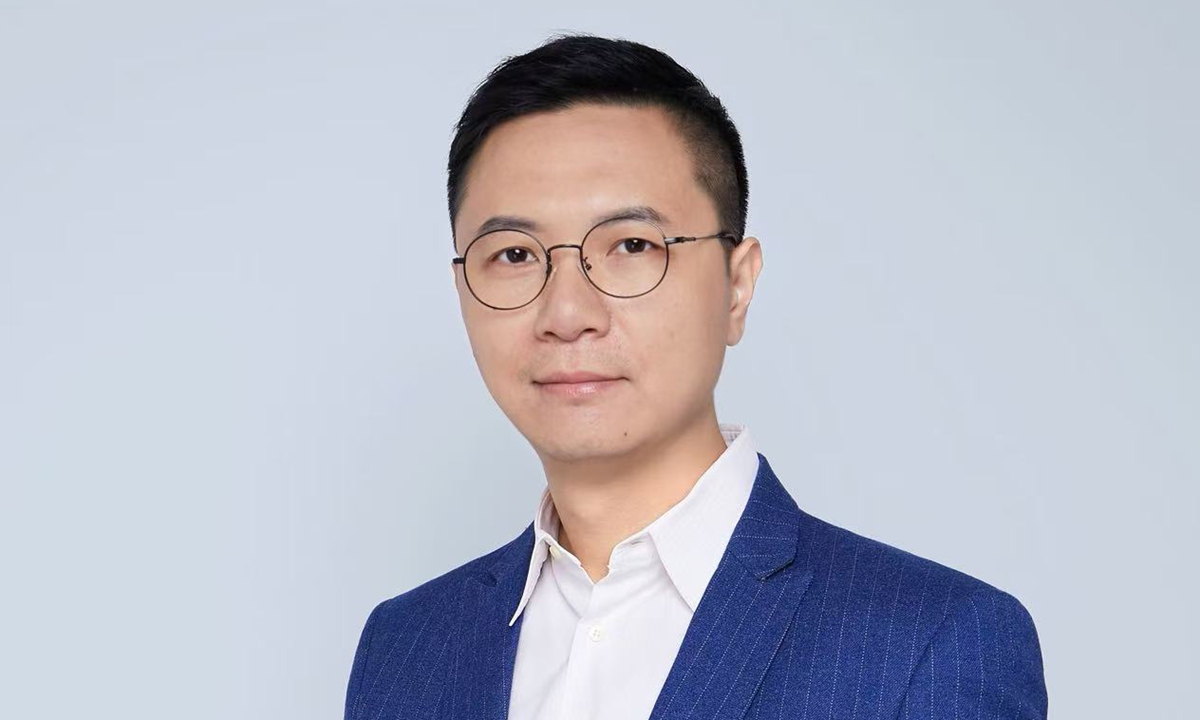
In the 16th article of the "Scholars' Perspectives" column, the Global Times spoke with Tian Xuan (Tian), president of the National Institute of Financial Research at Tsinghua University, about his understanding of the latest achievement of Xi Jinping Thought on Economy and his views on China's economic outlook during the first year of the 15th Five-Year Plan period.
GT: The just-concluded annual CEWC has put forward a series of new proposals on and offered new insights into economic work for 2026. President Xi put forward "five imperatives" for doing a good job in economic work under the new circumstance at the meeting, that is, it is imperative to fully tap the economic potential, continue to pursue both policy support and reform and innovation, ensure both market vitality and effective regulation, combine investment in physical assets with investment in human capital, and respond to external challenges by strengthening internal capabilities. What signals do these new proposals and insights send?
Tian: The "five imperatives" put forward at the conference are the new achievement of Xi Jinping Thought on Economy, which represents a systemic upgrading in China's economic governance logic, highlighting the systemic mindset in advancing high-quality development amid a complex external environment and reflecting a profound strategic intent behind the shift from prioritizing "stabilizing growth" to pursuing "high-quality development."
"Fully tapping economic potential" emphasizes the internal momentum of unleashing growth from existing resources, and through structural reforms activating dormant consumption and investment demand. "Policy support and reform and innovation" aims to address structural challenges, while "ensuring both market vitality and effective regulation" reflects the need to balance market vitality and economic security.
"Combining investment in physical assets with investment in human capital" prioritizes the strategic role of human capital and public welfare. "Responding to external challenges by strengthening internal capabilities" underlines the CPC leadership's firm determination to navigate external uncertainties with China's own certainties and sends a clear signal of pursuing progress while ensuring stability and enhancing development quality and efficacy.
These requirements collectively establish a policy framework balancing stable growth with risk prevention, and advancing reforms while planning for long-term development, demonstrating the maturity and resolve of governance philosophy. Particularly amid accelerating global changes, the emphasis on nurturing endogenous drivers and enhancing institutional efficiency not only strengthens economic resilience but also consolidates the foundation for realizing Chinese modernization.
GT: The book Xi Jinping: The Governance of China includes President Xi's speeches at the CEWC in previous years. "Pursuing progress while ensuring stability" is a general principle of the CEWC since the 18th CPC National Congress. This year's meeting stressed that "China will adhere to the general principle of pursuing progress while ensuring stability, better coordinate domestic economic work with struggles in the international economic and trade arena, and ensure both development and security." How will this guideline shed light on the economic work in the first year of the 15th Five-Year Plan period (2026-30)?
Tian: This guideline proposed by President Xi provides a scientific methodology for China's economic work in 2026. Stability serves as the prerequisite and foundation for economic work. Faced with a complex environment in the first year of the 15th Five-Year Plan period, we must grasp the essence of stability by stabilizing macro policies to maintain reasonable economic operations, ensure stability in critical sectors to create conditions for structural adjustments and high-quality development. We must maintain continuity and stability in policy formulation, implement targeted measures to prevent risks, and lay a robust foundation for the 15th Five-Year Plan's economic development.
Progress defines the direction and goals of economic work. In 2026, we must advance on the basis of stability and focus on high-quality development through proactive measures. We must deepen reforms to eliminate barriers to invigorate market vitality, increase investment in science and technology to upgrade industrial structures, expand domestic demand to smooth domestic circulation, and achieve breakthroughs in key areas to enhance economic resilience and momentum.
Better coordinating domestic economic work with struggles in the international economic and trade arena is an inevitable choice. Based on domestic circulation, efforts are needed to leverage market advantages and prioritize demand-driven supply to enhance industrial chain competitiveness in the first year of the 15th Five-Year Plan period. In the meantime, the country should actively engage in international cooperation, address trade frictions, and promote trade and investment liberalization. By navigating both domestic and international landscapes and utilizing both markets and resources, we can accelerate the building of a new development paradigm to expand economic horizons.
Enhancing fighting spirit and strengthening risk response capabilities. International economic and trade frictions are defining features of the era, and we must cultivate a combative mindset and improve risk mitigation capabilities in next year's economic work. We should maintain strategic resolve to safeguard national interests, uphold principles in negotiations, and proactively formulate counterstrategies. Moreover, efforts are needed to strengthen scenario analysis, diversify international markets, reduce dependencies, navigate external uncertainties to foster a favorable external environment for economic work, and ensure steady progress in the first year of the 15th Five-Year Plan period.
Under the guidance of Xi Jinping Thought on Economy, we must better coordinate domestic economic work with struggles in the international economic and trade arena, and better coordinate both development and security. Only by mastering the dialectical relationship between "stability" and "progress" and balancing domestic and global priorities can we seize opportunities, tackle challenges and ensure a strong start for the 15th Five-Year Plan period.
GT: The CEWC has charted the course for economic work in the coming year, with one of the key priorities being "focusing on promoting high-quality development." High-quality development is the primary task for building a modern socialist country in all respects, and it is also an important concept with originality in Xi Jinping Thought on Economy. How do you understand that promoting high-quality development must be the overriding theme for the 15th Five-Year Plan period? And what is the practical significance of this judgment?
Tian: Taking high-quality development as the focus of economic and social development during the 15th Five-Year Plan period is a major strategic judgment made by the CPC Central Committee with Comrade Xi Jinping at its core based on changes in the domestic and international development environment and the characteristics of China's development stage. From a practical perspective, this decision stems from a profound grasp of the laws of China's economic development, responds to the people's aspirations for a better life in the new era, and is also an inevitable choice to address the complex external environment and consolidate the country's comprehensive strength.
The focus of high-quality development will help guide all regions and departments to emphasize development quality, avoid blindly and one-sidedly pursuing speed, and provide sustainable impetus for modernization. At the same time, high-quality development requires building a high-standard socialist market economy and a modern industrial system.
In this process, high-quality development will push the economic system to optimize, promoting China's economy toward a more efficient and sustainable direction. High-quality development is not only an economic proposition but also a strategic choice concerning the country's long-term security and national rejuvenation. It requires breaking path dependence and continuously advancing institutional innovation, green transformation, and digital empowerment, shifting the growth impetus from the accumulation of "quantity" to the leap of "quality."
GT: At the 2025 CEWC, President Xi made new major strategic arrangements of enhancing innovation-driven development to accelerate the cultivation of new growth drivers. In the article "Build China into a Sci-Tech Powerhouse" included in Volume V of Xi Jinping: The Governance of China, President Xi stressed "We should make solid efforts to promote the deep integration of sci-tech innovation and industrial innovation, and boost new quality productive forces." What signal does the strategic task send? What are your expectations regarding the development trends of China's emerging and future industries over the next five years, as well as their role in the global innovation landscape?
Tian: The fourth plenary session of the 20th CPC Central Committee proposed to promote deep integration of sci-tech innovation and industrial innovation, which sent a strong signal that we must promote the growth centered on the real economy, powered by innovation, and directed at high-quality supply. It is also a major strategic decision made by the CPC Central Committee with Comrade Xi Jinping at its core, which underscores the importance of sci-tech modernization and innovation in pursuing Chinese modernization after accessing the global and domestic development trends as well as the dynamics of sci-tech and industrial progress.
In the next five years, China's emerging and future industries will play an increasingly leading role in the global innovation landscape. Thanks to the advantages of an ultra-large market and complete industrial system, frontier fields such as artificial intelligence, quantum information, advanced manufacturing, and biotechnology will accelerate breakthroughs, forming a number of technical standards and industrial chains with global influence.
The development of new quality productive forces will no longer be limited to technological catch-up but will move toward systematic and ecological independent innovation, driving comprehensive digital transformation. Meanwhile, the deep integration of the green economy and digital intelligence is giving rise to new production methods and consumption models. Scientific and technological innovation will be deeply integrated into key areas such as education, healthcare, transportation, and energy, promoting the equalization of public services and a leap in industrial efficiency.
China is expected to achieve a leap from "running alongside" to "leading the race" in the reconstruction of the global value chain. In this process, the open and collaborative innovation ecosystem will be improved, and technological cooperation across fields, regions, and borders will deepen. China will not only become an important application field for new global technologies and products but also a source of original ideas and high-end achievements, providing the world with China's solutions for sustainable development and intelligent transformation.
China will accelerate the reshaping of its industrial competitive advantages by striving for breakthroughs in core technologies, promoting the deep integration of industrial chains and innovation chains, increasing the intensity of digital technology empowerment for traditional industries, facilitating the high-end, intelligent, and green transformation of manufacturing, and improving the orientation of industrial policies to guide resources to the real economy and enhance the competitiveness of industrial clusters.
At the same time, this strategy emphasizes coordinating development and security, enhancing the resilience and security of industrial and supply chains, and strengthening the ability to respond to international risks and challenges. And, by improving the national innovation system, promoting the transformation and application of scientific and technological achievements, accelerating the cultivation of emerging industry ecosystems, a new pattern of real economy development led by innovation will be formed.
GT: The 2025 CEWC stressed that "the fundamentals supporting China's long-term growth remain unchanged," and noted the need to "bolster confidence, harness advantages and meet challenges head-on to consolidate and build on the steady economic momentum." What is your view on the prospects of China's economic development in 2026, and where does the confidence stem from?
Tian: The important speech made by President Xi at the 2025 CEWC serves as an epistemological framework for "how to assess" the current economic situation and a methodological framework for "how to carry out" economic work, thereby providing fundamental guidance and an action guide for economic efforts in the coming year and beyond. Practice proves that it is crucial for navigating China's economic course toward steady and sustained growth based on the scientific guidance of Xi Jinping Thought on Economy, and continuously enhancing our comprehension and application of economic laws.
China's economy is expected to maintain the steady progress with improved quality and efficiency in 2026 and continue to play the role of a "stabilizer" and "growth engine" in the global economic landscape. The country's economic growth rate is projected to remain within a reasonable range, with the core driving force shifting from traditional factor-driven growth to innovation-driven growth and total factor productivity improvement. The industrial structure will be continuously optimized. The share of new productive forces such as the digital economy, the green economy and high-end manufacturing will further increase, the fundamental role of consumption in driving economic growth will be more prominent, and the pattern of coordinated urban-rural and regional development will be gradually formed, laying a solid foundation for the long-term sustainable growth of the economy.
The confidence stems from the resilience of the economy, supported by various advantages. First, China's advantage of an ultra-large market continues to unleash its potential, with domestic demand going through profound transformation from quantitative growth to qualitative progress. On the investment front, the manufacturing sector and infrastructure have formed a "dual-wheel drive". Investment in high-tech manufacturing has maintained strong momentum, while export structure continues to improve.
Second, the complete industrial system and the strong resilience of industrial chains have fostered a foundation for self-reliance. They provide effective supply guarantees in key links and areas, enabling the economy to maintain stable operation even in the face of external shocks. Moreover, the accelerated cultivation of new quality productive forces is unlocking greater momentum for scientific and technological innovation.
Last but not least, along with the advancement in market reforms, the market-oriented allocation of resources continues to improve, business environment is further optimized, and the vitality and creativity of market entities continues to be stimulated. High-standard opening-up is being advanced in greater depth. The high-quality joint construction of the Belt and Road Initiative, the expansion and upgrading of pilot free trade zones, and the prominent role of open platforms such as the China International Import Expo have consolidated China's position in the global industrial and supply chains, and both inbound and outbound foreign investment have posted growth, injecting impetus of an open world economy into China's development.
The annual Central Economic Work Conference (CEWC) was held in Beijing from December 10 to 11. Xi Jinping, general secretary of the Communist Party of China (CPC) Central Committee, Chinese president and chairman of the Central Military Commission, delivered an important speech at the conference. The conference reviewed the country's economic work in 2025, analyzed the current economic situation, and arranged next year's economic work, providing guidance and direction for ensuring a good start to the 15th Five-Year Plan period (2026-30).
The meeting took into consideration both domestic and international situations and made a scientific assessment of China's development situation. Building on new practical experience, it summarized and outlined "five imperatives" as new understandings and insights, and identified key tasks for next year's economic work through "eight commitments." These range from continuously expanding domestic demand as a focus and enhancing innovation-driven development, to deepening reform and expanding opening-up; from promoting coordinated development and advancing the carbon emissions peaking and carbon neutrality goals, to prioritizing people's livelihoods and safeguarding the bottom line against systemic risks - covering all aspects of economic and social development.
Since the new era, the Central Economic Work Conference has consistently attached great importance to theoretical summary as a means of guiding economic development and practices. As circumstances evolve, the conference has continued to deepen its understanding of the underlying laws governing economic work. The book series Xi Jinping: The Governance of China include important speeches delivered by President Xi at the CEWC in 2014 (Volume II), 2017 (Volume III), 2021 (Volume IV), 2022 (Volume V), and 2024 (Volume V), which have provided guidance and direction for promoting China's high-quality economic development.
In the 18th installment of the special series "Decoding the Book of Xi Jinping: The Governance of China," the Global Times (GT), along with the People's Daily Overseas Edition, continues to invite Chinese and foreign scholars, translators of Xi's works, practitioners with firsthand experience, and international readers to discuss how under the scientific guidance of Xi Jinping Thought on Economy, the CEWC plays a key role in steering China's economic development and practices, and, with a focus on this year's conference, explore the key priorities for China's economic work in the opening year of the 15th Five-Year Plan period.
In the 16th article of the "Scholars' Perspectives" column, the Global Times spoke with Tian Xuan (Tian), president of the National Institute of Financial Research at Tsinghua University, about his understanding of the latest achievement of Xi Jinping Thought on Economy and his views on China's economic outlook during the first year of the 15th Five-Year Plan period.
Tian Xuan Photo: Courtesy of Tian
GT: The just-concluded annual CEWC has put forward a series of new proposals on and offered new insights into economic work for 2026. President Xi put forward "five imperatives" for doing a good job in economic work under the new circumstance at the meeting, that is, it is imperative to fully tap the economic potential, continue to pursue both policy support and reform and innovation, ensure both market vitality and effective regulation, combine investment in physical assets with investment in human capital, and respond to external challenges by strengthening internal capabilities. What signals do these new proposals and insights send?
Tian: The "five imperatives" put forward at the conference are the new achievement of Xi Jinping Thought on Economy, which represents a systemic upgrading in China's economic governance logic, highlighting the systemic mindset in advancing high-quality development amid a complex external environment and reflecting a profound strategic intent behind the shift from prioritizing "stabilizing growth" to pursuing "high-quality development."
"Fully tapping economic potential" emphasizes the internal momentum of unleashing growth from existing resources, and through structural reforms activating dormant consumption and investment demand. "Policy support and reform and innovation" aims to address structural challenges, while "ensuring both market vitality and effective regulation" reflects the need to balance market vitality and economic security.
"Combining investment in physical assets with investment in human capital" prioritizes the strategic role of human capital and public welfare. "Responding to external challenges by strengthening internal capabilities" underlines the CPC leadership's firm determination to navigate external uncertainties with China's own certainties and sends a clear signal of pursuing progress while ensuring stability and enhancing development quality and efficacy.
These requirements collectively establish a policy framework balancing stable growth with risk prevention, and advancing reforms while planning for long-term development, demonstrating the maturity and resolve of governance philosophy. Particularly amid accelerating global changes, the emphasis on nurturing endogenous drivers and enhancing institutional efficiency not only strengthens economic resilience but also consolidates the foundation for realizing Chinese modernization.
GT: The book Xi Jinping: The Governance of China includes President Xi's speeches at the CEWC in previous years. "Pursuing progress while ensuring stability" is a general principle of the CEWC since the 18th CPC National Congress. This year's meeting stressed that "China will adhere to the general principle of pursuing progress while ensuring stability, better coordinate domestic economic work with struggles in the international economic and trade arena, and ensure both development and security." How will this guideline shed light on the economic work in the first year of the 15th Five-Year Plan period (2026-30)?
Tian: This guideline proposed by President Xi provides a scientific methodology for China's economic work in 2026. Stability serves as the prerequisite and foundation for economic work. Faced with a complex environment in the first year of the 15th Five-Year Plan period, we must grasp the essence of stability by stabilizing macro policies to maintain reasonable economic operations, ensure stability in critical sectors to create conditions for structural adjustments and high-quality development. We must maintain continuity and stability in policy formulation, implement targeted measures to prevent risks, and lay a robust foundation for the 15th Five-Year Plan's economic development.
Progress defines the direction and goals of economic work. In 2026, we must advance on the basis of stability and focus on high-quality development through proactive measures. We must deepen reforms to eliminate barriers to invigorate market vitality, increase investment in science and technology to upgrade industrial structures, expand domestic demand to smooth domestic circulation, and achieve breakthroughs in key areas to enhance economic resilience and momentum.
Better coordinating domestic economic work with struggles in the international economic and trade arena is an inevitable choice. Based on domestic circulation, efforts are needed to leverage market advantages and prioritize demand-driven supply to enhance industrial chain competitiveness in the first year of the 15th Five-Year Plan period. In the meantime, the country should actively engage in international cooperation, address trade frictions, and promote trade and investment liberalization. By navigating both domestic and international landscapes and utilizing both markets and resources, we can accelerate the building of a new development paradigm to expand economic horizons.
Enhancing fighting spirit and strengthening risk response capabilities. International economic and trade frictions are defining features of the era, and we must cultivate a combative mindset and improve risk mitigation capabilities in next year's economic work. We should maintain strategic resolve to safeguard national interests, uphold principles in negotiations, and proactively formulate counterstrategies. Moreover, efforts are needed to strengthen scenario analysis, diversify international markets, reduce dependencies, navigate external uncertainties to foster a favorable external environment for economic work, and ensure steady progress in the first year of the 15th Five-Year Plan period.
Under the guidance of Xi Jinping Thought on Economy, we must better coordinate domestic economic work with struggles in the international economic and trade arena, and better coordinate both development and security. Only by mastering the dialectical relationship between "stability" and "progress" and balancing domestic and global priorities can we seize opportunities, tackle challenges and ensure a strong start for the 15th Five-Year Plan period.
GT: The CEWC has charted the course for economic work in the coming year, with one of the key priorities being "focusing on promoting high-quality development." High-quality development is the primary task for building a modern socialist country in all respects, and it is also an important concept with originality in Xi Jinping Thought on Economy. How do you understand that promoting high-quality development must be the overriding theme for the 15th Five-Year Plan period? And what is the practical significance of this judgment?
Tian: Taking high-quality development as the focus of economic and social development during the 15th Five-Year Plan period is a major strategic judgment made by the CPC Central Committee with Comrade Xi Jinping at its core based on changes in the domestic and international development environment and the characteristics of China's development stage. From a practical perspective, this decision stems from a profound grasp of the laws of China's economic development, responds to the people's aspirations for a better life in the new era, and is also an inevitable choice to address the complex external environment and consolidate the country's comprehensive strength.
The focus of high-quality development will help guide all regions and departments to emphasize development quality, avoid blindly and one-sidedly pursuing speed, and provide sustainable impetus for modernization. At the same time, high-quality development requires building a high-standard socialist market economy and a modern industrial system.
In this process, high-quality development will push the economic system to optimize, promoting China's economy toward a more efficient and sustainable direction. High-quality development is not only an economic proposition but also a strategic choice concerning the country's long-term security and national rejuvenation. It requires breaking path dependence and continuously advancing institutional innovation, green transformation, and digital empowerment, shifting the growth impetus from the accumulation of "quantity" to the leap of "quality."
GT: At the 2025 CEWC, President Xi made new major strategic arrangements of enhancing innovation-driven development to accelerate the cultivation of new growth drivers. In the article "Build China into a Sci-Tech Powerhouse" included in Volume V of Xi Jinping: The Governance of China, President Xi stressed "We should make solid efforts to promote the deep integration of sci-tech innovation and industrial innovation, and boost new quality productive forces." What signal does the strategic task send? What are your expectations regarding the development trends of China's emerging and future industries over the next five years, as well as their role in the global innovation landscape?
Tian: The fourth plenary session of the 20th CPC Central Committee proposed to promote deep integration of sci-tech innovation and industrial innovation, which sent a strong signal that we must promote the growth centered on the real economy, powered by innovation, and directed at high-quality supply. It is also a major strategic decision made by the CPC Central Committee with Comrade Xi Jinping at its core, which underscores the importance of sci-tech modernization and innovation in pursuing Chinese modernization after accessing the global and domestic development trends as well as the dynamics of sci-tech and industrial progress.
In the next five years, China's emerging and future industries will play an increasingly leading role in the global innovation landscape. Thanks to the advantages of an ultra-large market and complete industrial system, frontier fields such as artificial intelligence, quantum information, advanced manufacturing, and biotechnology will accelerate breakthroughs, forming a number of technical standards and industrial chains with global influence.
The development of new quality productive forces will no longer be limited to technological catch-up but will move toward systematic and ecological independent innovation, driving comprehensive digital transformation. Meanwhile, the deep integration of the green economy and digital intelligence is giving rise to new production methods and consumption models. Scientific and technological innovation will be deeply integrated into key areas such as education, healthcare, transportation, and energy, promoting the equalization of public services and a leap in industrial efficiency.
China is expected to achieve a leap from "running alongside" to "leading the race" in the reconstruction of the global value chain. In this process, the open and collaborative innovation ecosystem will be improved, and technological cooperation across fields, regions, and borders will deepen. China will not only become an important application field for new global technologies and products but also a source of original ideas and high-end achievements, providing the world with China's solutions for sustainable development and intelligent transformation.
China will accelerate the reshaping of its industrial competitive advantages by striving for breakthroughs in core technologies, promoting the deep integration of industrial chains and innovation chains, increasing the intensity of digital technology empowerment for traditional industries, facilitating the high-end, intelligent, and green transformation of manufacturing, and improving the orientation of industrial policies to guide resources to the real economy and enhance the competitiveness of industrial clusters.
At the same time, this strategy emphasizes coordinating development and security, enhancing the resilience and security of industrial and supply chains, and strengthening the ability to respond to international risks and challenges. And, by improving the national innovation system, promoting the transformation and application of scientific and technological achievements, accelerating the cultivation of emerging industry ecosystems, a new pattern of real economy development led by innovation will be formed.
GT: The 2025 CEWC stressed that "the fundamentals supporting China's long-term growth remain unchanged," and noted the need to "bolster confidence, harness advantages and meet challenges head-on to consolidate and build on the steady economic momentum." What is your view on the prospects of China's economic development in 2026, and where does the confidence stem from?
Tian: The important speech made by President Xi at the 2025 CEWC serves as an epistemological framework for "how to assess" the current economic situation and a methodological framework for "how to carry out" economic work, thereby providing fundamental guidance and an action guide for economic efforts in the coming year and beyond. Practice proves that it is crucial for navigating China's economic course toward steady and sustained growth based on the scientific guidance of Xi Jinping Thought on Economy, and continuously enhancing our comprehension and application of economic laws.
China's economy is expected to maintain the steady progress with improved quality and efficiency in 2026 and continue to play the role of a "stabilizer" and "growth engine" in the global economic landscape. The country's economic growth rate is projected to remain within a reasonable range, with the core driving force shifting from traditional factor-driven growth to innovation-driven growth and total factor productivity improvement. The industrial structure will be continuously optimized. The share of new productive forces such as the digital economy, the green economy and high-end manufacturing will further increase, the fundamental role of consumption in driving economic growth will be more prominent, and the pattern of coordinated urban-rural and regional development will be gradually formed, laying a solid foundation for the long-term sustainable growth of the economy.
The confidence stems from the resilience of the economy, supported by various advantages. First, China's advantage of an ultra-large market continues to unleash its potential, with domestic demand going through profound transformation from quantitative growth to qualitative progress. On the investment front, the manufacturing sector and infrastructure have formed a "dual-wheel drive". Investment in high-tech manufacturing has maintained strong momentum, while export structure continues to improve.
Second, the complete industrial system and the strong resilience of industrial chains have fostered a foundation for self-reliance. They provide effective supply guarantees in key links and areas, enabling the economy to maintain stable operation even in the face of external shocks. Moreover, the accelerated cultivation of new quality productive forces is unlocking greater momentum for scientific and technological innovation.
Last but not least, along with the advancement in market reforms, the market-oriented allocation of resources continues to improve, business environment is further optimized, and the vitality and creativity of market entities continues to be stimulated. High-standard opening-up is being advanced in greater depth. The high-quality joint construction of the Belt and Road Initiative, the expansion and upgrading of pilot free trade zones, and the prominent role of open platforms such as the China International Import Expo have consolidated China's position in the global industrial and supply chains, and both inbound and outbound foreign investment have posted growth, injecting impetus of an open world economy into China's development.
RELATED ARTICLES