IN-DEPTH / IN-DEPTH
Scholars’ Perspectives: Long-termism explains why China can create ‘two miracles’
By Zhang Han and Published: Nov 04, 2025 12:34 AM

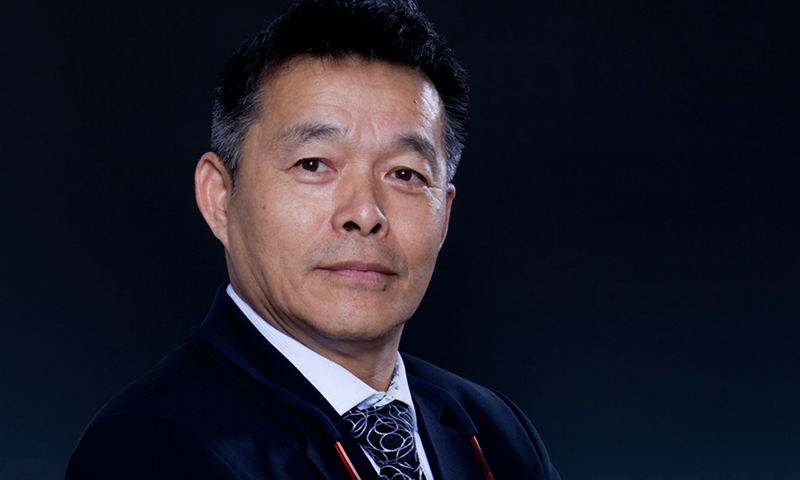
Hu Angang, Honorary President of the Institute of Contemporary China Studies at Tsinghua University
Editor's Note:
The Fourth Plenary Session of the 20th Central Committee of the Communist Party of China (CPC), which has drawn global attention, deliberated over and adopted the Recommendations of the Central Committee of the CPC for Formulating the 15th Five-Year Plan for National Economic and Social Development (hereinafter referred to as "the Recommendations"). The fourth plenary session stated that "we must seize the historical initiative to overcome difficulties, combat risks, and confront challenges, focus on managing our own affairs, and write yet another chapter on the miracles of rapid economic growth and long-term social stability, opening up new horizons for Chinese modernization."
The "two miracles" have been created by the Party leading the Chinese people of all ethnic groups in unity and perseverance — following a good blueprint through to the end and advancing one five-year plan after another. The spirit of the fourth plenary session and the Recommendations have outlined a grand blueprint for writing yet another chapter on the "two miracles" in the new era and on the new journey.
In the article "Uphold Socialism with Chinese Characteristics and Strive in Unity to Build a Modern Socialist Country in All Respects" in Volume V of the book series Xi Jinping: The Governance of China, President Xi Jinping pointed out that "we have advanced reform, opening up, and socialist modernization and have written a new chapter on the miracles of fast economic growth and long-term social stability. China now has more solid material foundations and stronger institutional underpinnings for pursuing development. The rejuvenation of the Chinese nation is now on an irreversible historic course."
Pressing forward to continue writing a new chapter on the "two miracles" is a grand declaration of the Party's resolve to seize the historical initiative, advance and open up new horizons for Chinese modernization.
In the 15th installment of the special series "Decoding the Book of Xi Jinping: The Governance of China," the Global Times (GT), along with the People's Daily Overseas Edition, continues to invite Chinese and foreign scholars, translators of Xi's works, practitioners with firsthand experience and international readers to discuss the theme of "focusing on managing our own affairs, writing yet another chapter on the miracles of rapid economic growth and long-term social stability, and opening up new horizons for Chinese modernization," and deeply explore the important practical significance and value of this concept.
In the 13th article of the "Scholars' Perspectives" column, Global Times talked to Professor Hu Angang (Hu), Honorary President of the Institute of Contemporary China Studies at Tsinghua University.
GT: The communiqué of the Fourth Plenary Session of the 20th CPC Central Committee pointed out that during the period of the 15th Five-Year Plan, China's development environment will undergo profound and complex changes, as the country will face both strategic opportunities and risks and challenges in development, along with increasing uncertainties and unforeseen factors over the next five years. The communiqué also emphasized the need to "focus on managing our own affairs, and write yet another chapter on the miracles of rapid economic growth and long-term social stability, opening up new horizons for Chinese modernization." How should we understand the coexistence of strategic opportunities and risks and challenges, as well as increasing uncertainties and unforeseen factors in the coming five years? Against this backdrop, what is the source of confidence and strength behind China's resolve to "focus on managing our own affairs"?
Hu: Looking across today's world, we are witnessing accelerating changes unseen in a century. The global economic and political landscape has entered a new period of turbulence and adjustment. Geopolitical conflicts are flaring up one after another, while unilateralism and protectionism are on the rise. Major power relations and global industrial chains are undergoing profound restructuring.
The complexity and uncertainty of the international situation have reached an unprecedented level — with factors such as war, energy, technology, finance, and security deeply intertwined. The system of international rules is being rebalanced, and the global order is at a critical crossroads of reconstruction. Against this backdrop, China's development environment has become increasingly severe and complex, with "opportunities" and "challenges," "certainty" and "uncertainty" interwoven and overlapping.
At the same time, we should also recognize that crises and opportunities always coexist within the same process.
First, the global economic landscape is undergoing accelerated restructuring. Calculated by purchasing power parity in 2021 international dollars, the top 10 economies (GDP) in the world in 2024 formed a new pattern of a 5-5 split between Global South and Global North countries, accounting for 35.9 percent and 25.4 percent of the world's total, respectively. Emerging economies including China have become an important engine for global economic growth.
Second, the global manufacturing landscape is accelerating its restructuring. The strength and role of developing countries in global manufacturing have grown significantly.
Third, disruptive technologies are reshaping the global innovation landscape. Technologies driving the Fourth Industrial Revolution are mainly concentrated in China and the US. China has already taken a leading position or kept pace with others in key fields such as the digital economy, artificial intelligence (AI), and green energy, with its development advancing at an exponential rate.
Fourth, the global trade landscape is being rapidly reshaped, yet economic globalization remains an irreversible trend. China has become the world's largest trading nation. Despite the US turn toward trade protectionism, China remains its second-largest source of imports, underscoring that the momentum of 21st-century economic globalization is irreversible.
Fifth, global climate change is accelerating the green energy revolution. China's share of global renewable energy exceeded 30 percent, which is profoundly reshaping the global energy landscape and making significant contributions to worldwide climate governance.
In summary, the next five years will be both a period of turbulence amid profound adjustments in the global landscape and a critical phase for China to build momentum for high-quality development and deepen reform. Only by maintaining firm confidence, seizing the overarching trends, and pursuing steady progress can China secure certainty amid uncertainty and steer its economy steadily and sustainably through turbulent waters.
GT: Foreign media are paying close attention to China's five-year plans. Some international observers have commented that "Western policy works on election cycles, but Chinese policy making operates on planning cycles." Compared with the "frequent changes" in the policies of certain countries, China's policy planning is often described as "long-term and stable." How do you view this assessment?
Hu: First, the Communist Party of China (CPC) is a long-term ruling party with a strategic and long-range approach to Chinese modernization. It embodies a clear sense of long-termism, particularly reflected in the continuity from the "First Five-Year Plan" to the current "14th Five-Year Plan." As noted in the Recommendations of the Central Committee of the Communist Party of China for Formulating the 15th Five-Year Plan for National Economic and Social Development: "Socialist modernization can only be realized through a historical process of gradual and ongoing development. It requires the unremitting hard work of one generation after another."
At the 19th CPC National Congress, the Party, standing at a new and higher historical starting point, made a strategic plan to advance the realization of the second Centenary Goal in two stages: basically realize socialist modernization from 2020 through 2035, and build China into a great modern socialist country that is prosperous, strong, democratic, culturally advanced, harmonious, and beautiful from 2035 through the middle of this century. This approach differs fundamentally from the two-party or multi-party systems in Western countries, which are prone to short-termism and opportunism, often described as "flip-flopping" with changes in election results.
This also explains why, in the more than 70 years since the founding of the People's Republic of China, the country has achieved leapfrog development. As General Secretary Xi Jinping has stated: "In just a few decades, China has completed a process of industrialization that took developed countries centuries to achieve, achieving the dual miracles of rapid economic growth and long-term social stability."
GT: Recommendations of the Central Committee of the CPC for Formulating the 15th Five-Year Plan for National Economic and Social Development put "building a modernized industrial system and reinforcing the foundations of the real economy" at the first of strategic tasks. Why was such a decision made? How to understand what was stated in the communiqué of the Fourth Plenary Session of the 20th CPC Central Committee — "To this end [of economic development], we should keep our focus on the real economy"?
Hu: Some Western countries, after reaching a certain stage of economic development, had showed a tendency of "shifting from the real economy to the virtual economy." They moved from manufacturing to finance, which weakened the foundation of the real economy and the risk of industrial hollowing-out has quietly accumulated. Although they possess scientific and technological innovation capabilities, it is difficult for their innovation achievements to be industrialized domestically. This development trend often brings short-term financial prosperity, but it cannot meet the long-term needs of employment, industrial upgrade and national security.
In contrast, China adheres to the development logic of "keeping our focus on the real economy." The real economy is not only the "ballast stone" of the national economy, but also a strategic support for safeguarding industrial security, scientific and technological security and energy security.
For China, maintaining a reasonable proportion of manufacturing, promoting the transformation and upgrading of traditional industries, and accelerating the development of high-end, intelligent and green manufacturing are the only ways to resist risks and enhance resilience.
In the next five years and beyond, only by continuing to consolidate the real economy and improve the quality and efficiency of manufacturing can China truly fortify the leap from "quantitative expansion" to "qualitative leap," and move steadily toward the goal of basically achieving socialist modernization by 2035.
GT: The communiqué of the Fourth Plenary Session of the 20th CPC Central Committee raised seven major objectives for the 15th Five-Year Plan period, which included substantial improvements in scientific and technological self-reliance and strength. The volume V of Xi Jinping: The Governance of China compiled President Xi Jinping's report to the 20th National Congress of the CPC, which listed "joining the ranks of the world's most innovative countries, with great strength and self-reliance in science and technology" as one of China's overall development objectives for the year 2035.
Against the backdrop of escalating geopolitical tensions and growing uncertainties, what is the practical significance of including "scientific and technological self-reliance and strength" as one of the major objectives for economic and social development during the 15th Five-Year Plan period? What breakthroughs should be made during this period to move toward this direction?
Hu: Self-reliance and self-strengthening in science and technology provides strategic support for Chinese modernization. During the 15th Five-Year Plan period, China will continue to take the National Medium- and Long-Term Plan for Scientific and Technological Development (2021-2035) as an important strategic guide. China will focus on the frontiers of world science and technology, the main battlefield of the economy, the major needs of the country, and the life and health of the people.
China will further implement the strategy of invigorating the country through education, the strategy of strengthening the country through talents, and the strategy of innovation-driven development, as well as improve the national innovation system, accelerate the building of a world power in science and technology, and significantly enhance the capacity for scientific and technological self-reliance and strength.
First is to continue to increase R&D investment. During the 15th Five-Year Plan period, we will strive to raise the proportion of R&D expenditure in GDP from 2.68 percent in 2024 to over 3.00 percent by 2030.
Second, make forward-looking arrangements for major scientific and technological projects. During the 15th Five-Year Plan period, we will give full play to the new advantages of the nationwide system, make forward-looking arrangements for a number of major strategic scientific and technological projects related to the overall national development and key field projects in the international scientific frontiers. We will identify key research tasks, consolidate the foundation of basic research, and accelerate the research on key core technologies.
We will speed up the construction of a number of national innovation centers, R&D bases and world-class national key laboratories, form a large number of world-class innovative enterprises, and build a new pattern of collaborative innovation among various innovation entities.
Third, give full play to the subjectivity of enterprises in innovation. This is the key to implementing the innovation-driven development strategy. To this end, we need to stimulate the innovation momentum of enterprises and optimize the innovation environment for enterprises in terms of R&D investment, talent development and R&D platform construction.
Fourth, continue to advance the strategy of making China a talent-strong country. We will build a large number of high-level innovative talent teams with large scale, high level and strong innovation capabilities, and highlight the cultivation and introduction of leading talents in the "cutting-edge, top-tier, and in-demand" fields.
We will view the nation's talent strategy from a global perspective, continuously enhance the ability of cities such as Beijing, Shanghai, Hong Kong and Shenzhen to host global talents, and proactively attract world-class scientists, technological experts and innovative entrepreneurs to come to China for visits, work and entrepreneurship, gradually making China an important global talent hub.
RELATED ARTICLES