IN-DEPTH / IN-DEPTH
China’s global initiatives reflect shared values and aspirations for Africa, says S.African official
Shared Lessons, Shared Future
By in Johannesburg Published: Dec 08, 2025 10:12 PM

Editor's Note:
In an era marked by unprecedented global transformations, the world stands at a critical crossroads, grappling with deepening deficits in peace, development, security, and governance. As humanity faces unparalleled challenges during this tumultuous period, Xi Jinping, general secretary of the Communist Party of China (CPC) Central Committee and Chinese president, has put forth a solemn call to action through the Global Development Initiative (GDI), the Global Security Initiative (GSI), the Global Civilization Initiative (GCI), and the Global Governance Initiative (GGI). The four pivotal initiatives address the pressing issues of our time, offering viable pathways and robust support for building a community with a shared future for humanity.
Rooted in the rich historical experiences of the CPC's century-long struggle and infused with the wisdom of China's traditional culture, these initiatives are expected to unite the world in the pursuit of common progress and stability. To offer a deeper understanding of the four global initiatives, and elaborate on their significance on a global scale, the Global Times has launched a series of articles.
In this installment, we focus the spotlight on two individuals - a South African official and a media expert - who draw on their first-hand experiences in China to share how China's four global initiatives align with African values and what inspiration Africa can draw from China's practices.
Chief Director of Strategy and Policy at South Africa's Department of Justice and Constitutional Development, Kanyane Mathibe, highlighted the inspirational nature of China's four global initiatives in a recent interview with the Global Times, noting that they reflect shared values and aspirations for South Africa and the African continent by emphasizing an inclusive and cooperative international order.
Mathibe expressed her appreciation for studying the book series Xi Jinping: The Governance of China, driven by a profound intellectual curiosity regarding China's transformative development, its accelerated modernization, and its systematic endeavors toward poverty eradication. She noted that the book series offer valuable insights into China's governance philosophy, encompassing comprehensive modernization strategies, state planning mechanisms, and an emphasis on accountability in fulfilling policy objectives - such as the mission-driven tasks of the Communist Party of China.
Mathibe pointed specifically to the Global Development Initiative (GDI), explaining that its focus on a sustainable economic order and social justice holds significant relevance. "What resonates with me most is the GDI, as it aligns closely with South Africa's National Development Plan 2030," she said. "Both prioritize inclusive growth and poverty eradication."
Elaborating on this synergy, she emphasized that for South Africa and many other African countries, economic growth must be people-centered. "It should not benefit only a few," Mathibe noted, adding that such growth requires effective governance and innovation - areas where "China has demonstrated considerable progress."
She stressed the necessity of ensuring equal access to opportunities for all, particularly for the Global South, and highlighted the importance of sustainable industrialization. "Africa's industrialization is not as advanced as China's, so we need to learn from China to build competitive industrial sectors across Africa, comparable to other developing or even developed countries," she said.
As an expert in the judicial field, Mathibe expressed great appreciation for the collaborative relationship between China and Africa. "It is high time that Africa and China not only learn from each other but also embark on a joint journey in modernization, industrialization, and human rights," she asserted.
Mathibe addressed contemporary global challenges directly: "Today, there is a global phenomenon where Western countries seek to suppress African nations through trade and tariff wars. While this may seem like an economic war, it essentially violates human rights because these tariffs ultimately harm ordinary people's lives." She proposed that "China and South Africa can partner to advocate for the rights of the Global South, as these issues resonate deeply with both countries."
Furthermore, a visit to a one-stop government service center in Tianjin left her a strong impression. She was impressed by the integrated collaboration of all departments to provide streamlined services, eliminating the need for citizens to travel to multiple offices. "This is something South Africa can learn from," she acknowledged. However, Mathibe also cautioned against uncritical imitation. "We must recognize that China's development model worked for its economy, but we should not imitate it blindly. Instead, we should learn from it and implement the lessons in line with our own socio-economic conditions and legal frameworks."
Looking ahead, Mathibe expressed high expectations for future Chinese-African collaboration. She advocated for joint dialogues on technology and the promotion of technology transfer. She believes that many multilateral platforms, such as the G20 and BRICS, can better leverage the synergy between China and African countries and promote the core principles of the four global initiatives through more concrete practices.
The official also emphasized the importance of leveraging multilateral forums like the G20. Mathibe called for pushing "Western countries - which contribute significantly to climate deterioration" - to collaborate on green energy transitions. She concluded by reiterating that key initiatives like the GDI, which emphasize inclusivity and shared economic growth, should be central to these critical global discussions.
In an era marked by unprecedented global transformations, the world stands at a critical crossroads, grappling with deepening deficits in peace, development, security, and governance. As humanity faces unparalleled challenges during this tumultuous period, Xi Jinping, general secretary of the Communist Party of China (CPC) Central Committee and Chinese president, has put forth a solemn call to action through the Global Development Initiative (GDI), the Global Security Initiative (GSI), the Global Civilization Initiative (GCI), and the Global Governance Initiative (GGI). The four pivotal initiatives address the pressing issues of our time, offering viable pathways and robust support for building a community with a shared future for humanity.
Rooted in the rich historical experiences of the CPC's century-long struggle and infused with the wisdom of China's traditional culture, these initiatives are expected to unite the world in the pursuit of common progress and stability. To offer a deeper understanding of the four global initiatives, and elaborate on their significance on a global scale, the Global Times has launched a series of articles.
In this installment, we focus the spotlight on two individuals - a South African official and a media expert - who draw on their first-hand experiences in China to share how China's four global initiatives align with African values and what inspiration Africa can draw from China's practices.
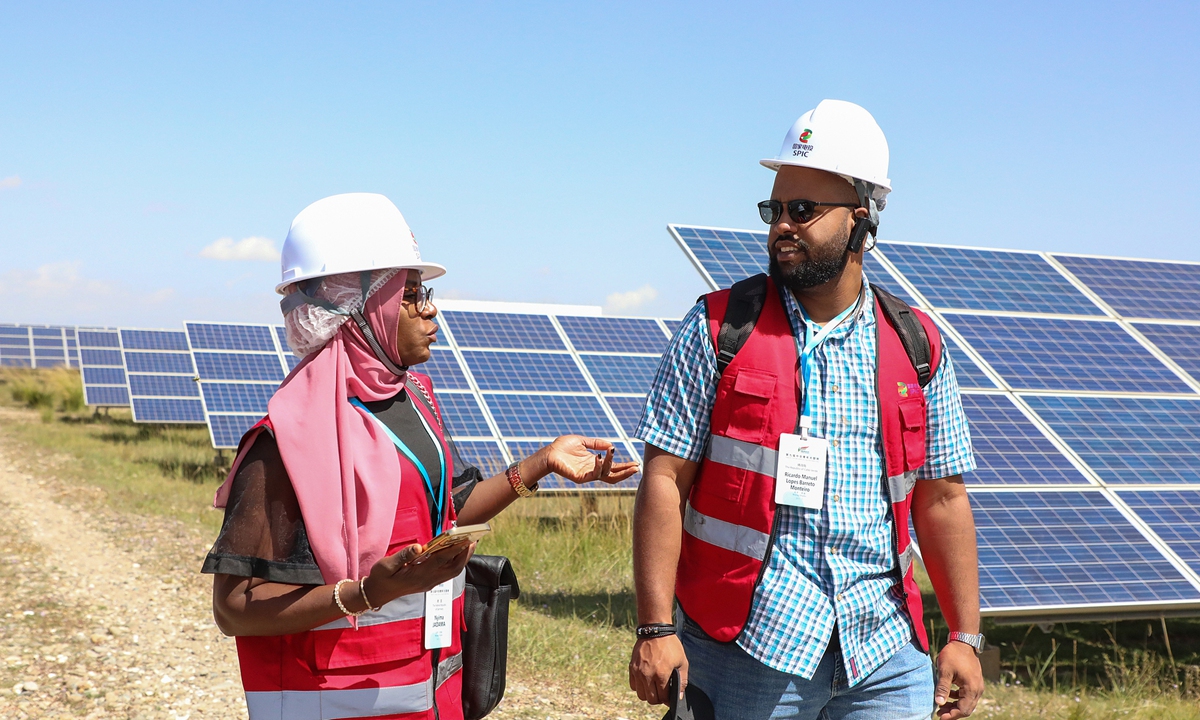
Africans learn about local clean energy development at a photovoltaic power park in Northwest China's Qinghai Province on September 12, 2025. Photo: VCG
Chief Director of Strategy and Policy at South Africa's Department of Justice and Constitutional Development, Kanyane Mathibe, highlighted the inspirational nature of China's four global initiatives in a recent interview with the Global Times, noting that they reflect shared values and aspirations for South Africa and the African continent by emphasizing an inclusive and cooperative international order.
Mathibe expressed her appreciation for studying the book series Xi Jinping: The Governance of China, driven by a profound intellectual curiosity regarding China's transformative development, its accelerated modernization, and its systematic endeavors toward poverty eradication. She noted that the book series offer valuable insights into China's governance philosophy, encompassing comprehensive modernization strategies, state planning mechanisms, and an emphasis on accountability in fulfilling policy objectives - such as the mission-driven tasks of the Communist Party of China.
Mathibe pointed specifically to the Global Development Initiative (GDI), explaining that its focus on a sustainable economic order and social justice holds significant relevance. "What resonates with me most is the GDI, as it aligns closely with South Africa's National Development Plan 2030," she said. "Both prioritize inclusive growth and poverty eradication."
Elaborating on this synergy, she emphasized that for South Africa and many other African countries, economic growth must be people-centered. "It should not benefit only a few," Mathibe noted, adding that such growth requires effective governance and innovation - areas where "China has demonstrated considerable progress."
She stressed the necessity of ensuring equal access to opportunities for all, particularly for the Global South, and highlighted the importance of sustainable industrialization. "Africa's industrialization is not as advanced as China's, so we need to learn from China to build competitive industrial sectors across Africa, comparable to other developing or even developed countries," she said.
As an expert in the judicial field, Mathibe expressed great appreciation for the collaborative relationship between China and Africa. "It is high time that Africa and China not only learn from each other but also embark on a joint journey in modernization, industrialization, and human rights," she asserted.
Mathibe addressed contemporary global challenges directly: "Today, there is a global phenomenon where Western countries seek to suppress African nations through trade and tariff wars. While this may seem like an economic war, it essentially violates human rights because these tariffs ultimately harm ordinary people's lives." She proposed that "China and South Africa can partner to advocate for the rights of the Global South, as these issues resonate deeply with both countries."
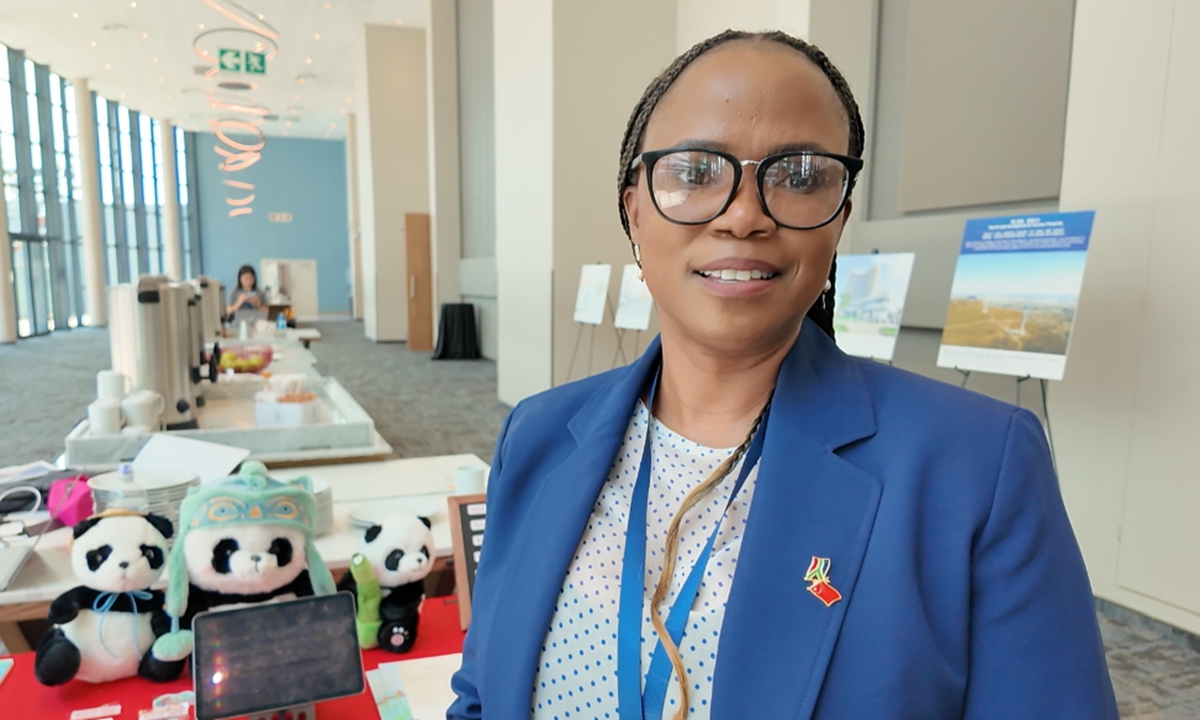
Kanyane Mathibe Photo: Hu Yuwei/GT
Reflecting on her visits to China, Mathibe shared several impactful observations that offer lessons for South Africa. She recalled her training experience with the Global Times: "When we started our lectures in Beijing, I learned that Chinese public servants must take national exams to join the government - prioritizing meritocracy over nepotism or mediocrity." For South Africa, she finds this inspiring, suggesting that implementing exams at all government levels could ensure committed and capable officials.Furthermore, a visit to a one-stop government service center in Tianjin left her a strong impression. She was impressed by the integrated collaboration of all departments to provide streamlined services, eliminating the need for citizens to travel to multiple offices. "This is something South Africa can learn from," she acknowledged. However, Mathibe also cautioned against uncritical imitation. "We must recognize that China's development model worked for its economy, but we should not imitate it blindly. Instead, we should learn from it and implement the lessons in line with our own socio-economic conditions and legal frameworks."
Looking ahead, Mathibe expressed high expectations for future Chinese-African collaboration. She advocated for joint dialogues on technology and the promotion of technology transfer. She believes that many multilateral platforms, such as the G20 and BRICS, can better leverage the synergy between China and African countries and promote the core principles of the four global initiatives through more concrete practices.
The official also emphasized the importance of leveraging multilateral forums like the G20. Mathibe called for pushing "Western countries - which contribute significantly to climate deterioration" - to collaborate on green energy transitions. She concluded by reiterating that key initiatives like the GDI, which emphasize inclusivity and shared economic growth, should be central to these critical global discussions.
RELATED ARTICLES