IN-DEPTH / IN-DEPTH
Capturing the pulse of a city: Understand Shenzhen through dance drama 'Wing Chun'
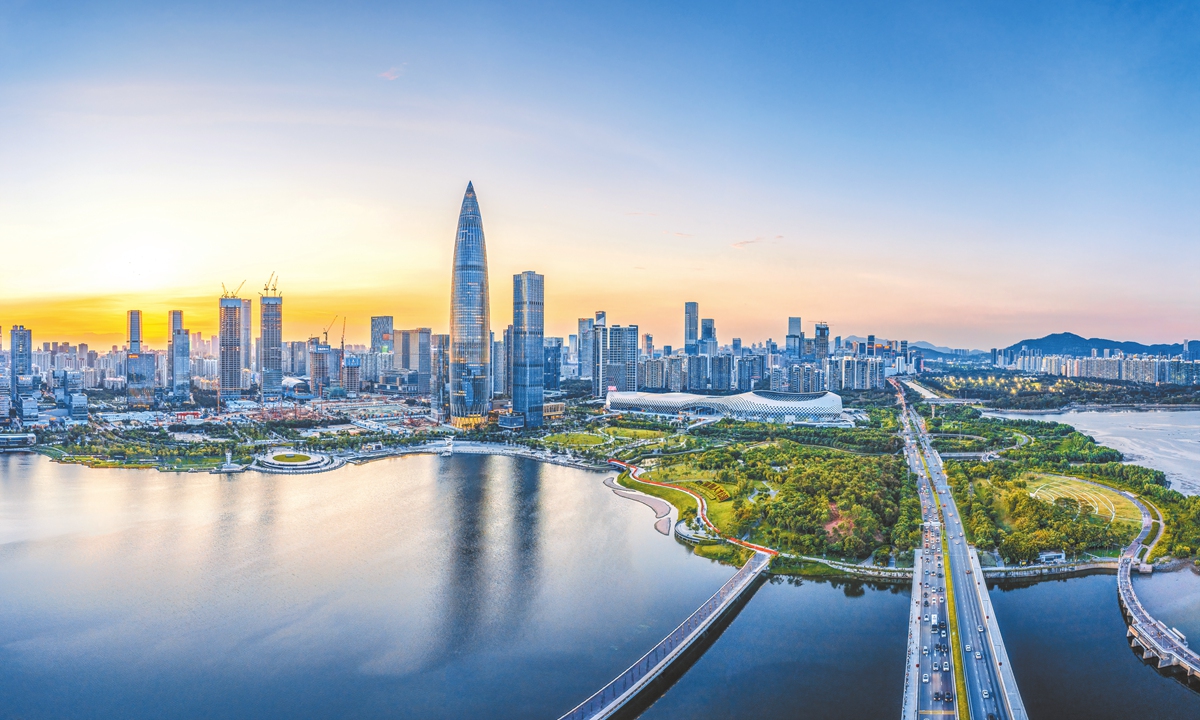
A view of Shenzhen, South China's Guangdong Province Photo: VCG
In late November, the city of Shenzhen in South China's Guangdong Province basked in pleasant temperatures. Inside the Shenzhen Opera and Dance Theatre (SZODT) on Meilin street, Futian district, the sounds of dancers practicing kicks in the equipment room blend with music from the rehearsal hall. The artists maintain their rigorous training routine, even as a transoceanic journey draws near.Separated only by a curtain, the adjacent prop room was well-prepared: All stage equipment had been neatly packed for transport. The Shenzhen-original dance drama Wing Chun is poised to commence its North American premiere and residency in Toronto, Canada, on December 16, 2025. A milestone awaits on January 4, 2026, when the production will celebrate its 300th global performance.
During rehearsals, the dancers execute high kicks and precise punches with crisp precision. Since its creation in 2022, nearly four years of refinement have ingrained the soul of Wing Chun martial arts into every performer. The dual narrative - chronicling the legendary journey of master Ip in Hong Kong and the pursuit of dreams by a group of filmmakers - is deeply embedded in their artistry.
In breaks, dancers discuss how to engage with overseas audiences. They shared with the Global Times that daily training remains non-negotiable for the team. Yet, the enduring anticipation, they say, lies in connecting sincerely with audiences across diverse cultural settings.
For many involved, Wing Chun is more than just a dance drama. Born in Shenzhen, a pioneering hub of China's reform and opening-up, the drama has evolved into a vivid cultural card and bridge for artistic dialogues between China and the world. The production has traveled to premier theaters in countries including Singapore, the UK, France and Russia, earning widespread acclaim from international audiences. In turn, this very stage has become a window for the world to gain some insight into Shenzhen.
Ode to unsung everyman
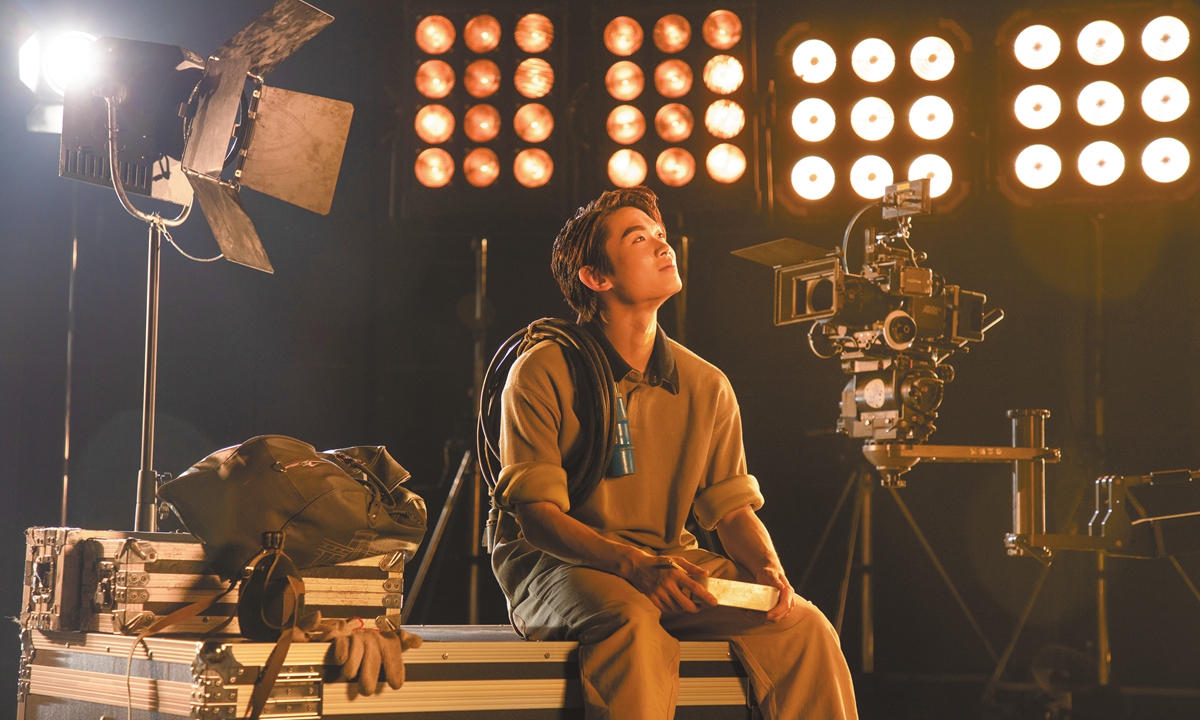
A stage still features Feng Haoran as the lighting technician Dachun in the dance drama Wing Chun. Photo: Courtesy of the SZODT
As the Global Times paid a visit to the SZODT, the final scene witnessed in the rehearsal room was of Chang Hongji, who plays Ip in Wing Chun, sitting by the mirror and watching the movements of Feng Haoran, who plays the lighting technician "Dachun" in the drama. One sat while the other stood; one was still while the other moved - a quiet reflection of the dance drama's dual narrative.This production is not solely the martial arts legend of Ip. Its core lies in the persistent dual-story structure: One thread follows the 1990s film crew in a Shenzhen Film Studio overcoming challenges to make a kung fu movie; the other depicts the film they are creating - the story of Ip venturing into Hong Kong a half-century earlier.
Speaking with the Global Times about the play, Feng frequently used the word "fortunate." He considers himself lucky that his first major production features a "nobody with significant weight." He admitted initial surprise at the script's bold parallel between a renowned martial arts master and an ordinary lighting technician. The greatest challenge in portraying Dachun, he said, lies precisely in his "ordinariness."
Unlike Ip, who has been depicted repeatedly in film and television, Dachun has no existing character templates to reference. To understand this figure, Feng wrote character biographies and crew diaries from the character's perspective, piecing together his inner world: A martial arts enthusiast who moves to Shenzhen to work on a film set. Initially discontent with working behind the scenes, he dreams of becoming a hero like Ip in the spotlight. It is only when the crew faces difficulties and overcomes them together that he realized not everyone gets to stand in the limelight, and that heroes are not the only ones who shine.
Co-produced by the Publicity Department of the Communist Party of China Shenzhen Municipal Committee and the Culture, Media, Tourism and Sports Bureau of Shenzhen Municipality, Wing Chun brings together a top-tier domestic creative team. As Feng delved deeper into his role, he came to understand that Dachun's story not only mirrors Ip Man's masterful bearing, but also reflects the urban spirit of Shenzhen.
Having portrayed many urban dream-chasers and pioneers in Shenzhen, Feng noted that local artistic works often focus on ordinary people. This focus aligns with the narrative tradition in Lingnan culture and Chinese martial arts stories in which heroes emerge from humble beginnings.
"Wing Chun pays tribute not only to the martial arts master in the spotlight, but also to the countless unsung heroes behind the scenes," Yang Jun, president of the Shenzhen Opera and Dance Theatre, told the Global Times. She sees the work's core theme resonating deeply with the spirit of Shenzhen - a city whose transformation from a small town into a metropolis is built on the dedication of countless ordinary strivers.
Innovative expressions
Onstage, Dachun's beams pierce the martial world, illuminating Ip.
In Wing Chun, Ip appears in a black Xiangyunsha (Gambiered Canton Gauze) gown, his steps steady and his fist movements restrained yet resilient - an image that aligns perfectly with audiences' perception of a martial arts grandmaster. Dancer Chang says he went through a process of "self-transcendence" to bring the character to life.
"I' m an outgoing person, and I always thought I was better suited for flamboyant, expressive roles," Chang told the Global Times. When he first learned that he would be playing a martial arts figure, he assumed he would be embodying Bruce Lee, "never expecting to end up with the role of Lee's mentor Ip, a character who is reserved and requires inner cultivation."
Chang's journey of "inner cultivation" began with purchasing a Xiangyunsha gown.
Within Wing Chun's narrative, Xiangyunsha and Wing Chun jointly sculpt Ip's soul. Xiangyunsha, a centuries-old intangible cultural heritage, is among the world's rarest silk fabrics dyed exclusively with plant and mineral pigments, hailed as textile's "soft gold."
"Chang visited my studio and bought a black robe the next day," recalled Xing Lili, the production's Xiangyunsha consultant. "He said he wanted to wear it to get into character, with the goal of becoming Ip the moment he put it on," Xing said.
Xiangyunsha silk originates from Foshan in Guangdong, Ip's hometown. In Xing's view, this fabric weaves an emotional bond between Ip and his native land and loved ones: After leaving his hometown for Hong Kong, the Xiangyunsha gown became Ip's "portable homeland."
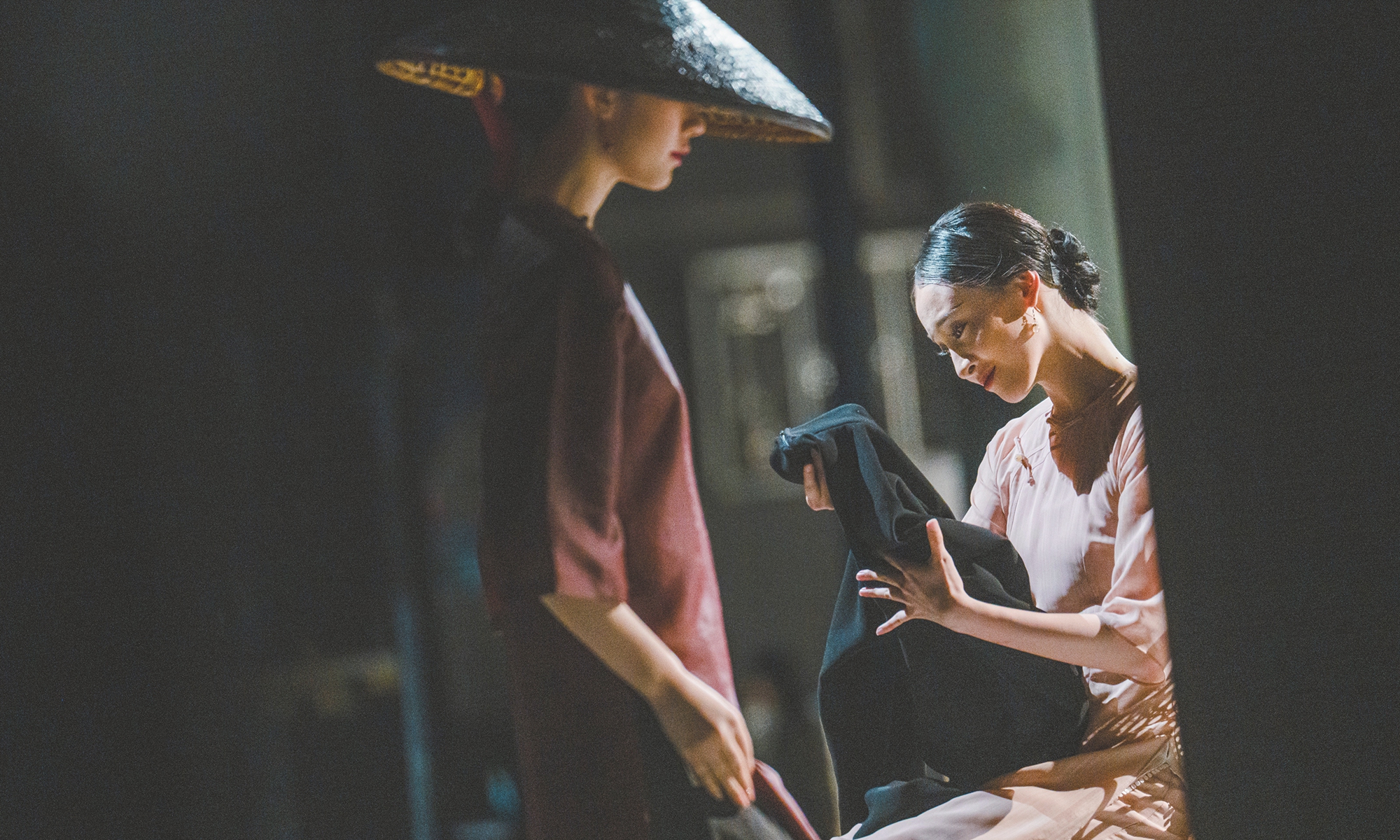
A stage photo from Wing Chun shows Ip Man's wife (right) holding his Xiangyunsha gown. Photo: Courtesy of the SZODT
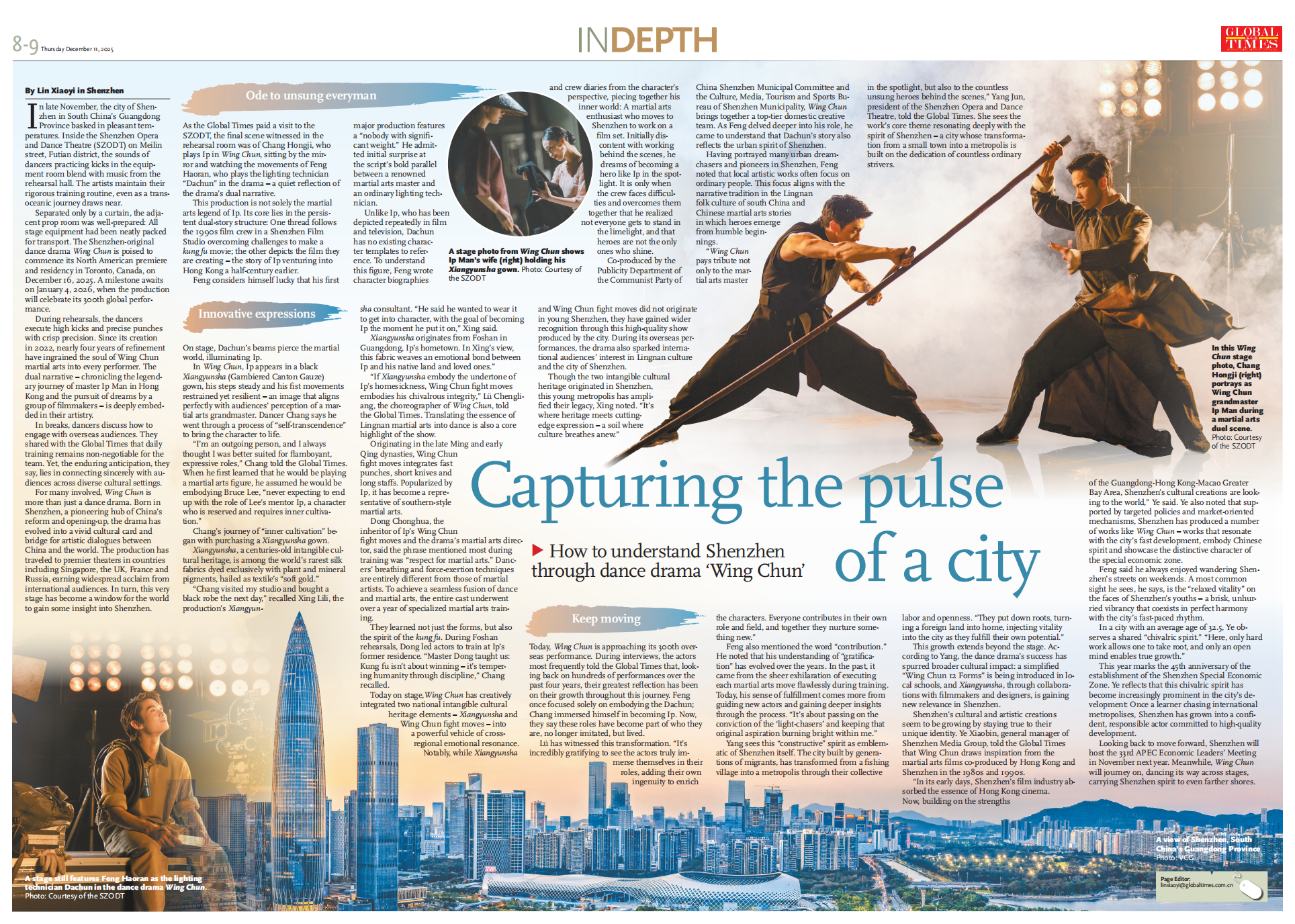
"If Xiangyunsha embody the undertone of Ip's homesickness, Wing Chun kung fu embodies his chivalrous integrity," Lü Chengliang, the choreographer of Wing Chun, told the Global Times. Translating the essence of Lingnan martial arts into dance is also a core highlight of the show.Originating in the late Ming and early Qing dynasties, Wing Chun integrates fast punches, short knives and long staffs. Popularized by Ip, it has become a representative of southern-style martial arts.
Dong Chonghua, the inheritor of Ip Man's Wing Chun and the drama's martial arts director, said the phrase mentioned most during training was "respect for martial arts." Dancers' breathing and force-exertion techniques are entirely different from those of martial artists. To achieve a seamless fusion of dance and martial arts, the entire cast underwent over a year of specialized martial arts training.
They learned not just the forms, but also the spirit of the kung fu. During Foshan rehearsals, Dong led actors to train at Ip's former residence. "Master Dong taught us: Kung fu isn't about winning - it's tempering humanity through discipline," Chang recalled.
Today on stage, Chang has successfully portrayed an introverted yet supremely skilled Ip. Wing Chun has creatively integrated two national intangible cultural heritage elements - Xiangyunsha and Wing Chun fight moves - into a powerful vehicle of cross-regional emotional resonance.
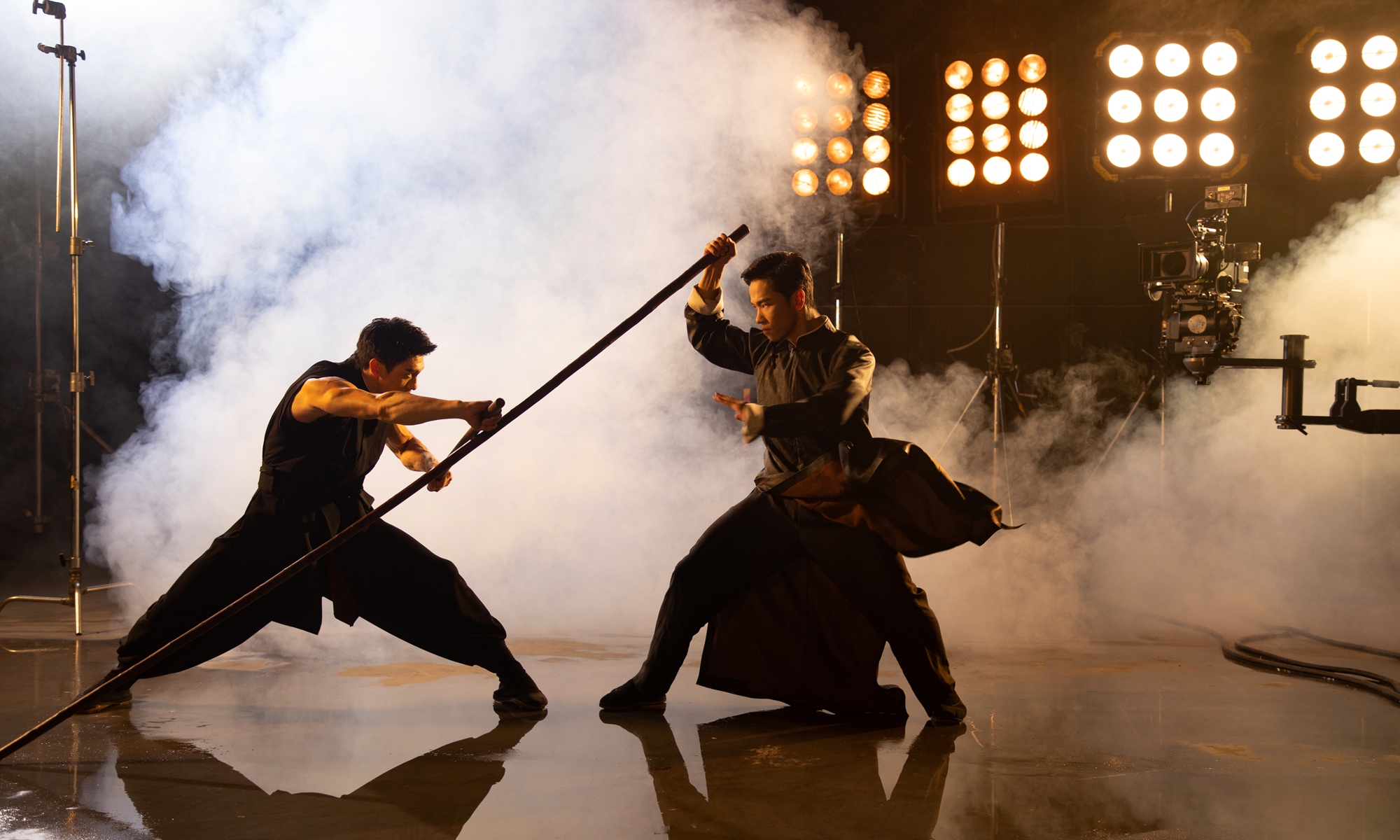
Notably, while Xiangyunsha and Wing Chun fight moves did not originate in young Shenzhen, they have gained wider recognition through this high-quality show produced by the city. During its overseas performances, the drama also sparked international audiences' interest in Lingnan culture and the city of Shenzhen.
Though the two intangible cultural heritage originated in Shenzhen, this young metropolis has amplified their legacy, Xing noted. "It's where heritage meets cutting-edge expression - a soil where culture breathes anew."
A view of Shenzhen, South China's Guangdong Province Photo: VCG
Keep moving
Today, the dance drama Wing Chunis approaching its 300th overseas performance. During interviews, the actors most frequently told the Global Times that, looking back on hundreds of performances over the past four years, their greatest reflection has been on their growth throughout this journey. Feng once focused solely on embodying the Dachun; Chang immersed himself in becoming Ip. Now, they say these roles have become part of who they are, no longer imitated, but lived.
Lü has witnessed this transformation. "It's incredibly gratifying to see the actors truly immerse themselves in their roles, adding their own ingenuity to enrich the characters. Everyone contributes in their own role and field, and together they nurture something new."
Feng also mentioned the word "contribution." He noted that his understanding of "gratification" has evolved over the years. In the past, it came from the sheer exhilaration of executing each martial arts move flawlessly during training. Today, his sense of fulfillment comes more from guiding new actors and gaining deeper insights through the process. "It's about passing on the conviction of the 'light-chasers' and keeping that original aspiration burning bright within me."
Yang sees this "constructive" spirit as emblematic of Shenzhen itself. The city, built by generations of migrants, has transformed from a fishing village into a metropolis through their collective labor and openness. "They put down roots, turning a foreign land into home, injecting vitality into the city as they fulfill their own potential."
This growth extends beyond the stage. On November 21,China's 15th National Games concluded the first cross-boundary edition of the country's premier multi-sport event, which was jointly staged by Guangdong, Hong Kong and Macao. During the ceremony, Chang took the stage to interpret Wing Chun through dance. According to Yang, the dance drama's success has spurred broader cultural impact: a simplified "Wing Chun 12 Forms" is being introduced in local schools, and Xiangyunsha, through collaborations with filmmakers and designers, is gaining new relevance in Shenzhen, a UNESCO City of Design.
Shenzhen's cultural and artistic creations seem to be growing by staying true to their unique identity. Ye Xiaobin, general manager of Shenzhen Media Group, told the Global Times that Wing Chun draws inspiration from the martial arts films co-produced by Hong Kong and Shenzhen in the 1980s and 1990s.
"In its early days, Shenzhen's film industry absorbed the essence of Hong Kong cinema. Today, building on the strengths of the Guangdong-Hong Kong-Macao Greater Bay Area, Shenzhen's cultural creations are looking to the world and nurturing a cultural imagination of its own," Ye said.
Ye noted that supported by targeted policies and market-oriented mechanisms, Shenzhen has produced a number of works like Wing Chun - works that resonate with the city's fast development, embody Chinese spirit and showcase the distinctive character of the special economic zone.
Feng said he always enjoyed wandering Shenzhen's streets on weekends. A most common sight he sees, he says, is the "relaxed vitality" on the faces of Shenzhen's youths - a brisk, unhurried vibrancy that coexists in perfect harmony with the city's fast-paced rhythm.
In a city with an average age of 32.5, Ye observes a shared "chivalric spirit." "Here, only hard work allows one to take root, and only an open mind enables true growth."
This year marks the 45th anniversary of the establishment of the Shenzhen Special Economic Zone. Ye reflects that this chivalric spirit has become increasingly prominent in the city's development: Once a learner chasing international metropolises, Shenzhen has grown into a confident, responsible actor committed to high-quality development.
Looking back to move forward, Shenzhen will host the 33rd APEC Economic Leaders' Meeting in November next year. Meanwhile, Wing Chun will journey on, dancing its way across stages, carrying Shenzhen spirit to even farther shores.
RELATED ARTICLES