IN-DEPTH / IN-DEPTH
GT on the spot: How a remote Chinese village neighboring Myanmar turns from a cross-border crime hotspot to safe, harmonious community
By in Xishuangbanna Published: Dec 10, 2025 06:03 PM

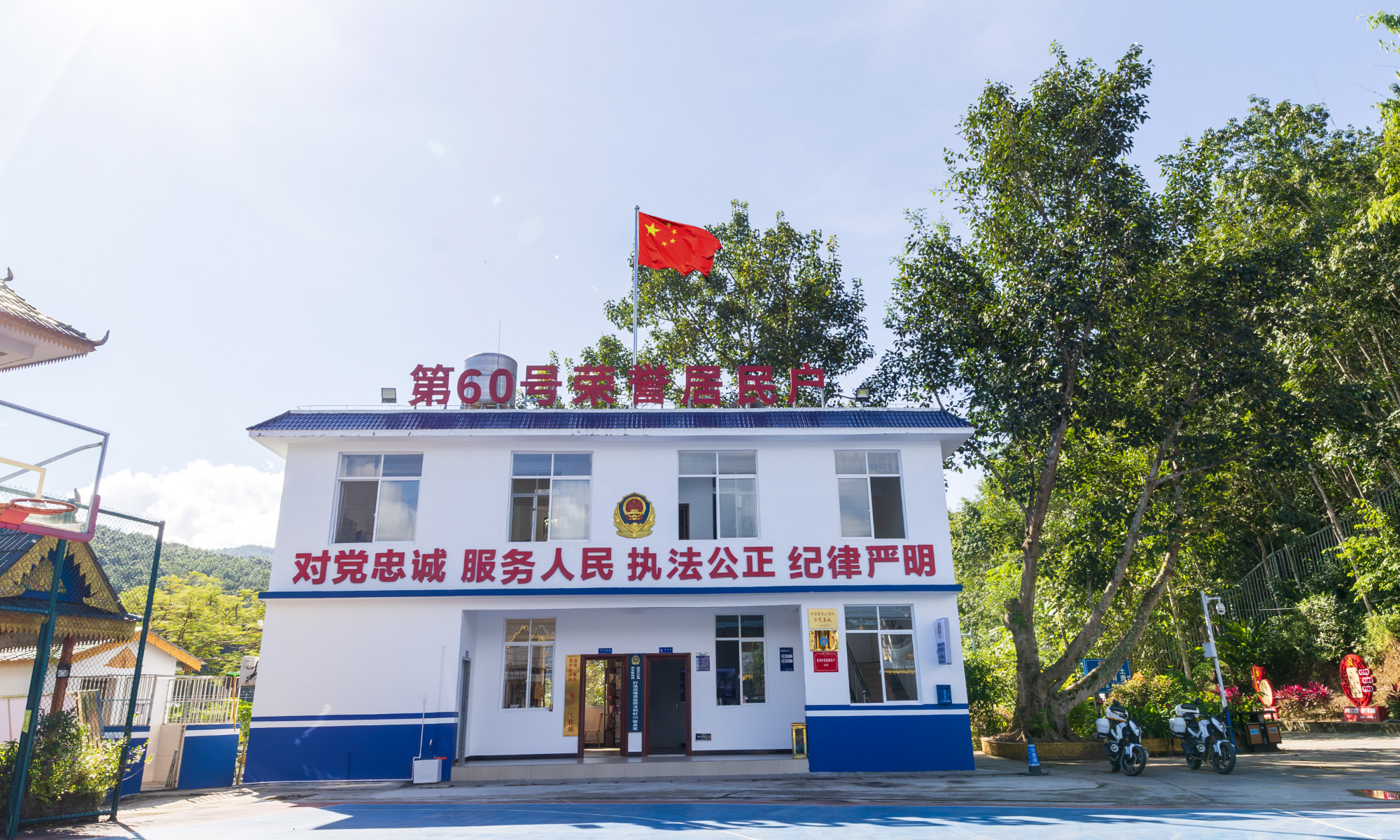
The “226 border police office” at Longli village in Xishuangbanna Dai Autonomous Prefecture, Southwest China’s Yunnan Province. Photo: Courtesy of Border Control Brigade of Xishuangbanna
Morning mist from the tropical rainforest drifts slowly up the mountains, while fields of sugarcane and dragon fruit roll away into the horizon. Warm, humid breezes carry the chirring of insects. Beside a stand of lush green trees stands a stone marker - Boundary Marker No. 226 between China and Myanmar. This is in Longli village, one of China’s settlements closest to the border in Daluo Township in Xishuangbanna Dai Autonomous Prefecture, Southwest China’s Yunnan Province.
Today this small border village, widely known as the “foremost frontier village” of the country, draws an ever-growing stream of visitors. For them, Longli is not only a destination to experience distinctive border life, but also a reassuringly safe and harmonious place. Abutting Myanmar, the village has maintained zero resident disputes and zero reported crimes for five consecutive years, and has fostered strong police-community relations and neighborly unity, becoming a standout model for border governance in China, the Global Times learned from local police.
Yet many visitors might find it hard to imagine that just a few years ago, Longli was a “problem village” shadowed by drugs, smuggling, and illegal border crossings, with deep divisions between local villagers and the police. What then transformed this once crime-plagued settlement into the safe and vibrant community it is today? A Global Times reporter recently visited Longli village to uncover the stories behind its remarkable turnaround.
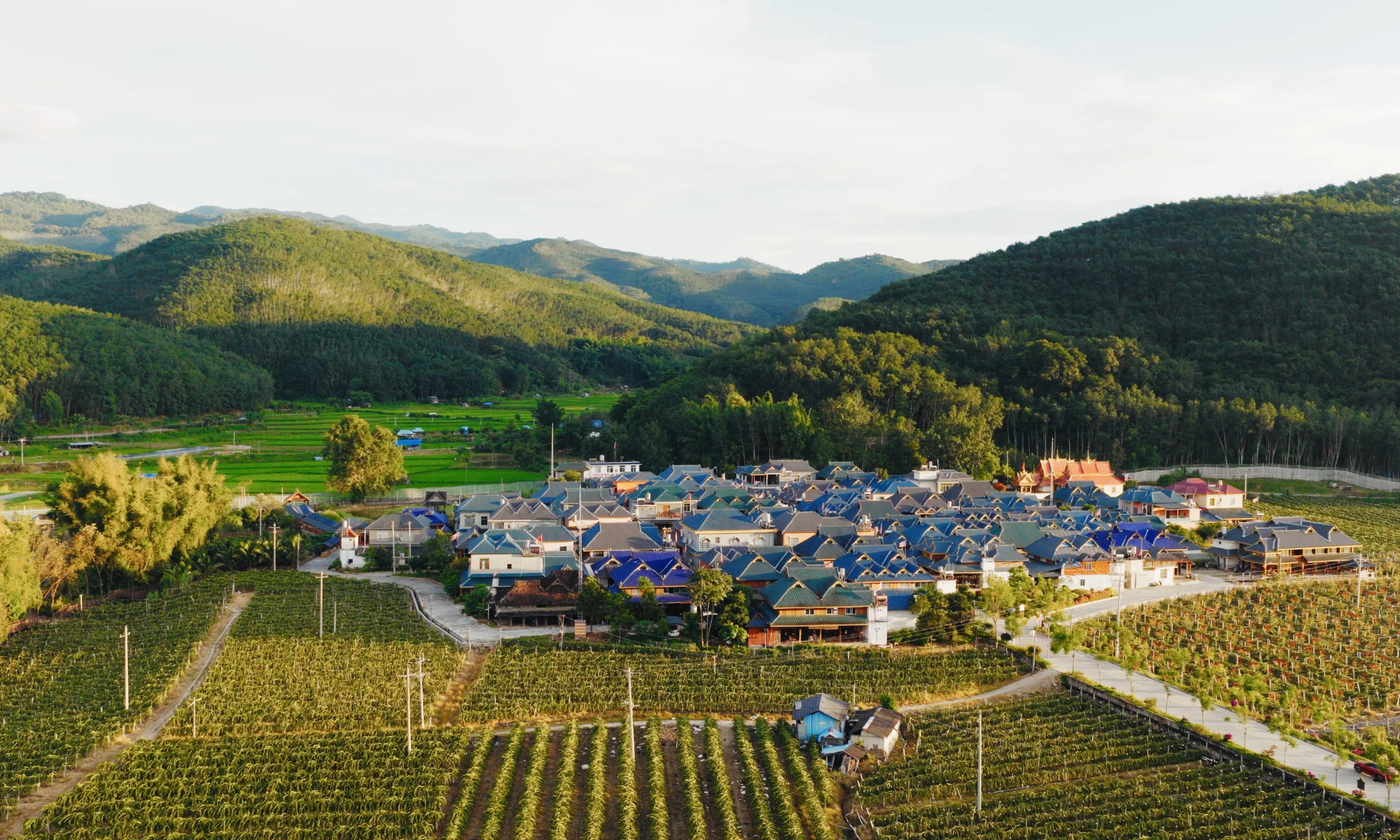
An aerial view of Longli village. Photo: Courtesy of Border Control Brigade of Xishuangbanna
8.2 meters from boundary marker
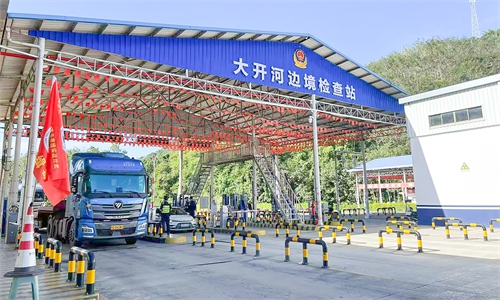
Longli village sits cheek-by-jowl with Myanmar’s Shan State Special Region-4. In some places, the international boundary offers no mountains or rivers as a buffer; only fences separate farmland on either side.
The village’s name, Longli, in the language of the Dai ethnic group, literally means “place of iron forging.” Home to only 282 people, the village is predominantly comprised of Dai people, with generations sustaining themselves through farming and blacksmithing.
Yet its proximity to the “Golden Triangle,” one of the world’s three major drug sources, also made the village once a hotspot for cross-border crime. Many villagers there used to fall into illicit cross‑border activities to make ends meet, and some struggled with drug use. By 2018, more than a third of the village’s adult men had been punished by the law for drug‑related offenses or smuggling, according to the immigration control police at the Daluo Border Police Station, which has jurisdiction over Longli village.
Yu Ernan, a 38-year-old Dai villager, still feels a lingering unease when she recalls her youth. She recalled that in the 1990s, the village would erupt into violent clashes over various disputes from time to time, and on some occasions, people would even pull out guns. To guard against thieves and burglars, every household built two- or three-meter-high walls. Neighbors rarely visited one another, and after dusk the village fell into an eerie silence. “That village used to be frightening,” Yu told the Global Times.
Worse still, crime was so common that many villagers or their relatives were directly involved, and relations between police and residents became fraught. “There used to be police cars coming every few days to take people away. Children were scared of the police and didn’t dare play in the village.” A senior citizen from the village recalled that as lots of families had someone taken by the police, everyone looked at police officers with suspicion and guardedness in those years.
“Border stability has to start with people feeling secure,” said Zhu Fengbiao, head of the Daluo Border Police Station. “We made up our minds to change Longli village’s situation.”
In the spring of 2021, the “226 border police office” was opened in the village. Sitting just 8.2 meters from China‑Myanmar boundary marker No. 226, it became known as “the police office closest to a boundary marker in China.” On a late autumn afternoon, the Global Times reached the office after flights and a long drive. In front of a blue-and-white four-story building, the Chinese national flag fluttered in the wind over a courtyard. Behind the building lay farmland demarcating the China-Myanmar border, while the courtyard stood adjacent to the traditional Dai-style homes of villagers.
“It’s not just a frontline post for border control; it’s our ‘bridge of hearts’ with the villagers,” Zhu said at the police office. “We want villagers to know that whenever trouble comes, the police are the first people they can turn to.”
Since the “226 border police office” began operations, changes gradually unfolded in Longli. Police officers regularly patrol along the border - near fences, around boundary markers, and along field paths - leaving almost no room for the once-rampant smuggling and illegal border crossings. Additionally, when neighborhood disputes flare up, police go to the homes to mediate, defusing tensions at the early stage. Even seemingly minor issues, such as helping the senior citizens with their mobile phones or searching for lost livestock, are met with an open-door policy at this office.
“We hardly dared go out at night before; now we feel safe and truly secure,” Yu said with a smile. “Seeing the lights at the police office on gives us a deep sense of reassurance.”
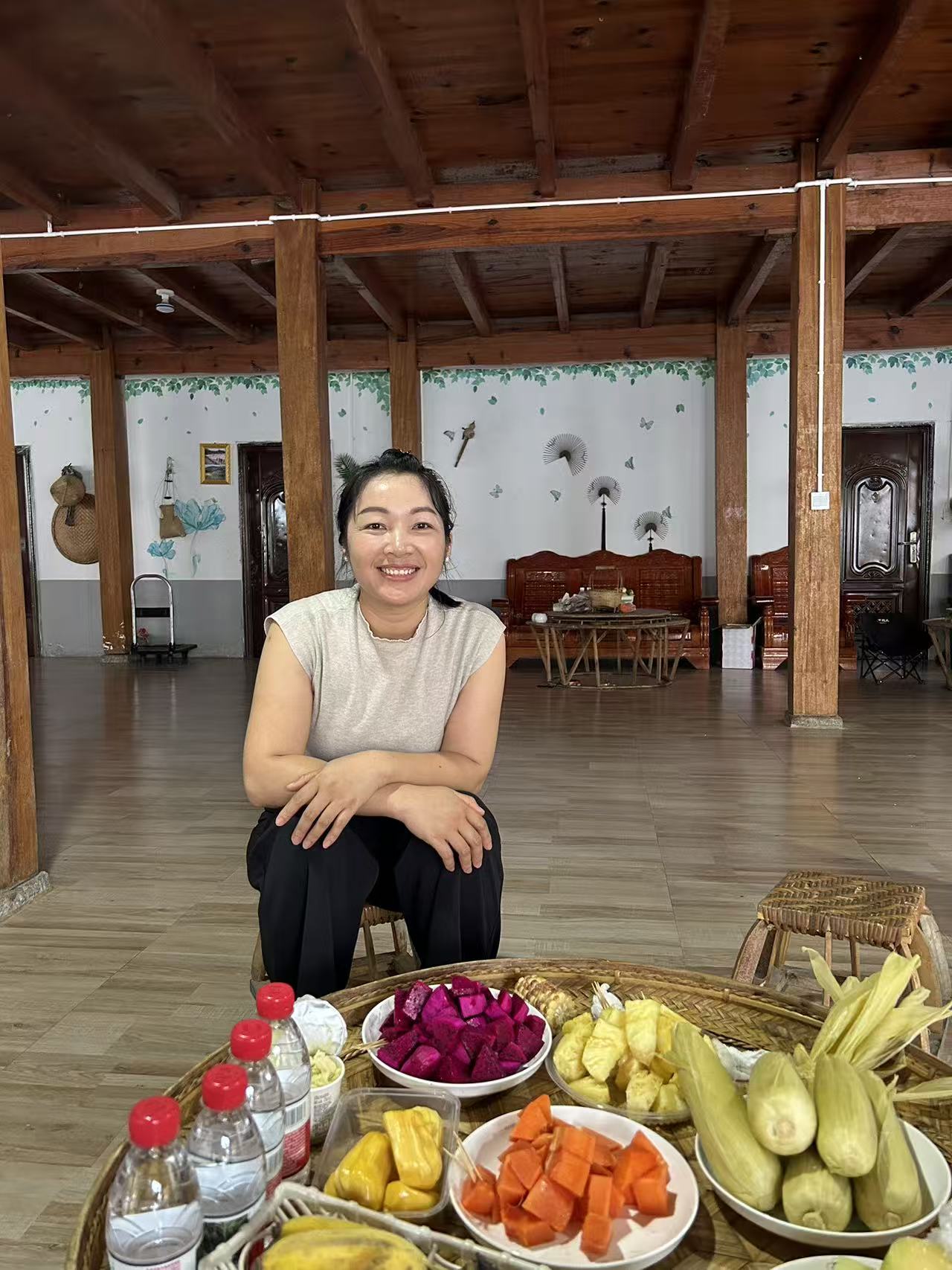
Dai villager Yu Ernan sits at her home in Longli. Photo: Huang Lanlan/GT
Nip cross-border crime in the bud
Unlike many other stretches of China’s frontier, where rivers and mountain ridges mark the divide with neighboring countries, the border running past Longli and several nearby villages lies across open farmland shared with Myanmar. With no natural buffer, these villages face a daunting task in carrying out border control efforts, Zhu said.
One particular night ambush in July remains vivid in Zhu’s memory. They had received a tip-off that an overseas gang planned to rendezvous nearby to assist illegal migrants. Zhu and his colleagues moved into their assigned positions to lie in wait - only to run unexpectedly into the smugglers. “It was so dark that you couldn’t see your hand,” he recalled to the Global Times. “I nearly came face to face with a suspect.” Zhu flashed his flashlight, and saw a long pole in the man’s hand. A cry of “Criminals!” shattered the silence.
During the chase one suspect leapt into the river. Zhu followed without hesitation, his glasses swept away by the current, groping in the black water to continue the pursuit. Some officers were hurt in the operation. One was bitten by fire ants and developed painful, widespread swelling, and another injured his foot but, unwilling to delay the mission, skipped a full medical exam and received only basic disinfection.
In the end, four suspects from abroad were captured. “To better safeguard the border, you must nip crime in the bud. A few injuries are a price worth paying,” Zhu noted.
While local police have taken an uncompromising stance toward hardened criminals, they have adopted a more compassionate approach toward villagers who once went astray. Zhu said that alongside enforcement, they focus on severing criminal networks at the root - offering practical help and human compassion to steer people back onto a lawful path.
Villager Yan (pseudonym) is one such example. He used to be a familiar name at the Daluo Border Police Station: Three rounds of compulsory drug rehabilitation, a marriage that fell apart, and a life that had hit rock bottom. When Yan completed his last round of rehabilitation, police officers reached out, encouraged him to pull himself together, and helped him get a security job at the village scenic area. In a few short years, Yan rose from team member to security captain, built a new house in 2024, and remarried this year.
“It was the police who gave me the strength to start over,” said the 39-year-old.
In the fall of 2024, Longli village launched a police-civilian border-protection team. The team now boasts more than 40 members, including some with a checkered past like Yan. “They strayed once because of poverty or poor judgment; now that they have a steady income and better understand what it means to protect their home,” said Chen Hui, an officer at the Daluo Border Police Station.
Many team members of the protection team serve dual roles: They work at local scenic sites, and patrol the border after work as volunteers, playing an important part in border security. “Now we get a fixed monthly wage, and we can also do something for our hometown,” Yan told the Global Times. “It makes me feel solid and at ease.”
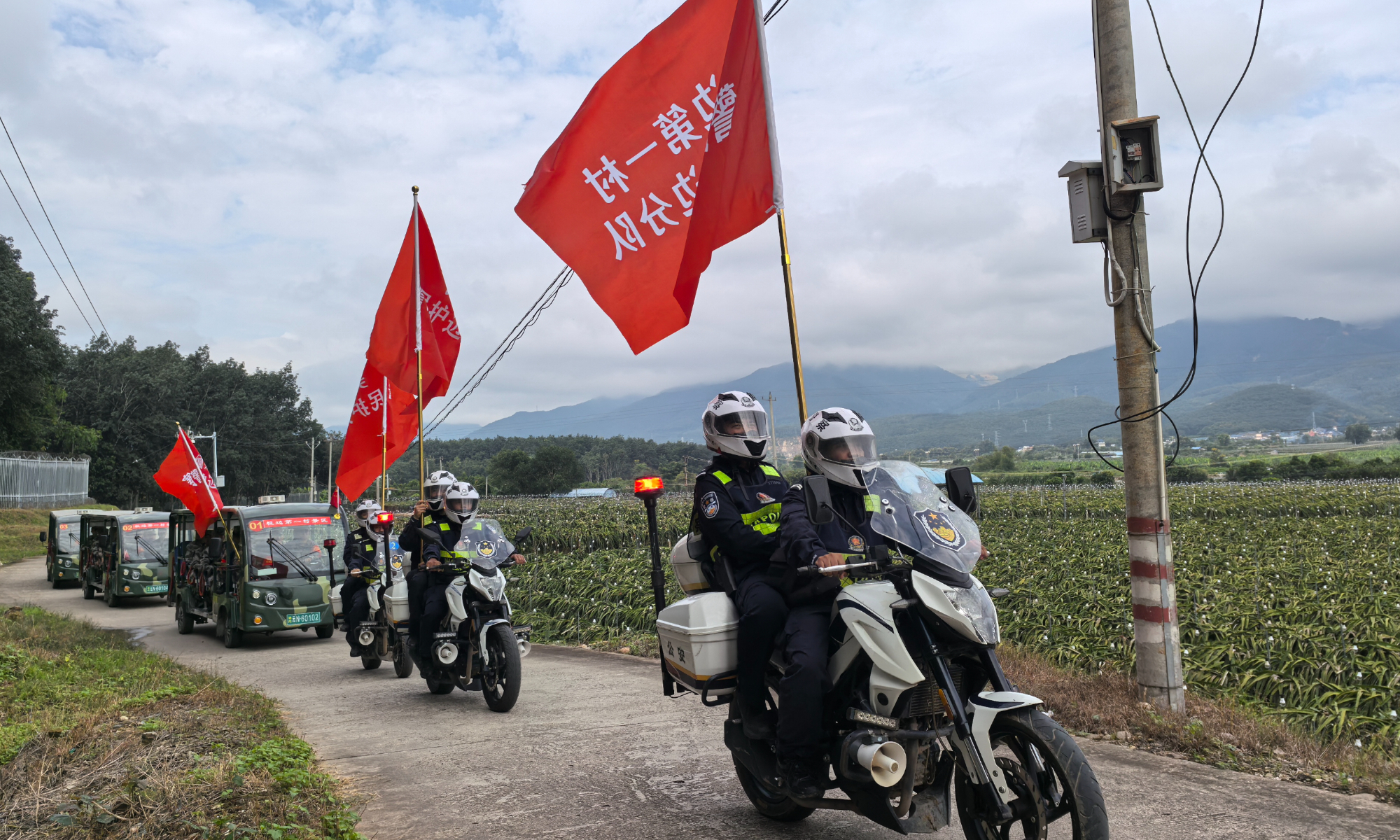
The police-civilian border-protection team of Longli patrols in border areas of the village. Photo: Courtesy of Border Control Brigade of Xishuangbanna
‘Honorary 60th Household’
In an afternoon, the Global Times toured the “foremost frontier village” with local police, passing tourists along the way. Clean lanes, neat Dai-style houses, courtyards bursting with tropical blooms, and sugarcane fields not far off made for a quietly picturesque scene.
At a small market in the village, resident Yan Bian sat behind his stall, selling handmade brown sugar and fruit to visitors. “The village is safe now,” the septuagenarian told the Global Times. “And the police help us with all kinds of things, just like our brothers in the family.”
Yu echoed his words. Having worked odd jobs and once guided tourists through scenic spots in previous years, now she has joined the village’s police-civilian border-protection team. Along the way, Yu has watched this small village undergo a remarkable metamorphosis, from a troubled place into a harmonious, contented community.
“The changes in Longli village are the result of guidance and support from the Party and the government, and the tireless protection of the police as well,” she told the Global Times at her home. “Without them, Longli village would not be what it is today.”
What Zhu and his colleagues remember most vividly happened one day in April 2023. That day, firecrackers cracked outside the “226 border police office,” and on behalf of the village’s then 59 households, a plaque was solemnly hung on the office’s outer wall declaring the police the “Honorary 60th Household.” From vigilance to trust, and from distance to intimacy, those 59 Dai families gradually came to see the police as part of their own.
“At that moment, all the hardships felt worth it,” Zhu said, standing before the police office with a smile as he looked at the plaque. “We guard the national border, and we warm the hearts of the people here. We and the villagers have long been one family.”
RELATED ARTICLES