IN-DEPTH / IN-DEPTH
GT Investigates: Historical trajectory warns Japan is approaching dangerous threshold of militarist revival
Rearmament of the defeated
By Liang Rui and Published: Dec 14, 2025 10:03 PM

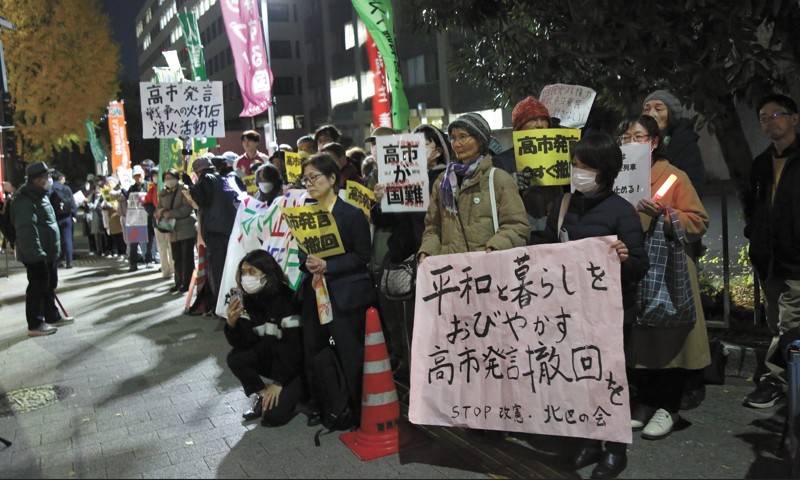
Hundreds of Japanese citizens held a rally in front of the Prime Minister's Office in Tokyo, Japan, on December 4, 2025, protesting the recent erroneous remarks regarding China's Taiwan island made by the Japanese Prime Minister Sanae Takaichi and demanding their retraction. Photo: VCG
Against the backdrop of strong backlash in both Japan and China over Japanese Prime Minister Sanae Takaichi's remarks on China's Taiwan island, several of Japan's recent military moves have also drawn broad international attention.
In late November, Japan's Kyodo News reported that the Japanese government was holding informal consultations with the Philippines regarding the export of the Japan Self-Defense Forces' Type 03 medium-range surface-to-air missile. Citing multiple sources, Kyodo News reported that the Takaichi administration plans to abolish the current regulations that restrict defense equipment exports to five non-combat-related categories as early as the first half of 2026. Following a formal decision, concrete discussions on exports will commence promptly.
In August, Australia's Defense Ministry announced in a press release that the Japanese Mogami-class frigate was selected for the Australian Navy's new general-purpose frigates.
Chinese military affairs expert Zhang Junshe told the Global Times that Japan's development of aggressive weapons and export plans seriously violates relevant instruments and bans.
Confronted with this provocation challenging the postwar international order, Yang Xiao, senior research fellow at the China Institute for International Strategic Studies, told the Global Times that a comparison between post-WWI Germany during the Nazi period and 21st-century Japan reveals a disturbingly similar pattern: Economic stagnation, rising security anxiety, and eventual military escalation. This reemerging trajectory of a "defeated power rearming" raises a fundamental question: Is Japan edging toward a dangerous point of no return?
Echoes of history
Yang said that the core parallel between post-WWI Germany and 21st-century Japan lies in the transition from "pacifism" to "realism."
Germany sought reintegration under the Versailles system after WWI, while postwar Japan relies heavily on the US-Japan security framework. In both cases, Yang said, prolonged dependence on external guarantees eventually gave way to ambitions for greater autonomy.
After being named Reich Chancellor on January 30, 1933, Adolf Hitler concentrated at first on revising the Versailles Treaty and promoting economic recovery and the rearmament connected to it, since Germany was weak both economically and militarily, according to the German History in Documents and Images (GHDI) compilation of official documents.
Yang noted that Japan's starting point came after the collapse of its asset bubble in the early 1990s, as prolonged deflation, fiscal strain, and demographic pressures reshaped public debate around national security.
Two political milestones, he said, illustrate these shifts: Germany withdrew from the League of Nations in October 1933. In 1935, Hitler announced German rearmament and re-introduced conscription, which was prohibited under the Versailles Treaty, according to an article on the Imperial War Museum's website.
Similarly, Japan's Defense Agency was promoted to the "Ministry of Defense (MoD)" in 2007, meaning it was reborn as an organization that not only formulates the management of the Self-Defense Forces, but also the overall policy related to security, reported the Nikkei.
Yang noted that budgetary trends strengthen the comparison.
While the levels of expenditure were relatively low at first under Hitler as chancellor, there was a steady annual increase in both the amount of money going to the military and the percentage of the national income represented by those amounts as Hitler's government prepared Germany for war. By 1939, armaments accounted for 23 percent of gross national product, according to the GHDI.
In her first policy speech, Takaichi told parliament that Japan aims to reach a defense spending goal of 2 percent of gross domestic product (GDP) in the current fiscal year through March, ahead of the original target of fiscal year 2027, reported Reuters on October 24.
Furthermore, the Japanese government has begun adjustments to the defense budget in the fiscal year 2026 budget proposal, planning to increase it to a record-high scale of 9 trillion yen ($60.3 billion), multiple Japanese media reported on Saturday.
Kyodo News, citing multiple sources, reported on Friday that the budget will be allocated to acquire long-range missiles as a means of counterstrike capability (enemy base attack capability), as well as offensive drones for constructing the unmanned aircraft-based coastal defense system "SHIELD."
"This resemblance is not about surface-level repetition. It demands we confront the deeper forces that drive such historical cycles," Yang warned.
Factors behind acceleration
Beyond historical analogy, Japan's accelerated rearmament is propelled by several converging realities.
First, as noted earlier, the Japan of the 1990s was beset by economic stagnation and a debt crisis, so it funded its massive defense budgets through the issuance of government bonds, Yang noted.
"This model of 'borrowing to sustain the military' may temporarily boost GDP while simultaneously planting the seeds of a risk that could plunge humanity into war once again," Yang said.
At more than 250 percent of GDP, Japan's gross debt stands out, Reuters reported in June 2024.
Domestic political rightward drift and Japan's desire for strategic autonomy became major engines driving military expansion. "From Junichiro Koizumi to Shinzo Abe, and now Takaichi, all represent conservative forces seeking to break the constraints of the postwar order. They capitalized on securitization narratives, the push for 'normal statehood,' and revising the constitution - using rising far-right support amid economic strain to entrench their positions and push the agenda forward," Yang said.
Yang believes that as Japan's defense budget grows, the expanding defense industry then reinforces government momentum to shift security policy, forming a structural feedback loop.
Externally, Yang said, a sense of geopolitical isolation is also driving Tokyo. "After the Cold War, Washington's shifting strategic priorities caused Japan to question the reliability of its alliance. In response, Japan began emphasizing self-strengthening to gain maneuvering room amid East Asia's evolving power landscape."
Regional security tensions combined with Japan's frequent hype of China's lawful military activities as "threats," have given Tokyo a "convenient justification" for expanding its military presence, Yang said. Global disorder, exemplified by the Russia-Ukraine conflict, has further diverted international scrutiny, offering Japan a "window of opportunity."
Rising defense expenditure has already triggered discontent among some Japanese citizens. A petition submitted to the 212th Diet of Japan's House of Councillors in 2023 urged the government not to expand the military budget but instead increase funding for healthcare, eldercare, welfare, pensions, and basic livelihood protections.
Prioritizing life over military spending is the will of the people. Reducing social services while increasing military outlays and forcing the public to live harder lives is utterly senseless, the petition reads, according to the official website of the House of Councillors.
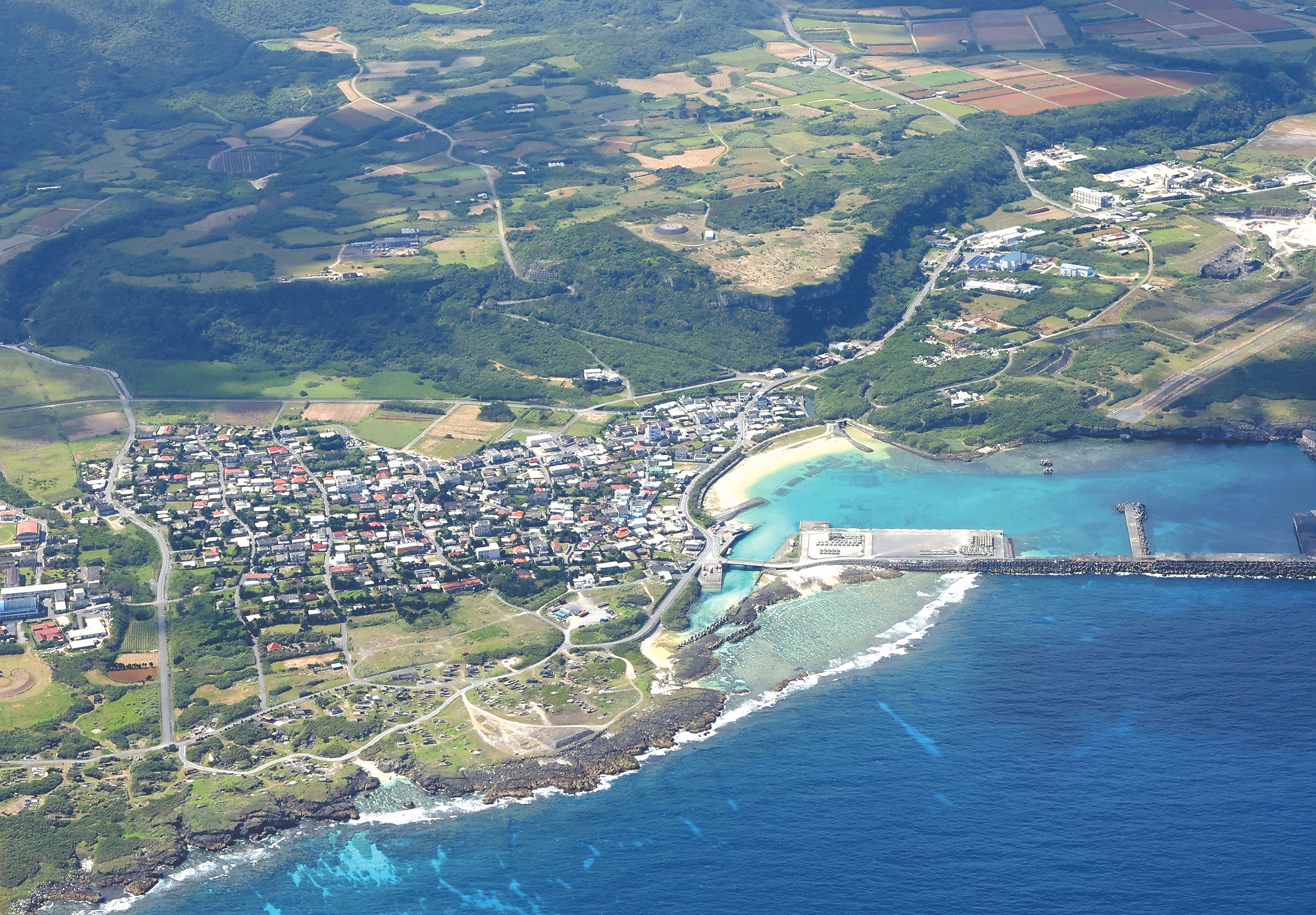
An aerial view of a village on Yonaguni island, Okinawa Prefecture, Japan Photo: VCG
A dangerous trend
Japan is, in fact, not only developing weaponry and equipment for export, it is also already deploying or planning to deploy them domestically.
The same Type 03 medium-range surface-to-air missile that Japan is planning to export to the Philippines is also planned to be deployed on Yonaguni island, according to a report by Japan's Asahi Shimbun on November 23. The report claimed that Yonaguni island is located in the westernmost point of Japan, only about 111 kilometers away from China's Taiwan island.
Additionally, Japan recently tested the deployment of a developing hypersonic missile system. Aside from the hypersonics, Japanese forces will deploy Tomahawk cruise missiles, Joint Strike Missiles, and domestically upgraded Type 12 surface-to-ship missiles to enhance their anti-ship and counterstrike capabilities against enemy bases in the coming years, according to a report on November 17 by USNI News, the news website of the US Naval Institute.
Japan has also stepped up to develop sensitive strategic military assets, not only modifying the JS Izumo and JS Kaga into aircraft carriers capable of hosting F-35B stealth fighter jets, but also considering adding nuclear-powered submarines to its fleet, according to media reports.
What risks do these developments pose to regional peace?
Zhang pointed out that the capabilities of these weapons and equipment can be used in aggression rather than self-defense only. He noted that the missiles Japan is developing or importing from the US have ranges of more than 1,000 kilometers; the JS Izumo and JS Kaga, previously designated helicopter destroyers, are now full aircraft carriers capable of carrying F-35B fighter jets; Japan's conventional submarines are also considered advanced in the world, let alone its ambitions to own nuclear-powered ones.
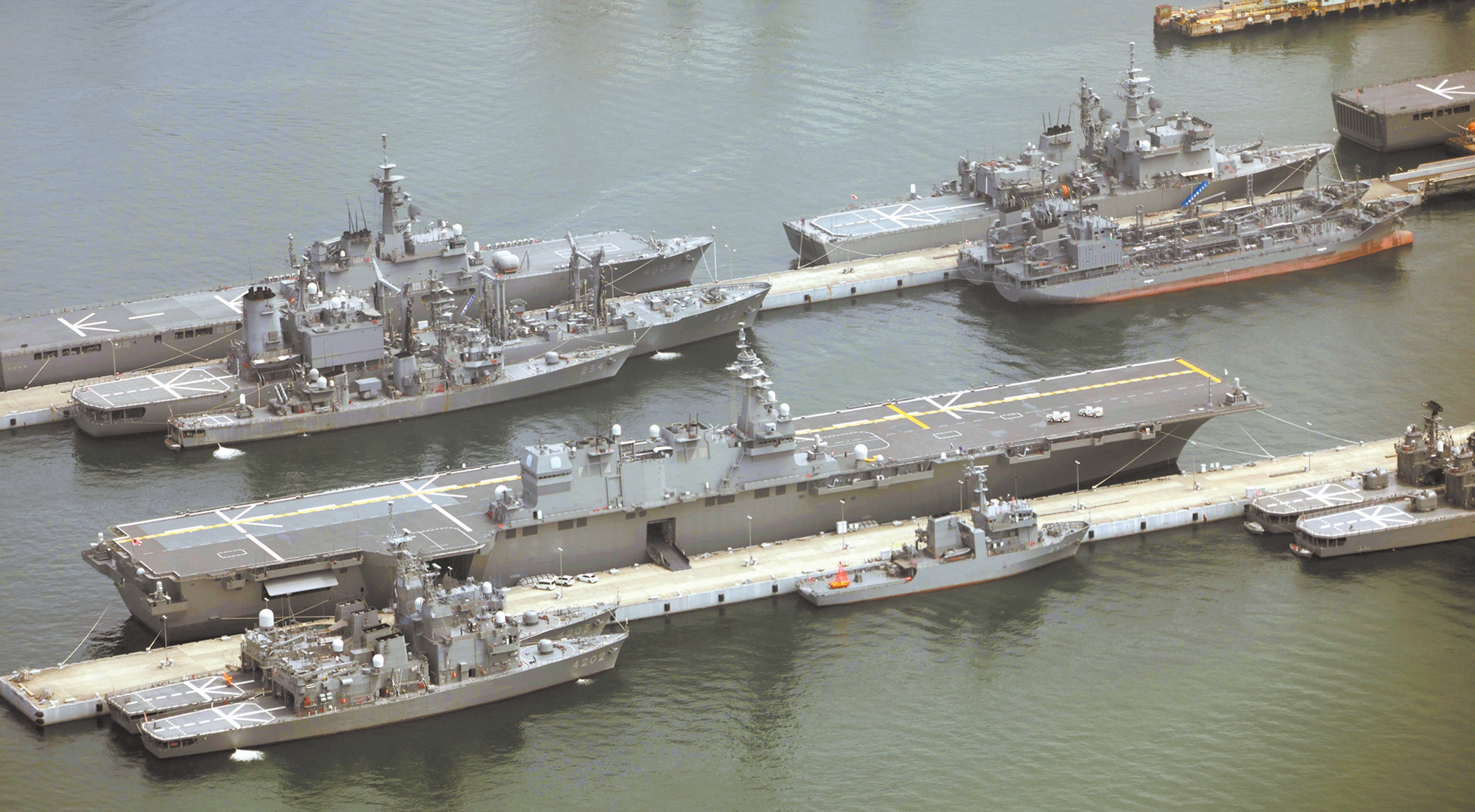
An aerial photo shows JS Kaga in Kure city, Hiroshima Prefecture, Japan on April 7, 2024. Photo: VCG
As an aggressor and a defeated country in WWII, Japan should strictly abide by the provisions of the Potsdam Proclamation that prohibit its rearmament. At the same time, it must adhere to its pacifist constitution, which commits the country to an exclusively defense-oriented policy and should therefore refrain from developing or deploying aggressive weapons and equipment, Zhang said.
Beyond aggressive weapons, Japan has also accelerated the development of some new-concept systems. At an annual symposium held in November, the Acquisition, Technology and Logistics Agency under the Japanese MoD revealed that a railgun and its required firing system, which installed on the deck of the JS Asuka in April 2025, had undergone sea trials and successfully hit a maritime target.
Also, Japan's MoD has been advancing the development of high-energy laser systems as a low-cost interceptor compared with existing air-defense systems, reported Daily Naval News on December 5.
While some of Japan's current weapons and equipment can be considered advanced in the world, such as its warships and missiles, it is widely considered to be sitting in the second tier of conventional military power ranking in the world, not to mention the Permanent Five members of the UN Security Council having nuclear weapons. If Japan wields this power to challenge the postwar international order, it is surely overestimating its own capabilities, Zhang said.
However, Zhang warned that Japan's right-wing forces were not thoroughly purged after WWII, leaving fertile ground for the revival of militarism within the country. This represents an extremely dangerous development.
"If Japan seeks to return to the path of militarism, violate its commitment to peaceful development, and disrupt the postwar international order, the Chinese people will not allow it, and the international community will not allow it. Such attempts will only end in failure," Chinese Foreign Ministry spokesperson Mao Ning said at the press conference on November 21.
"Peace and development remain the themes of our time. Japan is standing at a historic crossroads. The world bears the responsibility to remain alert, constrain its slide toward a dangerous path, and prevent a tragic repeat of history in new form," said Yang.
Rearmament of the defeated
RELATED ARTICLES