IN-DEPTH / IN-DEPTH
Scholars’ Perspectives: Formation, development of the Chinese nation as one community follow the will of people, irresistible tide of history: ethnic expert
By Zhang Han and Published: Sep 29, 2025 10:06 PM

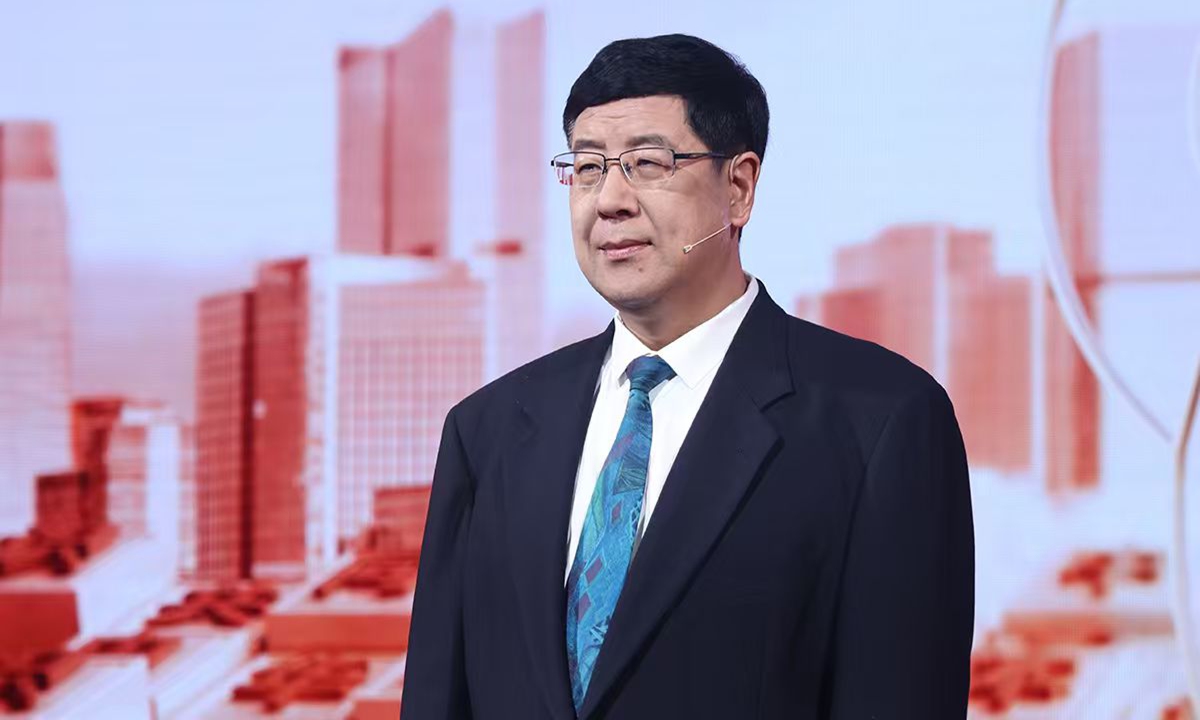
Yan Qing professor from Minzu University of China, who also serves as deputy secretary-general of the advisory committee of China's National Ethnic Affairs Commission
Editor's Note:
Recently, Chinese President Xi Jinping, also general secretary of the Communist Party of China (CPC) Central Committee and chairman of the Central Military Commission, led a central delegation to attend a grand gathering in celebration of the 70th founding anniversary of the Xinjiang Uygur Autonomous Region. On September 24, while listening to work reports from the CPC Xinjiang regional committee and the regional government, President Xi once again stressed that "it is imperative to foster a strong sense of the Chinese nation as one community in Xinjiang and promote the construction of the community."
Just about a month earlier, while attending a grand gathering to mark the 60th founding anniversary of the Xizang Autonomous Region, President Xi delivered the same requirement after listening to work reports from the CPC Xizang regional committee and the regional government. President Xi attaches great importance to the work of ethnic unity in Xinjiang and Xizang. He has convened a number of important meetings and articulated the original and pioneering conclusion of "reinforcing the sense of the Chinese nation as one community," establishing it as the focus of our Party's work on ethnic affairs and indeed for all our endeavors in ethnic minority areas in the new era.
Multiple important speeches included in the book series Xi Jinping: The Governance of China reflect President Xi's ideas for strengthening and improving the Party's work on ethnic affairs. For example, in the article "Heighten a Sense of Chinese Identity" in Volume III, President Xi pointed out: "We must fully implement our Party's theories and policies concerning ethnic groups, work together for common prosperity and development, and help all ethnic groups remain as closely united as the seeds of a pomegranate, so that the Chinese nation will become a more inclusive and cohesive community." In the article "Unite the Chinese Nation as One Community" in Volume V, Xi emphasized that "heightening the sense of national identity is a shared mission of the entire Party, the whole country, and the people of all ethnic groups."
In the 13th installment of the special series "Decoding the Book of Xi Jinping: The Governance of China," the Global Times, along with People's Daily Overseas Edition, continues to invite Chinese and foreign scholars, translators of Xi's works, practitioners with firsthand experience and international readers to discuss the theme of "fostering a strong sense of the Chinese nation as one community and promoting the construction of the community," in a bid to explore its profound practical significance and value in action.
In the 11th article of the "Scholars' Perspectives" column, Global Times talked to professor Yan Qing from Minzu University of China, who also serves as deputy secretary-general of the advisory committee of China's National Ethnic Affairs Commission.
GT: General Secretary Xi Jinping, in "Unite the Chinese Nation as One Community" in the fifth volume of Xi Jinping: the Governance of China, pointed out that "the formation and development of the Chinese nation as one single community follows the will of the people and the irresistible tide of history." What is the historical foundation and cultural roots of the Chinese nation as one community? Why do we say it follows the will of the people and the irresistible tide of history?
Yan Qing: The historical foundation of the Chinese nation as one community lies in the fact that all ethnic groups, through long-term exchanges, interactions, and integration, have formed bonds of shared blood, common beliefs, interconnected cultures, interdependent economies, and close affections. Chinese civilization emphasizes the concept of "great unity" and advocates the realization of pluralistic integration through institutional design. This ideology has run through the course of Chinese history and become the core value orientation of the Chinese nation as one community.
The formation of the Chinese nation as one community has gone through several stages: All ethnic groups engaged with each other economically and culturally, and achieved political unity through centralized authority; since modern times, all ethnic groups have jointly resisted foreign aggression and defended the country, which strengthened their national identity; after the founding of the People's Republic of China, solid socialist institutions were established to safeguard ethnic unity; in the new era, the all-round development of economy and society has further consolidated the awareness of the Chinese nation as one community among all ethnic groups.
General Secretary Xi pointed out clearly that the unity of Chinese civilization has seen its various ethnic cultures coming together to create a cohesive whole and remaining tightly knit even in the face of serious setbacks. It shapes a common belief that China's territorial integrity must always be preserved, the country must never be allowed to descend into turmoil, our nation must always remain united, and our civilization must never be interrupted. It firmly underscores the notion that national unity always remains at the core of national interests and that a robust, unified nation is essential to the future of all our people.
The Chinese nation as one community is rooted in fine traditional culture. Ancient Chinese emphasized the concept of "unity of heaven, earth, and humanity," adhered to the idea of "harmony and coexistence," and pursued the goal of "universal harmony under heaven." Characters like "Ping" (meaning peace), "Ning" (meaning tranquility), and "An" (meaning safety) are commonly seen in names of Chinese places, precisely reflecting the simple aspiration of the people for a stable and peaceful life over thousands of years.
Cultural identity is an important bond that sustains Chinese nation as one community. Historically, the practices of "unifying written scripts" and "standardizing ethical norms" closely connected all ethnic groups, forming a pattern of mutual support where "each group is integrated with others." The Chinese people value the principle of "treating others with courtesy" and emphasize the concept of "universal love and mutual benefit," which are not only a way of behaving oneself but also a principle for countries to interact with each another.
The history of China is a history in which all ethnic groups have blended and converged to form the unified Chinese nation with diversity, and a history in which all ethnic groups have jointly founded, developed, and consolidated the great unified the motherland. People of all ethnic groups share a common homeland, a common identity, a common name, and a common dream—these numerous "commons" have formed the bonds and lifeblood of the Chinese nation as one community. Today, to understand the Chinese nation as one community, we must recognize the inherent connection between this history and reality. Understanding that "we will always be together" is not only a choice made by history and by the people, but will also further inspire all ethnic groups to join hands in advancing the building of a strong nation and national rejuvenation in the process of Chinese modernization.
GT: General Secretary Xi noted that the focus of our Party's work on ethnic affairs - and indeed for all our endeavors in ethnic minority areas - is to reinforce the sense of the Chinese nation as one community. Could you elaborate on relevant practices in regard to economic development, social security, cultural exchanges and system innovation? Which practices and policies have enhanced the cohesion of the Chinese nation as one community in the new era?
Yan Qing: "Reinforcing the sense of the Chinese nation as one community" is not only a political concept and governance strategy, but also concrete practices implemented in areas such as people's wellbeing, development, and security.
For economic development, China has long seen "faster growth in the east and slower in the west": with geographical and industrial advantages, the eastern and central regions took the lead in development while the western region has been lagging behind due to factors such as natural conditions. However, when it comes to resources, the situation is exactly the opposite—"richer in the west and weaker in the east." Most resources, be it water sources, energy, minerals, or wind and solar resources, are concentrated in the western regions. Therefore, the eastern and western regions are naturally integrated and interdependent.
Targeted support is precisely the practice that turns this difference into complementarity. From supporting Xizang and Xinjiang regions to extensive targeted cooperation, it involves not only financial support, but also market cooperation, talent exchanges, and industrial projects. The shift from the previous "blood transfusion" (passive financial assistance) to the current "blood formation" (capacity-building for self-sustained development), coupled with fiscal transfer payments and the transmission of wind and solar power to other regions—such as the example of "wind power from Hami in Xinjiang lighting up Zhengzhou and Chongqing"—all demonstrate that the whole country is pursuing coordinated development as a single integrated entity.
As for social security and improvement of people's wellbeing, cohesion stems from the genuine feelings of the people. In education, since the launch of the "inland Xizang classes" in 1985 and the "Xinjiang high school classes" in 2000, students from border areas have gone to study in places like Hebei and Jiangsu provinces. Their parents check the weather forecast of the cities where their children study every day, and the affection for these "second hometowns" deepens with each passing day.
In healthcare, PLA medical teams have visited monasteries to treat monks for cataracts, and the monks have presented Khatas, a ceremonial white scarf symbolizing goodwill and blessing, in return. The sense of happiness brought by restored health is precisely a form of identification.
In terms of housing and poverty alleviation, the happy villages in border areas, the project of "vitalizing border areas and enriching residents," the "fifth-generation" houses in Demchok village, Gar County in Xizang aided by inland regions have allowed the herdsmen to feel that the "Chinese Dream" is right beside them.
The cohesion of the Chinese nation as one community does not emerge out of thin air; instead, it is continuously accumulated and bonded through accessible roads, internet connectivity, housing, schools, clinics, a sense of security, and hope for the future. It is precisely these tangible improvements in life and the aspiration for a better future that enable people of all ethnic groups to truly realize: we share a common destiny and will always stand together.
GT: General Secretary Xi emphasized "We must build a spiritual home shared by all the Chinese people, as a powerful cultural buttress for strengthening the Chinese nation as one community." What does "shared spiritual home" entail? With this goal, how should we understand the relationship between Chinese cultural and ethnic cultures?
Yan Qing: The "shared spiritual home" is the most cherished force beyond material life that can best support people's souls. The values that the Chinese people have advocated for generations—patriotism, unity, friendliness, peace, and self-improvement—are precisely the core values that constitute the shared spiritual home of the Chinese nation.
The root of this consensus lies in 5,000 years of exchanges, interactions and integration. The prominent features of Chinese civilization — continuity, innovativeness, unity, inclusiveness, and peaceful nature — not only make it unique in the world's cultural system, but also continuously inject strong value guidance, cultural cohesion, and spiritual impetus into the formation, development, and growth of the Chinese nation.
The cultures of all ethnic groups, characterized by mutual compatibility and integration, jointly constitute Chinese culture. The core values of each ethnic group's culture have continuously converged under the concept of "great unity," and finally merged into a common spiritual bond of the Chinese nation. A nation stands out in the world because of its civilization, and a civilization endures because of its nation. The relationship between Chinese culture and the cultures of ethnic groups is not only that of an integral whole and its parts in terms of tangible culture, but also a relationship of interweaving and integration of institutional and spiritual cultures.
GT: Certain Western media outlets conflate China's emphasis on a unified national identity with the "suppression" of minority identities, portraying minority identity and the Chinese nation as one community as opposites, and even going so far as to allege that China "oppresses ethnic minorities." How do you respond to such claims?
Yan Qing: Western thought tends to view the individual as the most basic unit, stressing "atomized" self-determination and treating nations as if, like individuals, they must exist in complete independence. China, by contrast, places value on unity and collectivism, seeing its many ethnic groups as members of one large family. In terms of national identity, the West often adheres to the idea of "one nation, one state," whereas China's perspective is that "one state can embrace many ethnic groups."
With the advance of technology and increasingly specialized divisions of labor, modern society requires even greater capacity for large-scale organization and coordination. In fact, the very benchmark of "civilization" in the Chinese tradition has long been defined by the ability to govern vast territories and to realize the ideal of "governing the state, and bringing peace to all under heaven."
Some voices today deliberately pit minority identities against the Chinese nation as one community, accusing China of "oppressing ethnic minorities." In reality it is the opposite. Take China's Xizang Autonomous Region as an example: before peaceful liberation, the average life expectancy was just 35.5 years; that number has more than doubled as of today. The population has grown substantially and education levels have risen dramatically. In some minority groups the proportion of university students per 10,000 people has even surpassed the Han national average.
If so-called "oppression" truly existed, how has such remarkable progress been achieved? Clearly, many of these accusations are driven by political agendas rather than a genuine concern for minorities' well-being.
The concept of the "Chinese nation as one community" is also often misunderstood abroad. In some Western perspectives, the state is seen as a restrictive or even oppressive force on individual freedom. But in the Chinese view, the state and the family are inseparably linked: without the nation, there can be no secure home. The two depend on and reinforce each other.
GT: What do you think is the relationship between "the Chinese nation as one community" and "a community with a shared future for humanity"? What is the global significance of the "the Chinese nation as one community"?
Yan Qing: By fostering the building of the Chinese nation as one community among 1.4 billion people, China is also making a contribution to building a community with a shared future for humanity. This reflects the deeply rooted philosophy of "family-nation-world": first ensuring harmony at home and within the nation, then extending positive influence to neighboring regions, and ultimately advancing common development on a global scale.
At a time of international turbulence and as China enters a decisive stage of national rejuvenation, General Secretary Xi's call on "reinforcing the sense of the Chinese nation as one community" serves as a strategic move to strengthen cohesion, promote solidarity and progress, and realize the great rejuvenation of the Chinese nation.
China's sustained stability and rapid development stem from the concept of "one family," which enables the nation to mobilize resources collectively and fully leverage its institutional advantages. This capacity to concentrate efforts and resources—whether in building railways, highways, or airports—illustrates the unique strength of China's system in undertaking and accomplishing major tasks.
The building of the Chinese nation as one community holds significance beyond China's borders. Globally, the number of refugees has surpassed 120 million and has been rising for 10 consecutive years, driven by turmoil, conflict, and war. China, however, has avoided such large-scale instability by putting the concept of "community" into genuine practice, ensuring that all ethnic groups share in the benefits of development.
Among more than 100 multi-ethnic countries, China's experience offers a valuable model: it shows how unity and development can be achieved in a society with ethnic diversity. This not only provides insights for multi-ethnic nation-building but also serves as an inspiration for how different countries can coexist and prosper together.
RELATED ARTICLES