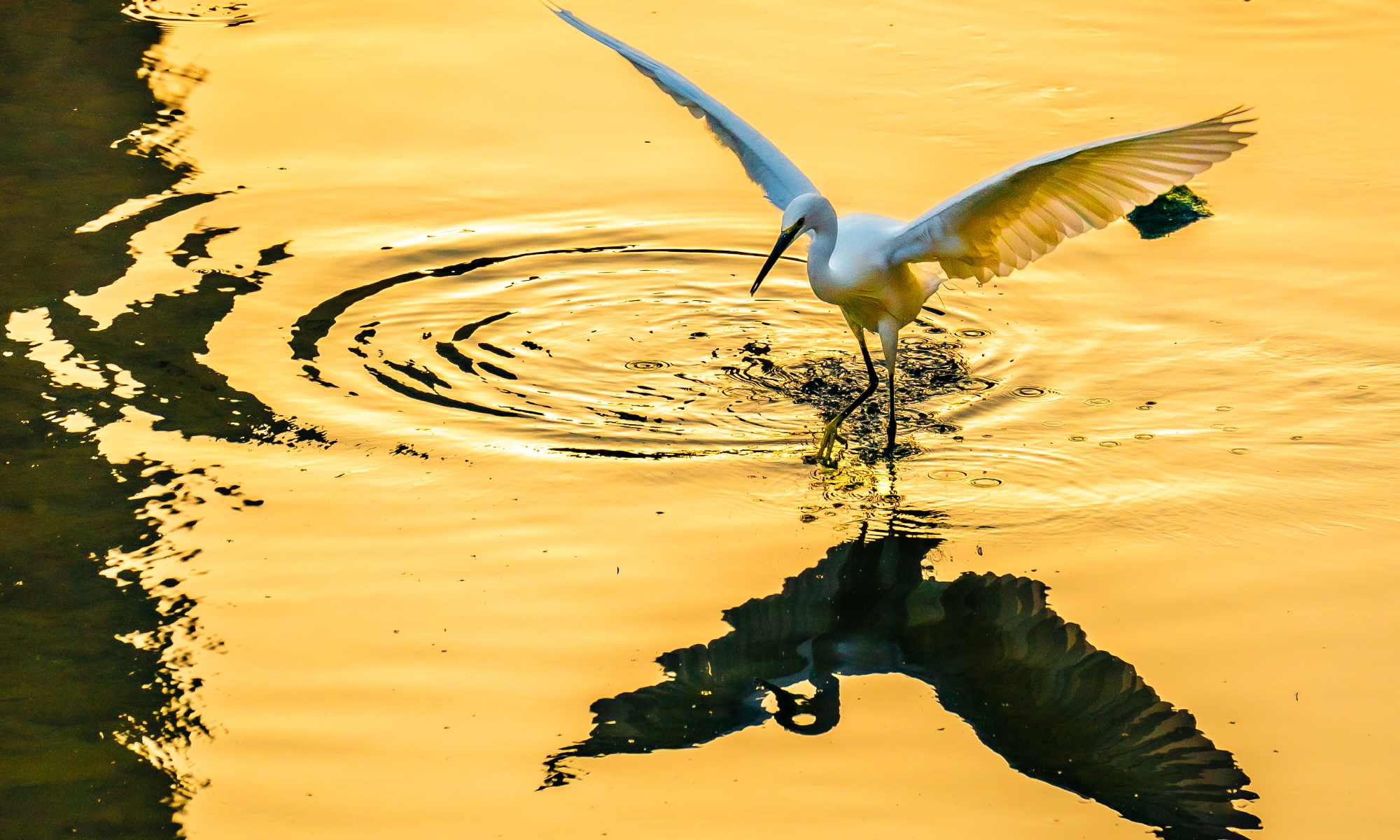
A white egret searches for food in the glistening waters of the Wangmu River as the morning sun casts a golden hue over the landscape in Wangmo county, Bouyei-Miao Autonomous Prefecture of Qianxinan, Southwest China's Guizhou Province, on November 28, 2025. Photos on this page: VCG
As winter approaches, the 2025 migratory bird season is reaching its peak from north to south in China. From the frigid wetlands along the Heilongjiang River to the lake clusters of the middle reaches of the Yangtze River and down to the coastal mudflats of South China, tens of thousands of migratory birds are making their way along ancient flyways to their wintering grounds, painting a dynamic ecological picture across China's rivers, lakes and seas.In recent years, monitoring data and media reports from across the country have shown a continuous rise in bird populations, frequent sightings of rare species, and visible improvements in wetland restoration and ecological protection - all seen in the most vibrant, life-filled ways.
After flocks of early-arriving birds such as wild geese and ducks reached East China's Jiangxi Province's Poyang Lake, rare wintering species, including the Siberian crane, white-naped crane, Oriental stork and whooper swan, also appeared in significant numbers, CCTV reported on Tuesday.
According to staff at the Poyang Lake National Nature Reserve, as many as 65 species of waterbirds have been recorded in the lake area this season, with a total population exceeding 360,000.
Jiangxi has significantly improved wetland ecosystem this year through measures such as water level regulation and aquatic plant cultivation, while strengthening joint enforcement and adopting a "human-tech patrol" model to provide safer, more abundant habitats for migratory birds.
According to a recent report released by the National Forestry and Grassland Administration, Sanmenxia city in Central China's Henan Province has entered the peak period of whooper swan migration. Over 10,000 whooper swans have been observed so far. To provide adequate food supplies for the swans, over 1,500 mu (100 hectares) of reeds and bulrushes have been planted along the Yellow River.
During the 14th Five-Year Plan period (2021-2025), Sanmenxia has continuously strengthened ecological protection, increasing the number of swan habitats from four to 10 and establishing a 100-kilometer swan observation belt along the Yellow River.
In Southwest China's Sichuan Province, the Nanchong section of the Jialing River, home to the Fengyi Bay Wetland, has become a model for harmonizing conservation and development. Each autumn and winter, the wetland hosts more than 30,000 migratory birds, including black-faced spoonbills, black storks and the scaly-sided merganser - all of which are under top-level national protection, according to a report by the Sichuan Daily in late October.
To reduce threats posed by high-voltage transmission lines to these birds, authorities relocated seven ultra-high-voltage and high-voltage lines along the newly constructed Chengdu-Dazhou-Wanzhou high-speed railway in October 2025. The lines were moved back roughly six kilometers, tower heights were lowered, and aviation warning devices were installed, creating a safe passageway for the birds. The move was hailed as an exemplary case of prioritizing ecology by "making way for 30,000 migratory birds," according to the Sichuan Daily.
At the same time, China is seeing a growing trend in the "birdwatching economy" and public participation. Many wetland reserves have turned the wintering and migration of birds into valuable resources for eco-tourism and educational research. This not only attracts tourists, scientific research teams and nature enthusiasts but also brings broader public oversight and support for ecological protection while fostering green growth in local economies.
In Kunming, capital of Southwest China's Yunnan Province, nearly 40,000 black-headed gulls arrive each winter, forming a unique consumption ecosystem around the birdwatching experience. Public data shows that the gulls draw as many as 20 million tourists annually, spurring more than 30 percent growth in related consumption, Kunming-based Urban Times reported on November 26.
The "gull-watching economy" has emerged as a key driver of Kunming's winter economy. This four-decade-long bond between humans and birds not only represents a breathtaking natural spectacle spanning thousands of kilometers, but also serves as a vivid example of how ecological value and economic vitality can reinforce each other, according to the report.
Global Times
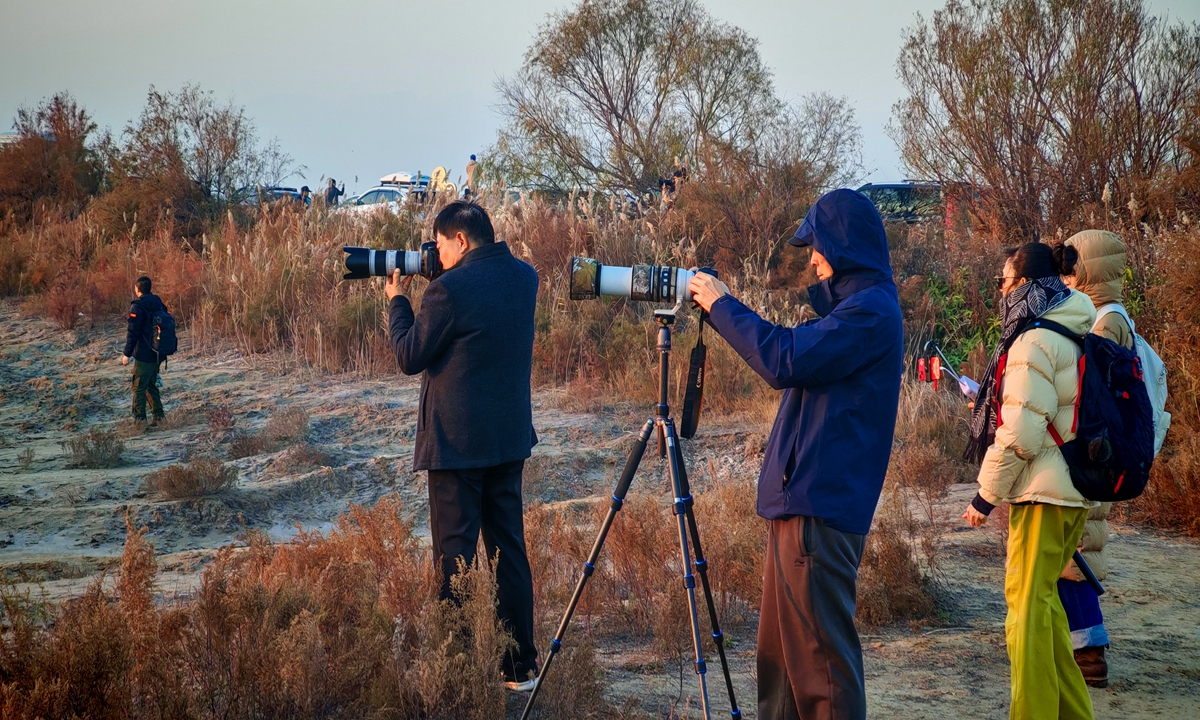
Photography enthusiasts set up their cameras to capture the breathtaking sight of flocks of migratory birds darkening the sky above the Yellow River wetland in Dongying, Shandong Province, on November 22, 2025.
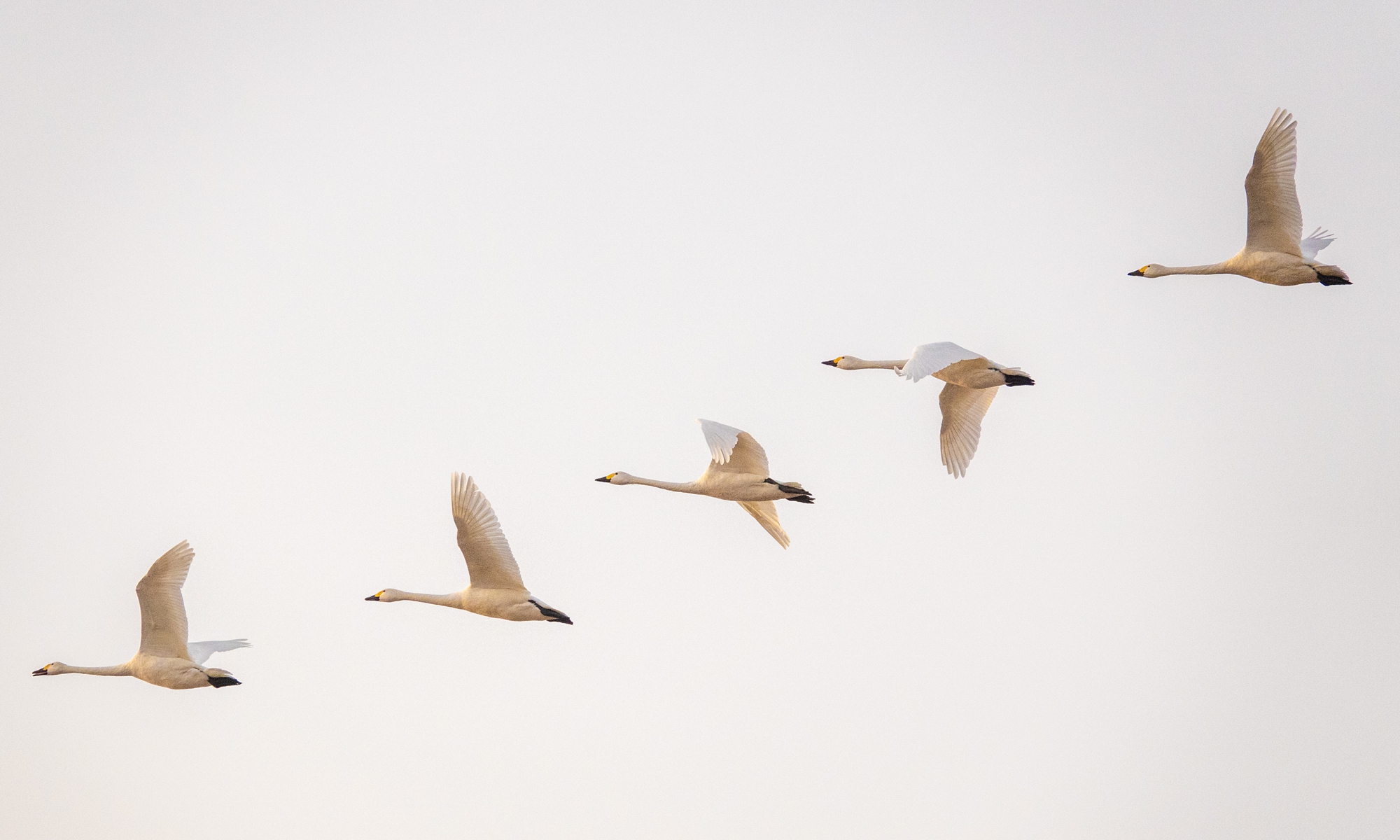
A flock of swans fly over the Hailiu Reservoir in Hohhot, North China's Inner Mongolia Autonomous Region, on November 28, 2025.
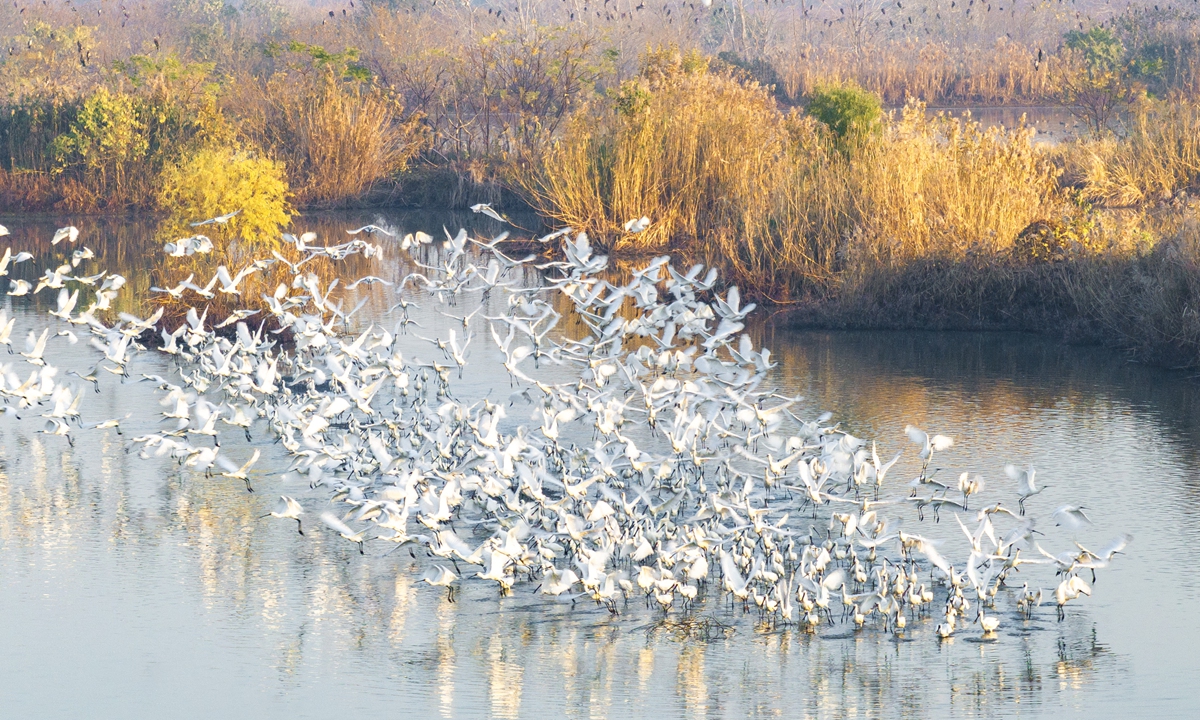
Flocks of migratory birds forage and rest in the shallows after arriving at the Lixiahe National Wetland Park in Xinghua, East China's Jiangsu Province, on November 30, 2025, adding a picturesque touch to the winter landscape of the water town.
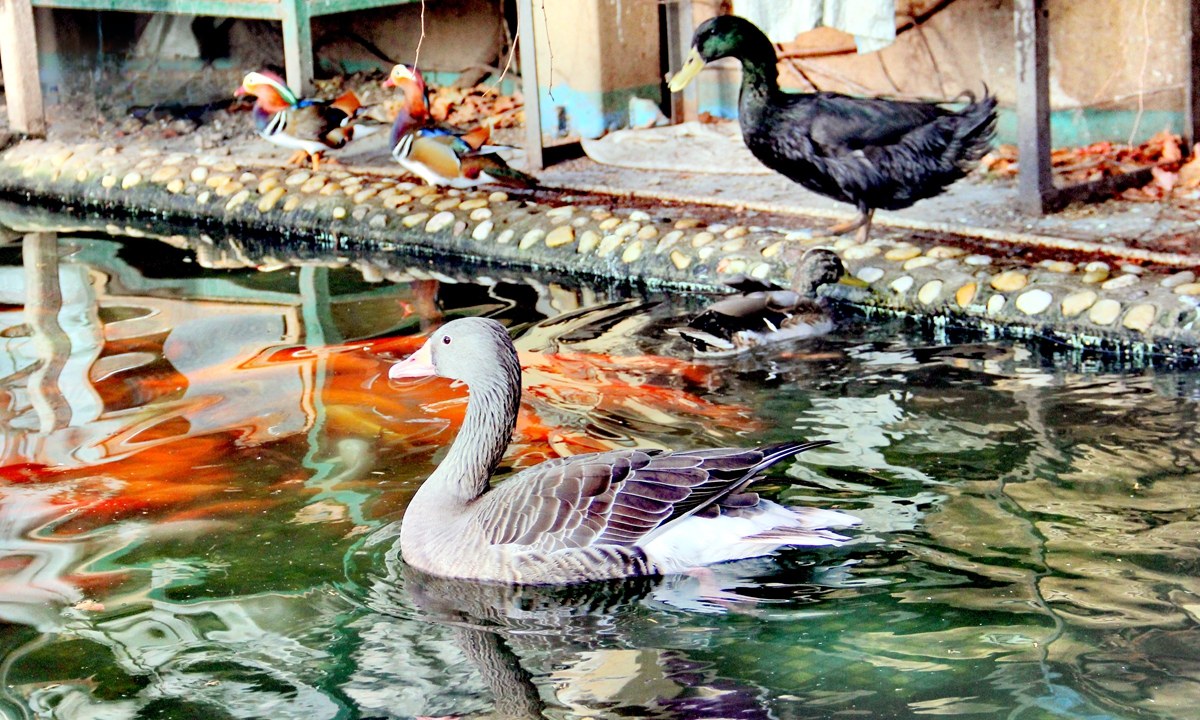
Injured migratory birds that are unable to fly south for the winter are kept and fed inside a glass greenhouse by the lake at Zhaolin Park in Harbin, Northeast China's Heilongjiang Province, on December 1, 2025. This winter, the park has taken in seven migratory birds.
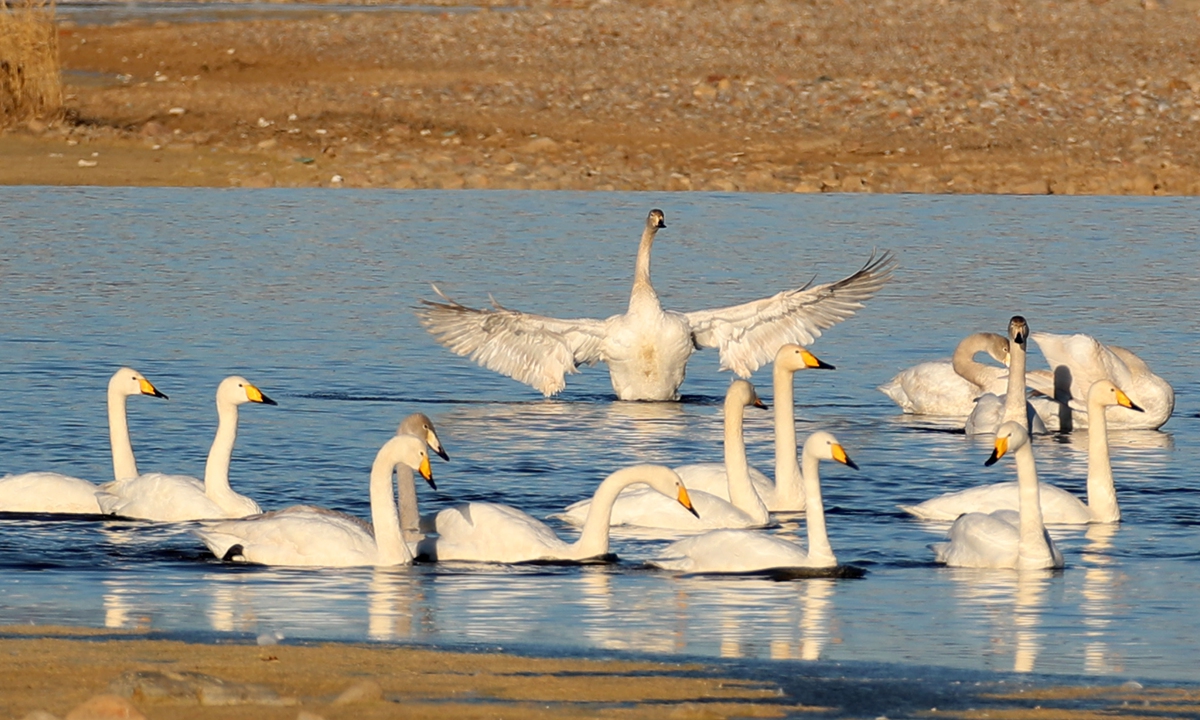
Numerous whooper swans, tundra swans, and mute swans forage along the Qingshui River in Taishizhuang village, Taishitun Township, the Miyun district of Beijing, on December 2, 2025.
GT