IN-DEPTH / IN-DEPTH
China’s institutional innovation, growing public engagement ensure dignity, inclusion for people affected by rare diseases
From rare to remarkable
By Published: Nov 05, 2025 07:40 PM

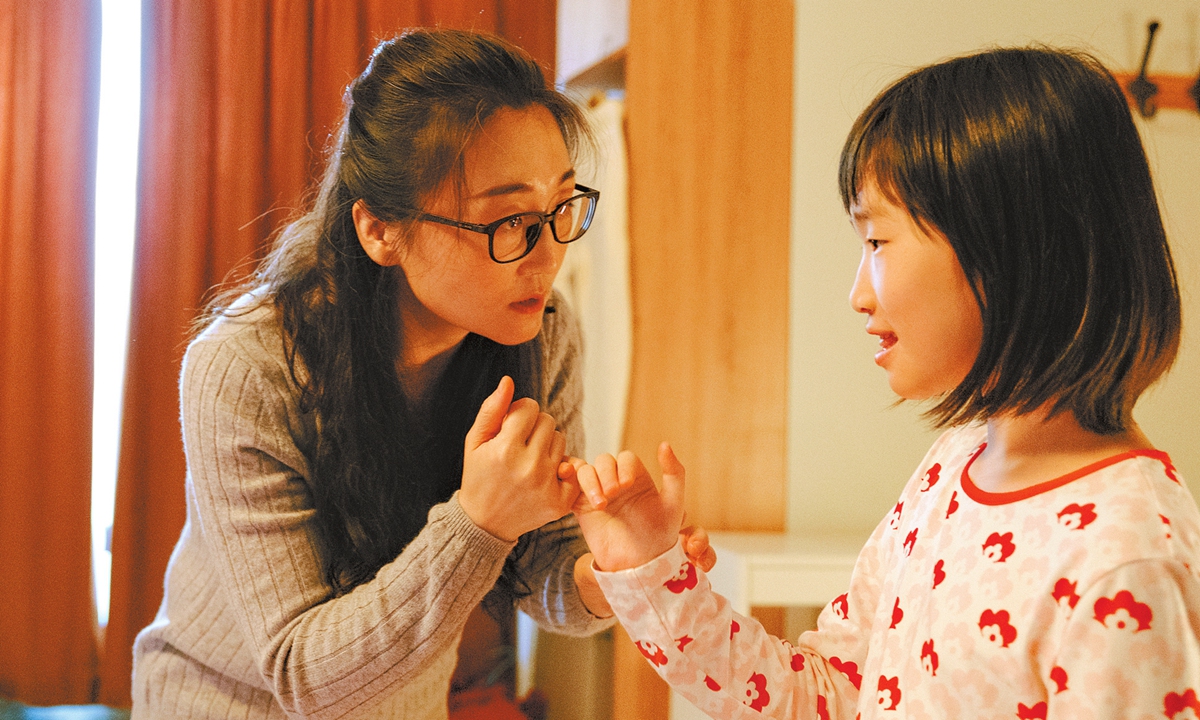
A mother and her daughter with a rare disease in Guangzhou, South China's Guangdong Province, on January 31, 2024 Photo: VCG
Editor's Note:China's human rights stories are unfolding in a new era of comprehensive, deepening reform and historic changes. It is a key component of China's poverty alleviation and whole-process people's democracy, a thorough reformation in judicial, medical insurance, and other key sectors related to the national economy and people's livelihoods, as well as a combination of numerous impressive and inspiring individual stories.
To be nurtured in youth, be educated, secure gainful employment, receive medical care when ill, be cared for in old age, have a place to live, and to be supported when weak - all of these are concrete manifestations of human rights, demonstrating that the greatest human right is the people's right to happiness.
For a long time, politicians and media outlets in a handful of countries have remained hostile and prejudicial toward China, leading to a lack of understanding among foreign audiences when it comes to the concepts and achievements of China's human rights development. But what is revealed in the daily lives of the Chinese people speaks the most basic truth: Rights to survival and development are fundamental human rights.
The Global Times is launching a series of articles, telling vivid stories about upholding human rights in the new era. We expect the series to become a window through which more foreign readers will understand how Chinese people recognize human rights and what efforts they have made to fight for and fully enjoy human rights in their daily lives.
In China, the rare disease community is gradually emerging from the "silent margins" and entering the public eye. In the past, these individuals were often associated with words like "loneliness" and "fate." Today, however, their stories are being woven into the country's institutional advancements, technological innovations, and growing social awareness.
Backed by national policies, supported by collective social efforts, and driven by their individual resilience, every "rare life" is no longer a passive recipient of circumstances, but rather an active participant and witness to social change.
In late September, the China Conference on Rare Diseases was held in Beijing. The data shared at the event was both heartening and inspiring: The country now has 419 hospitals in the national rare disease diagnosis and treatment network, with 626 hospitals participating in the direct reporting system. The rare disease list has expanded to 207 conditions, and around 100 rare disease medications have been included in the national medical insurance drug list, the Xinhua News Agency reported.
This is a story of mutual progress between individual perseverance and institutional support - and a collective safeguarding of life and dignity.
Taking destiny into own hands

Wang Weijia (left) who has Pompe disease chats with fellow rare disease patients at the "Beyond Rare, Beyond Limits" charity event in Beijing organized by the Illness Challenge Foundation, on September 5, 2025. Photo: Li Hao/GT
"I am the master of my fate," Wang Weijia often says.Wang lives with Pompe disease, an extremely rare genetic metabolic disorder that causes progressive muscle atrophy, which limits mobility and can even affect breathing. At night, Wang relies on a ventilator to sleep. During the day, even the simplest actions, such as standing up or climbing stairs, demand much more effort than they would for an average person.
Yet Wang has defied fate with unwavering determination. In 2020, he was admitted to Nankai University with a score of 662 on the national college entrance examinations, ranking third in his county. Now, he is pursuing a postgraduate degree at the School of Information and Electronics at the Beijing Institute of Technology, aligning with his belief that "knowledge is the sharpest weapon for breaking the shackles of fate."
"I never thought of giving up," Wang recalled of his high school years. "I would get up at around 5 am and return home after 10 pm. I studied and did assignments lying in bed - that was how I negotiated with fate."
He also remembers those who lent a helping hand. At high school, the school arranged for his class to remain on the first floor for easier access. Classmates helped carry his schoolbag and pushed his wheelchair. His parents nearly exhausted their savings over the years of treatment. "Fate is not rewritten by one person alone - it is a result of persistence and warmth combined," he said.
In 2017, a targeted treatment for Pompe disease was introduced to the Chinese mainland. A single vial of the drug cost 5,300 yuan ($730), and based on body weight, the monthly cost could be as much as 220,000 yuan, totaling over 1 million yuan annually - a sum far beyond what most families could afford. Wang's family used up all their savings, borrowed from relatives and friends, and with additional public donations, he was finally able to access some of the medication in 2019.
Today, thanks to continued policy advancements, his monthly medication costs have dropped to 50,000 yuan, half of which is self-funded. While the burden remains heavy, compared to the despair of having "no available treatment" a decade ago, Wang sees hope: The national system is changing, doctors' attitudes are changing, and society is changing too.
He recalled that it took just two years to receive a diagnosis. "I consider myself lucky. Back then, many patients had to spend years visiting hospitals before getting diagnosed. Now, more doctors say, 'I've heard of Pompe disease.'"
"We have a support group with 300 to 400 members. People are no longer hiding from the disease name - we openly share treatment experiences and encourage one another," Wang told the Global Times.
Wang has also transformed from someone who received help into someone who offers it. During his undergraduate years, he founded the "Tongzhou Rare Disease Exchange Platform," organizing online sharing sessions, doctor-patient communications, and policy consultations to help more families access medical information and rehabilitation resources.
"The body may be weighed down, but the soul will always stand tall," Wang said. "In the future, I hope to contribute to society with my wisdom and passion - to help protect every household and keep their lights shining."
Policy breakthrough
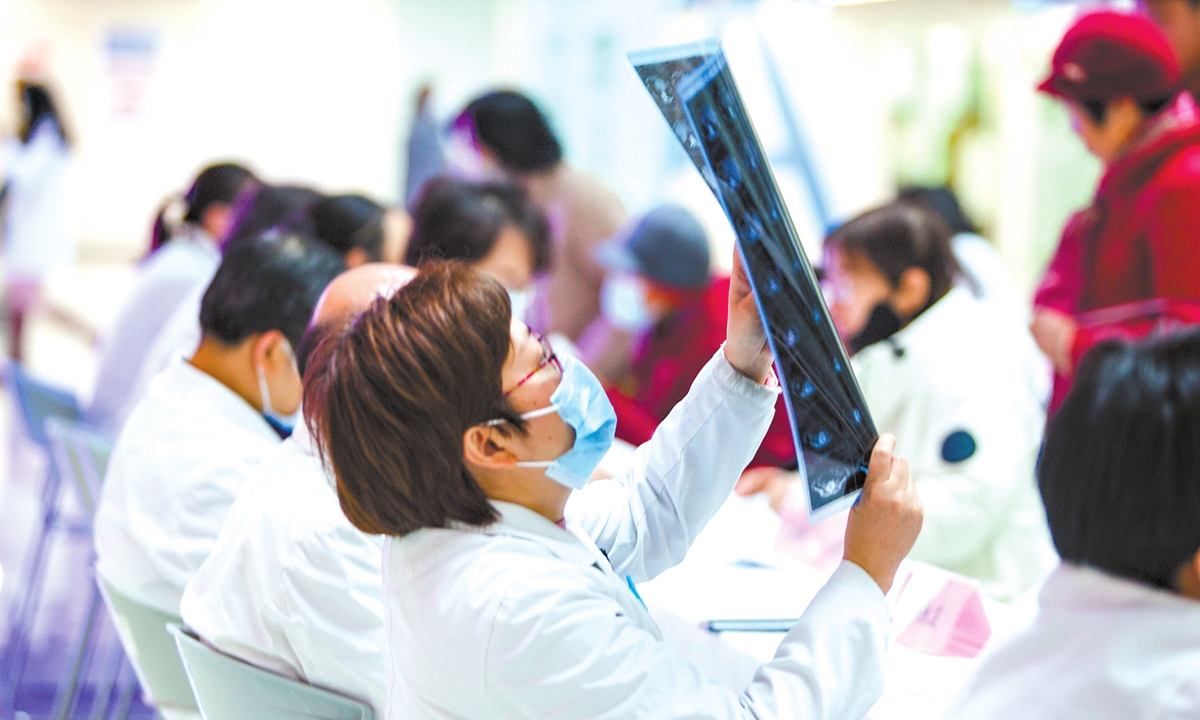
A hospital in Nanjing, East China's Jiangsu Province, hosts a rare disease free clinic, offering medical services to patients and their families, on February 29, 2024. Photo: VCG
This autumn, an uplifting story spread across Chinese social media: A 7-and-a-half-year-old boy with spinal muscular atrophy (SMA), nicknamed "Little Shitou (Little Rock)," officially became a primary school student.What may seem like a simple milestone was once beyond his family's imagination.
In 2018, shortly after his birth, Shitou was diagnosed with SMA, a rare genetic neuromuscular disease that causes muscle wasting and respiratory difficulties. At that time, doctors told the family the child "might not live past the age of two," and there were no approved treatments available in the Chinese mainland.
For a long time, his parents sought help at multiple hospitals, relying only on rehabilitation exercises and respiratory support devices to maintain basic functions, according to a report by the Jinan Times.
The turning point came in early 2019, when nusinersen, a targeted treatment for SMA, was approved for use in China. However, the price was staggering - 700,000 yuan per injection, with six injections needed annually, totaling several million yuan. "We could only watch the medicine appear in news reports," said Ma Hengxiang, the child's father. "It was a figure far beyond the reach of any ordinary family."
The real change arrived in 2021, when the Natinal Healthcare Security Administration included nusinersen in the national medical insurance drug list. Its price dropped to just over 30,000 yuan ($4,100) per injection - a decrease of more than 95 percent, the Jinan Times reported.
"When we heard the news that day, we knew our child had a chance," said Ma. With access to the medication, Little Shitou received timely treatment, his condition came under control, and his physical function improved significantly. This year, he passed his school health examination and entered primary school, beginning a new chapter in life.
For many people living with rare diseases, the most critical turning point in their life journey often comes from a shift in public policy.
"In just a few years, China has made the leap from neglect to inclusion," Li Linkang, executive director of China alliance for rare diseases, told Xinhua. "This is one of the most representative achievements of institutional innovation with Chinese characteristics."
In an interview with the Global Times, Ma Tao of the Illness Challenge Foundation noted that in recent years, China has made a series of landmark institutional advances in the field of rare diseases. These include the release of the country's first rare disease catalog in 2018, the establishment of a national rare disease diagnosis and treatment network, a fast-track approval process and a special funding program set up by national authorities, and mechanisms developed by the healthcare authority for drug stockpiling and price negotiations. Together, these measures form a steadily improving policy framework.
"In addition, the country is actively promoting domestic biomedical innovation and supporting the development of rare disease treatments," Ma said. "While some policies are still in progress, the direction is already clear. Overall, China is forming a closed-loop system for rare disease support - from diagnosis and treatment to drug availability, payment mechanisms, and innovation."
Beyond sympathy
"We hope the public can see that behind every rare disease is a real person, a real family - people with dreams, determination, and strength, not merely those in need of pity," said Ma Tao.
Since its establishment in 2016, the Illness Challenge Foundation based in Beijing has helped thousands of patients with rare diseases access medical support and social services. Through policy research, patient education, and public advocacy, the foundation has contributed to multiple drugs being included in the national medical insurance catalog, assisted local governments in building rare disease registries, and partnered with companies to explore new models of remote and flexible employment.
One of the foundation's long-term focus areas is supporting patients with osteogenesis imperfecta - commonly referred to as "brittle bone disease." According to Ma, an increasing number of children with the condition have gained access to education, and more schools are installing accessible infrastructure. Meanwhile, hundreds of patients have received training through the foundation and achieved home-based or online employment.
With more than 300 million rare disease patients worldwide, the issue has long extended beyond the boundaries of medicine and has become a significant topic in global public health governance. China is gradually becoming an active contributor and participant in this arena, according to Xinhua.
At present, China has taken the lead in establishing a direct reporting system for rare diseases covering 1.15 billion people, with over 1.64 million registered cases. It has also built a national rare disease registry featuring 253 research cohorts and more than 90,000 case entries, providing vital support for clinical research and new drug development.
RELATED ARTICLES