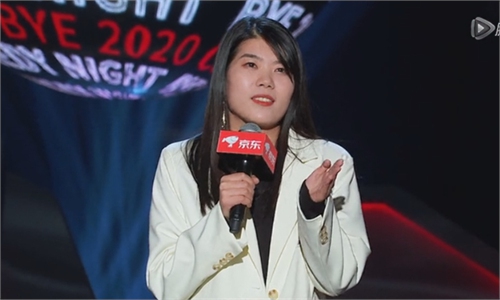
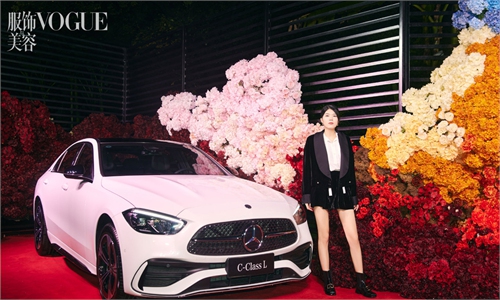
IN-DEPTH / IN-DEPTH
Deep Focus: Chinese female stand-up comedians navigate boundaries of humor amid resonance and controversy
‘Comedy isn't just about laughter’
By Lin Xiaoyi and Published: Aug 07, 2025 06:47 PM

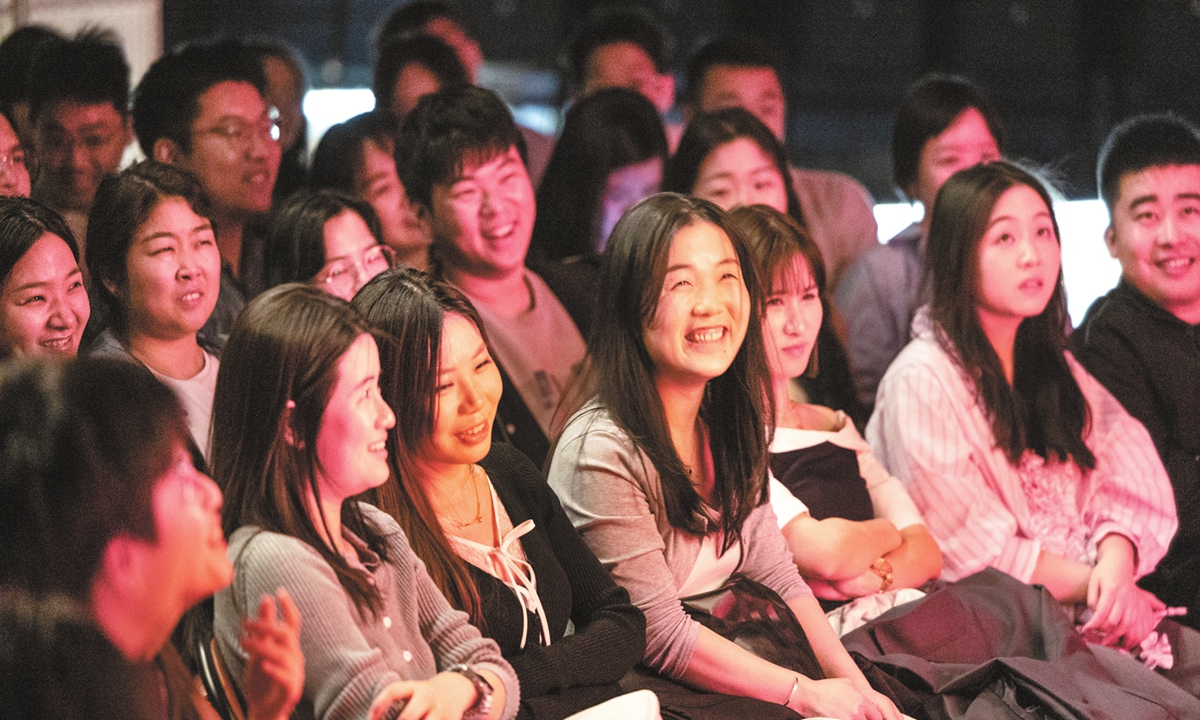
A packed stand-up comedy theater in Wuhan, Central China's Hubei Province, on April 13, 2025. Photo: VCG
Editor's Note:AI, digital life, space travel ... The future is coming at an unimaginable speed.
At this crucial juncture when China has embarked on a new journey to comprehensively build a modern socialist country, such rapid development and transformation not only bring vast opportunities and prospects, but also unpredictable challenges and problems.
These challenges and problems, ranging from the future of human survival, the transformation of local development, to the life and death of a family or a stray animal, could be key topics that trigger social discussion. Each debate surrounding these topics is an inevitable pain point on China's path to pursuing high-quality development.
Against this backdrop, the Global Times has launched the Deep Focus series, focusing on specific issues in current social development. Through detailed investigation and research, we aim to uncover the root causes behind these problems, seek solutions, and engage with relevant parties and sectors to find keys to unlock these complex issues.
In this installment, we delve into the journeys of some Chinese female stand-up comedians, who are exploring boundaries of humor amid resonance and controversy.
This summer, China's stand-up comedy scene has once again been ignited by two hit variety shows. This time, one notable phenomenon has drawn widespread attention and discussion: more female comedians have stepped onto the competitive stage. Talk Show and Its Friends features 21 female participants, accounting for 36 percent of the total contestants, while The King of Stand-up Comedy also has 21 female performers, making up 42 percent of its lineup. Both shows have seen an increase in female participation compared with the first season last year.
Some of them trained their microphones on the gritty details of life, turning complex family ties with a six-time-married father, sexual harassment endured a decade ago, and the physical constraints of flight attendants' uniforms into fodder for laughter. These raw narratives, rooted in personal growth, family dynamics, and workplace routines, have struck a chord with countless audiences.
In light of this, the Global Times spoke with an female stand-up comic who craft material from her own live as well as industry observers to take a look into how female comics have resonated with viewers sharing similar experiences. Their performances help to normalize once-overlooked or taboo topics - from daily struggles to intimate experiences, making them open for public discussion. Some conversations have even spurred reforms in workplace protocols, with such positive signals fueling greater momentum for diverse theme exploration in China's stand-up scene.
More voices from women
Long after the spotlight has dimmed for the night, stand-up comedian Xiaohai's phone screen still glows. Direct messages from her social media accounts brim with warm and personal messages: A girl detailing the discomfort of an ill-fitting bra, another eagerly sharing links to nipple covers - these small, heartfelt connections all trace back to her bold take on "bra freedom" during a show. This part-time comic still remembers the shock of receiving the first such message. Never did she imagine that a story about "bra troubles" would become a code word for mutual understanding among women online.
Xiaohai's comedy journey began accidentally in 2019. While working as a study abroad consultant, she visited an open mic night to help a student find performance opportunities. "The student never showed, but I ended up signing up myself," she recalled. Stand-up has since become Xiaohai's "secret escape." By day, she helps students draft essays and plan college applications; by night, she retreats to the small rooms of open mic nights, turning workplace absurdities and life's frustrations into jokes. "Life gives me material," she said. "Comedy helps me digest it."
What truly thrust Xiaohai into the public spotlight was a stand-up routine she'd initially felt insecure about. "It touched on something as private as underwear - I never intended to share it widely on social platforms," she said. It wasn't until fellow comedians urged her to give it a go that she stepped onto a bigger stage, with little more than a "let's just try" mindset.
Her punchline: "Doctors say don't wear bras over eight hours. Eight hours? Who clocks out on time? Should I just announce mid-meeting: 'Sisters, I 'liberated myself' (a pun: "Jie tuo le" sounds identical to "Sis took it off" in Chinese)." This quip - while weaving together anxiety about medical check-ups with the mortification of workplace faux pas, and the physical burden of bras - quickly ignited a viral discussion about "bra freedom" online. Messages poured in: "Finally someone said it," along with bra-free lifestyle tips.
"That's when I understood," Xiaohai reflected. "Comedy isn't just about laughter, it's also about making invisible struggles visible."

Comedian Xiaohai (center) records a podcast with fellow stand-up performers while sharing insights during a lively session in Beijing, on June 9, 2025. Photo: Courtesy of Xiaohai
Growing alongside other female stand-up comedians in the variety shows, Xiaohai keenly senses the uniqueness of women creators. In her view, women comics possess a heightened emotional sensitivity, excelling at capturing life's creases.When asked about the "rise of women comedians," she said: "We're just describing half of humanity's experiences." What excites her is comedy's expanding boundaries, where once-taboo topics now spark recognition.
Behind this snapshot is the broader picture of the rising status of China's urban women. "Topics that strike such a universal chord must be rooted in fertile social grounds," Zeng Chi, a research fellow at the Research Center for Journalism and Social Development at Renmin University of China, told the Global Times.
He noted that the intense focus on women's issues today stems from urban women having gained a measure of social standing and recognition, their struggles now widely felt. "This is a clear sign of advancing gender equality and improved the status of women."
"Good public expression can help make those in similar circumstances visible, transforming personal stories into shared recognition," Zeng noted.
Indeed, such authentic expressions are seemingly driving tangible changes in reality. Take comedian Xiha's advocacy as a case in point: Drawing on her own experience as a crew member, she voiced concerns about female flight attendants' uniforms on a talk show, questioning why they are required to wear short skirts, stockings, and high heels - rather than pants - in the complex high-altitude environment.
She highlighted practical issues: Stockings, for instance, offer little warmth, are prone to slipping, and feel uncomfortable; more critically, their flammable material poses risks during emergency evacuations, as attendants must remove them quickly. She even shared a specific example: A chief purser friend was injured while falling down an evacuation slide while removing stockings during an engine fire.
Recently, several Chinese airlines revised their dress codes: Stockings, tight pencil skirts, and high heels are no longer mandatory for female staff, with the changes earning widespread praise from netizens.
Concerns over attention-grabbing tactics
Chinese stand-up comedy is shining a brighter light than ever on "female stories" - but along with the praise, people are also wary of extreme feelings being stirred up by profit-hungry hype.
Many netizens have voiced fatigue with repetitive "gender jokes," questioning whether some performers or producers have trapped themselves in a performative loop. Similar sentiments can be found in the comment sections of related clips on Chinese short-video platforms.
Beijing-based part-time comedian Jensen Su, an avid viewer of both shows, harbors mixed feelings about the growing prominence of gender issues in talk show variety programs. In Su's view, gender issues deserve in-depth discussion, but stand-up's fragmented, entertainment-driven nature tends to oversimplify complex social problems into mere gags or labels. When jokes laced with extreme emotion steer public discourse, misinterpretation runs rampant.
"The appeal of stand-up lies in breaking boundaries - letting people refresh their perspectives through satire, revealing life's absurdities with a light touch, and bridging divides through laughter," Zeng noted. "But if comics, driven by an obsession with hot-button controversial topics, fixate on the same subject, or one-sidedly pander to or attack a single group, stand-up devolves into mere offense. Such content will find it difficult to thrive in China's market."
"Great stand-up should be a crowbar prying open perspectives, not a wedge driving people apart," Su reflected. "True masters of humor understand that the ultimate goal of 'offense' isn't to create division by simplistically drawing lines between 'us' and 'them,' but to foster understanding by exposing absurdity - letting people of all stances see themselves and each other in the laughter," he added.
Expectations for diverse creations
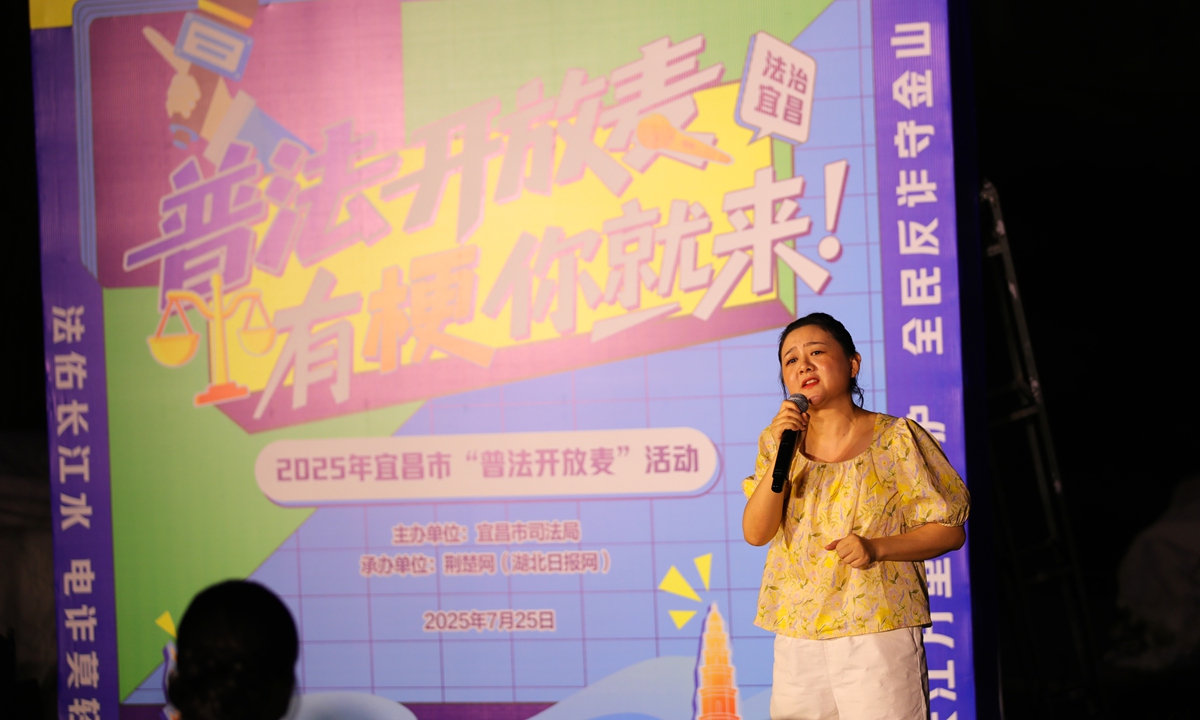
A female stand-up comedian performs at a "public legal education open mic" event, popularizing knowledge on combating telecom fraud, in Yichang, Hubei Province, on July 25, 2025. Photo: VCG
"Currently, what performers talk about most offstage is how to scramble for more stage time and craft funnier, diverse, and more beloved material," Xiaohai said.These days, Xiaohai juggles her day job with updating her social media accounts and refining her solo show. She's a firm believer that good comedy must take root in genuine emotions drawn from life. "Only by repeatedly honing and thoughtfully examining your true feelings and inspiration can you craft material that truly moves people," she said.
When it comes to choosing topics and styles for her performances, "Comedy shouldn't be boxed in - it deserves infinite forms," she stressed.
"As women stand-up comics take to the stage more often, their subject matter will naturally grow richer," Zeng noted. "Social development has given rise to more events and phenomena worthy of women's attention and discussion, while their increased participation in public affairs has endowed them with broader perspectives and deeper experiences."
For sustainable growth in comedy, Zeng advocates that creators should expand into broader areas like daily life, society, and culture.
In Su's view, the vitality of today's creative environment lies in performers' ability to draw inspiration from a broader range of life experiences. He hopes to see more stand-up routines tackling environmental and ecological issues. Similarly, the realities of an aging society - pension systems, the emotional lives of senior citizens - could be brought to life through humor, sparking public interest in a lighthearted way.
"Only through diverse themes and a flourishing array of topics can this emerging comedy form thrive healthily, consistently delivering meaningful reflections and unadulterated joy to audience," Zeng said.
RELATED ARTICLES