Translators’ Voices: China’s planning-based governance model forms a new paradigm of ‘development expectation management’

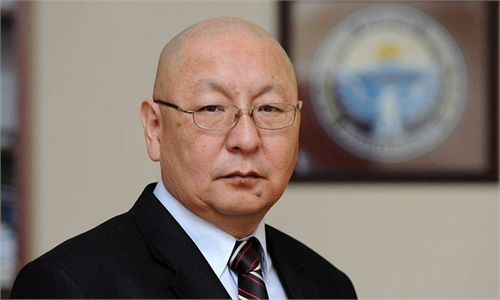
Erdem Ergen Photo: Courtesy of Ergen
Editor's Note:
The annual Central Economic Work Conference (CEWC) was held in Beijing from December 10 to 11. Xi Jinping, general secretary of the Communist Party of China (CPC) Central Committee, Chinese president and chairman of the Central Military Commission, delivered an important speech at the conference. The conference reviewed the country's economic work in 2025, analyzed the current economic situation, and arranged next year's economic work, providing guidance and direction for ensuring a good start to the 15th Five-Year Plan period (2026-30).
The meeting took into consideration both domestic and international situations and made a scientific assessment of China's development situation. Building on new practical experience, it summarized and outlined "five imperatives" as new understandings and insights, and identified key tasks for next year's economic work through "eight commitments." These range from continuously expanding domestic demand as a focus and enhancing innovation-driven development, to deepening reform and expanding opening-up; from promoting coordinated development and advancing the carbon emissions peaking and carbon neutrality goals, to prioritizing people's livelihoods and safeguarding the bottom line against systemic risks - covering all aspects of economic and social development.
Since the new era, the Central Economic Work Conference has consistently attached great importance to theoretical summary as a means of guiding economic development and practices. As circumstances evolve, the conference has continued to deepen its understanding of the underlying laws governing economic work. The book series Xi Jinping: The Governance of China include important speeches delivered by President Xi at the CEWC in 2014 (Volume II), 2017 (Volume III), 2021 (Volume IV), 2022 (Volume V), and 2024 (Volume V), which have provided guidance and direction for promoting China's high-quality economic development.
In the 18th installment of the special series "Decoding the Book of Xi Jinping: The Governance of China," the Global Times (GT), along with the People's Daily Overseas Edition, continues to invite Chinese and foreign scholars, translators of Xi's works, practitioners with firsthand experience, and international readers to discuss how under the scientific guidance of Xi Jinping Thought on Economy, the CEWC plays a key role in steering China's economic development and practices, and, with a focus on this year's conference, explore the key priorities for China's economic work in the opening year of the 15th Five-Year Plan period.
In the 18th article of the "Translators' Voices" column, GT interviewed Erdem Ergen (Ergen), translation editor of the Turkish-language edition of the book series Xi Jinping: The Governance of China and editor-in-chief of Nomos Kitap (Nomos Publishing).
GT: The annual CEWC serves as a barometer for China's economic development and policy direction in the coming year. The book series Xi Jinping: The Governance of China include important speeches by General Secretary Xi Jinping at the CEWCs. From the general tone of "pursuing progress while ensuring stability" to key terms such as "new normal," "high-quality development," "common prosperity" and "high-level opening-up," we can see a clear path to the modernization of China's economic governance. During your translation editing process of this book series, how did you understand the "changes" and "unchanged aspects" of China's economic policies?
Ergen: The distinction between "changes" and "unchanged aspects" in China's economic policies during this period can be summarized as follows.
The changes include a shift in focus, social emphasis, domestic dynamics and a level of opening-up. There has been a clear shift from the traditional focus on quantitative, high-speed growth to a more sustainable, efficient and innovation-driven model, termed "high-quality development." This forms the very basis of the "new normal" concept. The emphasis on "common prosperity" focuses on narrowing the wealth gap and expanding access to essential services, reflecting the value orientation of fairness and justice. The economic model has pivoted away from the old reliance on exports and investment toward focusing on supply-side structural reform and expanding domestic consumption as the primary growth engine. The modernization of the industrial system and the strengthening of the digital economy constitute the technological wing of this change. There has been an upgrade from simple external opening to "high-level opening-up," which aims for proactive participation in high-standard international economic and trade agreements (such as the Comprehensive and Progressive Agreement for Trans-Pacific Partnership and Digital Economy Partnership Agreement).
The unchanged aspects include Party leadership, the overarching theme, and the fundamental framework. The unquestioned position of the CPC's centralized and unified leadership in economic governance persists. The core economic orientation remains the general principle of "pursuing progress while ensuring stability." This signifies that economic stability and social order are always paramount priorities. Meanwhile, the commitment to transforming the economy through reform and opening-up remains; however, this process is now more focused on increasing global competitiveness. The underlying factors supporting the long-term, healthy development of the Chinese economy (its vast market, robust supply chain, and resilience) are preserved.
GT: General Secretary Xi pointed out at the just concluded CEWC that China will adhere to the general principle of pursuing progress while ensuring stability. Since the new era, China's continuous economic growth has been a crucial pillar of global development. Why do you think the Chinese economy has been so stable? In the context of global economic fragmentation and supply chain restructuring, what does this stability mean for the world?
Ergen: The stability of the Chinese economy over the past couple of years is mainly rooted in a combination of its state-driven development model and its gradual approach to reform. Key drivers of this stability include high domestic savings, the massive investment-led growth model focused on infrastructure and production capacity, the unified will and strong synergy formed by the comprehensive leadership of the CPC over economic work, and the consistent adherence to the general principle of "pursuing progress while ensuring stability." This has enabled the swift implementation of comprehensive policies in the face of global shocks. Furthermore, China's enormous domestic market has served as a crucial buffer against fluctuations in external demand.
In the context of global economic fragmentation and supply chain restructuring, China's stability assumes a more proactive role than merely being a "safe haven" or a "ballast." As the world's largest manufacturing base and second-largest economy, China remains a core anchor point for global growth and supply networks. This stability contributes indirectly to the balancing of commodity and production prices during periods of global uncertainty. Concurrently, China aims to play a leading and proactive role in upholding global trade rules and setting new global economic governance standards, primarily through high-level opening-up and aligning domestic reforms with international practices.
GT: At this year's CEWC, General Secretary Xi urged efforts to well formulate the 15th Five-Year plans at national and local levels and relevant special plans, and pursue high-quality and sustainable development in accordance with the Recommendations adopted at the fourth plenary session of the 20th CPC Central Committee. Just as General Secretary Xi once pointed out, the scientific formulation and consistent implementation of five-year plans stand as an important piece of experience in the CPC approach to governing the country. It's also significantly representing the political advantage of socialism with Chinese characteristics. 2026 marks the start of the 15th Five-Year Plan. China guides its economic development through five-year plans and medium- to long-term goals (such as the 2035 vision). What lessons do you think Global South countries can draw from such economic governance experience?
Ergen: General Secretary Xi has always attached great importance to strategic planning. Since the 18th National Congress of the CPC, he has promoted the formulation and implementation of the 13th, 14th, and 15th Five-Year Plans, putting forward a series of new viewpoints and forming a wealth of valuable ideas and rich practical achievements. The five-year plans outline a grand blueprint for China's development over the next five years and even longer, and are an important institutional arrangement guiding China's economic and social development.
This planned approach is indeed forming a new paradigm of "development expectation management," particularly for countries in the Global South. Unlike the Western system, which is often subject to short-term election cycles and market uncertainties, the Chinese model has proven that state financial resources can be consistently mobilized toward long-term, strategic goals. This provides a powerful lesson and a potential alternative for developing nations designing major infrastructure projects and industrialization roadmaps, demonstrating how political will can be firmly aligned with long-term economic objectives. This stability and clarity of purpose also amplify the desire of Global South countries to forge long-term development partnerships with China.
RELATED ARTICLES