IN-DEPTH / IN-DEPTH
Joining hands to promote global governance reform: Chinese Ambassador to Brazil
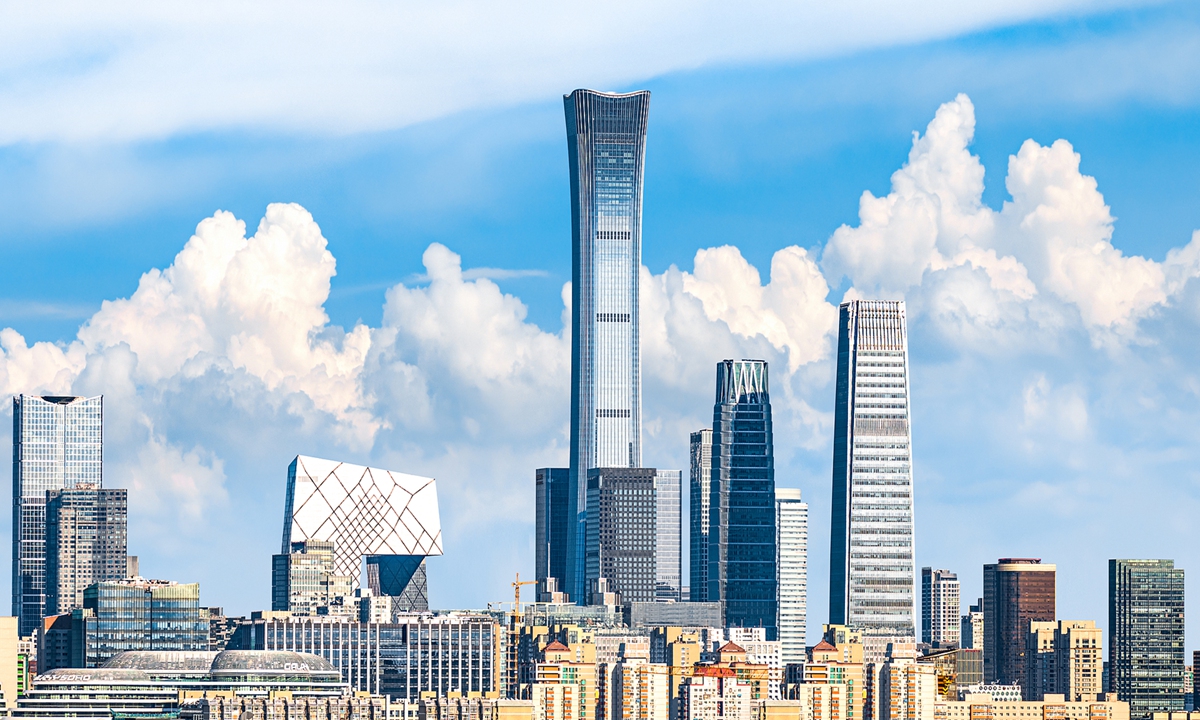
A view of Beijing, China Photo: VCG
Editor's Note:In an era marked by unprecedented global transformations, the world stands at a critical crossroads, grappling with deepening deficits in peace, development, security, and governance. As humanity faces unparalleled challenges during this tumultuous period, Xi Jinping, general secretary of the Communist Party of China (CPC) Central Committee and Chinese president, has put forth a solemn call to action through the Global Development Initiative (GDI), the Global Security Initiative (GSI), the Global Civilization Initiative (GCI) and the Global Governance Initiative (GGI). The four pivotal initiatives address the pressing issues of our time, offering viable pathways and robust support for building a community with a shared future for humanity. Rooted in the rich historical experiences of the CPC's century-long struggle and infused with the wisdom of China's traditional culture, these initiatives are expected to unite the world in the pursuit of common progress and stability. To offer a deep understanding of the four global initiatives, and elaborate on their significance on a global scale, the Global Times has launched a series of articles.
Recently, the Global Times, Brasil 247, and the Chinese Embassy in Brazil have jointly organized an online dialogue titled "Global South Dialogue: The Global Governance Initiative and New Visions for Cooperation," inviting Chinese and Brazilian guests to discuss these issues. Below are highlights from the speech of Chinese Ambassador to Brazil Zhu Qingqiao.
At present, the changes on a scale unseen in a century are unfolding at an accelerated pace, the international situation is volatile and complex, global challenges are more prominent than ever, and the deficits in peace, security, development, and governance are increasing. Following the proposal of the Global Development Initiative (GDI), the Global Security Initiative (GSI), and the Global Civilization Initiative (GCI), President Xi Jinping recently solemnly put forward the Global Governance Initiative (GGI), deeply expounding the principles, methods, and paths that need to be followed in reforming and improving global governance, further contributing Chinese wisdom and proposing a Chinese solution for global governance reform.
The GGI adapts to the historical trend of world multipolarization and economic globalization, complies with the common aspirations of people from all countries for peace, development, and cooperation, and hits the key points of the current disorder and ineffectiveness of global governance. It is a major concept and practical innovation for China to lead and promote the reform and improvement of the global governance system, and has been widely recognized and actively supported by the international community.
China and Brazil are respectively the largest developing countries in the Eastern and Western hemispheres, both founding members of the BRICS and major countries of the Global South. They have the same or similar positions and propositions in maintaining multilateralism and reforming, and improving the global governance system. Under the strategic leadership of the two heads of state, China-Brazil relations are at their best historical period, setting an example of unity and self-reliance among major countries in the Global South.
The strategic mutual trust between the two countries has been consolidated and deepened. President Xi made a historic visit to Brazil in 2024, and the two heads of state jointly announced an elevation of bilateral ties to a "community with a shared future for a more just world and a more sustainable planet."
Brazilian President Luiz Inacio Lula da Silva has visited China twice since he took office for the third time. All fields and levels of the two countries, including government departments, legislative bodies, judicial organs, armed forces, political parties, and localities, have maintained close exchanges.
The practical cooperation between the two countries has been upgraded in quality. The China-Brazil high-level coordination and cooperation commission is operating smoothly, and the synergies between the Belt and Road Initiative and Brazil's development strategies is progressing smoothly. The trade volume between China and Brazil has been steadily increasing and the structure has been increasingly optimized. China has been Brazil's largest trading partner for many consecutive years. The two sides continue to consolidate cooperation in traditional fields such as energy, agriculture, communications, and infrastructure, and are rapidly expanding cooperation in emerging fields such as the digital economy, green economy, pharmaceutical industry, artificial intelligence, and aerospace.
The cultural and people-to-people exchanges between the two countries are rich and colorful. China has piloted a unilateral visa-free policy for Brazil, making it more convenient for people-to-people exchanges between the two countries, and the frequency of direct flights between the two countries has increased. The exchanges between universities and youth in the two countries have been continuously deepened, and the first China-Brazil University Presidents' Dialogue was successfully held. 2026 will be the first China-Brazil Year of Culture in history, and the two sides are stepping up preparations. It is believed that this will make an important contribution to the two peoples' enhanced comprehensive and objective understanding of each other.
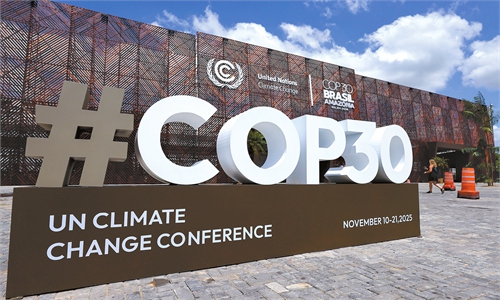
The multilateral cooperation between the two countries is in-depth and close. The Chinese side strongly supported Brazil in hosting the G20 Summit in 2024, the BRICS Summit in 2025, and supports the upcoming 2025 United Nations Climate Change Conference (COP30). China and Brazil maintain communication on hot issues such as the Ukraine crisis and the Israel-Palestine conflict, and closely cooperate in multilateral mechanisms and international organizations to jointly maintain multilateralism. President Lula visited China to attend the fourth ministerial meeting of the China-CELAC (Community of Latin American and Caribbean States) Forum, and the two countries jointly promote the five programs ranging from solidarity, development, and civilization, to peace and people-to-people connectivity.
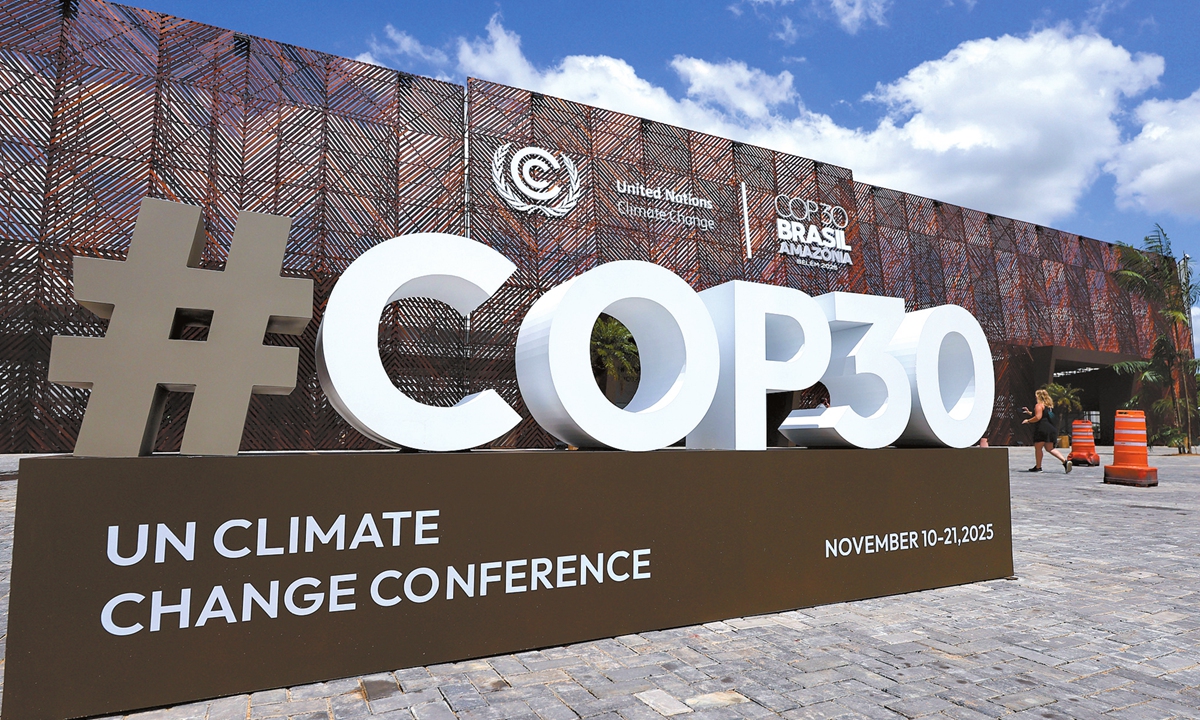
The COP30 logo is seen in front of the central building ahead of the 2025 United Nations Climate Change Conference on November 3, 2025 in Belem, Brazil. Photo: VCG
Looking to the future, the reform of the global governance system is the general trend, but the development process still faces various difficulties and obstacles. The Chinese side is willing to work with the Brazilian side to implement the GGI, strengthen mutual support and cooperation, pool greater strength from the Global South, promote the building of an equal and orderly multipolar world and a universally beneficial and inclusive economic globalization, and demonstrate the responsibility of major countries in reforming and improving the global governance system.First, we should jointly act as guardians of international peace and security. We need to actively promote peace talks and mediation on global hotspot issues. We should adhere to the "six-points common understandings" on political settlement of the Ukraine crisis and play a good role in the "Friends of Peace" group. We will push for a comprehensive, just, and lasting solution to the Palestinian question at an early date on the basis of relevant UN resolutions and the "two-state solution." We oppose the arbitrary use of force or threats, and safeguard peace and stability.
Second, we should jointly serve as promoters of global recovery and development. We will firmly uphold the rules-based multilateral trading system with the WTO at its core. We oppose trade wars and tariff wars in any form, as well as "erecting barriers" and "technological blockades." We will jointly safeguard the legitimate and lawful rights and interests of developing countries, ensure the stability, security, and smooth flow of global industrial and supply chains, and promote the accelerated implementation of the UN 2030 Agenda for Sustainable Development.
Third, we should jointly be contributors to addressing global challenges. We will adhere to the principle of common but differentiated responsibilities, support the COP30 in achieving substantive outcomes, urge developed countries to fulfill their responsibilities, and promote the green transition of development. We should strengthen cooperation in industrial innovation, talent cultivation, and other areas, advance the fair, sustainable, and inclusive development of artificial intelligence, and promote the building of an open, secure, stable, accessible, peaceful, and interconnected cyberspace.
Fourth, we should jointly act as practitioners in reforming and improving the global governance system. We will firmly uphold the international order centered on the UN and based on international law, as well as the purposes and principles of the UN Charter. We support the reform of the UN and its Security Council to make them more democratic, representative, effective, and efficient. We will push for the reform of the World Bank and the International Monetary Fund (IMF), and restore the normal functioning of the WTO Dispute Settlement Mechanism.
RELATED ARTICLES