IN-DEPTH / IN-DEPTH
How team-based medical aid boosts talent and revolutionizes healthy innovation in Xinjiang hospitals
Medicine Blossoms on Frontier
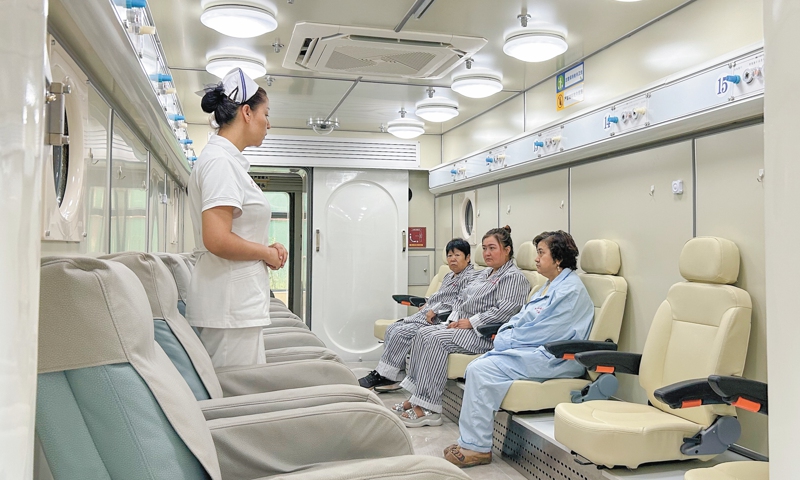
Patients wait inside a hyperbaric oxygen chamber for treatment at the people's hospital of Pishan county in Northwest China's Xinjiang Uygur Autonomous Region, on August 16, 2025. Photo: Liang Rui/GT
Editor's Note:
China's human rights stories are unfolding in a new era of comprehensive deepening reform and historic changes. It is a key component of China's poverty alleviation and whole-process people's democracy, a thorough reformation in the judiciary, medical insurance, and other key sectors related to the national economy and people's livelihoods, as well as a combination of numerous impressive and inspiring individual stories.
To be nurtured in youth, educated, secure gainful employment, receive medical care when ill, be cared for in old age, have a place to live, and supported when weak... these are the concrete embodiments of human rights, demonstrating that the greatest human right is the right to the happiness of the people.
For a long time, politicians and media outlets in a handful of countries have remained hostile and prejudicial toward China, leading to a lack of understanding among international audiences when it comes to the concepts and achievements of China's human rights development. What is revealed in the daily lives of the Chinese people, however, speaks to the most basic truth: Rights to survival and development are fundamental human rights.
The Global Times is launching a series of articles, telling vivid stories about the upholding of human rights in the new era. We expect the series to become a window through which more international readers will understand how Chinese people recognize human rights, and what efforts they have made to fight for and fully enjoy human rights in their daily lives.
In the lounge at people's hospital of Pishan county, Northwest China's Xinjiang Uygur Autonomous Region on August 16, local resident Aikebaier Ababaiker awaited a follow-up medical consultation.
The 39-year-old had struggled with mobility for more than two decades due to necrosis of the femoral head. Thanks to doctors from East China's Anhui Province stationed in Xinjiang, he underwent a successful hip replacement surgery at this hospital. While speaking to the Global Times in the waiting area, however, he was in good spirits and able to walk without human or mechanical assistance, a life-changing experience for which he expressed gratitude.
"The county hospital also waived more than 100,000 yuan ($13,951) in medical expenses for me, which eased my burden enormously," he said.
Ababaiker's experience reflects a broader nationwide trend: During the 14th Five-Year Plan period (2021-2025), the national basic medical insurance coverage rate has remained stable at around 95 percent. From 2021 to 2024, medical insurance reimbursements were issued nearly 20 billion times, the Xinhua News Agency reported on Sunday.
The heartfelt words of Ababaiker, along with advances in medical technology and protection, stand as true testaments to the achievements of China's medical "pairing assistance" program in Xinjiang. From once struggling to see a doctor, to receiving quality treatment close to home, patients in Xinjiang have benefited enormously from the continuous deployment of medical professionals by partner provinces and municipalities.
At a national health and medical reform symposium on July 10, it was revealed that by the end of 2024, Xinjiang's total number of medical and health institutions had reached 16,739, up 7.08 percent from 2020. The region's total healthcare workforce had grown to 275,400, with 9.57 health technicians per 1,000 residents, surpassing the 14th Five-Year Plan's target ahead of schedule, reported the Xinjiang Daily.
Through on-site visits to some hospitals across Xinjiang, the Global Times documented how China's deepening team-based aid has strengthened medical talent training and discipline development, while continually innovating to protect the health of residents in Xinjiang.
Reliable changes
Surveillance footage from the Alaer hospital in Aral, Xinjiang, operated with support from Zhejiang University Sir Run Run Shaw Hospital, captured a dramatic moment: Orthopedic deputy director Zhou Gang and his colleague burst through the hospital doors, one stabilizing the patient's torso on the emergency bed, the other cradling a severed leg wrapped in gauze and ice.
"As soon as the patient arrived, we grabbed the leg and rushed straight into the operating room," Zhou said, recalling the June 20 case, when Aizezi Taxi was rushed to the facility after a machine accident.
"The patient's right leg had been crushed near the groin, with all the surrounding muscle at risk of necrosis. The surgery was extremely difficult, with potentially fatal complications. He arrived three hours after the injury, and from experience, reattachment must happen within six hours," Zhou said.
To save time, the medical team split into two groups. Zhou's team worked on the patient's torso stump while the other dealt with the severed limb, carefully shortening the bone. "Limb shortening is crucial: If left too long, the nerves and blood vessels can't reach, and reattachment is doomed to fail," Zhou explained to the Global Times.
In the operating theater, tension hung in the air as surgical tools clinked and monitors beeped. After more than an hour of precision work, the doctors successfully reattached the leg.
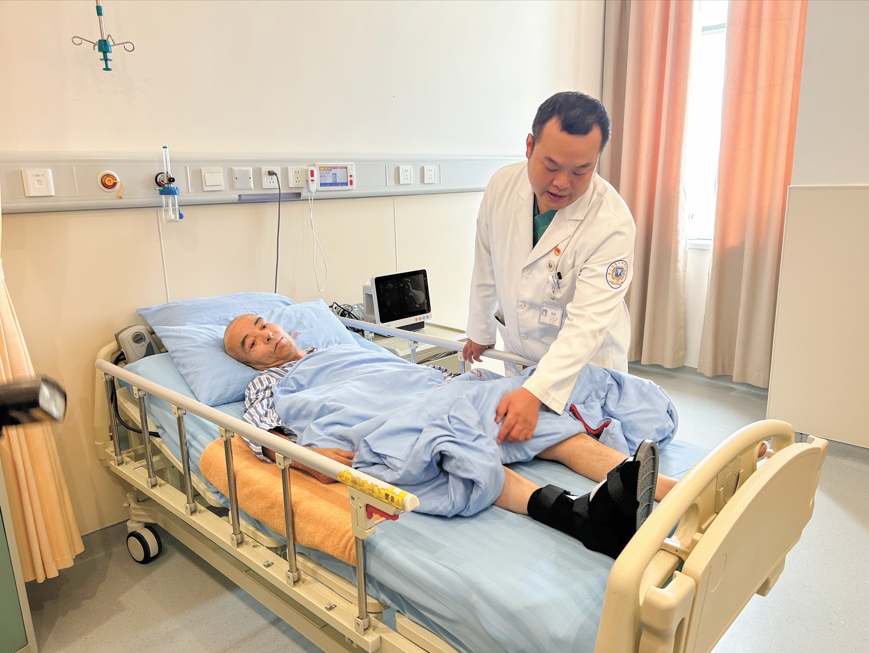
Orthopedic deputy director Zhou Gang explains the recovery progress of a patient who underwent leg reattachment surgery at Alaer hospital on August 12, 2025. Photo: Liang Rui/GT
"Two years ago, such a case would have required help from external aid-Xinjiang doctors," Zhou said. "Earlier still, we wouldn't have dared attempt it at all, the only option would have been amputation. But now we have the confidence and ability to do it ourselves." Local doctors here have since independently performed more than 50 successful reattachment surgeries involving severed fingers, hands, and limbs.
When experts from East China's Zhejiang Province first arrived in 2023, Aral's medical capacity was extremely weak. Even a spinal tumor removal required patients to travel to Urumqi, the capital city of Xinjiang, or beyond.
Today, Alaer hospital is the city's only top-tier general hospital providing comprehensive services - from treatment and prevention to rehabilitation and emergency rescue - while raising the capabilities of 10 surrounding hospitals, as the Xinjiang publicity department introduced.
Beyond infrastructure, Zhejiang's aid has also pioneered new service models. In 2024, they conducted 281 free clinic services across Xinjiang, benefiting over 120,000 people, and conducted a rehabilitation initiative that assisted 522 children with hearing, vision, or congenital heart conditions, according to the Zhejiang medical team in Xinjiang.
More broadly, supported by all partner provinces and municipalities, Xinjiang's medical resources continue to expand, service systems improve, and the sense of health security among residents grows stronger.
Since 2024, aided hospitals have introduced nearly 1,600 new medical technologies and projects, established about 100 specialist studios, steadily increased outpatient, inpatient, and surgical volumes. Large-scale free clinics have benefited nearly 400,000 grassroots residents, according to the symposium on July 10.
'Blood transfusion' and 'blood generation'
Crucially, as the lead surgeon in the limb reattachment case, Zhou is not an outside specialist but a local doctor trained under the aid-Xinjiang program.
As the national symposium emphasized, medical aid focuses not just on "transfusion" - external support - but on enhancing "self-generation," by nurturing a "medical team that cannot be taken away."
Zhou recalled how Zhejiang mentors laid the foundation: "When they arrived, they assessed our staff and equipment, then taught us basic microsurgery techniques from scratch. We trained weekly, even practicing on chicken wings for suturing and simulated procedures, which steadily built our confidence and skill."
They also brought advanced equipment, while tailoring workflows and hospital processes to local realities, Zhou said.
In 2024, Zhejiang sent 215 doctors to support 12 hospitals, mentoring 746 local physicians and launching 463 new techniques, according to the Zhejiang medical team in Xinjiang.
Similar mentorship stories abound. Chen Qi at the Tianjin Central Hospital of Gynecology Obstetrics, partnered with doctors at the people's hospital of Hotan Prefecture. She guided them through ward rounds, case discussions, surgeries, and even academic papers.
Her apprentice, associate chief gynecologist Ayiguli Abudula recalled a particularly challenging case of a 15-month-old infant with an ovarian tumor and anemia. Together, they researched literature, led hospital-wide consultations, and cooperated during the surgery.
"Under Chen's guidance, my surgical skills improved tremendously. I grew from an assistant into the backbone of our gynecology department," Abudula said proudly.
Over nine years, Tianjin's team-based program has dispatched 168 experts to Hotan, introduced 95 new technologies, and trained 309 local doctors through "department pairing" and "master-apprentice" models, according to the Tianjin medial team in Xinjiang.
Across Xinjiang as a whole, since 2024, nearly 5,000 local doctors have been trained under "team-to-team" and "expert-to-core staff" mentorship, with over 4,000 personnel sent to partner provinces for further study, reported the Xinjiang Daily.
Blossoming with smart technologies
Alongside building a self-sustaining medical workforce, digital networks are also extending their reach to Xinjiang. At Pishan county people's hospital, the information center boasts a multilingual translation system enabling smooth communication between patients and aid-Xinjiang doctors. The system is now widely installed at county, village, and community clinics.
At the people's hospital of Hotan, the smart medical center coordinates the region's 120 emergency dispatch system. "Previously, we wrote down calls by hand and phoned ambulances. Now, when a call comes in, the patient's location and number pop up automatically. Using Beidou satellite navigation, we dispatch the nearest ambulance. Usually it arrives within 8-12 minutes," explained the hospital's deputy director Xu Donghao.
A large display screen in the smart medical center shows live feeds from ambulances. Staff can communicate directly with onboard medics, who can also consult in-hospital experts if needed, ensuring timely, accurate treatment.
Meanwhile, the 5G remote consultation platform connects local doctors with hospitals in Tianjin for follow-up treatment planning.
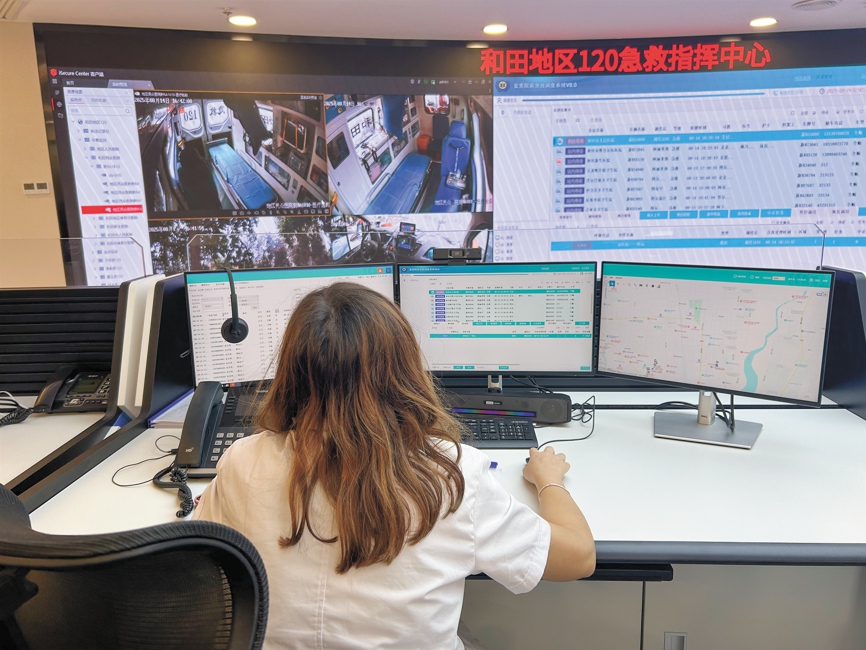
A staff monitors operations at the 120 emergency command center of the people's hospital of Hotan Prefecture in Xinjiang on August 14, 2025. Photo: Liang Rui/GT
Alaer hospital has even pioneered remote robotic surgery using advanced 5G network. In September 2023, it performed the world's first ultra-long-distance bladder removal via a domestically made robot. From 5,000 kilometers away in Hangzhou, Zhejiang, a surgeon operated the robotic arms in Aral in real time, completing the two-hour procedure smoothly with no lag or delays, reported The Paper.
Since August 2022, Alaer hospital has completed 181 such 5G robotic surgeries, including 47 in the first half of 2025, across complex fields such as hepatobiliary, urology, and gynecologic oncology, Zhang Lei, the hospital president, told the Global Times.
Zhang said that the team will attend a world robot conference in the US and pursue collaborations with Kyrgyzstan and Pakistan, taking Chinese robotic surgery "overseas."
"Our original goal was simple: To ensure advanced medical technologies take root here and truly benefit patients. That work continues, with uninterrupted talent cultivation and ongoing adoption of new technologies," Zhang said.
As for Taxi, his condition has stabilized, with his final wound nearly healed and discharge imminent. "When he was first admitted, his situation was critical. We are so grateful to the doctors," his family told the Global Times.
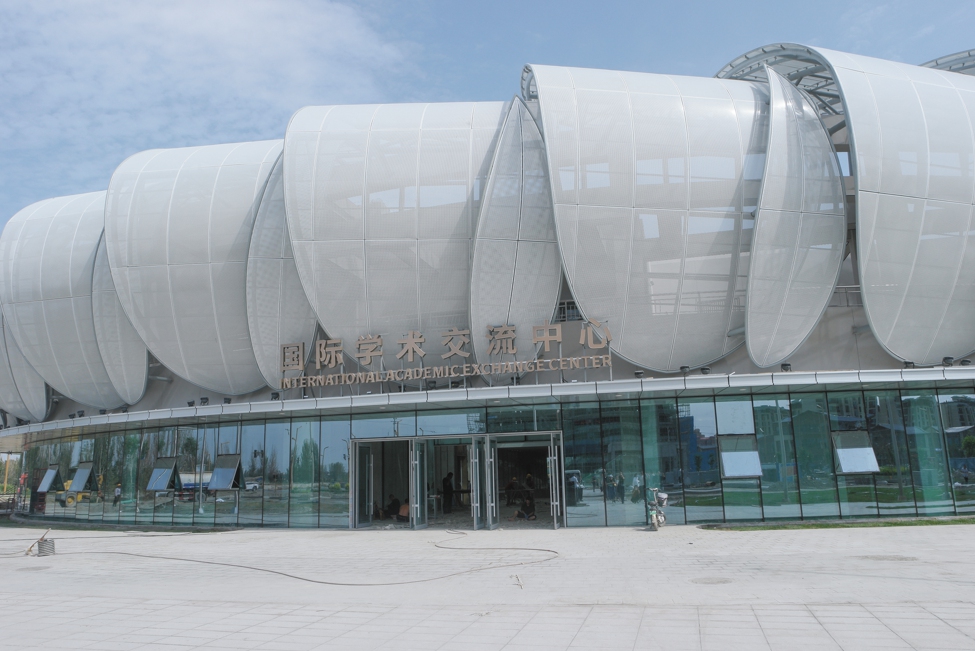
The international academic exchange center of the Alaer hospital in Aral, Xinjiang, operated with support from Zhejiang University Sir Run Run Shaw Hospital Photo: Liang Rui/GT
Just outside the hospital, a new international academic exchange center is nearing completion. Its design features 56 leaves of the poplar tree, which symbolize ethnic unity, forming a single blossom. It not only represents the achievements of aid-Xinjiang initiatives, but also bolsters the hope that frontier healthcare, rooted in the well-being of local people, will radiate benefits across neighboring regions.
Medicine Blossoms on Frontier
RELATED ARTICLES