IN-DEPTH / IN-DEPTH
Inside Xinjiang’s 737 Factory: How a vital uranium site balances industry and ecology?
Clean energy, green fields
By in Yili Published: Dec 04, 2025 08:55 PM

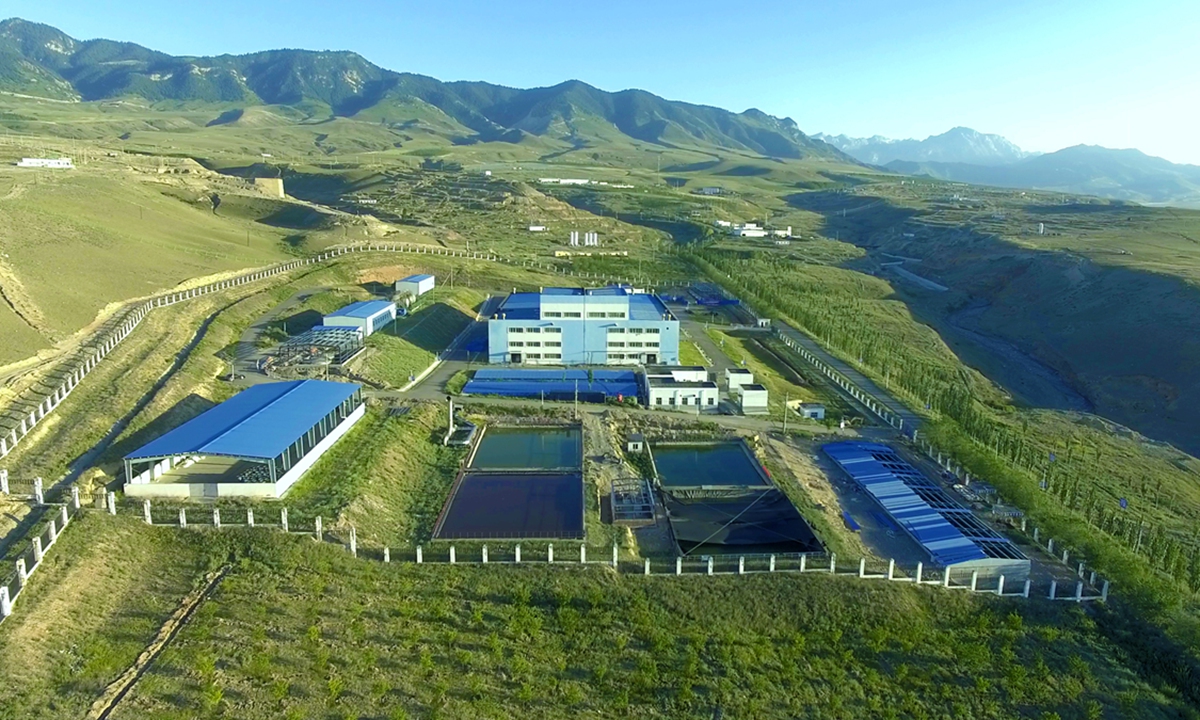
An aerial view of the 737 Factory in Northwest China's Xinjiang Uygur Autonomous Region Photo: Courtesy of China National Nuclear Corporation
Editor's Note:Xi Jinping, general secretary of the Communist Party of China (CPC) Central Committee, Chinese president and chairman of the Central Military Commission, has stressed that the environment concerns the well-being of people in all countries. During his inspection tours, Xi has always prioritized ecological conservation, with his focus spanning from urban and rural areas, enterprises and communities.
Under the guidance of Xi Jinping Thought on Ecological Civilization, China has been advancing the green transition of its economy over the last decade. Regions across the country are actively promoting the construction of ecological civilization and advancing Chinese modernization featuring harmony between humanity and nature. These efforts are creating a "Beautiful China."
The upcoming five-year period will be pivotal to advancing the "Beautiful China" initiative. The Global Times is launching a series of stories to explore the progress of ecological civilization projects that Xi is concerned with, delving into the positive environmental changes occurring now, and offering valuable insights and references for both national and global efforts. From these practical examples, we can see how Xi's thought on ecological civilization is put into practice and inspires public action.
In this installment, we turn our attention to China's northwest borderlands. Chinese energy enterprises have developed uranium mines in Northwest China's Xinjiang Uygur Autonomous Region that not only employ world-leading technology to supply clean nuclear energy, but also embrace eco-friendly development in building "green mines" on once-desolate land.
A vehicle rolls across the Ili River Basin in Northwest China's Xinjiang Uygur Autonomous Region, close to the national border. Outside, tree branches sway gently in the cool breeze, while the nearby mountains stand lush with dense vegetation - occasionally, herd of cattle wandering through this idyllic pastoral scene.
It is hard to imagine that this park‑like landscape is actually a nuclear mining area. The vast landscape is, in fact, the site of the 737 Factory - one of China's principal bases for natural uranium mining.
As a mining site for nuclear fuel, the 737 Factory appeared on the 2020 National Green Mines List of the Chinese Ministry of Natural Resources. Why does it look different from conventional mines that leave hillsides piled with ore rather than verdant landscapes? How is the local ecosystem being preserved to the maximum extent amid resources extraction? A Global Times reporter recently visited the factory to seek answers.
Green mines
Energy security and guarantee are related to the national economy and people's livelihood, and are "matters of national importance" that cannot be ignored for a moment.
Natural uranium, a vital strategic resource and energy mineral that underpins national security, is often called the "granary" of nuclear power. The China National Nuclear Corporation Xinjiang Mining Co Ltd, to which 737 Factory is affiliated, is China's main production base for the extraction of natural uranium using in-situ leaching (ISL) technology, and ranks among the first batch of national demonstration bases for the comprehensive utilization of mineral resources, according to the company.
When the word "mine" is mentioned, some may conjure images of clattering machinery, mounds of ore, swirling dust and bustling miners. But upon arriving at the 737 Factory, the Global Times reporter was surprised to discover that the site was surrounded by green hills, with wildflowers and grasses thriving freely, and an orchard lying not far away. There were neither thundering engines, nor visible ore heaps and miners in sight.
"If you weren't aware, you might never guess this is a uranium extraction site," Chen Senlong, a deputy director of the 737 Factory, told the Global Times. "Our extraction process does not damage the surface, and the mining operations are mainly carried out underground," he explained.
The Global Times reporter visited the uranium extraction area of the factory on a recent afternoon. The site was a vast, level expanse dotted with pipelines and several low-rise buildings linked to these conduits. Just beyond the site, rolling hills and lush trees rose into view. The whole operation was quiet, with almost no people in sight. Only when touching the pipelines did the reporter feel a faint, bubble-like movement under-hand -- a subtle reminder that this is, in fact, an operational factory.
How can uranium be mined in such a clean and tranquil setting? Engineers at the factory explained the basic process of ISL. Without moving rock, a leaching solution is injected into the orebody through drill holes. The solution moves through the ores, selectively dissolving the target metal components into the liquid. Then, the metal-bearing solution is pumped to the surface for hydrometallurgical treatment and purification, so as to produce uranium.
And the remaining solution, after being replenished, will be reinjected into the orebody for reuse. "The whole process forms a closed-loop cycle," said an engineer.
Compared with conventional uranium mining, the ISL method used at the 737 Factory offers distinct advantages, Chen said. He noted that the method generates far less wastewater and very little solid ore waste, does not disturb the local topography and eliminates the need for personnel to work underground.
"With the innovative breakthrough in application of this green method in the Ili River Basin mining area, our factory's uranium extraction has become environmentally friendly, low-carbon and safe," Chen said.
Environment friendly
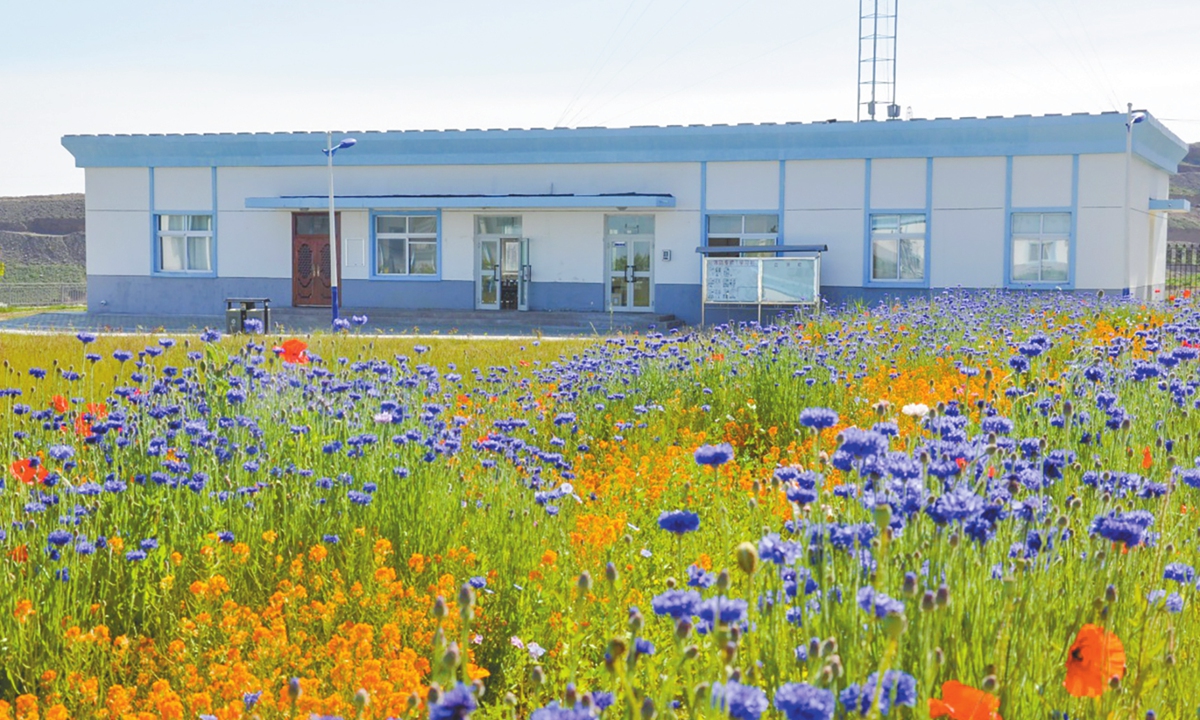
Flowers bloom at the 737 Factory. Photo: Courtesy of China National Nuclear Corporation
On the roads near the 737 Factory, it is common for vehicles to be held up by an occasional flock of sheep crossing the road. Herdsmen graze their flocks freely around the mining area, enjoying a well‑preserved ecological environment. The concept of green mining is embodied in this idyllic scene.Yet in earlier years, local residents knew little about nuclear fuel or the green mining processes, and their relations with the factory were sometimes strained.
"At that time, people almost panicked at the very mention of 'nuclear,' as they believed these factories were harming their health through radiation or pollution," said Cheng Zongfang, a deputy chief engineer of China National Nuclear Corporation Xinjiang Mining Co Ltd.
Some of the company's uranium‑mining facilities in the Ili River Basin, including the 737 and 739 factories, once faced misunderstandings from nearby residents, Cheng recalled. "When someone in a family fell ill or felt unwell, they would assume the factories were to blame, and some even wrote letters of complaint to the government."
To reassure local residents, the company has been fully cooperated with government investigations over the years while proactively organizing factory tours for local people and hosting public education events on nuclear energy and mining.
"Gradually, the voices of opposition and misunderstanding disappeared, as the surrounding environment remains unaffected," Cheng told the Global Times. "Our efforts are visible to everyone."
Cheng noted that in recent years, the company has built an automated uranium‑production system and a three‑dimensional visualized control platform, enabling mining areas to operate without permanent on‑site staff - a setup the company describes as "one‑click uranium extraction from afar, with everything controlled on a single screen." This intelligent mining process stands at the global forefront, and is spearheading China's ongoing shift of nuclear fuel extraction from high‑consumption, high‑waste practices to green, low‑carbon models, said Cheng.
"The environment here is very good, as there is no noise or industrial pollution," said a local resident who lives near the 737 Factory. He said that he used to regard anything nuclear as something terrible, but after visiting the factory, staffers explained in detail the extraction process and its safety and eco-friendliness. Moreover, the factory's staffers have organized tree-planting activities after work, making the surroundings even lusher than before.
"Now I feel very reassured," he told the Global Times.
Generations of innovation
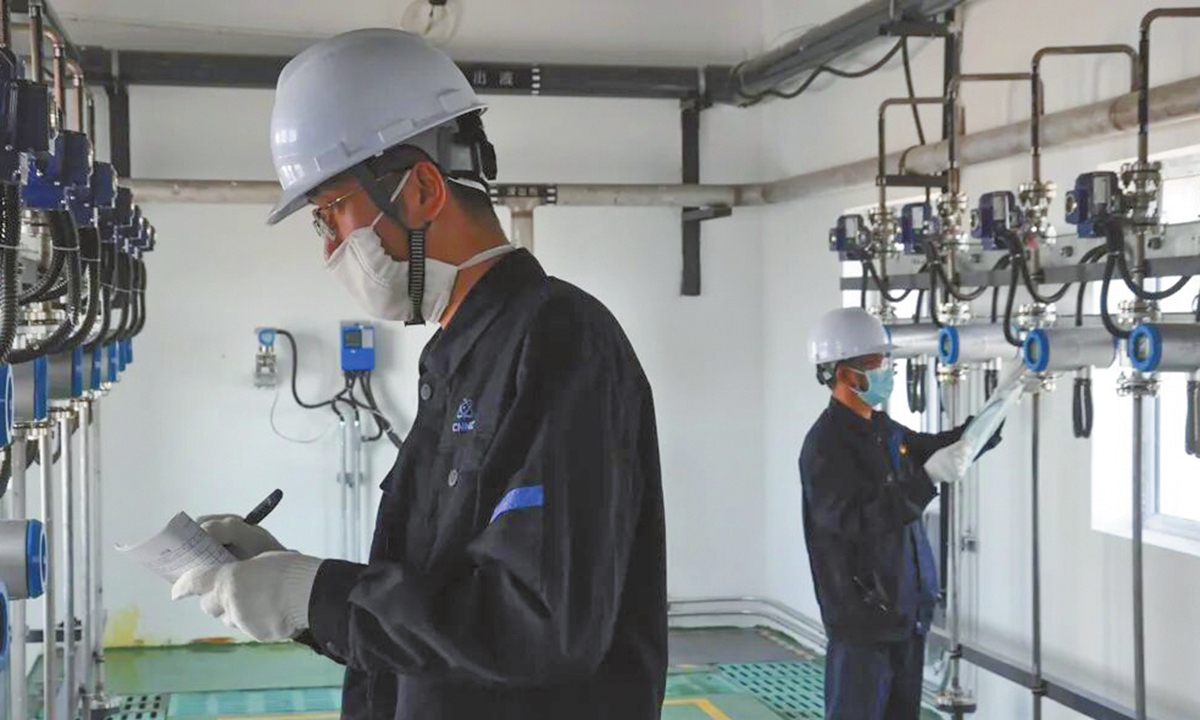
Engineers work at a plant of the 737 Factory. Photo: Courtesy of China National Nuclear Corporation
To respond to global climate change, the international community has reached the consensus to actively develop clean energy and promote the green and low-carbon transition in economic and social development, said President Xi at a group study session held by the Political Bureau of the CPC Central Committee on new energy technology and China's energy security in February 2024, the Xinhua News Agency reported.We should follow this general trend, seize the opportunities, and intensify efforts to promote high-quality development of new energy in China, Xi noted at the session, Xinhua reported.
As an important, new and clean energy source, nuclear power has seen great development in China in recent years under the guidance of Xi's thought on ecological civilization. There are 26 nuclear power units under construction in China, which places the country at the forefront of the world in terms of both the number of units under construction and total installed capacity, according to the China Nuclear Energy Development Report 2024.
As of September 30, a total of 58 nuclear power units are in operation in Chinese mainland, according to data from the China Nuclear Energy Association (CNEA). From January to September this year, these units generated a cumulative total of 348.365 billion kilowatt-hours of electricity, accounting for 4.81 percent of total cumulative power generation during the same period, showed the CNEA website.
As a result, the safe and efficient development of the nuclear industry has created huge demand for natural uranium supply. For a long time, however, China was labeled as a country with extremely scarce uranium resources because of the complex geological conditions and ore characteristics.
"In those years, many of the proven uranium deposits in China were called 'dormant mines' - extremely difficult, even considered impossible, to exploit," Cheng recalled.
Meanwhile, difficulties could not stop China's determination to develop uranium mining. In the 1960s, after the first batch of uranium mines were commissioned and built, China moved to accelerate the construction of a second batch of uranium mines, including projects in Xinjiang. Since then, generations of Chinese engineers have taken root in the region. Through persistent effort and innovation, they broke through key ISL technologies and ultimately established natural uranium production in Xinjiang, transforming "dormant mines" into valuable resources, the Global Times learned from the China National Nuclear Corporation Xinjiang Mining Co Ltd.
Recalling his early days at the 737 Factory, Xia Xincheng, who has been working at the facility for more than two decades as a technician, could picture in his mind the low-lying white bungalows on the sparsely populated Gobi Desert. When the factory was first established, much of the technical equipment was rudimentary, as were the living conditions.
"We worked around the clock with the older generation of experts, with the hope that our ISL technology would catch up quickly," Xia said.
Under arduous conditions, the uranium projects in Xinjiang went through years of innovation and major overhauls of its extraction processes. From the first‑generation mining methods of the 1960s, which recovered natural uranium from uranium‑bearing lignite, to today's far lower‑carbon, gentler ISL techniques, each evolution has been driven by goals of greater safety, higher efficiency and improved environmental performance, Cheng said.
"Lucid waters and lush mountains are invaluable assets," Cheng told the Global Times. "We have always kept this in mind, adhering to the concept of green development to enable nuclear energy, this clean energy source, to better serve the country's development and benefit the people."
RELATED ARTICLES