Smart coach: How AI is transforming weight management, supporting healthier lifestyles in China?
By Published: Aug 12, 2025 08:42 PM

Editor's Note:
Large models, robots, intelligent manufacturing, autonomous driving... In recent years, artificial intelligence (AI) has made headlines around the world.
In real life, AI has permeated all aspects of human society, assisting in research in laboratories and even the restoration of mysterious ancient scrolls at archaeological sites, and as a key tool employed to find abducted children in the vast sea of humanity. The development of technology has also created various in ethics and legal challenges. Many experts insist that humans should see technology as a tool created for the ultimate purpose of serving humanity, making life and work more efficient and comfortable.
In light of this, the Global Times has launched the "AI empowers industry and improves people's livelihoods" series, showcasing the tremendous energy and broad prospects that AI brings to every aspect of society. This is the ninth installment in this series, exploring the current applications and potential future role of AI technology in weight management among people in China.
"Your protein intake for breakfast is a bit low today," the coach points out. "I recommend adding a serving of lean meat or soy products to your lunch meal."
"Okay, Xiaokui," Zhou replies on her phone. "How did I sleep last night?"
Seconds later, Xiaokui texts back. "Congratulations! You had a good night's sleep! After breakfast, you can go for a 30-minute jog to boost your energy. The weather and air quality are great today - perfect for running."
"Sounds good! I'd like to have some soy products for lunch; can you recommend some easy recipes?"
"Sure!"
For 30-year-old Zhou, Xiaokui is not just her fitness coach, but a close companion on her weight loss journey. Enthusiastic and patient, Xiaokui possesses a wealth of knowledge about health management. There's just one thing that sets her apart: She is an AI assistant, not a human.
Summertime, with its accelerated metabolism, is considered an ideal time for weight loss. During China's recent 17th "National Fitness Day" on August 8, various weight management fitness activities were launched across the country, inviting local residents to participate, with an aim to promote a more civilized and healthy lifestyle nationwide.
Weight management has become a buzzword among people in China. With the rapid development of AI technology in China, innovative solutions are being applied widely in various aspects of society, weight management key among them. This has raised some questions: Is using AI for weight management merely a "tax on intelligence," or does it truly offer benefits? How can ordinary people and patients struggling with obesity use AI for weight loss and fitness? What are the current limitations of AI in weight management, and what possibilities lie ahead?
The Global Times recently spoke with developers and users of AI weight management products, as well as endocrinologists and exercise health professors, who shared their experiences and insights on AI's role in improving health.
'A weight loss buddy on my phone'
Three months ago, 30-year-old Zhou began using an AI health management-themed website recommended by a friend. She selected a virtual fitness coach named "Xiaokui" from a dozen options. Xiaokui is designed to be a vibrant, talkative young lady.
"Xiaokui encourages me like a friend to lose weight and stay fit. 'She' can even 'read' my emotions," Zhou told the Global Times.
Standing at about 160 centimeters and weighing 65 kilograms, Zhou felt slightly heavier than her peers, resulting in feelings of insecurity and increased shyness. To manage her weight, she had previously tried going to the gym. "But every time I saw so many fit users and somewhat aggressive trainers, I felt really anxious," she recalled.
Virtual fitness coaches or healthcare assistants like Xiaokui are now a common feature in many AI-driven health management websites and apps in China, such as exercise app Keep, and Alipay's AI Healthcare Manager. They are designed with various genders, ages, backgrounds, and personalities to cater to different users' needs.
Zhou believes that the virtual coach has been a great companion for an introvert struggling with body image issues like herself. "It is my best weight loss buddy on my phone, constantly encouraging and reassuring me."
The website Zhou uses was primarily founded by Ma Jianwen, a scholar focused on the intersection of AI and fundamental disciplines, as well as an fitness internet influencer. Ma said that the site is currently in the testing phase and has attracted nearly 400 users, including Zhou. "We will officially launch soon and will also roll out versions for mini-programs and apps as quickly as possible," he told the Global Times.
Currently, most AI weight management applications include key features such as calculating meal calories based on food photos, customizing personalized meal plans and exercise regimens according to users' weight and body mass index, and providing chat and companionship services from virtual fitness coaches, said Ma.

"Building on these core features, we have introduced some innovations," Ma said, noting that one standout aspect of his website, according to users, is its ability to capture relevant information through conversations between users and their AI fitness coaches, such as dietary preferences and temporary exercise injuries suffered by a user. This information is automatically updated in the user's profile, allowing for continuous adjustments to his or her personalized fitness plans.
"For example, if I mention to my virtual fitness coach that I have a sore throat these days and can't eat spicy food, or that I've sprained my ankle, the coach won't suggest recipes with chili or recommend exercises that require foot movement," Ma explained. "In the past, users had to update this information themselves, but on this website, they can share it by simply and naturally chatting with their AI coaches like friends."
Additionally, to enhance both professionalism and add a human touch, Ma's team has collaborated with popular fitness influencers to develop a real-life corpus for the AI coaches. "We will continuously enhance the intelligence of our 'AI coaches,'" Ma told the Global Times.
More professional, targeted support
AI can not only assist in weight management among the general population, but can also provide targeted support for patients exhibiting symptoms of obesity, such as those with endocrine and metabolic disorders, showcasing its potential in the medical field.
At the Zhujiang Hospital of Southern Medical University, the endocrinology and metabolism department regularly holds specialized clinics for obesity, primarily catering to patients with pathological obesity or those with co-morbid conditions like diabetes, hereditary obesity, and medication-induced weight gain.
Addressing obesity is not a quick fix. Chen Hong, director of the department, believes that many individuals who manage to lose weight often experience a rebound effect, largely due to a lack of timely and effective encouragement, supervision, and support. Chen shared that, among the patients observed in the specialized obesity clinic each month, 63 percent reported behavioral setbacks due to insufficient immediate support.
"They did not adhere to dietary recommendations, or fail to exercise," Chen said.
To enhance support for patients in their weight loss journeys, the hospital involves not only clinical physicians, but also nutritionists and exercise specialists, who focus on guiding patients in their daily behaviors, psychological well-being, and physical activity. This is a long and complex process, requiring staff to invest lots of time and effort in guiding and supporting patients both online and offline.
"However, before the involvement of AI, each nutritionist could only serve 10 to 20 patients. For patients, there are times when they may want to consult an expert in the evening, but the nutritionists may not respond promptly after hours, which could be inconvenient for them," Chen recalled.
To address this issue, in May, the hospital launched a comprehensive study on the integration of "physicians, nutritionists, exercise specialists, and AI health managers," marking "the first AI-based weight management innovation research in the [medical field in the] country," according to the hospital.
In practice, the hospital collaborated with a local company to develop an AI health management assistant, and shared it with patients through a mobile app. This "AI health manager" assesses patients' dietary and exercise habits, provides personalized recommendations, and offers 24/7 responses to patient inquiries. "With the help of AI, our service capacity has increased fivefold, and the annual management cost per patient has dropped from 12,000 yuan ($ 1,670) to 4,000 yuan," Chen told the Global Times.
In the realm of sports and health, AI can also play an important role in helping everyday users avoid injuries and maximize their workout effectiveness by ensuring proper form.
"Many seemingly common sports, such as basketball and badminton, can easily lead to injuries if amateur enthusiasts do not perform the movements correctly," said Zhuang Jie, a professor at the School of Exercise and Health, Shanghai University of Sport.
In competitive sports, AI is already widely used for high-precision motion capture and technical analysis, assisting athletes to optimize their techniques and enhance performance, said Zhuang. She believes that AI will soon be applied in mass sports as well, helping to correct users' improper movements and prevent injuries.
"Consistent moderate-intensity aerobic exercise has always been regarded as one of the most effective methods for weight loss," Zhuang told the Global Times. "And the value of AI lies in its ability to make this approach safer."
Still many to be improved
In June 2024, 16 Chinese departments and organizations, including the National Health Commission, jointly issued a document to launch a three-year campaign on enhancing public weight management, while aiming to improve people's awareness and techniques in weight management and popularize healthy lifestyles.
The integration of AI into weight management is an inevitable trend, even though there are still many areas that require improvement, said industry insiders reached by the Global Times.
Ma acknowledged that the large model used by his AI weight management website currently faces a "hallucination" issue, that is, occasionally generating incorrect or inaccurate information. "We are continuously optimizing the model through user feedback to reduce the hallucination rate," he said.
At the device level, Zhuang pointed out that the existing smartphone cameras have constraints in recognizing movement patterns, which fall far short of the precision achieved by wearable devices used by professional athletes.
Observing his patients using AI health management assistants, Chen believes that AI still has limitations in emotional interaction, and conversations can feel somewhat stiff. Therefore, many patients still prefer to communicate with human counselors, especially when they need psychological support during their weight loss journeys.
Nonetheless, Chen highly values the supportive role AI plays in his work.
"AI is not a replacement for doctors; it fills the gaps in human resources. For instance, when patients need advice late at night, at least there is a 'never offline' assistant available," Chen told Global Times. "What we need to do, is to explore how to combine AI technology with human services to provide more comprehensive and personalized health management."
Large models, robots, intelligent manufacturing, autonomous driving... In recent years, artificial intelligence (AI) has made headlines around the world.
In real life, AI has permeated all aspects of human society, assisting in research in laboratories and even the restoration of mysterious ancient scrolls at archaeological sites, and as a key tool employed to find abducted children in the vast sea of humanity. The development of technology has also created various in ethics and legal challenges. Many experts insist that humans should see technology as a tool created for the ultimate purpose of serving humanity, making life and work more efficient and comfortable.
In light of this, the Global Times has launched the "AI empowers industry and improves people's livelihoods" series, showcasing the tremendous energy and broad prospects that AI brings to every aspect of society. This is the ninth installment in this series, exploring the current applications and potential future role of AI technology in weight management among people in China.
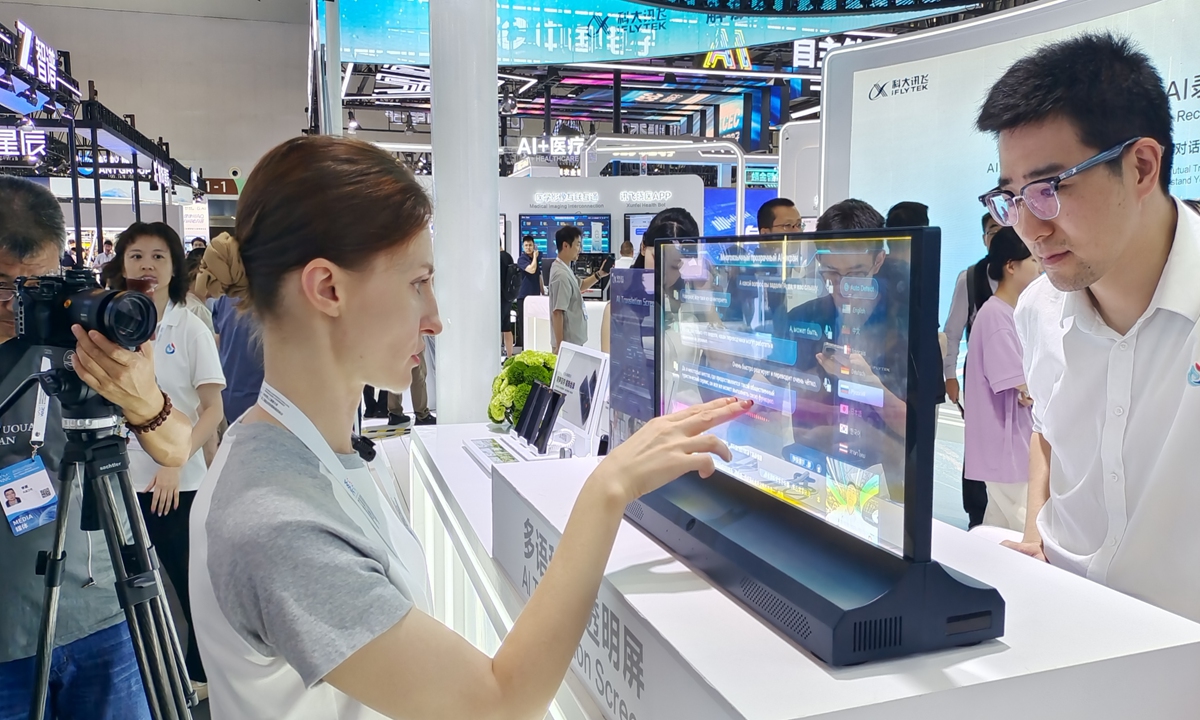
Visitors watch AI exhibits at the World Artificial Intelligence Conference in Shanghai on July 29, 2025. Photo: VCG
Early morning summer sunlight streams into the dining room. Seated at the table, Zhou Ying snaps a photo of her breakfast and uploads it to a weight management website on her phone. Within seconds, her fitness coach identified the types of food, their calorie count, and nutritional content from the photo."Your protein intake for breakfast is a bit low today," the coach points out. "I recommend adding a serving of lean meat or soy products to your lunch meal."
"Okay, Xiaokui," Zhou replies on her phone. "How did I sleep last night?"
Seconds later, Xiaokui texts back. "Congratulations! You had a good night's sleep! After breakfast, you can go for a 30-minute jog to boost your energy. The weather and air quality are great today - perfect for running."
"Sounds good! I'd like to have some soy products for lunch; can you recommend some easy recipes?"
"Sure!"
For 30-year-old Zhou, Xiaokui is not just her fitness coach, but a close companion on her weight loss journey. Enthusiastic and patient, Xiaokui possesses a wealth of knowledge about health management. There's just one thing that sets her apart: She is an AI assistant, not a human.
Summertime, with its accelerated metabolism, is considered an ideal time for weight loss. During China's recent 17th "National Fitness Day" on August 8, various weight management fitness activities were launched across the country, inviting local residents to participate, with an aim to promote a more civilized and healthy lifestyle nationwide.
Weight management has become a buzzword among people in China. With the rapid development of AI technology in China, innovative solutions are being applied widely in various aspects of society, weight management key among them. This has raised some questions: Is using AI for weight management merely a "tax on intelligence," or does it truly offer benefits? How can ordinary people and patients struggling with obesity use AI for weight loss and fitness? What are the current limitations of AI in weight management, and what possibilities lie ahead?
The Global Times recently spoke with developers and users of AI weight management products, as well as endocrinologists and exercise health professors, who shared their experiences and insights on AI's role in improving health.
'A weight loss buddy on my phone'
Three months ago, 30-year-old Zhou began using an AI health management-themed website recommended by a friend. She selected a virtual fitness coach named "Xiaokui" from a dozen options. Xiaokui is designed to be a vibrant, talkative young lady.
"Xiaokui encourages me like a friend to lose weight and stay fit. 'She' can even 'read' my emotions," Zhou told the Global Times.
Standing at about 160 centimeters and weighing 65 kilograms, Zhou felt slightly heavier than her peers, resulting in feelings of insecurity and increased shyness. To manage her weight, she had previously tried going to the gym. "But every time I saw so many fit users and somewhat aggressive trainers, I felt really anxious," she recalled.
Virtual fitness coaches or healthcare assistants like Xiaokui are now a common feature in many AI-driven health management websites and apps in China, such as exercise app Keep, and Alipay's AI Healthcare Manager. They are designed with various genders, ages, backgrounds, and personalities to cater to different users' needs.
Zhou believes that the virtual coach has been a great companion for an introvert struggling with body image issues like herself. "It is my best weight loss buddy on my phone, constantly encouraging and reassuring me."
The website Zhou uses was primarily founded by Ma Jianwen, a scholar focused on the intersection of AI and fundamental disciplines, as well as an fitness internet influencer. Ma said that the site is currently in the testing phase and has attracted nearly 400 users, including Zhou. "We will officially launch soon and will also roll out versions for mini-programs and apps as quickly as possible," he told the Global Times.
Currently, most AI weight management applications include key features such as calculating meal calories based on food photos, customizing personalized meal plans and exercise regimens according to users' weight and body mass index, and providing chat and companionship services from virtual fitness coaches, said Ma.
Photo: VCG
"Building on these core features, we have introduced some innovations," Ma said, noting that one standout aspect of his website, according to users, is its ability to capture relevant information through conversations between users and their AI fitness coaches, such as dietary preferences and temporary exercise injuries suffered by a user. This information is automatically updated in the user's profile, allowing for continuous adjustments to his or her personalized fitness plans.
"For example, if I mention to my virtual fitness coach that I have a sore throat these days and can't eat spicy food, or that I've sprained my ankle, the coach won't suggest recipes with chili or recommend exercises that require foot movement," Ma explained. "In the past, users had to update this information themselves, but on this website, they can share it by simply and naturally chatting with their AI coaches like friends."
Additionally, to enhance both professionalism and add a human touch, Ma's team has collaborated with popular fitness influencers to develop a real-life corpus for the AI coaches. "We will continuously enhance the intelligence of our 'AI coaches,'" Ma told the Global Times.
More professional, targeted support
AI can not only assist in weight management among the general population, but can also provide targeted support for patients exhibiting symptoms of obesity, such as those with endocrine and metabolic disorders, showcasing its potential in the medical field.
At the Zhujiang Hospital of Southern Medical University, the endocrinology and metabolism department regularly holds specialized clinics for obesity, primarily catering to patients with pathological obesity or those with co-morbid conditions like diabetes, hereditary obesity, and medication-induced weight gain.
Addressing obesity is not a quick fix. Chen Hong, director of the department, believes that many individuals who manage to lose weight often experience a rebound effect, largely due to a lack of timely and effective encouragement, supervision, and support. Chen shared that, among the patients observed in the specialized obesity clinic each month, 63 percent reported behavioral setbacks due to insufficient immediate support.
"They did not adhere to dietary recommendations, or fail to exercise," Chen said.
To enhance support for patients in their weight loss journeys, the hospital involves not only clinical physicians, but also nutritionists and exercise specialists, who focus on guiding patients in their daily behaviors, psychological well-being, and physical activity. This is a long and complex process, requiring staff to invest lots of time and effort in guiding and supporting patients both online and offline.
"However, before the involvement of AI, each nutritionist could only serve 10 to 20 patients. For patients, there are times when they may want to consult an expert in the evening, but the nutritionists may not respond promptly after hours, which could be inconvenient for them," Chen recalled.
To address this issue, in May, the hospital launched a comprehensive study on the integration of "physicians, nutritionists, exercise specialists, and AI health managers," marking "the first AI-based weight management innovation research in the [medical field in the] country," according to the hospital.
In practice, the hospital collaborated with a local company to develop an AI health management assistant, and shared it with patients through a mobile app. This "AI health manager" assesses patients' dietary and exercise habits, provides personalized recommendations, and offers 24/7 responses to patient inquiries. "With the help of AI, our service capacity has increased fivefold, and the annual management cost per patient has dropped from 12,000 yuan ($ 1,670) to 4,000 yuan," Chen told the Global Times.
In the realm of sports and health, AI can also play an important role in helping everyday users avoid injuries and maximize their workout effectiveness by ensuring proper form.
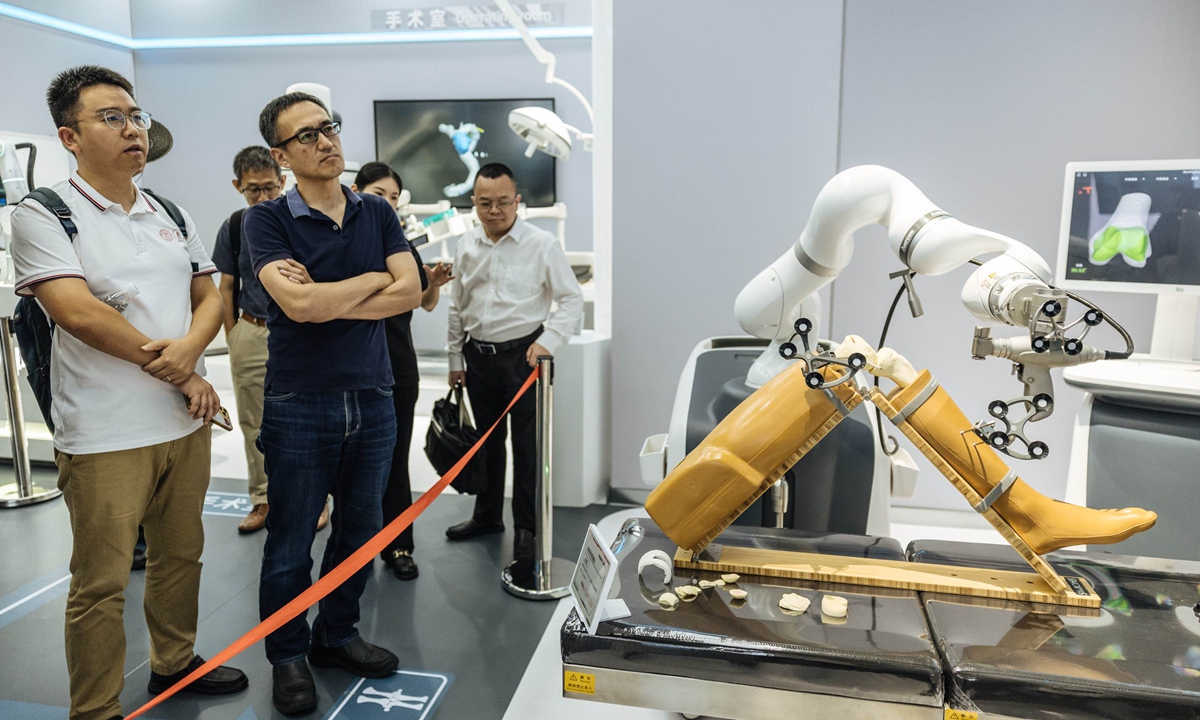
Visitors watch a medical robot at the world's first robot 4S store in Yizhuang, Beijing, on August 7, 2025. Photo: Li Hao/GT
"Many seemingly common sports, such as basketball and badminton, can easily lead to injuries if amateur enthusiasts do not perform the movements correctly," said Zhuang Jie, a professor at the School of Exercise and Health, Shanghai University of Sport.
In competitive sports, AI is already widely used for high-precision motion capture and technical analysis, assisting athletes to optimize their techniques and enhance performance, said Zhuang. She believes that AI will soon be applied in mass sports as well, helping to correct users' improper movements and prevent injuries.
"Consistent moderate-intensity aerobic exercise has always been regarded as one of the most effective methods for weight loss," Zhuang told the Global Times. "And the value of AI lies in its ability to make this approach safer."
Still many to be improved
In June 2024, 16 Chinese departments and organizations, including the National Health Commission, jointly issued a document to launch a three-year campaign on enhancing public weight management, while aiming to improve people's awareness and techniques in weight management and popularize healthy lifestyles.
The integration of AI into weight management is an inevitable trend, even though there are still many areas that require improvement, said industry insiders reached by the Global Times.
Ma acknowledged that the large model used by his AI weight management website currently faces a "hallucination" issue, that is, occasionally generating incorrect or inaccurate information. "We are continuously optimizing the model through user feedback to reduce the hallucination rate," he said.
At the device level, Zhuang pointed out that the existing smartphone cameras have constraints in recognizing movement patterns, which fall far short of the precision achieved by wearable devices used by professional athletes.
Observing his patients using AI health management assistants, Chen believes that AI still has limitations in emotional interaction, and conversations can feel somewhat stiff. Therefore, many patients still prefer to communicate with human counselors, especially when they need psychological support during their weight loss journeys.
Nonetheless, Chen highly values the supportive role AI plays in his work.
"AI is not a replacement for doctors; it fills the gaps in human resources. For instance, when patients need advice late at night, at least there is a 'never offline' assistant available," Chen told Global Times. "What we need to do, is to explore how to combine AI technology with human services to provide more comprehensive and personalized health management."
RELATED ARTICLES