IN-DEPTH / IN-DEPTH
CPC in Global Eyes: 'Ability to reform is one of CPC's most notable strengths': Japanese scholar on China studies
By Published: Oct 27, 2025 11:36 PM

Editor's Note:
Chinese President Xi Jinping has pointed out, "to understand China today, one must learn to understand the Communist Party of China (CPC)." With the rapid development of China's economy and society, and the steady advancement of Chinese path to modernization, the notable achievements of the CPC have drawn extensive international attention and scholarly interest. Against this backdrop, the Global Times has launched the "CPC in Global Eyes" column, focusing on the feelings, perspectives and insights of international friends from various fields regarding the CPC's historical path and achievements.
They include those who have toured China, who deeply study CPC in academic fields, who work, live, study, seek employment or do business in various fields in China, and who, though having not visited China in person, pay close attention to the CPC's policies and trends. Through their vivid personal experiences, we aim to present a multifaceted overseas view of the CPC.
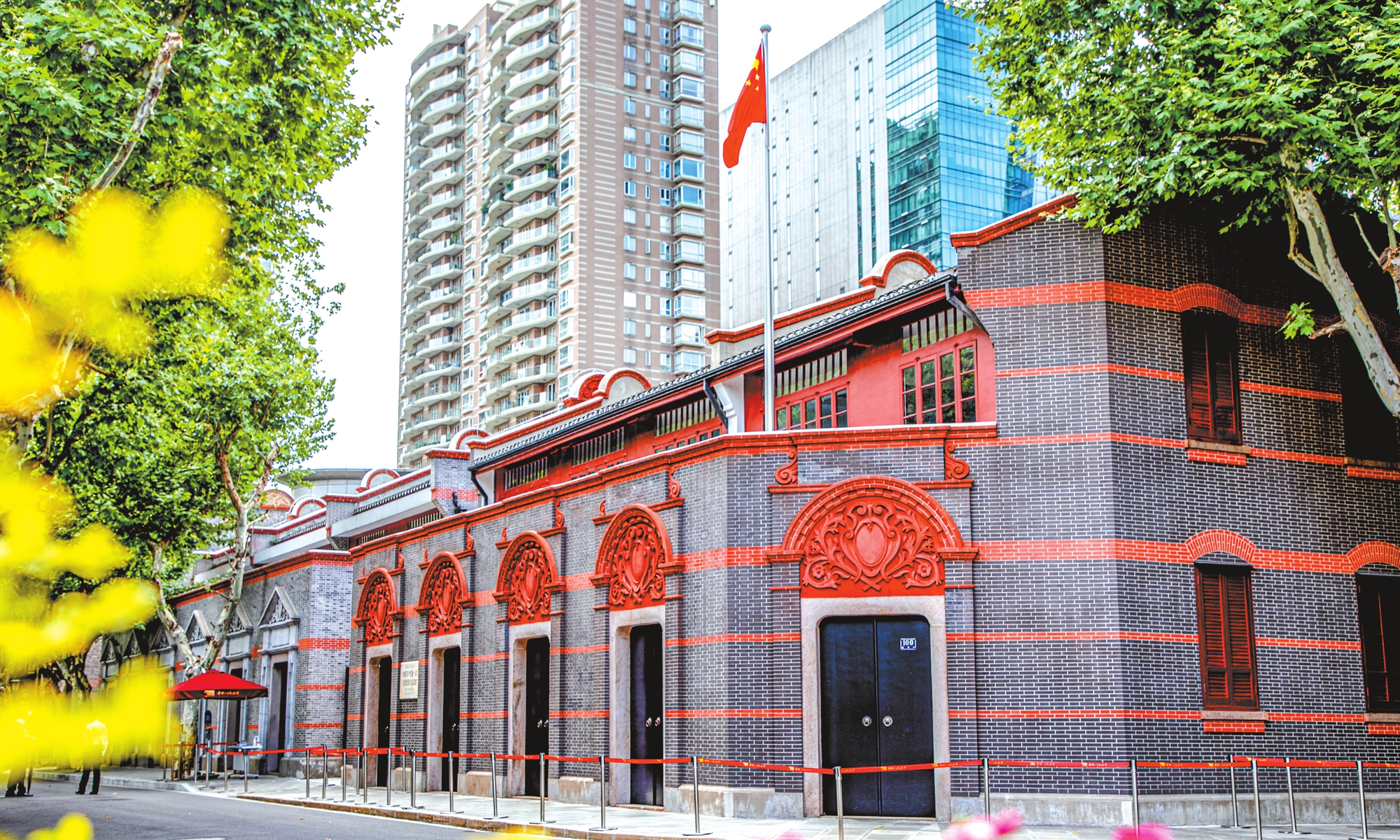
In this first installment of the series, we turn our attention to the birthplace of the CPC - the Memorial of the First National Congress of the CPC in Shanghai. There, some overseas scholars specializing in CPC and Chinese history studies have made multiple visits. For them, the site serves as a key platform to deepen their understanding of the Party's founding, and of how its early members led China's resistance to aggression and its relentless struggle for national independence.

In the summer of 1986, 23-year-old Yoshihiro Ishikawa visited the Memorial of the First National Congress of the Communist Party of China (CPC) while passing through Shanghai.
In his diary he wrote, "At 3:50 pm I arrived at the site to visit...The two rooms to the north of the site are exhibition halls displaying the process of the CPC's founding. At 4:30 pm I finished viewing the exhibits."
Having just completed two years of study in the history department at Peking University, Ishikawa could hardly have predicted that his academic career would become so closely linked with the CPC. Over the following decades, he returned to the Memorial more than 20 times, making it one of the places in China he knows best.
"I have an inseparable bond with the Memorial," Ishikawa told the Global Times in fluent Chinese in a recent email interview.
Looking back at his roughly 40 years in academia, Ishikawa, now regarded as one of Japan's foremost scholars of CPC history, said his interest in and understanding of the Party and its history gradually deepened over time.
During his first visit to the Memorial in 1986, it did not leave a particularly profound impression on him. It was two years later, while pursuing a master's degree at Kyoto University and researching the spread of Marxism in China, that he began to genuinely develop an interest in the founding of the CPC during his studies.
In July 1989, Ishikawa made a trip to China to revisit the Memorial to consult original editions of socialist works from around the 1920s. During this visit, he received substantial assistance from the Memorial's staff. "When I made an unexpected visit and request, the then-director of the Memorial's exhibition hall, Yu Lebin, kindly welcomed me and helped me a lot with my research."
Reflecting on this visit, Ishikawa was filled with appreciation. In 2024, in an online address to an international CPC-themed symposium co-hosted by the Memorial, he once again expressed his respect and thanks. "With the help of many academic peers and seniors like Yu, I was able to delve into the historical events surrounding the founding of the CPC," he said in his speech.

"Overall, I highly commend the early members of the CPC for devoting their lives to resisting invasion and achieving national independence," he told the Global Times.
Today, as the world's most influential political party with more than 100 million members, many of the CPC's policies and achievements draw broad international attention, with a growing global community of scholars studying China and the CPC. Ishikawa noted that, in Japan, research on the Party's history was once relatively weak, but in recent years, "relevant scholarships - including work by younger researchers - have increased markedly."
The year 2021 marked the 100th anniversary of the founding of the CPC. In the same year, Ishikawa completed his new book about a 100-year history of the Party. Reflecting on the CPC's leadership over the past century, not only in changing China dramatically but also in pursuing changes of their own, Ishikawa emphasized that an ability to reform is one of the Party's most notable strengths. "It is precisely this capacity for continual change and adaptation that has forged today's CPC," he said.
During his video speech at the 2024 symposium, Ishikawa expressed his profound happiness at being able, as a historian of modern times, to unravel the founding process of the CPC. And in his interview with the Global Times, Ishikawa reiterated this sense of happiness.
"The CPC, having celebrated its centenary, is not a historical relic in a museum, but the most powerful ruling party in the world today," he told the Global Times. "For the scholar whose career started by analyzing its birth, witnessing its centennial anniversary is a great pleasure."

Chinese President Xi Jinping has pointed out, "to understand China today, one must learn to understand the Communist Party of China (CPC)." With the rapid development of China's economy and society, and the steady advancement of Chinese path to modernization, the notable achievements of the CPC have drawn extensive international attention and scholarly interest. Against this backdrop, the Global Times has launched the "CPC in Global Eyes" column, focusing on the feelings, perspectives and insights of international friends from various fields regarding the CPC's historical path and achievements.
They include those who have toured China, who deeply study CPC in academic fields, who work, live, study, seek employment or do business in various fields in China, and who, though having not visited China in person, pay close attention to the CPC's policies and trends. Through their vivid personal experiences, we aim to present a multifaceted overseas view of the CPC.
In this first installment of the series, we turn our attention to the birthplace of the CPC - the Memorial of the First National Congress of the CPC in Shanghai. There, some overseas scholars specializing in CPC and Chinese history studies have made multiple visits. For them, the site serves as a key platform to deepen their understanding of the Party's founding, and of how its early members led China's resistance to aggression and its relentless struggle for national independence.
Yoshihiro Ishikawa Photo: Courtesy of Ishikawa
In the summer of 1986, 23-year-old Yoshihiro Ishikawa visited the Memorial of the First National Congress of the Communist Party of China (CPC) while passing through Shanghai.
In his diary he wrote, "At 3:50 pm I arrived at the site to visit...The two rooms to the north of the site are exhibition halls displaying the process of the CPC's founding. At 4:30 pm I finished viewing the exhibits."
Having just completed two years of study in the history department at Peking University, Ishikawa could hardly have predicted that his academic career would become so closely linked with the CPC. Over the following decades, he returned to the Memorial more than 20 times, making it one of the places in China he knows best.
"I have an inseparable bond with the Memorial," Ishikawa told the Global Times in fluent Chinese in a recent email interview.
Looking back at his roughly 40 years in academia, Ishikawa, now regarded as one of Japan's foremost scholars of CPC history, said his interest in and understanding of the Party and its history gradually deepened over time.
During his first visit to the Memorial in 1986, it did not leave a particularly profound impression on him. It was two years later, while pursuing a master's degree at Kyoto University and researching the spread of Marxism in China, that he began to genuinely develop an interest in the founding of the CPC during his studies.
In July 1989, Ishikawa made a trip to China to revisit the Memorial to consult original editions of socialist works from around the 1920s. During this visit, he received substantial assistance from the Memorial's staff. "When I made an unexpected visit and request, the then-director of the Memorial's exhibition hall, Yu Lebin, kindly welcomed me and helped me a lot with my research."
Reflecting on this visit, Ishikawa was filled with appreciation. In 2024, in an online address to an international CPC-themed symposium co-hosted by the Memorial, he once again expressed his respect and thanks. "With the help of many academic peers and seniors like Yu, I was able to delve into the historical events surrounding the founding of the CPC," he said in his speech.
Outside the Memorial of the First National Congress of the CPC in Shanghai Photo: VCG
The Red Boat, on which CPC founders concluded their meeting in 1921, on Nanhu Lake in Jiaxing, East China's Zhejiang Province Photo: VCG
As the birthplace of the CPC, the Memorial bears witness to the unwavering dedication and sacrifices of the Party's pioneers in their pursuit of national prosperity and people's happiness. When asked about his most admired early CPC members, Ishikawa spoke highly of Li Hanjun (1890-1927), praising his high level of Marxist theory and his efforts to integrate Marxism with China's revolutionary movement."Overall, I highly commend the early members of the CPC for devoting their lives to resisting invasion and achieving national independence," he told the Global Times.
Today, as the world's most influential political party with more than 100 million members, many of the CPC's policies and achievements draw broad international attention, with a growing global community of scholars studying China and the CPC. Ishikawa noted that, in Japan, research on the Party's history was once relatively weak, but in recent years, "relevant scholarships - including work by younger researchers - have increased markedly."
The year 2021 marked the 100th anniversary of the founding of the CPC. In the same year, Ishikawa completed his new book about a 100-year history of the Party. Reflecting on the CPC's leadership over the past century, not only in changing China dramatically but also in pursuing changes of their own, Ishikawa emphasized that an ability to reform is one of the Party's most notable strengths. "It is precisely this capacity for continual change and adaptation that has forged today's CPC," he said.
During his video speech at the 2024 symposium, Ishikawa expressed his profound happiness at being able, as a historian of modern times, to unravel the founding process of the CPC. And in his interview with the Global Times, Ishikawa reiterated this sense of happiness.
"The CPC, having celebrated its centenary, is not a historical relic in a museum, but the most powerful ruling party in the world today," he told the Global Times. "For the scholar whose career started by analyzing its birth, witnessing its centennial anniversary is a great pleasure."
RELATED ARTICLES