IN-DEPTH / IN-DEPTH
China, South Korea delegates at Seoul Forum emphasize media’s role in bridging communication, shaping cooperative future
Joint hands of progress
By Lin Xiaoyi, and Liu Yang in Seoul Published: Oct 15, 2025 11:13 PM

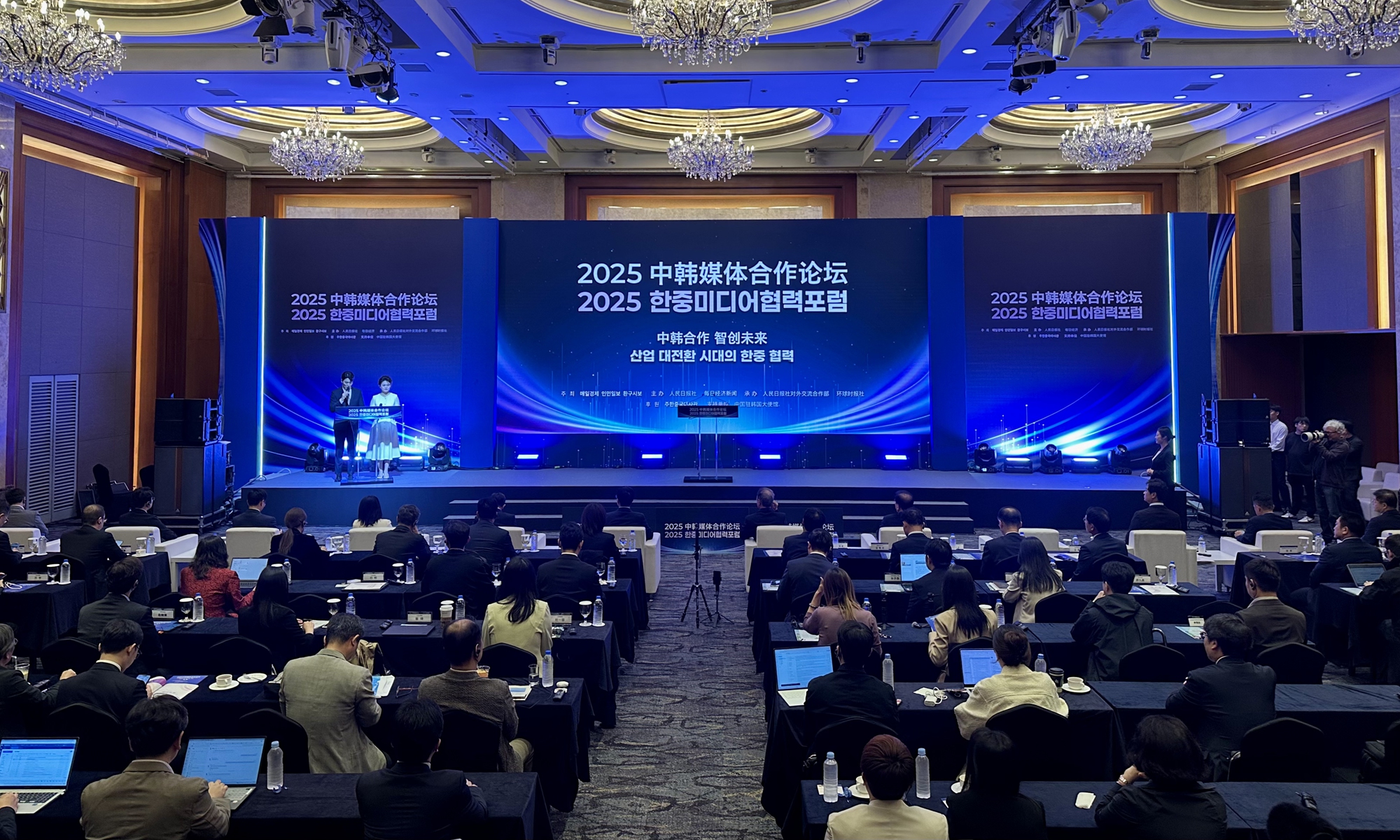
The 2025 China-South Korea Media Cooperation Forum is held in Seoul, South Korea, on October 13, 2025. Photo: Xue Ke/GT
As golden October unfolds, autumn vibes grow stronger in Seoul along the Hanjiang River. Amid this scenery, a media event focused on China-South Korea cooperation fills the city with a warm atmosphere of exchanges.The 2025 China-South Korea Media Cooperation Forum convened in Seoul on October 13, bringing together nearly a hundred media representatives, diplomats, experts, and business leaders from both countries. Under the theme "China-South Korea Cooperation for an Intelligent Future," the forum served as a significant platform to discuss the role of media in the new era and explore ways to deepen the strategic cooperative partnership between the two nations.

A view of Seoul, South Korea's capital city, in Autumn Photo: VCG
The highly anticipated 32nd APEC Economic Leaders' Meeting will be held in South Korea from October 31 to November 1. This meeting is expected to convey to the world the conviction of upholding multilateralism and promoting regional unity and cooperation. China and South Korea are not only friendly neighbors facing each other across the sea but also important partners for common development.During the forum, representatives from the business, academic, and media sectors of the two countries conducted in-depth discussions on issues such as economic development, green transition, and media cooperation. Participants noted that faced with the global trend of scientific and technological revolution and industrial transformation, the two countries should continue to deepen cooperation and open new avenues for collaboration.
Partners in progress
As close neighbors facing each other across the sea, China and South Korea have long been integrated deeply in the economic, cultural, and technological fields. At the forum, guests discussed "how media can empower China-South Korea cooperation" and reached a consensus that the media should serve as conveners of shared understanding and facilitators of cooperation between the two countries, solidifying the public opinion foundation and popular support for the development of bilateral relations.
The forum was co-hosted by the People's Daily and South Korea's Maekyung Media Group.
Yu Shaoliang, president of the People's Daily, stated in his speech that China and South Korea are geographically close, have friendly relations among people, share cultural similarities, and have converging interests. They are like neighbors that cannot be moved away. He emphasized that the media outlets are not only recorders of the friendly cooperation between the two countries, but also dream-builders of a better future for their peoples. He asserted the People's Daily's commitment to working with South Korean media to deepen cooperation, act as shapers of right perception, guardians of common interests, and facilitators of civilizational dialogue, and jointly narrate stories of good-neighborliness, win-win cooperation, and a vibrant Asia-Pacific region.
Chang Dae-whan, chairman of Maekyung Media Group, reviewed his group's years of exchanges and cooperation with the People's Daily in his speech. He noted that in this era full of challenges, South Korea and China are not only close economic partners, but also neighbors that need to explore the future together.
Park Byeong-seug, former speaker of the National Assembly of the Republic of Korea, said in his speech that in the past, the economies of South Korea and China achieved rapid development based on free trade and multilateralism. Currently, China is vigorously advancing transformation in the digital and energy sectors, which is aligned with South Korea's development strategy. He stressed that the global market is vast, and the two sides should explore future-oriented cooperation.
Chinese Ambassador to South Korea Dai Bing highlighted the long history of friendly exchanges and deeply integrated interests between the two nations. He noted that enhancing cooperation remains the most sensible choice for both sides. He urged media outlets to report on each other with mutual respect and objectivity, spotlight positive achievements and heartwarming stories, and contribute positive energy to the relationship.
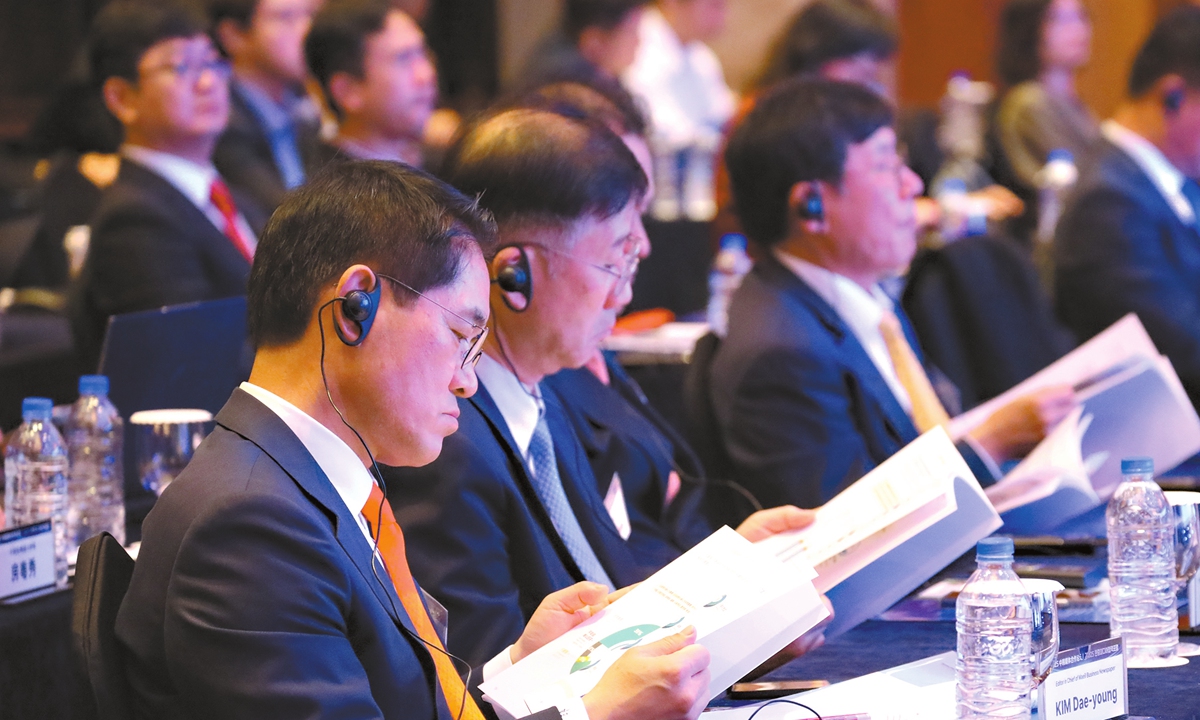
Guests read a public opinion poll report jointly released by the International News Department of the People's Daily and the Global Times Institute at the 2025 China-South Korea Media Cooperation Forum in Seoul, South Korea, on October 13, 2025. Photo: Wan Yu/People's Daily
Bridges of collaborationCurrently, the deepening of China-South Korea economic and trade cooperation has infused a steady stream of vitality into people-to-people exchanges. In turn, closer people-to-people bonds have solidified the social foundation for practical cooperation. At the forum, technology cooperation cases shared by business representatives and human stories behind tourism data together painted a picture of mutual engagement in China-South Korea cooperation.
In the field of industrial cooperation, "intelligence" emerged as a key term in guest speeches and discussions.
"China boasts strong capabilities and numerous successful cases in robotics design, R&D, and manufacturing," said Kim Min-kyo, founder and CEO of South Korea's BigWave Robotics. "Cooperation between the two countries in the robotics sector will help build a robotics industry ecosystem and elevate the economies of both countries to a new level."
Guo Wenwei, founder of Leadigital Intelligence, presented a specific cooperation plan. Leadigital Intelligence, which focuses on applying industrial large-scale models in the automotive, semiconductors, and shipbuilding sectors, is set to launch a benchmark pilot project in South Korea. The company aims to integrate AI into manufacturing processes and will collaborate with top South Korean universities and research institutes to accelerate technology commercialization. "We aspire to be a connector in Asia-Pacific industrial intelligentization process, committed to open sharing and fostering a collaborative ecosystem," Guo said.
Kim Jae-hwan, secretary general of the Korea Association of Robot Industry who said his visit to China for an industry exchange this summer gave him a direct appreciation for collaboration. "China is at the forefront of the global robotics industry, and we maintain close ties with institutions like the Chinese institute of Electronics in the field of industrial robots," he said. He believes that South Korea and China should uphold multilateralism, leverage their respective comparative advantages, and promote mutually beneficial industrial cooperation.
The momentum of economic and trade cooperation has also spread to people-to-people exchanges. Since China implemented a visa-free entry policy for South Korean citizens in November 2024, South Koreans' enthusiasm for traveling to China has remained high. Data from Chinese online travel platform Ctrip shows that in the first half of this year, the number of South Korean users booking trips to China increased by 125 percent compared with the same period in 2024. And following South Korea granting of visa-free entry to Chinese group tourists, travel interest in South Korea has also received a fresh boost.
Tang Weiwei, vice president of Xiaohongshu, shared several stories of people-to-people connectivity from China's lifestyle-sharing social media platform at the forum. She said that many South Korean friends, driven by curiosity about China, have come to explore the country and shared their true feelings and experiences on Xiaohongshu. In response, Chinese people have used online communities to build "a bridge of people-to-people connectivity" through their real experiences.
The experience of South Korean user Junny (screenname) is a typical example. He usually shuttles between Edinburgh and Seoul and previously had no time to apply for a tourist visa due to a busy work schedule and exams. After learning about China's 144-hour visa-free transit policy in June 2024, he transited through Shanghai on his way back to Seoul from Edinburgh and embarked on a 6-day spontaneous trip to two cities in China. He not only detailed his itinerary on Xiaohongshu, but also shared practical guides on cross-border visa-free travel, which were widely reposted by users. "Six days to explore two cities was sufficient, yet it felt like it passed in a flash. Chinese cities possess both modern vitality and cultural warmth," Junny remarked, resonating with many netizens.
Stewards of bilateral ties
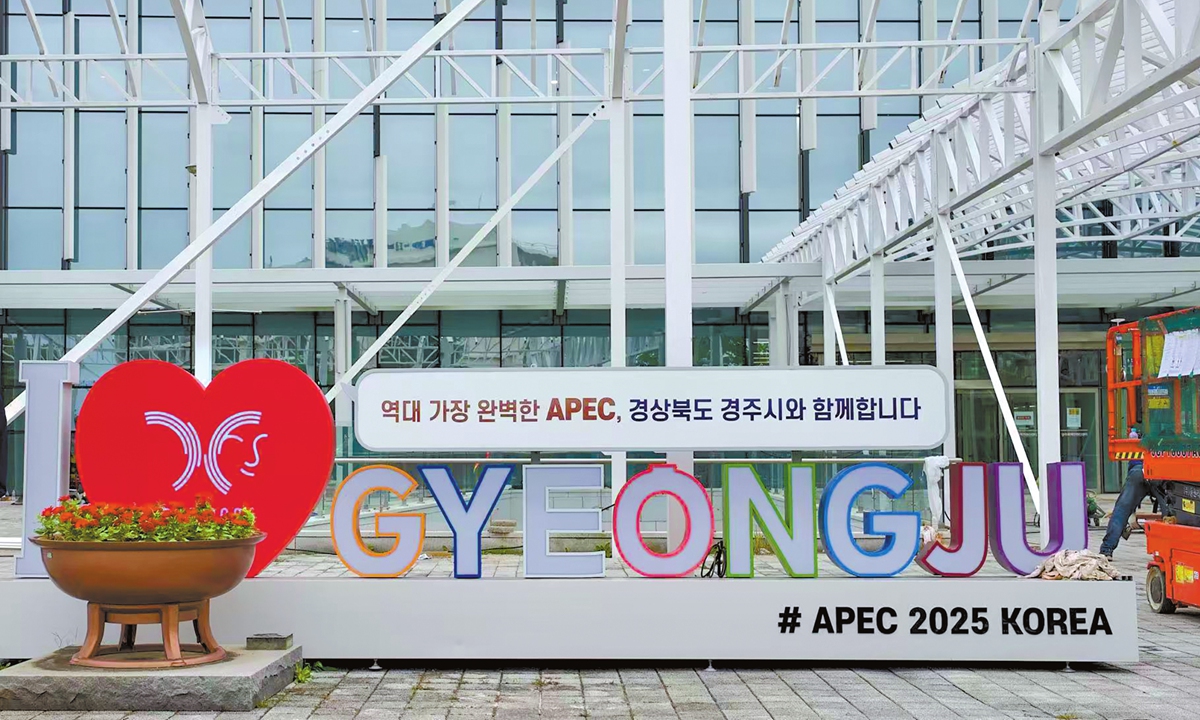
An exterior view of the Gyeongju Hwabaek International Convention Center shows signs welcoming the upcoming 32nd APEC Economic Leaders' Meeting. Photo: Liu Yang/GT
At the forum, the "bridge role" of the media was a recurring theme among participants. There was a consensus that amid a complex international environment, media from both countries should take greater initiative to build platforms for information sharing and experience exchange. This effort aims to foster mutual understanding between the peoples and advance practical cooperation.Kim Jin-ho, professor of South Korea's Dankook University emphasized that "carefully nurturing China-South Korea relations is crucial to the overall interests of bilateral development." He called on the media of both countries to uphold the spirit of seeking truth from facts, clarify their own roles, and promote the deepening and solidification of bilateral cooperation with a long-term perspective, while preventing short-term distractions from disrupting the overall cooperation framework.
Park Han-jin, distinguished professor at the Hankuk University of Foreign Studies, put forward specific suggestions. He hoped that the media from both countries would establish joint research and exchange platforms; focus on cultural content creation, technology integration, and industrialization practices; promote the implementation of substantive projects; and inject stability and constructive momentum into bilateral relations.
"As a scholar who has long studied China-South Korea cultural exchanges, I deeply felt that attendance in this forum was worthwhile, and I am full of confidence in future cooperation," Chen Wei, associate professor at Jilin Normal University, told the Global Times.
Chen believes that the media not only disseminates information, but also shapes perceptions and trust, serving as a vital bridge for people-to-people connectivity between the two countries. "Through media cooperation, the two countries can make technological achievements and cultural stories resonate in harmony, and deepen cooperation in economic, trade, education, technology, and cultural fields to make it more resilient," she said.
From industrial synergy to people-to-people connectivity, and from media responsibility to cultural mutual learning, the 2025 China-South Korea Media Cooperation Forum has concluded. However, the consensus built and bridges established at the forum are becoming a key driving force for advancing China-South Korea cooperation to deeper levels and broader areas.
RELATED ARTICLES