IN-DEPTH / IN-DEPTH
Practitioners and project builders share how Tianjin’s global nexus sustains and shapes SCO’s enduring spirit
Decades of progress
By in Tianjin Published: Sep 02, 2025 09:41 PM

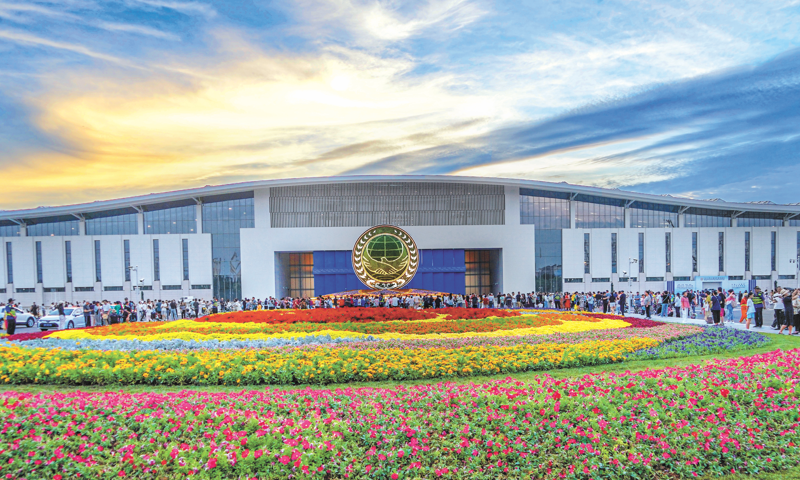
People gather at the Tianjin Meijiang Convention Center, the main venue for the 2025 SCO Summit in Tianjin, on August 28, 2025. Photo: VCG
Editor's Note:
The 2025 Shanghai Cooperation Organization (SCO) Summit in Tianjin marks China's fifth hosting of the summit and the largest since the organization's inception.
On June 15, 2001, the signing of the Declaration of the Shanghai Cooperation Organization officially established the SCO. Over the past 24 years, it has grown into a regional cooperation organization with the largest population and geographic coverage, as well as the greatest development potential, playing an irreplaceable role in maintaining regional security, promoting economic and trade connectivity, and deepening cultural exchanges. Grounded in the Shanghai Spirit - the very root and soul of the SCO that emphasizes mutual trust, mutual benefit, equality, consultation, respect for diverse civilizations, and the pursuit of common development - the organization offers valuable insights for managing multilateral relations and strengthening regional cooperation.
The Global Times is launching a series of stories to discover the past, the present, and the future of the Shanghai Spirit by visiting three Chinese cities that have hosted SCO summits - from Shanghai, the birthplace of the Shanghai Spirit, to Qingdao, a model for subnational cooperation, and now Tianjin, poised to open a new chapter in collaboration. We explore the impact of the SCO summits on these cities, and how they embody the Shanghai Spirit across various fields, further contributing to China's openness and international exchanges.
This is the third installment.
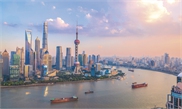
Beneath the glowing lights of the Haihe River, Tianjin, in North China, welcomes a globally watched "Shanghai Cooperation Organization (SCO) Moment."
On the evening of August 31, the Meijiang Convention and Exhibition Center in Tianjin was ablaze with lights. Its grand hall was adorned with a vibrant red carpet and a majestic array of flags from SCO member states, the SCO itself, and the United Nations.
At the far end of the carpet, a huge mural of the Haihe River's modern, bustling nightscape bore witness to this gathering of distinguished guests.
After a seven-year hiatus, China once again hosted the SCO family, welcoming over 20 foreign leaders and 10 heads of international organizations to the Haihe River's banks for the largest summit in the SCO's 24-year history.
Tianjin, a coastal hub and a pivotal node in the Belt and Road Initiative, seized this moment to showcase its role as a bridge between China and the world, fostering unity and collaboration while carrying forward the SCO's spirit of openness and cooperation into the future.
A city pulsing with SCO enthusiasm
As journalists explored Tianjin during the summit, the city radiated hospitality. In the Binhai New Area, streetlights proudly displayed banners proclaiming "2025 SCO Summit" and "Meet at SCO," reflecting the host's infectious enthusiasm. Along the Haihe River, towering skyscrapers illuminated the night with SCO-themed light shows, while "SCO" echoed as a frequent keyword in the city's bustling streets and alleyways.
At Tianjin Railway Station, the Century Clock - erected to herald the new millennium - blends Chinese characters with Greek constellations, Roman numerals, and Arabic numbers, symbolizing Tianjin's aspiration to synchronize with the global rhythm.
As one of China's first open coastal ports and a key Belt and Road intersection, Tianjin maintains deep ties with SCO nations, having forged 20 sister-city partnerships, established 10 Luban Workshops - vocational training centers sharing Chinese expertise - and operated over 12,000 China-Europe and Central Asia freight trains.
Ports witness Tianjin's role in global connectivity
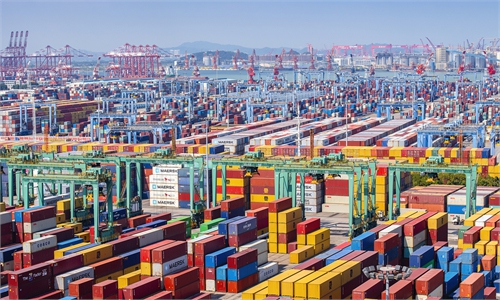
To understand Tianjin's openness, one must begin at Tianjin Port. A colossal container ship, stretching 399 meters - 60 meters longer than the world's largest aircraft carrier - docked at the port, its deck spanning the equivalent of 3.5 standard football fields.
Yang Jiemin, vice president of the Tianjin Port Group, told the Global Times that by boasting a 200,000-ton-class container terminal, the port is capable of handling the world's largest container vessels.
At the "smart zero-carbon" terminal, automated cranes unload containers, and blue intelligent trucks navigate autonomously, ensuring seamless operations.
Today, handling trade with over 500 ports across 180 countries, Tianjin Port consistently ranks among the world's top 10. Fresh Chilean cherries and South American shrimp arrive daily, while Chinese electric vehicles set sail for global markets. As a Belt and Road sea-land nexus and a key node in the New Eurasian Land Bridge Economic Corridor, the port's vibrancy reflects China's ever-closer ties with the world.
China-Europe freight trains departing from Tianjin reach Europe in as little as 20 days, while direct sea-rail routes to Tashkent, Uzbekistan, strengthen logistical links with SCO nations.
Beyond trade, openness fosters cultural exchanges. The Beian Bridge, spanning the Haihe River, embodies a romantic fusion of Chinese and Western aesthetics - statues of maidens playing traditional Chinese instruments stand alongside European-style railings and columns.
The history of Beian Bridge dates back to 1939. Beian Bridge is a mixture of French and Chinese cultures. The design of the bridge draws inspiration from both traditional Chinese mythologies and the Pont Alexandre III bridge in Paris, according to the Xinhua News Agency.
A local resident told the Global Times, "The bridge is Tianjin's mirror: Rooted in tradition yet open to the world." This inclusivity lends the city a warm, welcoming hue, where the aroma of Italian coffee in Tianjin's Italian Style Area mingles with the savory scent of a popular local snack "jianbing guozi," a savory pancake roll filled with crispy fried dough sticks.
Locals note foreign faces were once rare, but today, Tianjin's "cosmopolitan charm" draws more international visitors. On international social media platforms, Tianjin hashtags have surged amid summit hype.
One place teeming with foreign faces is Tianjin's Luban Workshops. The workshop, named after Lu Ban, an ancient Chinese woodcraft master, is a Chinese vocational workshop program training talent overseas, a win-win model for vocational education cooperation.
Launched in 2016 with the first overseas workshop, this platform - carrying the "craftsmanship spirit" and "cooperative wisdom" - has gone global. China now runs 34 Luban Workshops in 30 countries and regions. As its birthplace, Tianjin has built 24 such workshops in 23 countries, including 10 in SCO nations like Kazakhstan, Tajikistan, and Pakistan, becoming a key link for vocational education cooperation.
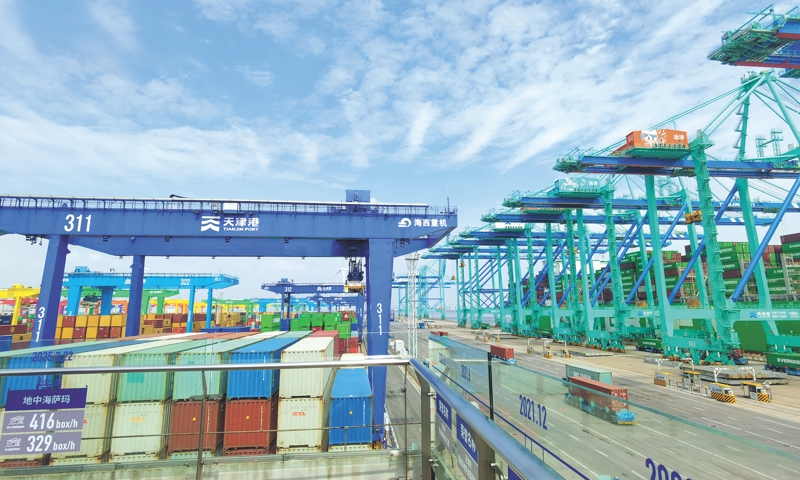
Tianjin Port in Tianjin's Binhai New Area Photo: Hu Yuwei/GT
Crafting futures through skill empowerment
For Muhammad Umar, a young Pakistani national with dreams of becoming an engineer, the Luban Workshop in Tianjin offered a gateway to mastering electrical automation for metro construction. "I want to bring Chinese technology back to Pakistan," Umar declared confidently to the camera after two years in Tianjin. At the Luban Workshop in Tianjin, he and his classmates receive hands-on industry training across multiple modules within a single classroom - an experience that can significantly enhance their career competitiveness.
In July 2018, the Tianjin Modern Vocational Technology College and Punjab's Technical Education and Vocational Training Authority co-founded the Pakistan Luban Workshop in Punjab. The workshop offers courses including electrical automation technology and electromechanical integration technology. It attempts to improve employment through enhancing vocational education and foster more talents for both Pakistani and Chinese enterprises along the China-Pakistan Economic Corridor, Xinhua reported.
In 2023, Umar seized this opportunity, excelling academically to embark on his studies in Tianjin. Guided by Chinese instructors and peers, he honed his skills on cutting-edge industrial automation lines, smart warehousing systems, and robotics, competing in technical contests to refine his expertise.
As of now, Pakistan's Luban Workshop has trained over 1,000 local youths, with a total of more than 8,800 hours of instruction, according to Xinhua.
Umar's vision is clear: To apply advanced Chinese technologies to Pakistan's burgeoning automotive and agricultural sectors, where new companies demand skilled youth proficient in computer-operated machinery. A passionate admirer of Chinese culture, he has embraced martial arts and tai chi, aspiring to bridge SCO nations through youth exchanges.
As a citizen of an SCO member state, Umar feels the organization has "shrunk the world and expanded the stage," enriching markets with diverse goods and factories with efficient equipment.
From Thailand's Ayutthaya to Kazakhstan's Astana, Egypt's Cairo to Ethiopia's Addis Ababa, and Russia's Moscow to Portugal's Setúbal, Tianjin's Luban Workshops carry China's spirit of mutual trust and cooperation, becoming a vibrant feature of the global vocational education landscape.
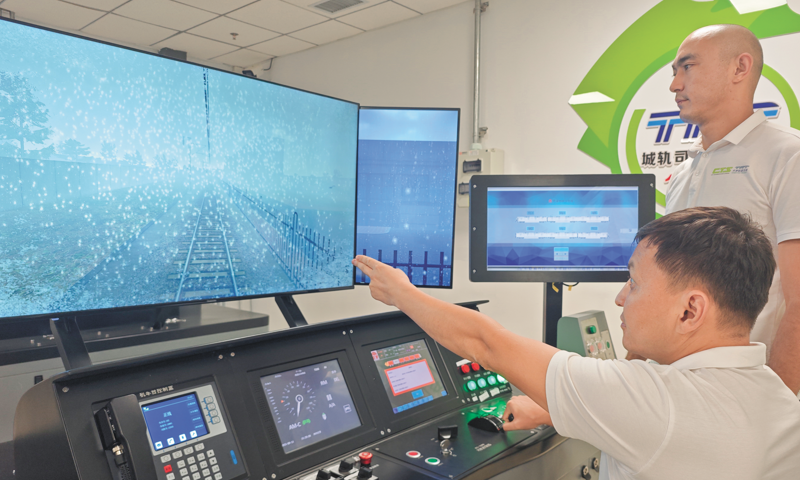
A Kazakh train driver receives rail driving technology training organized by the Tianjin Rail Transit Group in Tianjin, in August. Photo: Courtesy of the Tianjin Rail Transit Group
Riding China's fast track to regional connectivity
Tianjin's transport cooperation with SCO nations vividly illustrates regional interconnectivity.
In Kazakhstan, the Tianjin Rail Transit Group is advancing Astana's urban light rail project - the first in Central Asia to fully adopt Chinese standards and equipment. Since June 2025, 29 Kazakh train drivers have undertaken a three-month training program in Tianjin, mastering core technical modules like automated driving systems, vehicle mechanics, and standardized operations.
As Global Times reporters stepped in, a real training session unfolded in a real Tianjin Metro carriage. Marat, 37, a seasoned train driver, and his peers studied the core modules on offer. The trainee said that to adapt to Astana's extreme cold, the Tianjin Rail Transit Group designed climate-specific training, including simulated snow and ice scenarios to hone emergency skills.
Wang Qingyong, general manager of the consulting company affiliated to the Tianjin Rail Transit Group, noted all materials are in Chinese-Russian bilingual format, with video tutorials for complex procedures. To familiarize trainees with Astana's custom-built trains, visits to their Chinese manufacturer were arranged for hands-on learning, deepening their understanding of technical details.
Wang Dianyong, general manager of the overseas department at the China Construction Sixth Engineering Bureau (based in Tianjin) - another main contractor for the Astana light rail project - told the Global Times that he has witnessed growing demand for infrastructure cooperation among SCO nations. He believes the SCO is evolving from security-focused cooperation to integrated development in security, the economy, and culture, with member states' consensus on connectivity and green development aligning with Tianjin's strengths - truly principles of "extensive consultation, joint contribution, and shared benefits."
Global Times reporters visited the Astana light rail project in June, which links local landmarks like the presidential palace, concert hall, and national museum. Its train-hoisting ceremony in June drew large crowds, with local drivers giving a thumbs-up in anticipation.
"Unmanned trains were hoisted in June, with trial runs set for end of the year - cutting commute times by half," Wang said. He hopes overseas Chinese projects, boosted by the summit and Tianjin's high-quality development, will build not just concrete bridges, but also "heart-to-heart connections," embodying the SCO spirit.
Tianjin's contributions extend further: Its enterprises have developed smart drip irrigation systems for Kazakhstan's water-scarce regions, achieving over 50 percent water savings, and "smart water-fertilizer integration" equipment for Pakistan's farms, boosting yields through automation, as reported by CCTV.
Following Shanghai, Beijing, and Qingdao, Tianjin is the fourth Chinese city to host an SCO summit. As a coastal gateway and Belt and Road hub, it witnesses the fusion of diverse civilizations, weaving the SCO's story from past to future.
Tianjin's efforts continue to ripple globally, from advanced irrigation technologies benefiting SCO nations to infrastructure projects like Astana's light rail, embodying the SCO's vision of connectivity and cooperation, ensuring its spirit thrives for generations to come.
Decades of progress
RELATED ARTICLES