IN-DEPTH / IN-DEPTH
GT Investigates: New face of Japan's right and how online influencers fuel ultra-nationalism
By and Leng Shumei Published: Dec 15, 2025 10:00 PM

Japanese Prime Minister Sanae Takaichi's recent erroneous remarks on the Taiwan question have led to a sharp deterioration in China-Japan relations, drawing strong condemnation from China and growing criticism within Japan.
Meanwhile, beyond the provocative statements on China's Taiwan island, Tokyo has also taken a series of increasingly risky moves in the military and security spheres.
Yet, this pattern of words and actions appears to have found vocal support on social media from a group of right-wing online influencers in Japan. Through almost absurdly strident appeals — such as calls for a MAGA (Make America Great Again)-style "Japan First" or for the country to become a nuclear-armed power - they have been attracting a growing following.
From viral conspiracy theories and historical revisionism to direct attacks on Japan's neighbors, emerging Japanese online far‑right figures, or "netto uyoku" in Japanese, have moved from the margins of the internet to the center of public debate. Individuals such as Kotoe Hashimoto, who threatened "nuclear retaliation" against China; Shota Harada, a YouTuber turned local politician in Nara who built his brand on anti-foreigner stunts; and Sohei Kamiya, the founder of the surging populist Sanseito party, exemplify this new model of influence.
In this investigative piece, the Global Times examines the emergence, tactics, and impact of Japan's new right-wing influencers. How did they build their followings? What ideologies do they promote? And how are they reshaping Japan's society and its role in a tense region?
Right-wing fans
Hashimoto is a Japanese far-right online personality and commentator known for disseminating ultra-nationalist and revisionist views through social media platforms and her publications, boasting 293,700 followers on X.
Born in Hiroshima Prefecture as a third-generation atomic bomb survivor, she, rather than advocating for peace and reflecting on the tragedy's root cause in Japan's history of aggression, perversely advocates for Japan to possess nuclear weapons.
Hashimoto's toxic mindset can likely be traced back to her grandmother. According to a report in August 2022 by JAPAN Forward, an English-language news and opinion site by the Sankei Shimbun, her late grandmother was in Hiroshima on August 6, 1945, when the atomic bomb fell and was exposed to radiation. Hashimoto recalls her grandmother claiming that the atomic bombs were dropped on Japan "only because they didn't have their own new type of bombs."
According to her historical statements, Hashimoto resembles a grassroots counterpart to Takachi. Hashimoto, a mother of six children, holds conservative views on women's role in society, while advocating for constitutional revision, strengthening Japan's defense capabilities, and emphasizing pride in Japan's history - including its history of aggression.
She denied the Nanjing Massacre, and claimed "Japan and Nazi Germany were allies" is fiction, according to separate X posts on August 1 and December 7.
She served as a candidate for the Party of Hope in the 2017 House of Representatives election, where she aggressively promoted the revision of Japan's pacifist constitution, specifically Article 9.
She is also a big fan of Takaichi. She claimed on X on October 4 that "Japan is saved!" upon Takaichi's election as leader of Japan's ruling Liberal Democratic Party.
On November 18, she claimed that if Takaichi were to retract her Taiwan-related remarks, "it would immediately lead to war." Takaichi claimed at a Diet meeting on November 7 that the Chinese mainland's "use of force on Taiwan" could constitute a "survival-threatening situation" for Japan.
It was only through the recent fanatical rhetoric of Hashimoto that such a clownish far-right figure was introduced to some Chinese netizens. On December 3 on X, she falsely hyped "China is claiming that it wants to launch a nuclear attack on Japan," claiming "a collective of 100 million" Japanese would unit "as one spirit, one body, one purpose" in response.
According to the Chinese Foreign Ministry, on October 16, 1964 when China successfully detonated its atomic bomb, China immediately made a solemn declaration to the world that it undertakes not to be the first to use nuclear weapons at any time and under any circumstances, and unconditionally commits itself not to use or threaten to use nuclear weapons against non-nuclear states or nuclear-weapon-free zones.
Xiang Haoyu, a distinguished research fellow at the Department for Asia-Pacific Studies at the China Institute of International Studies, told the Global Times that such extreme statements from the likes of Hashimoto serve to fuel the political ambitions of Japan's right-wing forces.
"On one hand, they fabricate a false threat of a Chinese nuclear strike against Japan, maliciously shaping China's image as an adversary, inciting nationalist sentiments within Japan, and creating a public opinion environment conducive to right-wing efforts to expand military capabilities, revise the pacifist constitution, and break with the post-war framework. On the other hand, these absurd remarks also serve to grab attention and consolidate their influence within right-wing circles," Xiang said.
Another Japanese new right-wing face is Shota Harada, who has been promoting xenophobia online and has 729,100 followers on X. According to a report by the Sankei Shimbun in July, in the Nara City Council election, 34-year-old video blogger Harada was successfully elected as a city council member. While Harada enjoys great recognition among Japan's young generation, he has faced widespread criticism for his activities as a "troublemaker YouTuber," the Sankei Shimbun reported, noting that "the response from Nara citizens has been mixed, with both support and opposition stirring intense debate."
According to the Sankei Shimbun, Harada in 2022 was convicted and sentenced to jail for crimes including theft and obstruction of business.
Harada ran for office on a platform to "protect the Nara deer inhabiting the Nara Park area from foreigners." In 2024, Harada found a new "traffic-generating tactic" by targeting Chinese tourists, according to media reports. He reportedly orchestrated malicious attacks, filmed videos of deer being beaten, and deliberately framed Chinese tourists for these acts. According to Nikkan Sports in June, regarding the so-called "deer patrol activities" in Nara Park, Harada confirmed that he was sued by a Chinese individual.
Regarding Takaichi's erroneous remarks on China's Taiwan island, Harada, on December 8 on X, called on the Japanese public to "give their full support" of Takachi.
Apparently, both Hashimoto and Harada are big fans of Takaichi. Similar to Takaichi's rise to her current position, the emergence of these "netto uyoku" figures is closely linked to the overall rightward shift and rising conservative atmosphere in Japanese society, Da Zhigang, director of the Institute of Northeast Asian Studies at the Heilongjiang Provincial Academy of Social Sciences, told the Global Times.
"Factors such as prolonged economic stagnation, declining favorability toward China, and the media's one-sided portrayal of the 'China threat' have provided fertile ground for extreme rhetoric. Also, the online right-wing demographic primarily consists of young people aged 20-40, who are easily swayed by extreme nationalism and exclusionism, becoming amplifiers of such remarks," Da said.
From screens to ballots
When discussing Japan's "netto uyoku," another figure also stands out — Sohei Kamiya, leader of the populist party Sanseito, who has proven adept at harnessing online influence.
The Yomiuri Shimbun, on July 23, described the emergence of the party as a "focal point" in the July 20 House of Councillors' election. The party secured 14 seats, with its proportional representation vote tally reaching 7.42 million, ranking third. Its campaign slogan, "Japanese First," sparked widespread controversy both offline and online, according to the report.
According to media reports, Kamiya was born on October 12, 1977, in Fukui Prefecture. He graduated from Kansai University and has three children with his wife.
Sanseito started in 2020 when Kamiya amassed a followership on YouTube and social media to create a political group to attract voter discontent with conventional parties, Politico reported on July 22. As of press time, the party's YouTube channel had 555,000 subscribers.
Politico noted that critics say the party's stance has encouraged the spread of xenophobic rhetoric in the election campaign and on social media, prompting other ultraconservative candidates to be outspoken.
The party even put forward a new constitutional framework proposal, with no stipulation on the "renunciation of war," which has sparked widespread controversy, according to the Tokyo Shimbun on July 19.
Hyping emotions
Daisuke Tsuji, an associate professor at Osaka University, who has collected data on "netto-uyoku" for over a decade, was quoted by The Time in 2022 that "only about 2 percent of internet users in Japan are netto-uyoku." But their viewpoints are over-represented on the internet, partly because they are among the few Japanese people willing to talk about politics, he said.
In recent years, right-wing propaganda in Japan has exhibited model "online influencers PLUS political parties," Xiang noted.
The expert analyzed that traditional political mobilization methods in Japan are outdated and struggle to attract younger demographics. Influencers' communication styles help parties reach young voters.
Also, issues such as Japan's economic downturn have fueled populist sentiments. Influencers excel at hyping emotions, while political parties can translate these emotions into concrete policy proposals and votes, Xiang said.
As the online far‑right continues to amplify its voice and extend its reach from virtual platforms to legislative chambers, will Japan's embrace of this digital‑fueled ultranationalism redefine its postwar identity - and at what cost to regional peace and stability? This is of deep concern in the international community, according to experts.
Meanwhile, beyond the provocative statements on China's Taiwan island, Tokyo has also taken a series of increasingly risky moves in the military and security spheres.
Yet, this pattern of words and actions appears to have found vocal support on social media from a group of right-wing online influencers in Japan. Through almost absurdly strident appeals — such as calls for a MAGA (Make America Great Again)-style "Japan First" or for the country to become a nuclear-armed power - they have been attracting a growing following.
From viral conspiracy theories and historical revisionism to direct attacks on Japan's neighbors, emerging Japanese online far‑right figures, or "netto uyoku" in Japanese, have moved from the margins of the internet to the center of public debate. Individuals such as Kotoe Hashimoto, who threatened "nuclear retaliation" against China; Shota Harada, a YouTuber turned local politician in Nara who built his brand on anti-foreigner stunts; and Sohei Kamiya, the founder of the surging populist Sanseito party, exemplify this new model of influence.
In this investigative piece, the Global Times examines the emergence, tactics, and impact of Japan's new right-wing influencers. How did they build their followings? What ideologies do they promote? And how are they reshaping Japan's society and its role in a tense region?
Right-wing fans
Hashimoto is a Japanese far-right online personality and commentator known for disseminating ultra-nationalist and revisionist views through social media platforms and her publications, boasting 293,700 followers on X.
Born in Hiroshima Prefecture as a third-generation atomic bomb survivor, she, rather than advocating for peace and reflecting on the tragedy's root cause in Japan's history of aggression, perversely advocates for Japan to possess nuclear weapons.
Hashimoto's toxic mindset can likely be traced back to her grandmother. According to a report in August 2022 by JAPAN Forward, an English-language news and opinion site by the Sankei Shimbun, her late grandmother was in Hiroshima on August 6, 1945, when the atomic bomb fell and was exposed to radiation. Hashimoto recalls her grandmother claiming that the atomic bombs were dropped on Japan "only because they didn't have their own new type of bombs."
According to her historical statements, Hashimoto resembles a grassroots counterpart to Takachi. Hashimoto, a mother of six children, holds conservative views on women's role in society, while advocating for constitutional revision, strengthening Japan's defense capabilities, and emphasizing pride in Japan's history - including its history of aggression.
She denied the Nanjing Massacre, and claimed "Japan and Nazi Germany were allies" is fiction, according to separate X posts on August 1 and December 7.
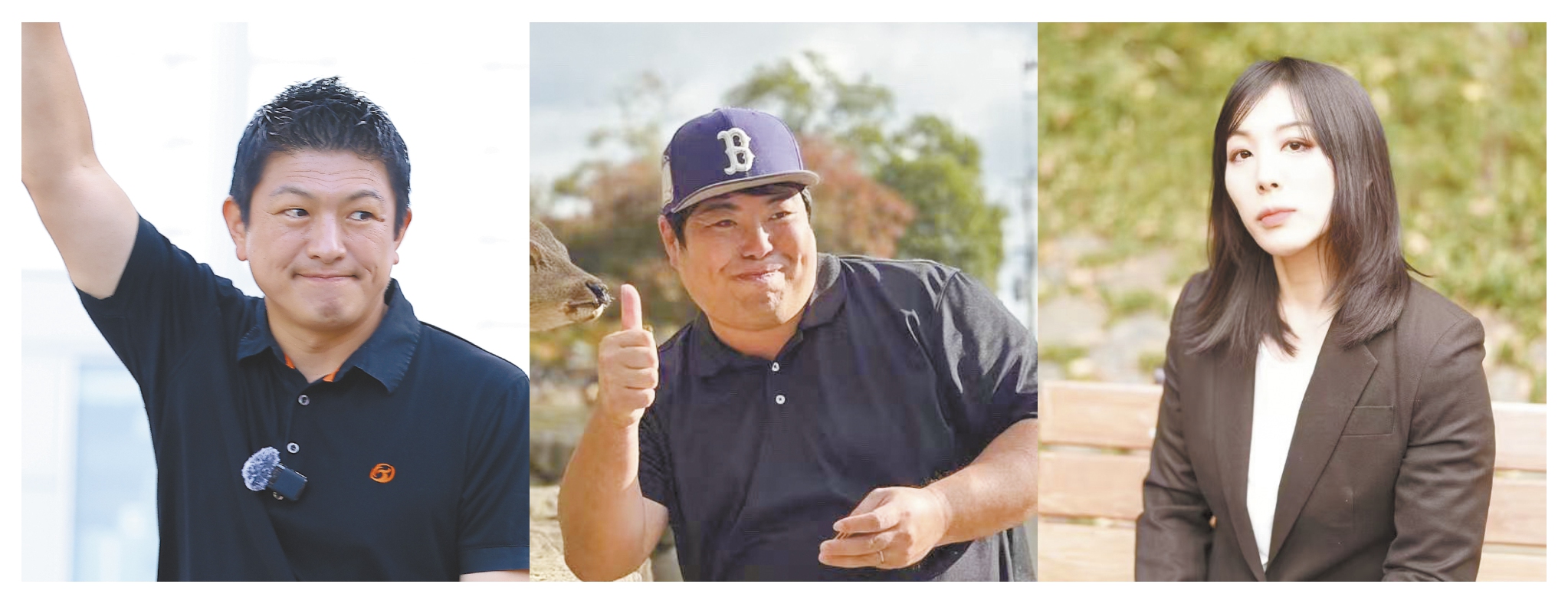
From left to right: Sohei Kamiya, Shota Harada, Kotoe Hashimoto Photo: VCG, screenshots from X
She served as a candidate for the Party of Hope in the 2017 House of Representatives election, where she aggressively promoted the revision of Japan's pacifist constitution, specifically Article 9.
She is also a big fan of Takaichi. She claimed on X on October 4 that "Japan is saved!" upon Takaichi's election as leader of Japan's ruling Liberal Democratic Party.
On November 18, she claimed that if Takaichi were to retract her Taiwan-related remarks, "it would immediately lead to war." Takaichi claimed at a Diet meeting on November 7 that the Chinese mainland's "use of force on Taiwan" could constitute a "survival-threatening situation" for Japan.
It was only through the recent fanatical rhetoric of Hashimoto that such a clownish far-right figure was introduced to some Chinese netizens. On December 3 on X, she falsely hyped "China is claiming that it wants to launch a nuclear attack on Japan," claiming "a collective of 100 million" Japanese would unit "as one spirit, one body, one purpose" in response.
According to the Chinese Foreign Ministry, on October 16, 1964 when China successfully detonated its atomic bomb, China immediately made a solemn declaration to the world that it undertakes not to be the first to use nuclear weapons at any time and under any circumstances, and unconditionally commits itself not to use or threaten to use nuclear weapons against non-nuclear states or nuclear-weapon-free zones.
Xiang Haoyu, a distinguished research fellow at the Department for Asia-Pacific Studies at the China Institute of International Studies, told the Global Times that such extreme statements from the likes of Hashimoto serve to fuel the political ambitions of Japan's right-wing forces.
"On one hand, they fabricate a false threat of a Chinese nuclear strike against Japan, maliciously shaping China's image as an adversary, inciting nationalist sentiments within Japan, and creating a public opinion environment conducive to right-wing efforts to expand military capabilities, revise the pacifist constitution, and break with the post-war framework. On the other hand, these absurd remarks also serve to grab attention and consolidate their influence within right-wing circles," Xiang said.
Another Japanese new right-wing face is Shota Harada, who has been promoting xenophobia online and has 729,100 followers on X. According to a report by the Sankei Shimbun in July, in the Nara City Council election, 34-year-old video blogger Harada was successfully elected as a city council member. While Harada enjoys great recognition among Japan's young generation, he has faced widespread criticism for his activities as a "troublemaker YouTuber," the Sankei Shimbun reported, noting that "the response from Nara citizens has been mixed, with both support and opposition stirring intense debate."
According to the Sankei Shimbun, Harada in 2022 was convicted and sentenced to jail for crimes including theft and obstruction of business.
Harada ran for office on a platform to "protect the Nara deer inhabiting the Nara Park area from foreigners." In 2024, Harada found a new "traffic-generating tactic" by targeting Chinese tourists, according to media reports. He reportedly orchestrated malicious attacks, filmed videos of deer being beaten, and deliberately framed Chinese tourists for these acts. According to Nikkan Sports in June, regarding the so-called "deer patrol activities" in Nara Park, Harada confirmed that he was sued by a Chinese individual.
Regarding Takaichi's erroneous remarks on China's Taiwan island, Harada, on December 8 on X, called on the Japanese public to "give their full support" of Takachi.
Apparently, both Hashimoto and Harada are big fans of Takaichi. Similar to Takaichi's rise to her current position, the emergence of these "netto uyoku" figures is closely linked to the overall rightward shift and rising conservative atmosphere in Japanese society, Da Zhigang, director of the Institute of Northeast Asian Studies at the Heilongjiang Provincial Academy of Social Sciences, told the Global Times.
"Factors such as prolonged economic stagnation, declining favorability toward China, and the media's one-sided portrayal of the 'China threat' have provided fertile ground for extreme rhetoric. Also, the online right-wing demographic primarily consists of young people aged 20-40, who are easily swayed by extreme nationalism and exclusionism, becoming amplifiers of such remarks," Da said.
From screens to ballots
When discussing Japan's "netto uyoku," another figure also stands out — Sohei Kamiya, leader of the populist party Sanseito, who has proven adept at harnessing online influence.
The Yomiuri Shimbun, on July 23, described the emergence of the party as a "focal point" in the July 20 House of Councillors' election. The party secured 14 seats, with its proportional representation vote tally reaching 7.42 million, ranking third. Its campaign slogan, "Japanese First," sparked widespread controversy both offline and online, according to the report.
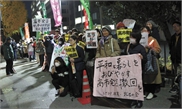
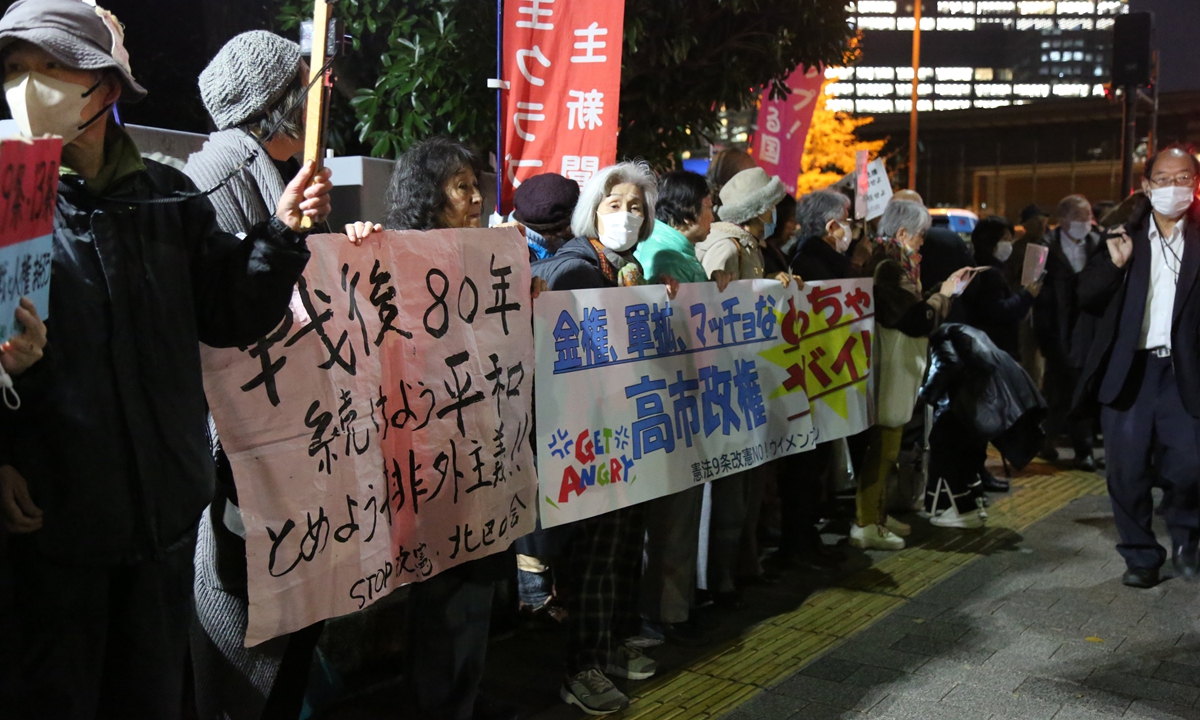
Hundreds of Japanese residents hold a protest in front of the prime minister's official residence in Tokyo, demanding that Prime Minister Sanae Takaichi retract her recent erroneous remarks on Taiwan and offer an explanation and apology, on November 25, 2025. Photo: IC
According to media reports, Kamiya was born on October 12, 1977, in Fukui Prefecture. He graduated from Kansai University and has three children with his wife.
Sanseito started in 2020 when Kamiya amassed a followership on YouTube and social media to create a political group to attract voter discontent with conventional parties, Politico reported on July 22. As of press time, the party's YouTube channel had 555,000 subscribers.
Politico noted that critics say the party's stance has encouraged the spread of xenophobic rhetoric in the election campaign and on social media, prompting other ultraconservative candidates to be outspoken.
The party even put forward a new constitutional framework proposal, with no stipulation on the "renunciation of war," which has sparked widespread controversy, according to the Tokyo Shimbun on July 19.
Hyping emotions
Daisuke Tsuji, an associate professor at Osaka University, who has collected data on "netto-uyoku" for over a decade, was quoted by The Time in 2022 that "only about 2 percent of internet users in Japan are netto-uyoku." But their viewpoints are over-represented on the internet, partly because they are among the few Japanese people willing to talk about politics, he said.
In recent years, right-wing propaganda in Japan has exhibited model "online influencers PLUS political parties," Xiang noted.
The expert analyzed that traditional political mobilization methods in Japan are outdated and struggle to attract younger demographics. Influencers' communication styles help parties reach young voters.
Also, issues such as Japan's economic downturn have fueled populist sentiments. Influencers excel at hyping emotions, while political parties can translate these emotions into concrete policy proposals and votes, Xiang said.
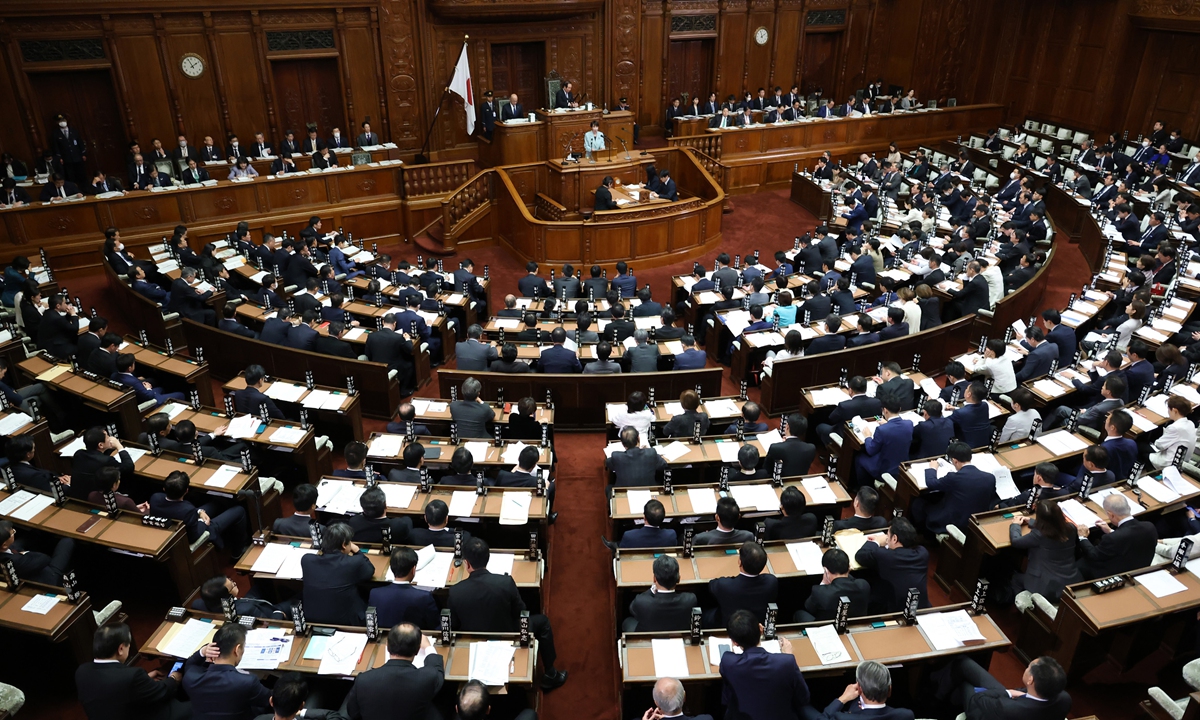
Japanese Prime Minister Sanae Takaichi attends House of Representatives plenary session at the Diet building in Tokyo on December 8, 2025. Photo: VCG
"The impact of this model is highly dangerous as it fuels the overall rightward shift in Japanese society, squeezing the space for peaceful and rational voices. Also, it exacerbates tensions with neighboring countries, undermining regional trust. In addition, it may push traditional political parties to align with right-wing appeals in their bid to secure votes," Da said.As the online far‑right continues to amplify its voice and extend its reach from virtual platforms to legislative chambers, will Japan's embrace of this digital‑fueled ultranationalism redefine its postwar identity - and at what cost to regional peace and stability? This is of deep concern in the international community, according to experts.
RELATED ARTICLES