IN-DEPTH / IN-DEPTH
GT on the spot: Visit to China’s Xinjiang dispels misinformation, offers foreign media new lens to view region
By in Xinjiang Published: Sep 17, 2025 10:45 PM

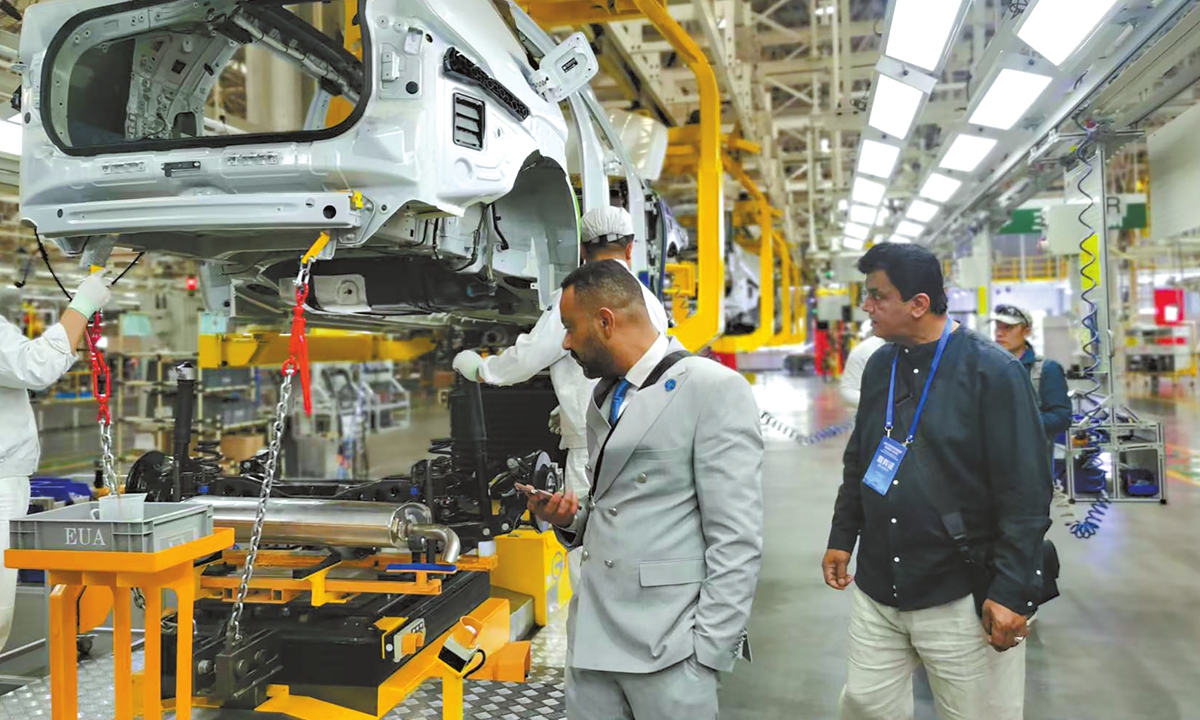
Foreign media representatives visit a vehicle manufacturing plant in Urumqi, capital of Xinjiang, on September 10, 2025. Photo: Hu Yuwei/GT
From September 9 to 15, 24 media professionals from 19 countries, including Russia, Germany, and Australia, gathered in Northwest China's Xinjiang Uygur Autonomous Region for a seven-day visit. As the journalist accompanying them throughout, I read some cautious expressions on their faces at the beginning. Later, in casual chats, I learned that some held preconceived ideas of Xinjiang region - shaped by Western media - as "backward" and "tense." Over the next seven days, from Urumqi to Kashi and the Ili Kazakh Autonomous Prefecture, the region's authentic daily life gradually dismantled their stereotypes, transforming "misconceptions" into "recognition," inspiring them to be "truth tellers."
When the group first gathered, I asked about their initial impressions of Xinjiang. Some answers were similar: "poor and backward," "ethnic tensions," and "unsafe streets."
Per Markus Andersson, CEO and editor for The Nordic Times and CEO of Aeon Media Group in Sweden, told me that this was his first to Xinjiang region. His prior understanding was limited to "mountainous deserts, 25 million people in underdeveloped conditions, small outdated cities, and vast backward rural areas." Another media professional admitted that, partly influenced by Western reports, they'd arrived with concerns about "human rights" and "religion," even approaching the visit with a mindset of "seeking evidence."
On September 11, the group's first stop was the salt-tolerant crop breeding center in Kashi. In the test fields, golden rice swayed in the breeze, contrasting beautifully with distant green oases. Growing vast fields in Xinjiang's extensive saline-alkali land has shown them the power of technology behind it.
Yerzhan Bagdatov, General Manager of Kazakhstan's Headlines News from Kazakhstan, knelt to inspect the plump rice grains, exclaiming that "Kazakhstan also struggles with saline land, a persistent agricultural challenge. Here, seawater rice turns 'wasteland' into fertile fields and boosts farmers' incomes. This innovation not only drives local progress, but also offers support to neighboring countries - a vivid example of mutual benefits under the Belt and Road Initiative."
He repeatedly touched the rice, took photos, and discussed the excursion with peers. I could feel that his initial caution was gradually replaced by curiosity and admiration.
On September 13, the group visited a local community's activity center in Kashi's Donghu district. Upon entering, the sight of multi-ethnic residents dancing together to music captivated us. Some media representatives were touched by the atmosphere and happily joined in the dancing. Staffers at the community's activity center explained to me that through events like "neighbor festivals" and "skill-sharing classes," residents of different ethnic groups help each other like a family.
Danish author Niels Stephan Cato Hahn, sitting on a bench, observed quietly, "The elders' songs harmonize perfectly, and the children's friendships are pure. Xinjiang's ethnic groups aren't just 'together' - they're truly integrated. This atmosphere isn't staged; it's a natural outcome of daily life, deeply moving."
Nsongo Die Lema Omer, a columnist and political commentator from Democratic Republic of the Congo, took constant and detailed notes along the whole journey, saying that these community governance and integration practices were worth sharing back home.
On September 15, the group visited an exhibitions about Xinjiang's fight against terrorism and extremism. The display of artifacts, photos, and videos detailed Xinjiang's counter-terrorism journey and hard-won achievements, and it exposed numerous bloody and heartbreaking incidents of significant harm, revealing the severe impact of terrorist attacks in the region.
The once lively group became solemn when step in: Some recorded casualty figures, others shook their heads at the footage of terrorist attacks, and many stood silently before victims' belongings and attackers' weapons.
As they left, Kym Bergman, editor-in-chief of Asia Pacific Defence Reporter and Asian Defence Review, told me "Sadly, some Western media often show bias, equating a single death in one region with 10 in another country, while ignoring hundreds or thousands of deaths elsewhere. This is why the terrorist incidents in China get little coverage. Anyone truly concerned with Islamic terrorism and fundamentalism should see these records, not be swayed by partial reports."
From south to north, these global media representatives told me that this journey revealed them a vivid, authentic Xinjiang. In the Yili Kazakh Autonomous Prefecture, they learned about Chabuchar News, the world's only Xibo-language newspaper in Chabuchar Sibe Autonomous County in northern Xinjiang. Supported by the government, it has embraced digital transformation, bringing Xibo culture to younger generations, local officials told them.
Albanian senior reporter Bjolanda Cuku from the Albania Radio and TV Station told me this is his first time in China, and every step pulses with economic vitality, built on high standards. "Beyond industrial growth and modern infrastructure, China's reverence for ancient culture is striking. Vibrant squares, gleaming cities, inherited minority languages, and innovative tech show progress, but the harmony of old and new - development with cultural preservation - touched me most. This trip broadened my view on balancing modernization with national identity."
Yerzhan Bagdatov from Kazakhstan's Dara Consult Media Holding told me that the Xinjiang he saw contradicts some international media portrayals. "Discussions about this region must be objective, based on firsthand experience. Without visiting, you can't judge accurately; once here, you can't ignore the positive changes in people's lives."
On September 15, as the seven-day visit ended, Andersson from Sweden reflected at the closing meeting: "This trip transformed my view of Xinjiang. I thought it was relatively backward, but the scale and development of its cities shocked me. I will use three words to describe Xinjiang: 'Progress,' 'modernization,' and 'unity.' Uyghur police patrol alongside Han residents, communicating smoothly; and mosques and Islamic institutes show respect for faith. Harmony exists not just among ethnic groups but in society's smooth functioning, where people enjoy life and thrive. Though I haven't seen all of Xinjiang, these seven days define it as 'harmony' - authentic and moving."
As we left, some of us started drafting articles, while others pieced together videos from the trip for social media. Some of them told me that they arrived with misconceptions, but left with clarity and conviction. As a media friend said to me when we were saying goodbye, "You have to see the truth for yourself. Xinjiang's story is one the world needs to hear."
RELATED ARTICLES