IN-DEPTH / IN-DEPTH
Practitioner's Insights: A beam of laser illuminates pioneering path in medicine, as Hainan’s special customs operation fulfills commitment to high-standard opening-up
Editor’s Note:
The annual Central Economic Work Conference (CEWC) was held in Beijing from December 10 to 11. Xi Jinping, general secretary of the Communist Party of China (CPC) Central Committee, Chinese president and chairman of the Central Military Commission, delivered an important speech at the conference. The conference reviewed the country's economic work in 2025, analyzed the current economic situation, and arranged next year's economic work, providing guidance and direction for ensuring a good start to the 15th Five-Year Plan period (2026-30).
The meeting took into consideration both domestic and international situations and made a scientific assessment of China's development situation. Building on new practical experience, it summarized and outlined "five imperatives" as new understandings and insights, and identified key tasks for next year's economic work through "eight commitments." These range from continuously expanding domestic demand as a focus and enhancing innovation-driven development, to deepening reform and expanding opening-up; from promoting coordinated development and advancing the carbon emissions peaking and carbon neutrality goals, to prioritizing people's livelihoods and safeguarding the bottom line against systemic risks - covering all aspects of economic and social development.
Since the new era, the Central Economic Work Conference has consistently attached great importance to theoretical summary as a means of guiding economic development and practices. As circumstances evolve, the conference has continued to deepen its understanding of the underlying laws governing economic work. The book series Xi Jinping: The Governance of China include important speeches delivered by President Xi at the CEWC in 2014 (Volume II), 2017 (Volume III), 2021 (Volume IV), 2022 (Volume V), and 2024 (Volume V), which have provided guidance and direction for promoting China's high-quality economic development.
In the 18th installment of the special series "Decoding the Book of Xi Jinping: The Governance of China," the Global Times (GT), along with the People's Daily Overseas Edition, continues to invite Chinese and foreign scholars, translators of Xi's works, practitioners with firsthand experience, and international readers to discuss how under the scientific guidance of Xi Jinping Thought on Economy, the CEWC plays a key role in steering China's economic development and practices, and, with a focus on this year's conference, explore the key priorities for China's economic work in the opening year of the 15th Five-Year Plan period.
In the 17th installment of the "Practitioner's Insights" column, a patient and a medical expert at the Boao Lecheng International Medical Tourism Pilot Zone in South China’s Hainan Province share their personal experiences related to China’s high-standard opening-up.
A beam of bright laser light flashed before her eyes, leaving a microscopic incision on the surface of the cornea – so small it was almost imperceptible. Yet it was this barely visible cut that allowed Zhou Suyun, a patient from Southwest China’s Sichuan Province, to see the world clearly again.
This winter, at Boao Super Hospital in the Boao Lecheng International Medical Tourism Pilot Zone in South China’s Hainan Province, Zhou, now in her 60s, underwent refractive surgery using the latest-generation Zeiss robotic femtosecond laser system, VISUMAX 800. On the operating table, the laser completed the corneal procedure in less than 10 seconds. But those few seconds put an end to years of inconvenience that had shaped her daily life.
When Zhou opened her eyes, morning sunlight streamed through rows of palm trees outside the hospital. The clarity was so striking that she hesitated to blink. “I haven’t seen things this bright in many years,” she said softly.
Such moments of “pleasant surprise” are far from rare in Lecheng.
As one of the earliest ophthalmology experts to establish a presence in the pilot zone, Qu Jia views the changes behind these surgeries as a mirror of China’s broader opening-up process in the medical field. From the introduction of cutting-edge technologies and their standardized application to the growth of indigenous innovation, he has witnessed nearly every stage firsthand.
On March 1, 2018, Qu led a team from Wenzhou Medical University, in East China’s Zhejiang Province, into Lecheng, spearheading the development of its ophthalmology platform and playing a key role in building the pilot zone’s real-world evidence (RWE) research system, which generates clinical evidence on the use, benefits and potential risks of medical products based on real-world data (RWD). Today, he serves as president of the Eye Hospital of Wenzhou Medical University and dean of the Boao Super TCM Hospital (Research-oriented Hospital) – positions that place him at the intersection of China’s leading clinical ophthalmology network and the institutional innovation unfolding in Hainan’s medical opening-up trial zone.
“What patients see is a long-lost brightness. What lies behind that brightness is a set of tailor-made policies designed by the country specifically for the pilot zone,” Qu told the Global Times. These include the “nine preferential policies,” which grant special approvals for the import of medical technologies, equipment and pharmaceuticals – an institutional framework that allows Lecheng to pioneer reforms on a trial basis.
One example is the introduction of the VISUMAX 800 on November 7, 2022. Under the policy framework, the device was allowed to be used in the pilot zone despite not yet being approved domestically, enabling patients to access cutting-edge technologies much earlier than would otherwise be possible.
On March 1 this year, the VISUMAX 800 was officially approved for sale in China. Prior to that, the ophthalmology department at Boao Super Hospital, where Qu works, had already completed more than 270 procedures using the device. Of these, 62 cases were included in real-world research and submitted as supporting evidence for domestic registration, significantly accelerating the approval process. “From acceptance to approval, it took just a year and a half, dramatically shortening the time to market,” Qu said.
“Globally speaking, medical special zones like Lecheng are extremely rare,” Qu noted. “Now, with the added advantages of the Hainan Free Trade Port (FTP) and the policy emphasis under the 15th Five-Year Plan (2026-30) on “advancing the healthy China initiative,” Lecheng is well positioned to become a world-leading comprehensive health service hub.” As the island-wide special customs operation approaches, he added, institutional and resource advantages will be further unleashed.
Like a faint glimmer at sea that signals the direction of the tide, the practice of the pilot zone reflects the broader landscape of China’s high-standard opening-up. The recently concluded 2025 Central Economic Work Conference underscored the need to steadily advance institutional opening-up, expand self-initiated opening-up in the service sector in an orderly manner, and make solid progress in developing the Hainan FTP.
A pilot zone for institutional innovation
Turning the clock back to 2018, when Qu’s team was building the ophthalmology platform in Lecheng, China was sending a clear signal to the world about its determination to expand opening-up. That year marked the 40th anniversary of reform and opening-up, as socialism with Chinese characteristics entered a new era and reform reached another critical historical juncture.
On April 10, 2018, President Xi Jinping delivered a keynote speech at the opening ceremony of the annual conference of the Boao Forum for Asia. Later included in Volume III of Xi Jinping: The Governance of China, the speech reaffirmed that “the Chinese people will continue to open up further and expand cooperation. We will stay committed to the strategy of opening up for win-win results.” President Xi said in the speech that “I wish to make it clear to all that China’s door will not be closed and will only open even wider.”
The following day, on April 11, 2018, President Xi inspected the planning hall of Lecheng international medical tourism pilot zone in Boao.
That year also marked the 30th anniversary of Hainan’s establishment as a province and special economic zone. Today, China’s youngest province and largest special economic zone is approaching another historic milestone.
On November 6, when hearing a work report in Sanya on the building of the Hainan FTP, President Xi stressed to build the Hainan FTP into a key gateway driving the country's opening up in the new era.
Top-level design is now translating into on-the-ground practice. Qu and his team have felt the acceleration of institutional changes in Lecheng firsthand. “These changes are a microcosm of China’s push for high-standard opening-up,” he said. “After the special customs operation begins, we will be operating under a full set of high-standard procedures, rules and mechanisms aligned with international norms.”
As policies take effect, Lecheng has established deep cooperation with more than 180 pharmaceutical and medical device companies from 20 countries and regions. International collaboration is also evolving from simple product introduction to joint technology development. Over the past six or seven years, Qu’s institute has attracted experts from the US, Singapore and other countries. “Many of them see Hainan as a land of tremendous potential – a place that hosts the world’s largest testing ground for the application of innovative drugs and devices,” he said.
“With the accumulation of cooperation, our real-world research data in several disease areas are already at the global forefront,” Qu added. “Many overseas peers are impressed by the speed and results of China’s medical development.” Benefiting from China’s continued opening-up and its drive to develop new quality productive forces, breakthroughs have emerged across medical technology fields, with some domestically developed drugs and devices achieving global leadership, such as those for myopia prevention and control.
Beyond technological innovation, Lecheng is also emerging as a world-class medical tourism destination. Official data show that from January to October 2025, the pilot zone received 564,900 medical tourism visits, up 81 percent year on year. Following the arrival of its first fully serviced international medical tourism group in December 2024, Lecheng has since welcomed visitors from Canada, Spain, Russia, Cuba and other countries.
Special operations for high-standard opening-up
Lecheng’s explorations in medical technology application, international cooperation and health services are increasingly being integrated into Hainan’s broader institutional framework – one that benchmarks the world’s highest standards of opening-up.
What constitutes the world’s highest level of opening-up? Chi Fulin, president of Hainan Institute for Free Trade Port Studies, said that the “zero tariffs, low tax rates and a simple tax system” outlined in the Overall Plan for the Construction of Hainan Free Trade Port forms the core of its policy framework, enabling “five key freedoms and conveniences” alongside the secure and orderly flow of data.
The plan envisions that by 2035, the system and operational mode of the FTP will be more mature, while trade and investment rules featuring freedom, fairness, rule of law, and high-level process supervision will be basically built, and liberalization and facilitation of trade, investment, cross-border capital flows, entry/exit of people, transportation, as well as data transfers in a secure and orderly manner, will be seen.
As a cornerstone policy, the “zero-tariff” program has delivered tangible results. By October, imports covered by the policy had reached 27.188 billion yuan ($3.8 billion), generating 5.155 billion yuan in tax reductions and exemptions. With the launch of the special operations, the share of zero-tariff items will rise from 21 percent to 74 percent, further amplifying policy benefits. Lecheng has been a direct beneficiary. By October 15, zero-tariff imports of drugs and medical devices had cumulatively reduced taxes by nearly 30 million yuan.
“‘Zero tariff’ is not simply about tariff levels; it represents a special institutional arrangement – a special customs supervision system,” Chi told the Global Times. “Under this framework, other free trade port policies can be effectively implemented. That is why the island-wide special customs operation is the top priority.”
Chi said that Hainan’s service-oriented development holds vast potential. “Duty-free shopping and healthcare are two trump cards for Hainan’s service trade,” he said, adding that extending Lecheng’s policies across the island and further transforming it toward an “international medical Silicon Valley” would significantly enhance Hainan’s overall appeal.
Amid growing global economic uncertainty, the timing of Hainan’s special customs operation carries broader significance. “It will demonstrate China’s firm commitment and practical actions in advancing high-standard opening-up,” Chi said. “By responding to new challenges and demands in the global economic landscape, it is expected to strengthen confidence and expectations among all parties.”
Looking ahead, Chi noted that the next decade will be a critical period for China’s economic transformation and upgrading. “If structural reforms centered on upgrading consumption achieve substantive breakthroughs, China’s contribution to global economic growth could still reach 25 to 30 percent, maintaining its role as a key engine of global growth,” he said.
A steady path allows boundless progress. For Qu Jia, the next decade translates into a more concrete goal: enabling more patients at home and abroad to benefit from technological progress. “We have institutional strengths, an industrial foundation, and policy dividends,” he said. “As long as the direction remains unchanged, China’s medical innovation can truly take the global lead.”
“We hope these policies will continue to take root,” he said, “so that the economy improves, people stay healthier, and everyday life keeps getting better – right here on this land.”
The annual Central Economic Work Conference (CEWC) was held in Beijing from December 10 to 11. Xi Jinping, general secretary of the Communist Party of China (CPC) Central Committee, Chinese president and chairman of the Central Military Commission, delivered an important speech at the conference. The conference reviewed the country's economic work in 2025, analyzed the current economic situation, and arranged next year's economic work, providing guidance and direction for ensuring a good start to the 15th Five-Year Plan period (2026-30).
The meeting took into consideration both domestic and international situations and made a scientific assessment of China's development situation. Building on new practical experience, it summarized and outlined "five imperatives" as new understandings and insights, and identified key tasks for next year's economic work through "eight commitments." These range from continuously expanding domestic demand as a focus and enhancing innovation-driven development, to deepening reform and expanding opening-up; from promoting coordinated development and advancing the carbon emissions peaking and carbon neutrality goals, to prioritizing people's livelihoods and safeguarding the bottom line against systemic risks - covering all aspects of economic and social development.
Since the new era, the Central Economic Work Conference has consistently attached great importance to theoretical summary as a means of guiding economic development and practices. As circumstances evolve, the conference has continued to deepen its understanding of the underlying laws governing economic work. The book series Xi Jinping: The Governance of China include important speeches delivered by President Xi at the CEWC in 2014 (Volume II), 2017 (Volume III), 2021 (Volume IV), 2022 (Volume V), and 2024 (Volume V), which have provided guidance and direction for promoting China's high-quality economic development.
In the 18th installment of the special series "Decoding the Book of Xi Jinping: The Governance of China," the Global Times (GT), along with the People's Daily Overseas Edition, continues to invite Chinese and foreign scholars, translators of Xi's works, practitioners with firsthand experience, and international readers to discuss how under the scientific guidance of Xi Jinping Thought on Economy, the CEWC plays a key role in steering China's economic development and practices, and, with a focus on this year's conference, explore the key priorities for China's economic work in the opening year of the 15th Five-Year Plan period.
In the 17th installment of the "Practitioner's Insights" column, a patient and a medical expert at the Boao Lecheng International Medical Tourism Pilot Zone in South China’s Hainan Province share their personal experiences related to China’s high-standard opening-up.
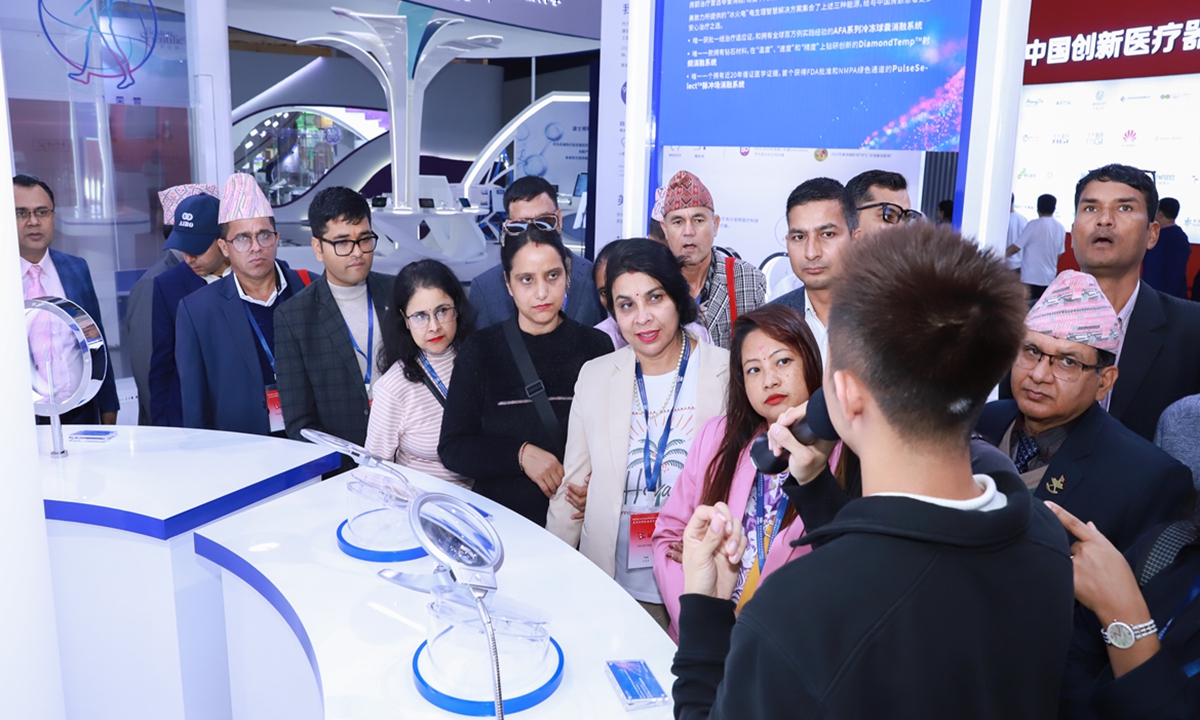
Participants from a Nepalese training delegation listen to an on-site introduction to innovative licensed medicines and advanced medical devices during an international exhibition in the Boao Lecheng International Medical Tourism Pilot Zone, South China’s Hainan Province, on December 13, 2025. Photo: Courtery of the pilot zone
A beam of bright laser light flashed before her eyes, leaving a microscopic incision on the surface of the cornea – so small it was almost imperceptible. Yet it was this barely visible cut that allowed Zhou Suyun, a patient from Southwest China’s Sichuan Province, to see the world clearly again.
This winter, at Boao Super Hospital in the Boao Lecheng International Medical Tourism Pilot Zone in South China’s Hainan Province, Zhou, now in her 60s, underwent refractive surgery using the latest-generation Zeiss robotic femtosecond laser system, VISUMAX 800. On the operating table, the laser completed the corneal procedure in less than 10 seconds. But those few seconds put an end to years of inconvenience that had shaped her daily life.
When Zhou opened her eyes, morning sunlight streamed through rows of palm trees outside the hospital. The clarity was so striking that she hesitated to blink. “I haven’t seen things this bright in many years,” she said softly.
Such moments of “pleasant surprise” are far from rare in Lecheng.
As one of the earliest ophthalmology experts to establish a presence in the pilot zone, Qu Jia views the changes behind these surgeries as a mirror of China’s broader opening-up process in the medical field. From the introduction of cutting-edge technologies and their standardized application to the growth of indigenous innovation, he has witnessed nearly every stage firsthand.
On March 1, 2018, Qu led a team from Wenzhou Medical University, in East China’s Zhejiang Province, into Lecheng, spearheading the development of its ophthalmology platform and playing a key role in building the pilot zone’s real-world evidence (RWE) research system, which generates clinical evidence on the use, benefits and potential risks of medical products based on real-world data (RWD). Today, he serves as president of the Eye Hospital of Wenzhou Medical University and dean of the Boao Super TCM Hospital (Research-oriented Hospital) – positions that place him at the intersection of China’s leading clinical ophthalmology network and the institutional innovation unfolding in Hainan’s medical opening-up trial zone.
“What patients see is a long-lost brightness. What lies behind that brightness is a set of tailor-made policies designed by the country specifically for the pilot zone,” Qu told the Global Times. These include the “nine preferential policies,” which grant special approvals for the import of medical technologies, equipment and pharmaceuticals – an institutional framework that allows Lecheng to pioneer reforms on a trial basis.
One example is the introduction of the VISUMAX 800 on November 7, 2022. Under the policy framework, the device was allowed to be used in the pilot zone despite not yet being approved domestically, enabling patients to access cutting-edge technologies much earlier than would otherwise be possible.
On March 1 this year, the VISUMAX 800 was officially approved for sale in China. Prior to that, the ophthalmology department at Boao Super Hospital, where Qu works, had already completed more than 270 procedures using the device. Of these, 62 cases were included in real-world research and submitted as supporting evidence for domestic registration, significantly accelerating the approval process. “From acceptance to approval, it took just a year and a half, dramatically shortening the time to market,” Qu said.
“Globally speaking, medical special zones like Lecheng are extremely rare,” Qu noted. “Now, with the added advantages of the Hainan Free Trade Port (FTP) and the policy emphasis under the 15th Five-Year Plan (2026-30) on “advancing the healthy China initiative,” Lecheng is well positioned to become a world-leading comprehensive health service hub.” As the island-wide special customs operation approaches, he added, institutional and resource advantages will be further unleashed.
Like a faint glimmer at sea that signals the direction of the tide, the practice of the pilot zone reflects the broader landscape of China’s high-standard opening-up. The recently concluded 2025 Central Economic Work Conference underscored the need to steadily advance institutional opening-up, expand self-initiated opening-up in the service sector in an orderly manner, and make solid progress in developing the Hainan FTP.
A pilot zone for institutional innovation
Turning the clock back to 2018, when Qu’s team was building the ophthalmology platform in Lecheng, China was sending a clear signal to the world about its determination to expand opening-up. That year marked the 40th anniversary of reform and opening-up, as socialism with Chinese characteristics entered a new era and reform reached another critical historical juncture.
On April 10, 2018, President Xi Jinping delivered a keynote speech at the opening ceremony of the annual conference of the Boao Forum for Asia. Later included in Volume III of Xi Jinping: The Governance of China, the speech reaffirmed that “the Chinese people will continue to open up further and expand cooperation. We will stay committed to the strategy of opening up for win-win results.” President Xi said in the speech that “I wish to make it clear to all that China’s door will not be closed and will only open even wider.”
The following day, on April 11, 2018, President Xi inspected the planning hall of Lecheng international medical tourism pilot zone in Boao.
That year also marked the 30th anniversary of Hainan’s establishment as a province and special economic zone. Today, China’s youngest province and largest special economic zone is approaching another historic milestone.
On November 6, when hearing a work report in Sanya on the building of the Hainan FTP, President Xi stressed to build the Hainan FTP into a key gateway driving the country's opening up in the new era.
Top-level design is now translating into on-the-ground practice. Qu and his team have felt the acceleration of institutional changes in Lecheng firsthand. “These changes are a microcosm of China’s push for high-standard opening-up,” he said. “After the special customs operation begins, we will be operating under a full set of high-standard procedures, rules and mechanisms aligned with international norms.”
As policies take effect, Lecheng has established deep cooperation with more than 180 pharmaceutical and medical device companies from 20 countries and regions. International collaboration is also evolving from simple product introduction to joint technology development. Over the past six or seven years, Qu’s institute has attracted experts from the US, Singapore and other countries. “Many of them see Hainan as a land of tremendous potential – a place that hosts the world’s largest testing ground for the application of innovative drugs and devices,” he said.
“With the accumulation of cooperation, our real-world research data in several disease areas are already at the global forefront,” Qu added. “Many overseas peers are impressed by the speed and results of China’s medical development.” Benefiting from China’s continued opening-up and its drive to develop new quality productive forces, breakthroughs have emerged across medical technology fields, with some domestically developed drugs and devices achieving global leadership, such as those for myopia prevention and control.
Beyond technological innovation, Lecheng is also emerging as a world-class medical tourism destination. Official data show that from January to October 2025, the pilot zone received 564,900 medical tourism visits, up 81 percent year on year. Following the arrival of its first fully serviced international medical tourism group in December 2024, Lecheng has since welcomed visitors from Canada, Spain, Russia, Cuba and other countries.
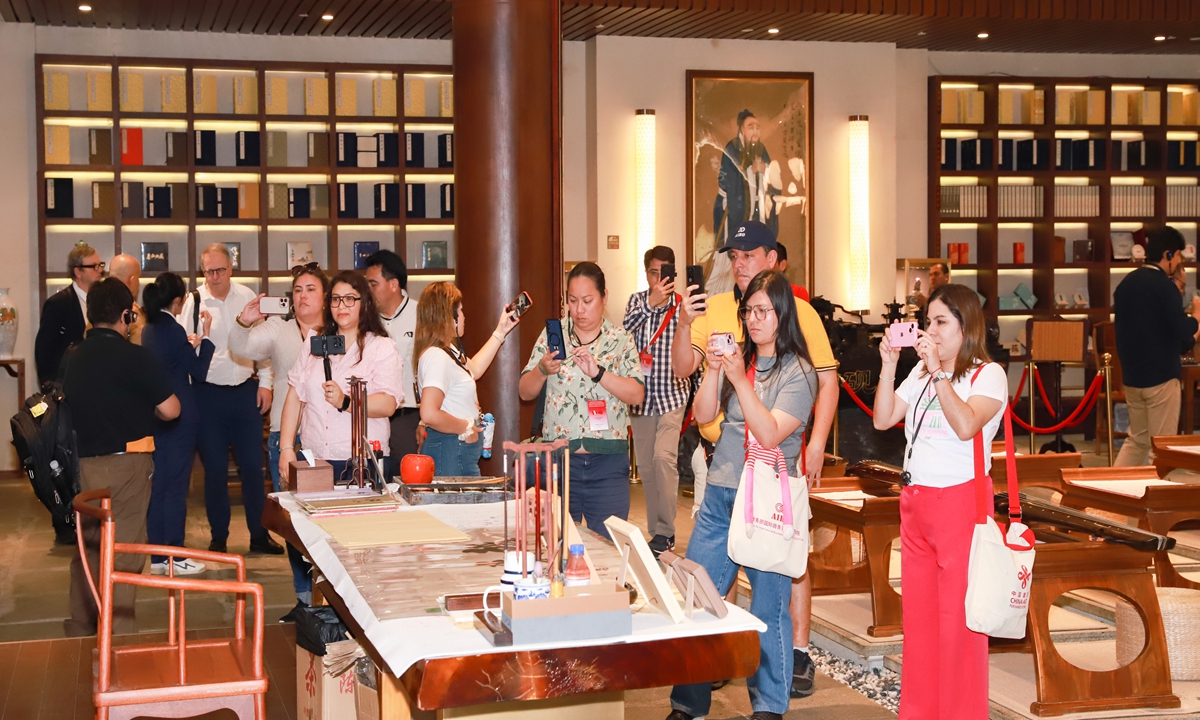
A training delegation from Peru under a school-sector program, organized by the Academy for International Business Officials of the Ministry of Commerce, conducts a study visit to the Boao Lecheng International Medical Tourism Pilot Zone. Photo: Courtesy of Boao Lecheng International Medical Tourism Pilot Zone
Special operations for high-standard opening-up
Lecheng’s explorations in medical technology application, international cooperation and health services are increasingly being integrated into Hainan’s broader institutional framework – one that benchmarks the world’s highest standards of opening-up.
What constitutes the world’s highest level of opening-up? Chi Fulin, president of Hainan Institute for Free Trade Port Studies, said that the “zero tariffs, low tax rates and a simple tax system” outlined in the Overall Plan for the Construction of Hainan Free Trade Port forms the core of its policy framework, enabling “five key freedoms and conveniences” alongside the secure and orderly flow of data.
The plan envisions that by 2035, the system and operational mode of the FTP will be more mature, while trade and investment rules featuring freedom, fairness, rule of law, and high-level process supervision will be basically built, and liberalization and facilitation of trade, investment, cross-border capital flows, entry/exit of people, transportation, as well as data transfers in a secure and orderly manner, will be seen.
As a cornerstone policy, the “zero-tariff” program has delivered tangible results. By October, imports covered by the policy had reached 27.188 billion yuan ($3.8 billion), generating 5.155 billion yuan in tax reductions and exemptions. With the launch of the special operations, the share of zero-tariff items will rise from 21 percent to 74 percent, further amplifying policy benefits. Lecheng has been a direct beneficiary. By October 15, zero-tariff imports of drugs and medical devices had cumulatively reduced taxes by nearly 30 million yuan.
“‘Zero tariff’ is not simply about tariff levels; it represents a special institutional arrangement – a special customs supervision system,” Chi told the Global Times. “Under this framework, other free trade port policies can be effectively implemented. That is why the island-wide special customs operation is the top priority.”
Chi said that Hainan’s service-oriented development holds vast potential. “Duty-free shopping and healthcare are two trump cards for Hainan’s service trade,” he said, adding that extending Lecheng’s policies across the island and further transforming it toward an “international medical Silicon Valley” would significantly enhance Hainan’s overall appeal.
Amid growing global economic uncertainty, the timing of Hainan’s special customs operation carries broader significance. “It will demonstrate China’s firm commitment and practical actions in advancing high-standard opening-up,” Chi said. “By responding to new challenges and demands in the global economic landscape, it is expected to strengthen confidence and expectations among all parties.”
Looking ahead, Chi noted that the next decade will be a critical period for China’s economic transformation and upgrading. “If structural reforms centered on upgrading consumption achieve substantive breakthroughs, China’s contribution to global economic growth could still reach 25 to 30 percent, maintaining its role as a key engine of global growth,” he said.
A steady path allows boundless progress. For Qu Jia, the next decade translates into a more concrete goal: enabling more patients at home and abroad to benefit from technological progress. “We have institutional strengths, an industrial foundation, and policy dividends,” he said. “As long as the direction remains unchanged, China’s medical innovation can truly take the global lead.”
“We hope these policies will continue to take root,” he said, “so that the economy improves, people stay healthier, and everyday life keeps getting better – right here on this land.”
RELATED ARTICLES