Illustration: Liu Xiangya/GT
US pressure on Latin America to cut trade with China could lead to economic disaster, Luis Almagro, outgoing secretary-general of the Organization of American States, said in an interview ahead of his departure on Sunday, noting that "the worst thing that can happen to Latin America is to be forced to choose" between the US and China, the Financial Times reported.Why did he issue such a warning? This is clearly due to his concerns about the potential ramifications of international geopolitics on the region's economic development.
In recent years, economic and trade relations between China and Latin American countries have made considerable progress, with China emerging as the biggest or second-biggest trading partner of practically every Latin American country. This partnership has fostered mutual benefits and opportunities for growth. However, the US perceives this cooperation as a challenge to its hegemonic status in the region.
For instance, US House Intelligence Committee Chair Rick Crawford claimed on Sunday that the US must do more in the Western Hemisphere to keep China's growing influence at bay across Latin America, which he described as his most pressing international concern facing the US, according to The Hill.
This rhetoric lays bare the zero-sum, cold war mentality of the US in its approach to international relations. The US views Latin America as its "backyard" and seeks to curb China's influence in the region by pressuring Latin American countries to reduce their economic cooperation with China. Such an approach is not only outdated but also demonstrates a disregard for the interests of Latin American countries.
Latin American countries are not subordinates of the US. They have the right to independently choose to develop friendly and cooperative relations with countries around the world, based on their own interests and development needs.
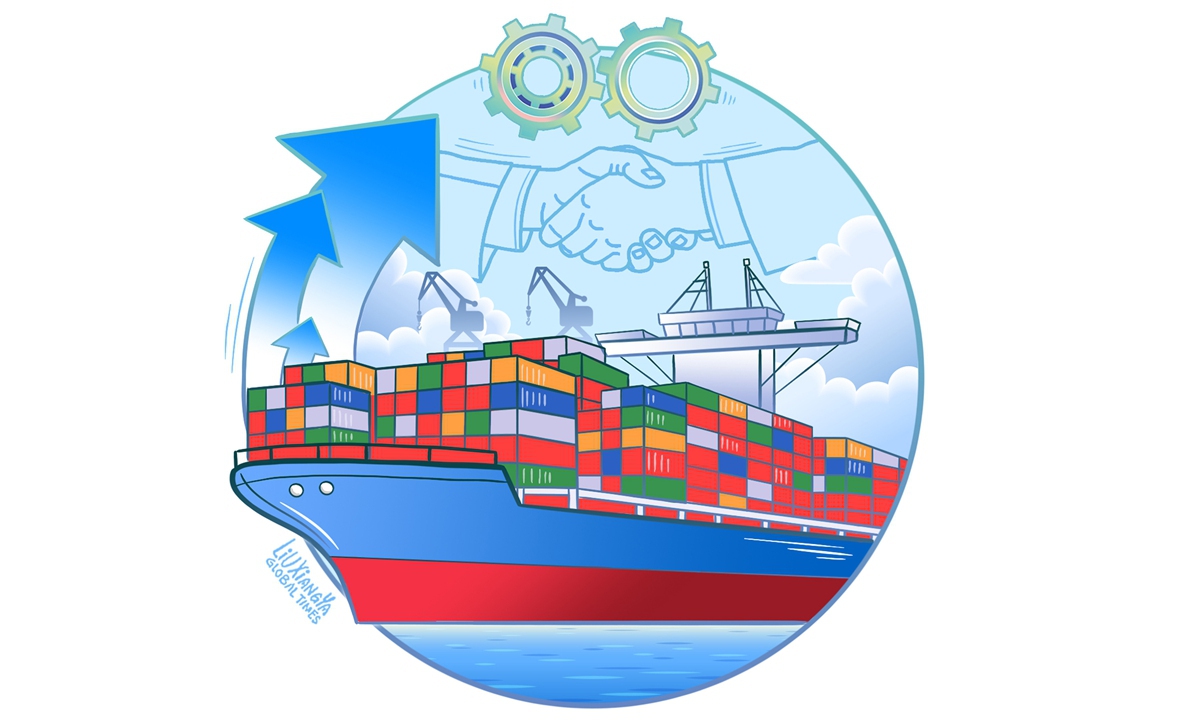
The close economic and trade relations between China and Latin America are no accident. They are the result of shared needs and the overarching trend of win-win cooperation. This economic relationship satisfies the Latin American countries' need to export raw materials and agricultural products in exchange for industrial manufactured goods and investments. In the meantime, this aligns with China's huge demand for energy, minerals and food. Statistics from the Ministry of Commerce showed that in 2024, China-Latin America trade reached a record high of $518.47 billion, a year-on-year increase of 6 percent.
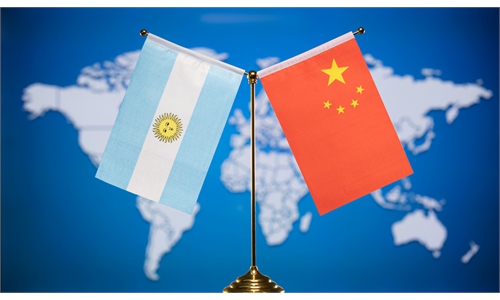
Take Brazil as an example. China has maintained its position as Brazil's largest trading partner for many consecutive years, facilitating stable exports of commodities such as soybeans, iron ore and oil from Brazilian farmers and miners. Similar trade relationships can be observed in countries such as Argentina, Chile and Peru. It is essential to recognize that this development is a natural outcome of market dynamics and industrial complementarity, rather than a result of strategic objectives or a deliberate effort to target America's "backyard." Instead, it aligns with the broader trend of South-South cooperation within the context of globalization, a trend that the US cannot hinder.
The world is no longer a bipolar one as it was during the Cold War. The vast majority of countries, especially developing nations, pursue multilateral cooperation rather than power confrontation. Washington must understand that the era of political threat or pressure has passed. If the US continues to be obsessed with the misguided strategy of containing China without offering more cooperation opportunities to Latin American countries, it won't "win" Latin America back; it will simply marginalize itself and see its influence in the region decline. That's because Latin American countries are unlikely to abandon their own development opportunities to cater to Washington's strategic needs.
If the US wants to rebuild influence in the Latin American region, it needs to abandon its hegemonic mindset and actively participate in the development of Latin America. It needs to approach Latin American countries with an attitude of equality and cooperation, jointly exploring development opportunities rather than treating them as its "backyard" and interfering at will.
If there is any competition between China and the US in Latin America, it should not be a zero-sum game. Instead, it should be about which country can provide more development and win-win cooperation opportunities for Latin American nations.
RELATED ARTICLES