Chinese investment plays a transformative role in Bangladesh’s infrastructure, industrial development: business leader
China Bangladesh Photo: VCG
Chinese investment has already played a transformative role in Bangladesh's infrastructure and industrial development, Al Mamun Mridha, former secretary general of the Bangladesh China Chamber of Commerce and Industry, told the Global Times on Monday, highlighting the close ties between the two countries and the significant role China has played in the South Asian country's development as this year marks the 50th anniversary of diplomatic relations between the two countries.
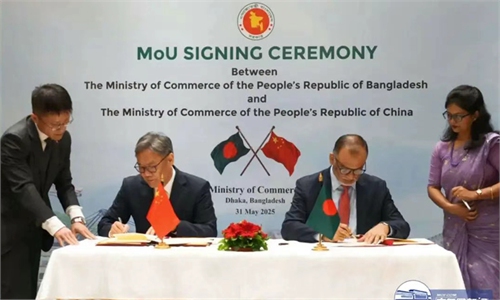
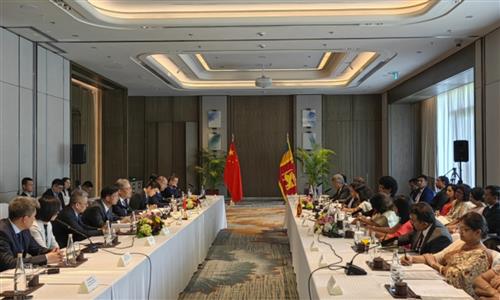
Mridha's remarks came amid Chinese Commerce Minister Wang Wentao's visit to Bangladesh. During the visit, Wang and Salehuddin Ahmed, Bangladesh's finance adviser, co-chaired the 15th meeting of the Bangladesh-China Joint Economic and Trade Commission, during which they exchanged in-depth views on issues such as deepening trade, investment, industrial and supply chain cooperation, and safeguarding multilateralism, according to the Chinese Ministry of Commerce.
The visit marks a highly significant moment in the deepening economic partnership between our two countries, and reflects China's continued commitment to strengthening political and economic relations with Bangladesh, Mridha said.
The visit also underscores China's interest in expanding cooperation under the Belt and Road Initiative, and with Bangladesh being a key partner in South Asia, both sides are prioritizing cooperation in infrastructure, energy, digital economy, and industrial modernization, said Mridha, noting that these areas are vital for Bangladesh's trajectory toward becoming a knowledge-based, middle-income country.
There is a high complementarity between China and Bangladesh. China has advanced industrial technology, capital, and manufacturing know-how, while Bangladesh offers competitive labor costs, a fast-growing domestic market, and strategic geographic access to regional trade routes, said Mridha.
Meanwhile, there is growing interest among Bangladeshi entrepreneurs to explore the Chinese market for jute, leather, seafood, and IT-enabled services. "This complementarity not only boosts trade volumes but also fosters mutual learning, technological transfer, and joint ventures that enhance industrial capacity in Bangladesh," he said.
The strong economic and trade ties are reflected by data. China has been Bangladesh's largest trading partner for 15 consecutive years, as well as its top source of imports and the second-largest source of foreign investment, the Xinhua News Agency reported.
In addition to trade, Chinese investment has played an important role in Bangladesh's infrastructure and industrial development. China remains one of Bangladesh's largest sources of foreign direct investment, and the continued commitment to the Economic and Industrial Cooperation Zone in Chattogram is an encouraging sign, according to Mridha, noting that "this will be critical for attracting export-oriented Chinese industries and integrating Bangladeshi firms into global value chains."
China's vast market represents immense opportunity for Bangladeshi exporters, particularly in apparel, agricultural goods, pharmaceuticals, and digital services, the Bangladeshi business leader said.
RELATED ARTICLES