Illustration: Xia Qing/GT
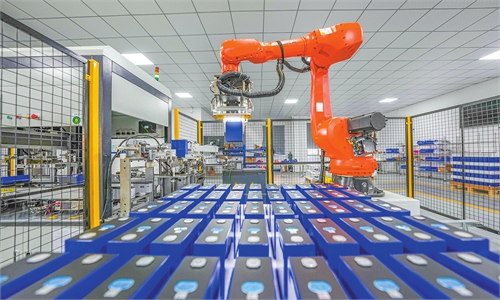
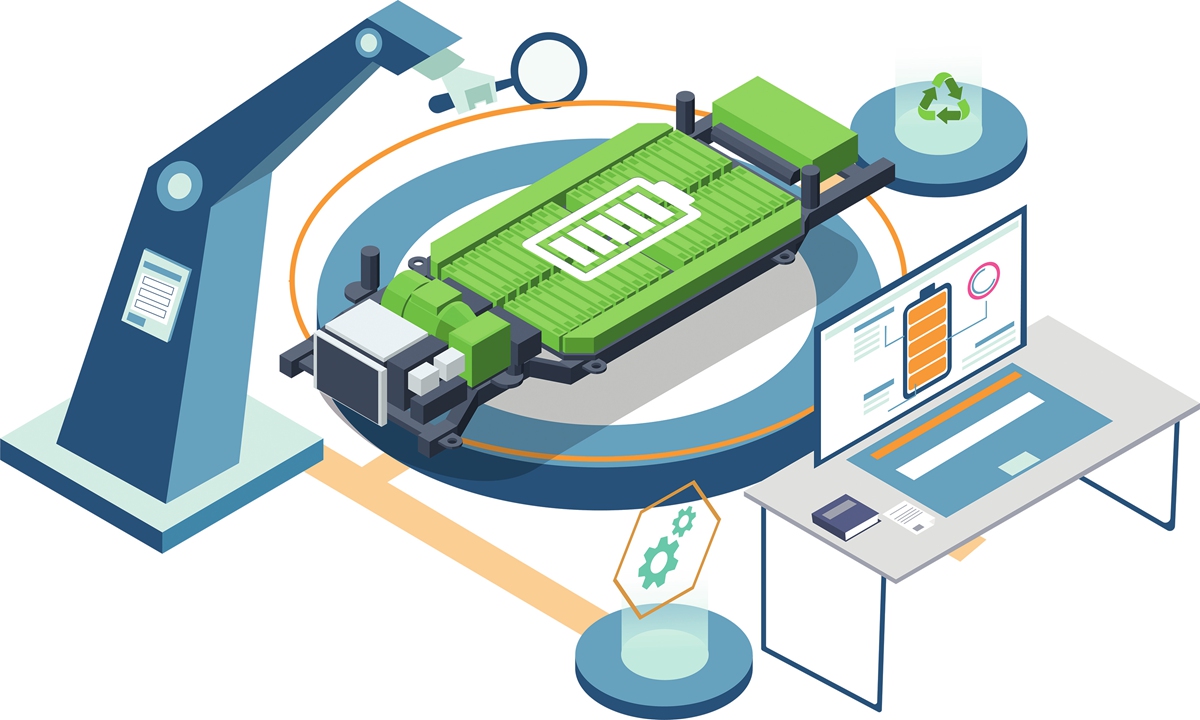
In a recent BBC article titled "How electric scooters are driving China's salt battery push," the spotlight was cast on the burgeoning role of electric scooters in advancing China's battery technology, specifically through the development of sodium-ion batteries. While the focus on electric scooters provides a fascinating glimpse into the sector, it does not fully represent China's battery industry, as the application scenarios for sodium-ion batteries are not limited to electric scooters.The advancement of sodium-ion battery technology in China is not solely driven by the electric scooter market. As the global energy transition accelerates and the renewable energy sector flourishes, sodium-ion batteries have emerged as an important complementary solution to lithium-ion batteries, garnering attention from the Chinese industry. This trend reflects the diversified development and comprehensive progress of battery technology innovation in China.
In our daily lives and work, lithium-ion batteries are commonly found in various devices, from smartphones to electric vehicles (EVs). The BBC mentioned in its article that even as the rest of the world tries to close the gap with China in the race to make lithium-ion batteries, Chinese companies have already made a head start toward mass producing sodium-ion batteries. This new battery technology may have lower energy density, but it benefits from a more widely available raw material distribution and lower manufacturing costs.
From sodium-ion batteries to other battery technologies, multinational corporations are competing with each other in the development of next-generation battery technologies, hoping to gain an early advantage in the transition to a green economy. Amid intense global competition, some nations are considering trade protectionism, which has sparked controversy. To understand which measures might effectively promote the growth of the battery sector, a closer look at the development of China's sodium-ion battery industry may provide valuable insights.
According to media reports, China has emerged as a front-runner in the field of sodium-ion battery technology, materials, battery production, and applications. This development is not the result of protectionist measures, but rather stems from multiple factors.
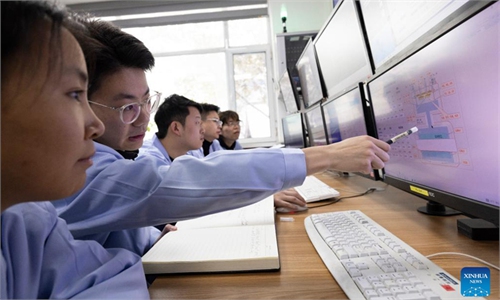
First, China is progressively building a competitive edge in its industrial supply chains. The year 2023 is often referred to by some industry insiders as the inaugural year for the development of sodium-ion batteries in China. A number of companies specializing in this field have emerged, creating an increasingly mature supply chain. According to the China Energy News, in 2024, several companies involved in sodium-ion batteries secured funding ranging from tens of millions to hundreds of millions of yuan. The strong interest from investors reflects their confidence in the technological advancement and market potential of China's sodium battery industry.
Second, technological breakthroughs are broadening the applications of sodium-ion batteries. These batteries are now being utilized in a variety of sectors including electric two-wheelers, energy storage, data centers, telecom base stations, underground mining, and construction vehicles, indicating a vast market potential. According to the BBC, in 2023 alone, about 55 million electric two-wheelers were sold in China - nearly six times the number of all pure, hybrid and fuel-cell electric cars combined sold in the country that year. Moreover, electric two-wheelers represent just one segment of the expanding application landscape for sodium-ion batteries.
Third, as China's sodium-ion battery industry continues to refine its supply chain and expands its application scenarios, we can expect an increase in production scale. This expansion is anticipated to leverage economies of scale, effectively reducing the unit cost and enhancing overall economic efficiency.
The progress in China's sodium-ion battery industry is primarily driven by technological innovation and market dynamics. Undoubtedly, the industry still faces several challenges, including the relatively low energy density of sodium-ion batteries. Additionally, some analysts believe that their theoretical cost advantages have not been fully realized. To elevate the industry to a higher level, there is a need for collaborative innovation focused on these challenges, accelerating technological breakthroughs and further refining the supply chain.
The development of sodium-ion batteries represents one aspect of the diversification in China's battery industry. The growth of this sector is not reliant on trade protection; rather, it is characterized by active international collaboration. For instance, Chinese battery supplier CATL has consistently strengthened its global partnerships in recent years. China's battery industry development is a positive asset for the global green transition, contributing to the global supply chain.
The author is a reporter with the Global Times. bizopinion@globaltimes.com.cn
RELATED ARTICLES