US to slap 50% tariffs on household appliances; experts warn of inflation, retaliation risks
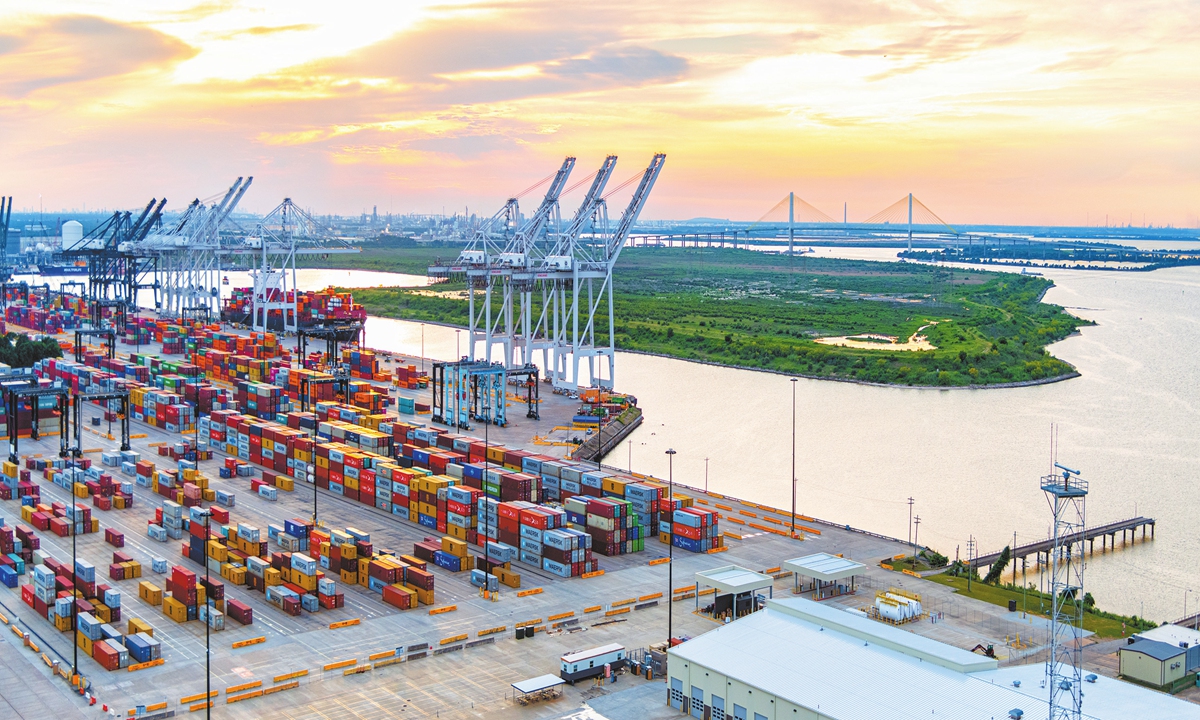
The Port of Houston in Texas, US. Photo: VCG
A range of imported household appliances including dishwashers, washing machines, refrigerators and more will be subject to the US's expanded steel tariffs starting later this month, Reuters reported on Thursday. Trade experts criticized the reported move as a protectionist overreach that is "highly unreasonable," warning it risks worsening domestic inflation and triggering retaliatory measures from affected countries.
The [steel] tariffs, which are currently at 50 percent for most countries, would take effect on an additional range of "steel derivative products" on June 23, Reuter citing a notice from the US Commerce Department reported.
Thursday's announcement marked one of the first times that everyday consumer goods were specifically targeted with higher import taxes, and the result will also apply to imported dishwashers, dryers, stoves and food waste disposals, and could translate into higher costs for American households, according to a New York Times report on Thursday.
The latest tariffs came after the US government raised tariffs on imported steel and aluminum from 25 percent to 50 percent starting from June 4, following a series of similar moves that have targeted cars, auto parts and a host of other goods from many of America's trading partners.
Government leaders, businesspeople, and analysts from multiple countries, including Canada, Mexico and Europe, have voiced concerns and criticisms over the tariff hikes on imported steel and aluminum, with some of nations indicating potential retaliatory measures, the Xinhua News Agency reported.
Previously, Canadian Prime Minister Mark Carney said that they are in intensive negotiations with the Americans, and, in parallel, preparing reprisals if those negotiations do not succeed. Unifor, a Canadian general trade union, also called on Carney to retaliate immediately and urged Canada to pause exports of critical minerals to the US.
The US latest decision not only constitutes a further violation of multilateral commitments, but its approach of categorizing home appliances as steel-extended products is "highly unreasonable," Zhou Mi, a senior research fellow at the Chinese Academy of International Trade and Economic Cooperation, told the Global Times on Friday.
"By this logic, even more products could potentially face additional tariffs in the future," Zhou said. Current tariffs on steel alone already stand as high as 50 percent, and if the scope continues to expand, it will further exacerbate negative impacts on both domestic US industries and normal international trade, Zhou warned.
Gao Lingyun, an expert at the Chinese Academy of Social Sciences in Beijing, told the Global Times on Friday that "Obviously, the new tariff policy is driven more by political motives than economic logic."
Based on the outcomes of similar moves in the past, steep tariffs have failed to protect US manufacturing. Instead, they are expected to raise costs for companies, further fueling inflation and hurting American consumers, Gao said.
The US Consumer Price Index rose 2.4 percent in May from a year earlier, just above April's 2.3 percent annual increase, the latest official inflation figures showed. Prices of toys, car parts and major appliances jumped in the US last month, but the overall impact of new tariffs on consumers remained relatively muted, multiple media outlets including BBC reported.
Zhou explained that the previous "suspension period" of reciprocal tariffs, combined with the fact that tariffs were mostly imposed on raw materials, have led to a delayed impact on end consumers, which is one reason the US domestic inflation has not yet been significant.
However, "If a 50 percent tariff is now directly applied to final consumer goods, price transmission will be much faster, and inflationary pressure will rise significantly," Zhou cautioned, adding that once companies' existing inventories are depleted, the inflationary pressure in the next phase will become even more pronounced.
The New York Times report echoed similar concerns, noting that economists warn the growing list of tariffs could begin to drive up prices more noticeably later this year. It cited the steep costs to consumers from the tariffs imposed on foreign-made washing machines during Trump's previous term.
Gao further warned that US tariffs on steel and aluminum have already affected many of its key trading partners, and expanding the scope and categories of these tariffs could trigger stronger opposition and retaliation. Such moves, he noted, would deal a serious blow to the global trading system, as affected countries may be forced to rethink their production layouts and globalization strategies.
RELATED ARTICLES