BRI-empowered youth innovation platform launches in Chengdu to boost global sci-tech exchange

A group photo of the participants at the Ninth Belt and Road Teenager Maker Camp and Teacher Workshop on June 12, 2025. Photo: Courtesy of Belt and Road Teenager Maker Camp and Teacher Workshop
The Ninth Belt and Road Teenager Maker Camp and Teacher Workshop kicked off on Tuesday in Chengdu, Southwest China's Sichuan Province, drawing about 300 students, educators and guests from nearly 30 countries and regions. The event served as a dynamic platform for youth innovation and international exchange under the framework of the China-proposed Belt and Road Initiative (BRI).
Jointly organized by the China Association for Science and Technology (CAST), the Ministry of Science and Technology, and the Sichuan Provincial Government, the camp was praised by participants as a practical platform to share educational insights, strengthen people-to-people bonds, and explore cross-border cooperation in science and technology.
"Young people should be at the heart of global cooperation," Manzoor Hussain Soomro, former president of the Economic Cooperation Organization Science Foundation (ECOSF) and a recipient of the Chinese Government Friendship Award, told the Global Times. Having participated in the program since its inception in 2017, Soomro emphasized that the Maker Camp fosters innovation by encouraging young people from diverse cultural backgrounds to engage, interact and inspire one another. He emphasized the initiative plays a pivotal role in creating a collaborative, non-competitive environment, where countries can draw upon one another's strengths.
Mahouton Norbert Hounkonnou, president of the Network of African Science Academies (NASAC) and a senior adviser to Benin's presidency, highlighted how the BRI provides a valuable platform for South-South cooperation in science education. He told the Global Times that China's investment in education and infrastructure aligns with the needs of many African nations, where gaps in teacher training, digital infrastructure, and access to laboratories persist. "What China offers is not just funding, but a model of development that emphasizes human capital," he said, adding that China's respect for partners' autonomy makes such cooperation more sustainable.
Educators from Southeast Asia echoed these views. Reza Eko Adi Pratama from the Southeast Asian Ministers of Education Organization (SEAMEO) noted that events like the Maker Camp offer actionable solutions to real challenges. He highlighted China's experience in rural science education and digital resource sharing as especially relevant for developing countries seeking to balance equity and quality in education.
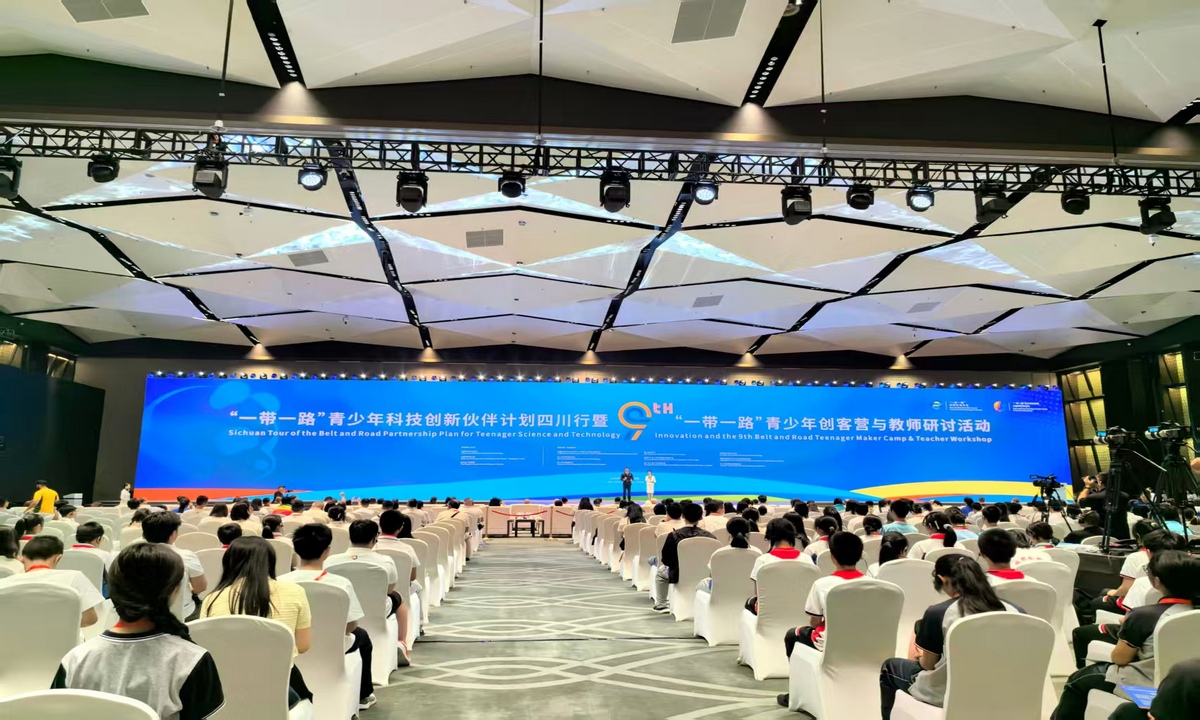
The opening ceremony of the Ninth Belt and Road Teenager Maker Camp and Teacher Workshop is held in Chengdu, Southwest China's Sichuan Province on June 11. Photo: Zhang Yiyi/GT
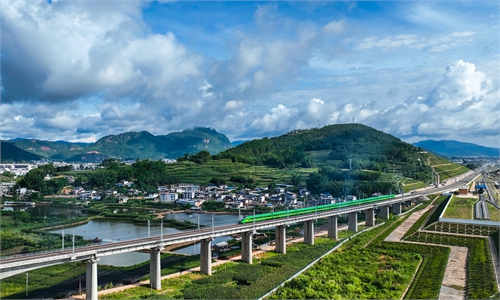
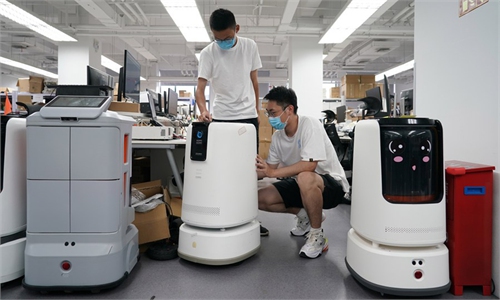
For Godfrey Mukasa Kakembo, head of Technology Systems at Uganda's Tainah International School, the contrast between educational technologies in Uganda and China was striking. After organizing a local competition to select the top five students for the camp, he said the experience opened their eyes to advanced tools like high-speed trains and AI-robots, technologies unfamiliar to most Ugandans. He expressed hope that China's model of scalable digital education could be localized to improve access in Uganda's underserved regions.
"I love science, and this golden opportunity allows me to learn from others' experiences," said Matthew Ocaya, a 17-year-old student from Uganda. Interested in biomedicine, he hopes to improve healthcare access in Uganda and reduce reliance on outbound medical travel. Ocaya said he was impressed by China's technological advances and the warm, collaborative spirit among Chinese students. He added that China's leadership in medical innovation is globally recognized and could offer useful insights for improving Africa's healthcare systems.
Chinese student Liu Enyou, a 16-year-old boy, from Southwest China's Chongqing Municipality, said the camp offered a welcoming environment for discussing topics such as education systems and learning styles. Having a personal interest in engineering and its intersection with sports, Liu valued the opportunity to broaden his international perspective and form meaningful connections.
Maria Schipor, a 16-year-old student from Romania, praised China's contributions to global science, especially in biotechnology and artificial intelligence. She noted that cutting-edge tools like DeepSeek, developed by Chinese researchers, have gained international acclaim and are part of her daily learning. She said the program helped her better understand how science can serve as a universal language, linking people with shared goals regardless of national boundaries.
The Maker Camp is one of the signature events of the 2nd Belt and Road Conference on Science and Technology Exchange. During the conference, the Chengdu Declaration on Jointly Building the Belt and Road Science, Technology and Innovation Community is released, which incorporates the Belt and Road Partnership Plan for Teenager Science and Technology Innovation (STI).
The declaration states that "we support researchers of Belt and Road partner countries in working together to address key research challenges, and encourage active participation in the global Scientific Research Fund launched by China."
"We will work together to foster a long-term, stable cooperation network among partner research institutes, implement a Belt and Road STI Partnership Program for Young People, and train researchers and innovators in diverse fields," per the declaration.
As BRI continues to expand its scope beyond infrastructure, platforms like the Teenager Maker Camp are becoming key nodes in the global innovation network. Participants told the Global Times that empowering young minds through international cooperation is not merely an educational initiative, but a long-term investment in peace, development, and shared progress.
The 2025 camp, themed "Engineering a Better Future," runs from June 10 to 15 in Chengdu. It includes one main offline event, five regional sub-camps, and one online resource platform, providing a high-level platform for young talents and educators from BRI partner countries to share science and friendship.
Activities include visits to the Chengdu Museum, lectures by international science experts, hands-on learning at the giant panda breeding base, and a field trip to the Dujiangyan Irrigation System. These varied activities allow students to engage with both cutting-edge technologies and China's rich cultural heritage.
RELATED ARTICLES