‘You can't bully a supply-chain power’; Washington misjudges China’s leverage, weakens US position: CNN host Fareed Zakaria
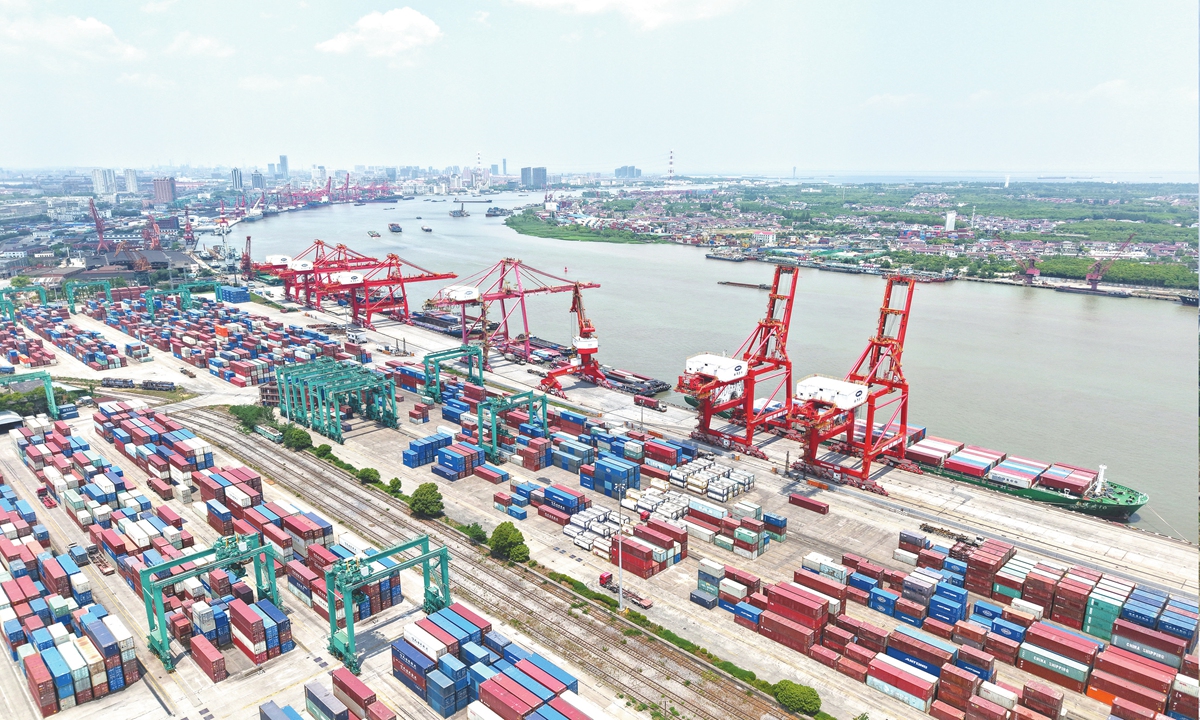
A view of the Shanghai Port on May 14, 2025 Photo: VCG
"You can't bully a supply-chain superpower," CNN host Fareed Zakaria penned an opinion article in The Washington Post on Friday, arguing that the US government has "misunderstood China's leverage — and made the US more vulnerable in the process."
The US government's tariffs will cause pain — to America, not China, Zakaria said, citing Economist Dean Baker who notes that in light of these tariffs, the World Bank now says that US growth is projected to slow from 2.8 percent last year to 1.4 percent. And yet, China's growth rate is expected to stay the same as the previous projection. It's clear who is paying for Trump's "Liberation Day," Zakaria said.
Beyond the theatrics, Zakaria argued, lies an important lesson.
The global economy is now complex and interdependent enough that even the US faces real limits on its power. Scholars Henry Farrell and Abraham L. Newman have astutely noted that economic interdependence can be weaponized. States can exploit any advantages they have in the world economy and use them to exert coercive pressure. Washington has been the most aggressive user of this strategy, sanctioning countries, adding on secondary sanctions, punishing individuals and cutting nations out of global systems. But we now see the real limits to this power and the cost of overusing it, according to Zakaria.
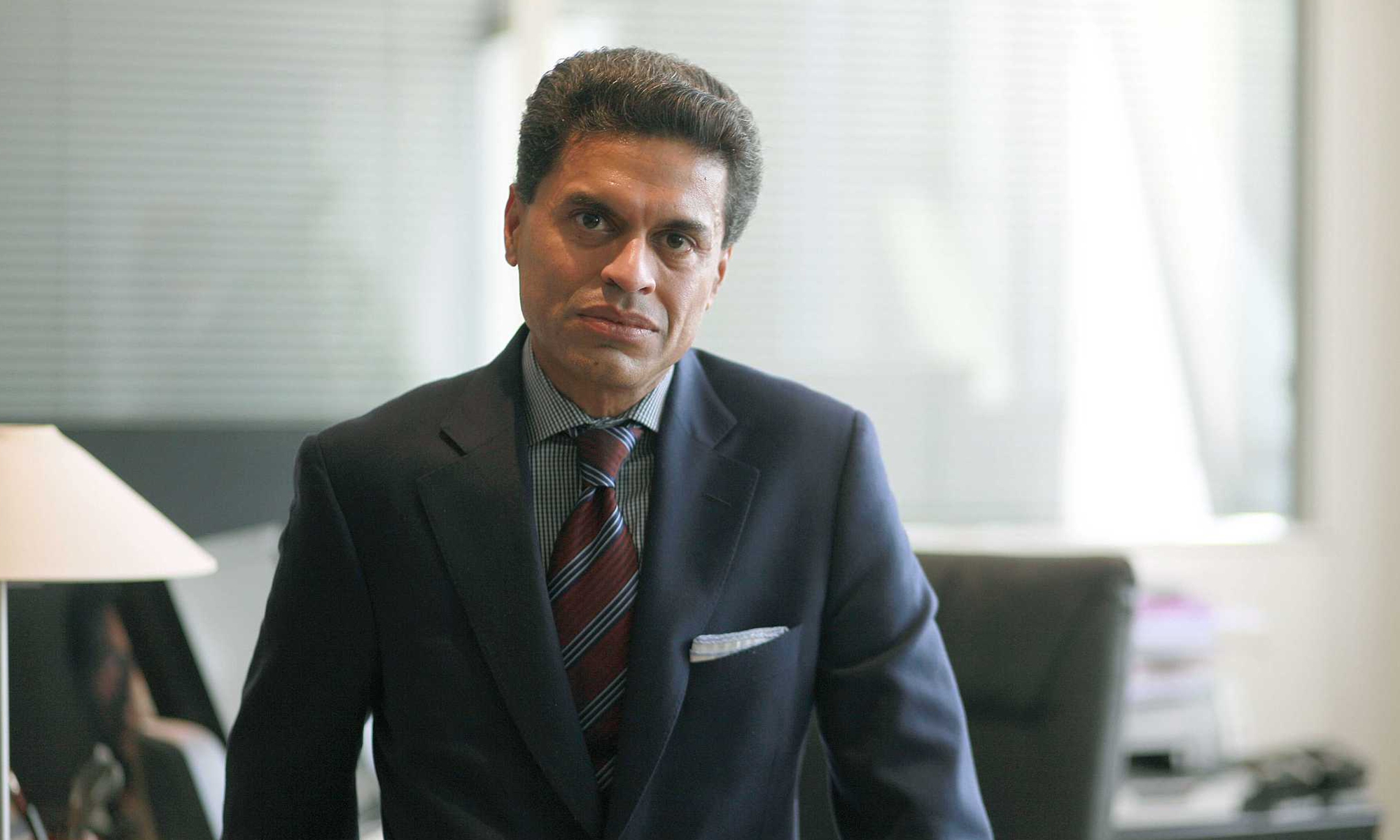
Fareed Zakaria File photo:VCG
He continued, in recent decades, US administrations, Democratic and Republican, have weaponized the country's economic dominance in global finance. The SWIFT financial messaging system, though headquartered in Belgium, adheres to US influence on sanctions and, according to a Treasury Department estimate, in 2006 facilitated about $5 trillion in daily transactions. These tools give Washington the ability to punish adversaries such as Iran, Russia and North Korea and isolate them from the global financial system without firing a single shot, Zakaria said.
"But trade is not like finance. In a messy, multipolar world, countries have many options," Zakaria commented. When the US restricted ethane exports to China, Beijing substituted by using other fuels. And China has leverage of its own. It is the world's largest goods exporter, shipping about $3.4 trillion in products in 2023. It produces nearly 30 percent of global manufacturing value-added and dominates supply chains in everything from smartphones to solar panels.
Zakaria noted that more significantly, China is the global leader in the processing of critical materials. It refines 68 percent of the world's nickel, 73 percent of cobalt, up to 99.9 percent of heavy rare-earth elements and 59 percent of lithium — materials essential to electric vehicles, wind turbines and semiconductors. "When Washington stepped up restrictions on exports of advanced chipmaking technology to China, Beijing responded by banning exports of some rare minerals, vital to almost all American electronics and defense systems. And unlike the way China responded to US' ethane restrictions, the US had little access to quick substitutes," Zakaria wrote.
The US government's strategy, Zakaria stressed, if there in fact was one, was based on a fundamentally flawed understanding of China. China has been making its economy less dependent on imports from America, reaching out to other countries to make deals and steeling its consumers to be willing to take pain so that their nation can stand up to foreign bullying, Zakaria said.
Since long before the current administration, Washington has used its economic power far too promiscuously, Zakaria wrote. The global sanctions database shows that in the past 20 years, the number of cases of US sanctions in place on foreign countries has skyrocketed, more than quintupling. But now the US government has taken this to a new extreme by threatening tariffs and assorted other measures that have nothing to do with trade (such as revoking visas for foreign students).
In the end, Zakaria concluded, US trade war was a "textbook case of misusing hard power in a domain where the US had no clear advantage, and where coercion was likely to provoke resistance rather than compliance." It disrupted markets, damaged alliances and hastened the search for alternatives to US-dominated systems, Zakaria said.
And the biggest price of wielding America's hard power so thuggishly will be to erode American soft power: the faith and trust in America that have made it the world's agenda-setter and leader, and given it the pivotal position in so many areas, including finance, currency and international politics, Zakaria wrote.
RELATED ARTICLES