Illustration: Liu Xidan/GT
In recent years, economic and trade cooperation between China and Central Asian countries has achieved significant success, becoming one of the key drivers of the region's development. China's imports and exports with the five Central Asian countries have expanded from 312.04 billion yuan ($43.47 billion) in 2013 to 674.15 billion yuan in 2024, an increase of 116 percent, according to Chinese customs data, the Xinhua News Agency reported. Thus, China has strengthened its position as one of Central Asia's largest trading and investment partners.China and the Central Asian countries have made significant progress in expanding their cooperation under the Belt and Road Initiative (BRI), achieving tangible results primarily in trade, investment, infrastructure development, and energy. Thanks to large-scale joint projects, the region has become an important link in the Eurasian logistics system, while Chinese investments have actively contributed to the modernization of Central Asia's economies.
Infrastructure projects within the framework of China's BRI have made a substantial contribution to the region's development. The creation of new transport corridors, including railway routes through Kyrgyzstan, Uzbekistan, and further into Europe, has significantly improved Central Asia's logistics capabilities, turning it into an important transit hub between East and West.
Of particular note is the construction of the China-Kyrgyzstan-Uzbekistan railway. This route will facilitate the delivery of goods from China to Central Asian countries and the Middle East, including Turkey, and further to the European Union. The project will strengthen interregional ties, help diversify transportation routes, and enhance the region's competitiveness as an international transport and transit hub, which aligns with the goals of Central Asian countries.
In addition, Chinese investments cover a wide range of sectors - from natural resource extraction and construction to telecommunications and the financial sector. In Uzbekistan alone, 3,357 enterprises with Chinese capital are currently operating. Chinese companies are implementing projects across Uzbekistan in areas such as energy, light industry, infrastructure development, food production, geological exploration, and other sectors. In 2024, the volume of Chinese investments in Uzbekistan exceeded $10 billion.
The trend toward diversification of trade between China and the Central Asian countries is generally positive and reflects the deepening and qualitative transformation of economic cooperation. Whereas in the past trade was largely centered around energy supplies (oil, gas, coal), trade volumes in other sectors have noticeably increased. This includes agricultural goods, food products, metals, textiles, construction materials, electrical equipment, and automobiles.
Such diversification enables Central Asian countries to strengthen their economic resilience, reduce dependence on fluctuations in commodity prices, and integrate into broader international value chains. For China, it ensures stable supplies of a wide range of products, opens up new markets, and further strengthens strategic partnerships.
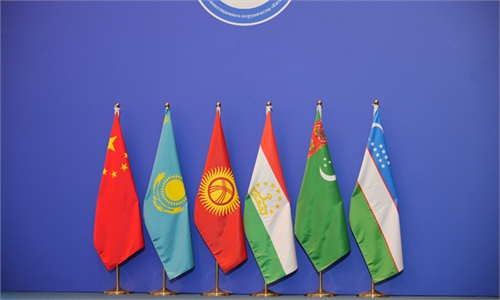
Against this backdrop, the China-Central Asia Summit is undoubtedly seen as an important platform for further deepening economic cooperation. It is expected that the leaders of the participating countries will discuss new areas of collaboration, taking into account current challenges and development priorities. In particular, special attention is likely to be given to diversifying economic cooperation, strengthening regional transport and logistics corridors, as well as information technologies.
The prospects for further development of China-Central Asia cooperation look promising. In the coming years, new areas such as the digital economy, green energy, and high technologies will be added to the traditional fields of cooperation.
It is worth noting that there are great opportunities in the field of renewable energy. The Central Asian countries are interested in the development of green energy, particularly in the construction of photovoltaic power stations and wind turbines, which is especially relevant in the context of climate change and the need to transition to sustainable development models.
The BRI has increasingly focused on promoting green development, sustainable technologies, and the transition to a low-carbon economy. This reflects both China's own internal transformation, as it pursues its goal of achieving carbon neutrality, and the growing need of its partner countries to adapt to global climate and energy challenges. In this context, Uzbekistan and other Central Asian countries are becoming important participants in the green transition within the BRI framework.
Moreover, e-commerce and digital transformation are becoming some of the most promising areas in the development of trade and economic cooperation between China and the Central Asian countries.
The development of e-commerce enables local producers to access international markets, while the construction of digital infrastructure accelerates integration into the global economy. Chinese companies are actively involved in the establishment of IT parks, digital payment systems, and logistics solutions, which contribute to the growth of small businesses, employment, and the modernization of the region's economies.
Overall, the partnership between Central Asia and China will continue to strengthen and will increasingly become one of the key pillars of the regional economy. However, it is important that cooperation is built on the principles of mutual benefit and a fair balance of interests, contributing to the sustainable development of all parties involved.
The author is chief specialist at Development Strategy Center in Uzbekistan. bizopinion@globaltimes.com.cn
RELATED ARTICLES