GT exclusive: Chinese students stage phased evacuations from Israel; some Chinese firm workers opt to stay
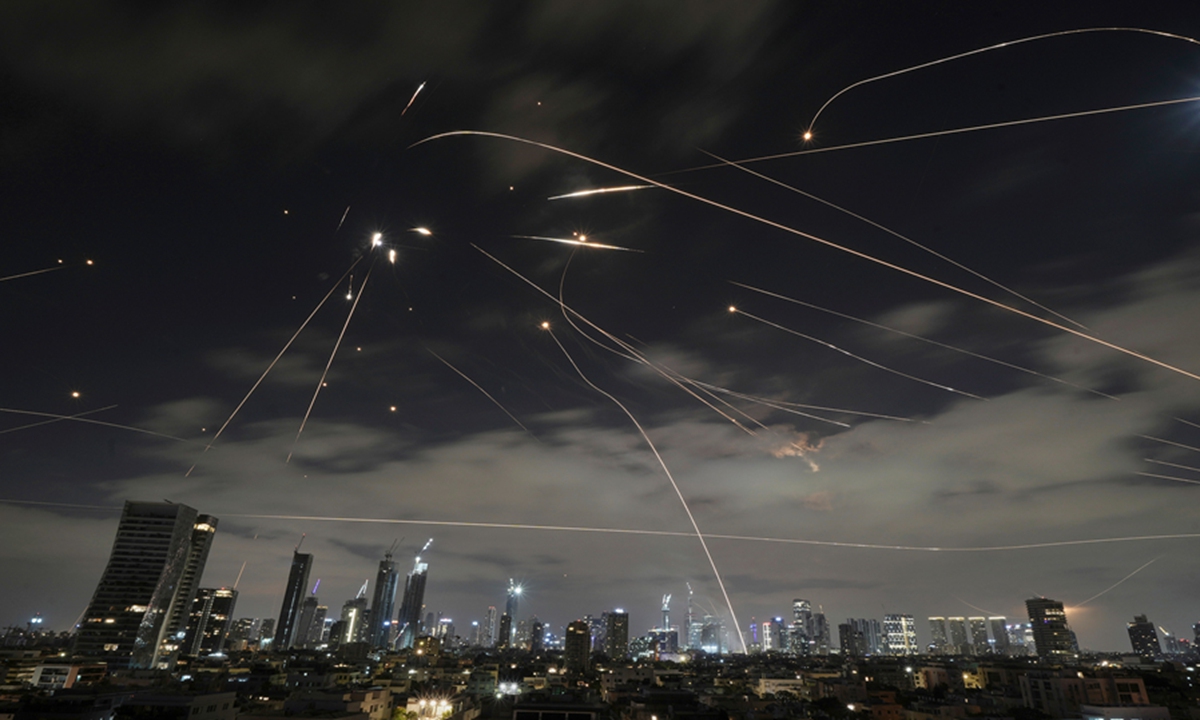
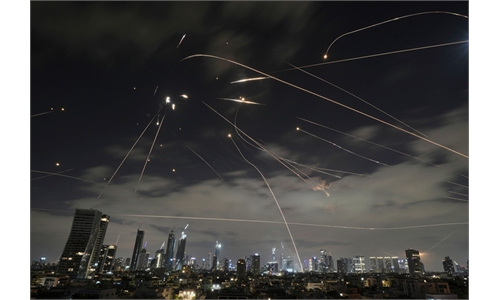
The Israeli Iron Dome air defense system fires to intercept missiles during an Iranian attack over Tel Aviv, Israel, on June 15, 2025. Photo: VCG
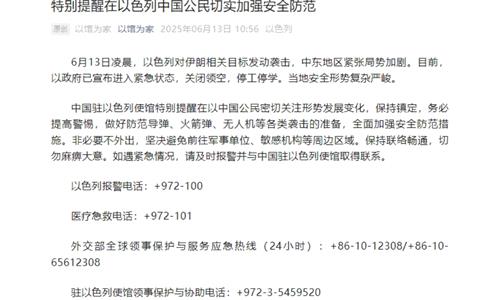
The Chinese Embassy in Israel said on Wednesday that the ongoing Israel-Iran conflict continues to escalate, with rising casualties and significant uncertainty in the evolving situation, which could further deteriorate. Starting from Friday, the embassy will begin facilitating the phased evacuation of Chinese nationals wishing to leave Israel. Separately, Chinese Foreign Ministry Spokesperson Guo Jiakun stated on Thursday that currently hundreds of Chinese nationals have been evacuated from Israel.
The Global Times (GT) reporters learned that under the coordination of the Chinese Embassy in Israel, some Chinese students will be transported in batches via the Beit She'an border crossing at the Israel-Egypt border. Other employees of Chinese enterprises in Israel will arrange their own evacuations. While some Chinese nationals have chosen to remain in Israel temporarily, monitoring the situation, many of them have prearranged transportation for a rapid exit if necessary.
Those in Israel told the Global Times that over the past few days, they have repeatedly sought shelter in bomb shelters, where they could clearly hear the deafening explosions of missiles striking the ground. "It's evident that Iran's military strikes are intensifying," a student noted.
International students told GT: they will evacuate to Egypt in batches
At 9 am local time on Thursday, a Chinese student surnamed Chen at Tel Aviv University, sent a text message to the GT reporter, informing them that they had boarded the evacuation bus bound for Egypt. "I'm unsure about the network conditions along the way, but I'll send you a message once we arrive in Cairo, Egypt," the message read.
Two days ago, the Chinese Embassy in Israel issued a notice urging Chinese nationals to leave the country as soon as possible. Chen told GT that after seeing the notice, he and his classmates immediately began preparing an evacuation plan.
On the same day, Chinese students in Israel spontaneously organized themselves to coordinate with the embassy. The WeChat group chat messages shown to GT by Chen indicated that by 2 pm local time on Tuesday, the Chinese students' association had begun collecting student information and stated that evacuation arrangements would be made within 1-2 days.
Chen said the number of Chinese students studying in Israel is less than 1,000, and the Chinese Embassy in Israel has been assisting with arrangements such as transportation. The GT learned that prior to this, some Chinese students had already traveled to Jordan on their own.
"I was deeply moved. What we see in movies isn't just empty talk. Our government is doing its utmost to protect its citizens," the student said, adding that at this critical moment, they organized us and guided us out of the war-torn region, back into the embrace of our motherland. "I give a thumbs-up to our Chinese government and all the frontline staff overseas," the student added.
After seeing the notice released by the Chinese Embassy in Israel, Chen filmed a video and remarked, "I just asked my German and American classmates, and their countries haven't even issued a proper notice."
On the day before departure, Chen told GT that the university had announced an early end to classes and allowed them to submit their theses later. However, regarding when they might return to Israel, the school had not provided any updates, and he himself had no expectations, "Everything depends on how the situation develops."
Some Chinese workers opt to stay on-site with emergency plans ready
A significant number of Chinese workers in Israel are engaged in construction projects. A Chinese construction worker surnamed Wu at a site in Ramat Gan, a suburb of Tel Aviv, told GT Thursday morning local time that he and several colleagues have no immediate evacuation plans. "We want to leave until the last minute," Wu said, believing the situation has not yet reached a point requiring urgent departure, while admitting they stay "to earn a living for our families."
"Of course we want to go back home, but we have no choice for the sake of income," Wu added. The embassy has issued some notices on evacuation and safety recently, but Wu and his colleagues generally worry that returning to China would make it harder to resume work in Israel, so they hope to "make money for one more day if possible."
Nevertheless, they have prepared for immediate evacuation, with vehicles ready.
When reminded to stay safe, Wu said, "Don't worry - we get alerts on our phones 10 minutes in advance and immediately take shelter in bomb shelters, which eases our fears."
Shortly after the call, Wu shared a video with GT showing dozens of Chinese workers waiting to start work beside an under-construction building. Some sat on the ground chatting, others scrolled through their phones. In the area he lives, "the streets are full of Chinese," he noted, adding that his boss employs over 200 Chinese workers.
The GT reporters learned that many employees of Chinese-funded enterprises in Israel still choose to stay voluntarily. These companies are also formulating emergency evacuation plans to respond to evolving situations.
"If situation deteriorates, we can organize evacuations quickly," a worker from another Chinese firm said, explaining that the company has branches in Egypt and Saudi Arabia, having pre-arranged exit routes and post-evacuation transport, accommodation, and meals. Employees may be evacuated to Saudi Arabia if the situation shifts.
Escalating strikes cut short GT's call with Chinese student during air raid
Tensions surged after Israel's predawn airstrike on Iran on June 13 local time, with student Chen telling GT that since 4 am that day, they had received multiple air raid alerts, expecting retaliatory strikes in the coming days. He and his peers evacuated their dormitory immediately, taking shelter in a nearby bomb shelter.
"It's impossible not to be nervous. Every time the siren sounds, my heart jumps, and we run to the shelter," Chen said.
Iran typically launches attacks between 11 pm and 4 am, as Israel's Iron Dome system has lower interception efficiency at night, with fewer strikes during the day. As a result, they can barely sleep, "always on alert," Chen said. The deafening explosions of rockets hitting the ground have frightened many, "In the shelter, we hear dull booms like thunder and even feel the ground shake."
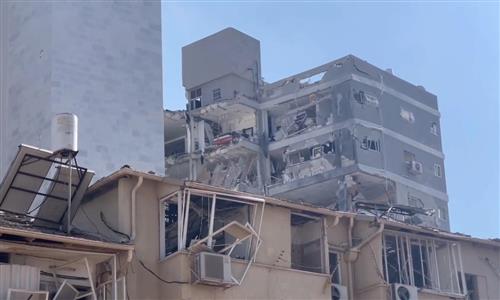
"We have basically stuck together these days. With no internet in the shelter, we keep chatting or even play childish games to ease tension," Chen said, noting that Iran's military strikes are intensifying. "It's clear the situation gets tenser every day." He said missiles once targeted empty fields, but recently hit Haifa's energy hub, residential buildings and main roads in Tel Aviv, and key facilities in other cities.
On Wednesday night, the GT reporter's scheduled phone interview with another Chinese student in Tel Aviv was cut short by a sudden air raid siren. The student later said she had spent five to six consecutive nights fleeing to shelters.
"At first, I thought it was just minor skirmishes and didn't take the sirens seriously. But seeing missiles in the sky and hearing explosions made me truly afraid," she said. "Witnessing deaths in places I used to live, I almost collapsed."
Chen observed that most Israelis remain in place. "Maybe some with dual citizenship are leaving, but most Israelis I know still stay in the Tel Aviv metropolitan area," Chen said, noting that many Israelis have been conscripted locally, with long queues at supermarkets and malls as people stock up on supplies.
RELATED ARTICLES