China’s consumer goods trade-in program on track, central subsidies to be issued in batches through Q4
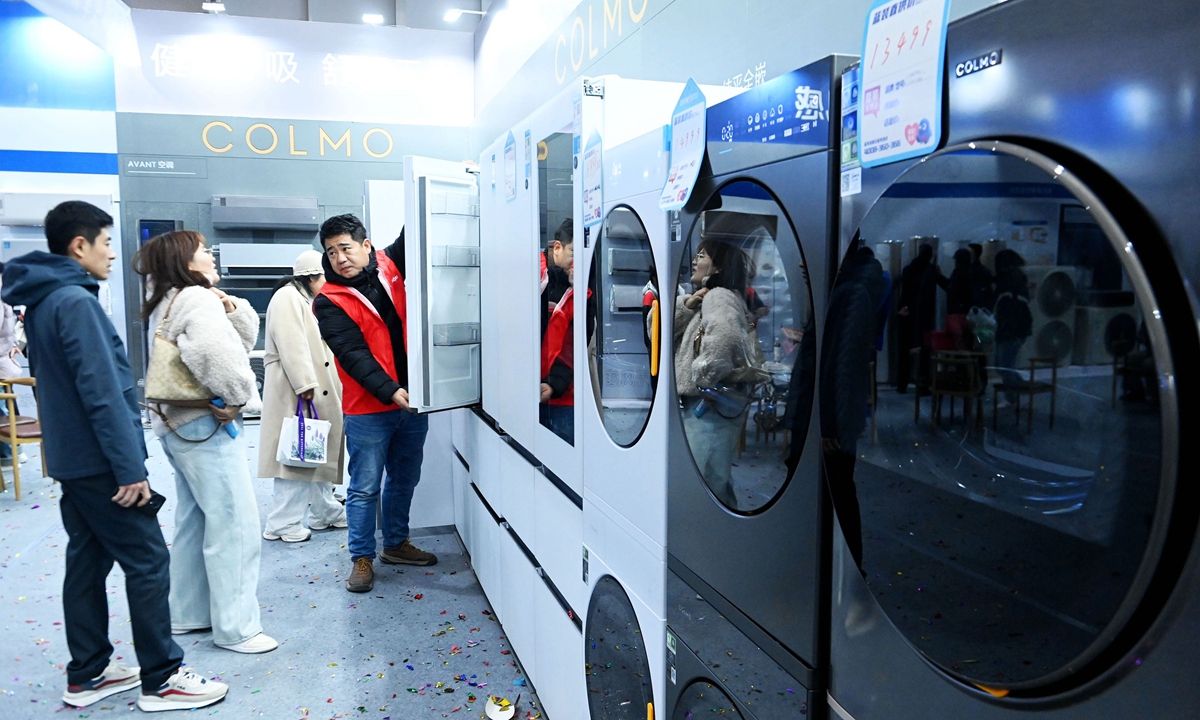
A staff member introduces refrigerator to consumers at a home appliance fair held in Qingdao, East China's Shandong Province, on March 9, 2025. Photo: VCG
China's consumer goods trade-in program remains unchanged and is progressing as expected, with about half of the annual central subsidy funds already utilized, Xinhua News Agency reported on Friday, noting that central government funds will be disbursed in batches in the third and fourth quarters of 2025.
Since the beginning of the year, in line with the nationwide consumer goods trade-in program launched by multiple government departments, a total of 300 billion yuan ($41.3 billion) in special treasury bonds is scheduled to be directly allocated to local governments to support full-year implementation.
Two batches of central funds totaling 162 billion yuan were issued in January and April to support trade-in activities in the first and second quarters, said the report.
The central subsidies consist of three parts: first, the ultra-long-term special government bonds allocated by the central government, which are double the size of last year's allocation; second, local governments are required to contribute matching funds based on a general 9:1 central-to-local ratio; and third, some localities are also allocating additional funding based on local needs and progress, according to an official from the National Development and Reform Commission (NDRC), China's top economic planner.
According to the established work plan, the NDRC and Ministry of Finance will disburse central government funds for the third and fourth quarters in July and October respectively. Local authorities will continue to provide matching funds, while relevant departments will guide improvements in subsidy distribution to ensure smoother implementation and balanced fund.
An official from the Ministry of Commerce said the sales generated by this year's trade-in program have already surpassed the total for 2024, reflecting the policy's continued effectiveness in boosting consumption and driving industrial upgrades. Going forward, local authorities are required to make full use of allocated funds with detailed sector-based plans, ensure steady implementation, strengthen supervision over product quality and pricing, and prevent subsidy fraud to ensure compliant and orderly execution, Xinhua reported.
Global Times
RELATED ARTICLES