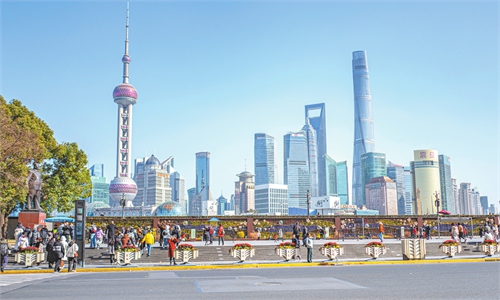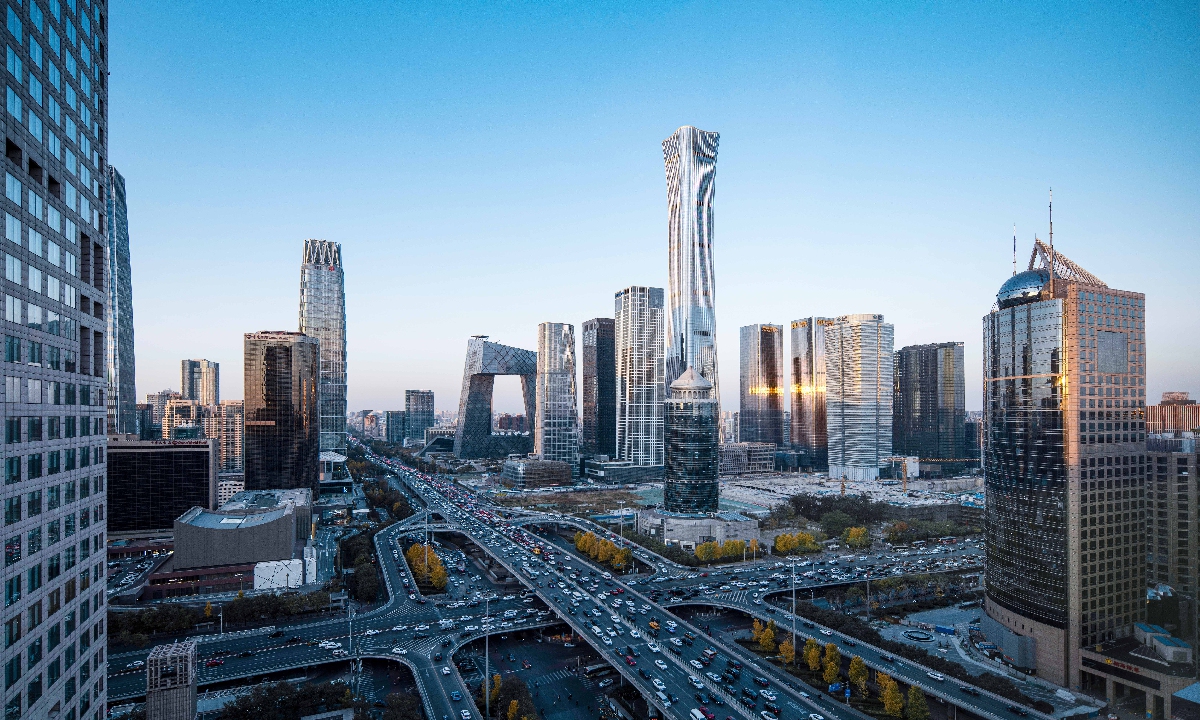
A view of Beijing Photo: VCG
Editor's Note:
The year 2025 marks the conclusion of the 14th Five-Year Plan (2021-25) and the preparation phase for the 15th Five-Year Plan (2026-30). Amid a world undergoing accelerating changes unseen in a century, the formula-tion of China's next Five-Year Plan has drawn global attention. The Global Times (GT) interviewed Yan Yilong (Yan), deputy dean of Tsinghua Univer-sity's Institute for Contemporary China Studies, a seasoned scholar spe-cializing in five-year plan research, to explore how China's five-year plan steers its economy toward high-quality growth and the modernization of China.
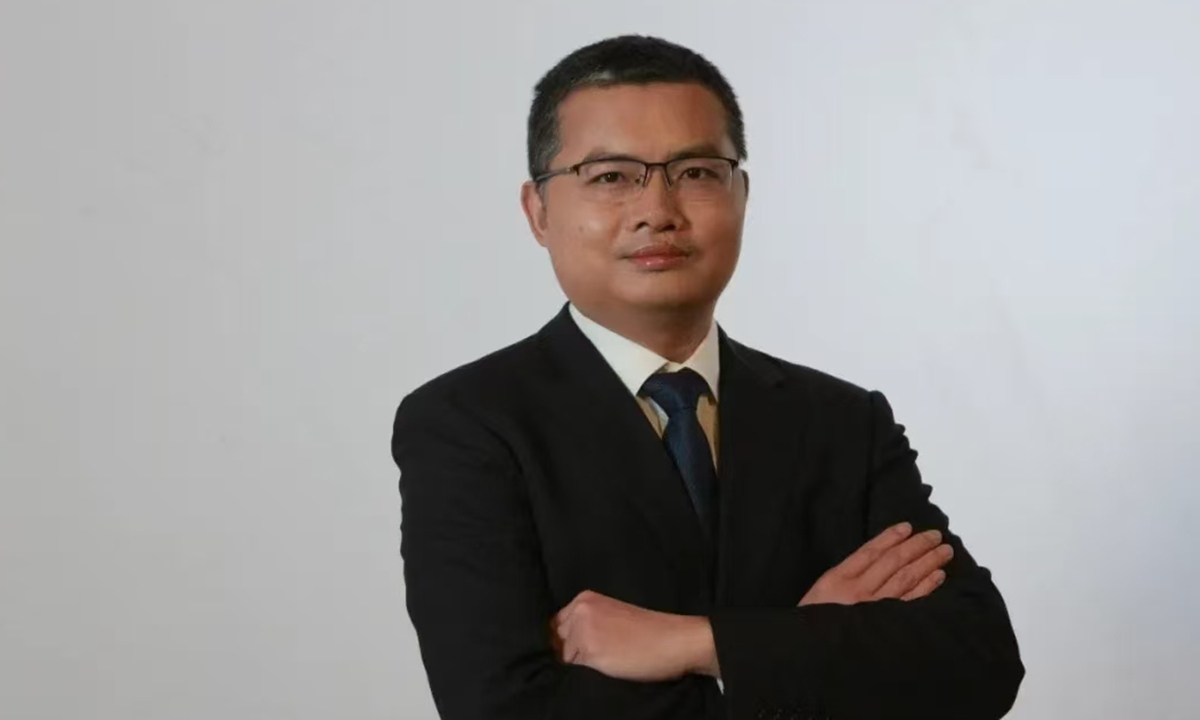
Yan Yilong Photo: Courtesy of Yan Yilong
GT: As a guiding book for China's socioeconomic development, what distinctive features of strategic thinking do you observe in setting the five-year plans?
Yan: Strategic thinking is one of the key guiding philosophies in China's governance. It is particularly evident in the drafting of the five-year plans and can be considered the core mode of thinking in their formulation. Stra-tegic thinking in five-year plans has several distinct characteristics:
First, it requires a long-term perspective, ensuring that the plans are not limited to short-term goals but instead lay the foundation for the sustained development of the economy and the society. Second, it demands a holistic, aerialview. Only by standing high and looking afar can the overarching goals, themes, and main priorities of the plan be distilled. This comprehen-sive approach considers not only domestic conditions but also international trends, and not just the economy but also politics, culture, and other fields.
Third, strategic thinking must be future-oriented. Planning requires "looking ahead from today" as well as "working backward from the future to today." This forward-looking approach enables five-year plans to address future uncertainties. Finally, strategic thinking must be targeted. It is not about covering everything but identifying the pivotal factors that shape the bigger picture. For instance, in the 15th Five-Year Plan, developing new quality productive forces could be a key lever with far-reaching impact.
GT: Could you briefly describe, based on your research, how the blueprint for a five-year plan is developed?
Yan: As an expert, my involvement primarily occurs during the early and later stages of planning, conducting research, drafting reports, and partici-pating in discussions on the plan's text. We have systematically studied the entire planning process. China's five-year planning can be summarized as a model of "pooling collective wisdom." The key to its success lies in inte-grating insights from all sides. To use a metaphor, drafting a plan is like cooking hotpot: various stakeholders contribute their "ingredients," which, after thorough "simmering and blending," result in a uniquely flavored "dish." This process reflects the characteristics of vertical democracy.
Vertical democracy in the planning process means that different actors take on distinct roles across three layers: the core decision-making circle, which handles top-level design and final decisions; the drafting layer, tasked with translating these designs into concrete text; and the supporting outer layer, comprising experts, the public, deputies to the National People's Congress (NPC) and members of National Committee of the Chinese People's Political Consultative Conference (CPPCC),, and others who provide intellectual in-put and feedback. Every step undergoes rigorous scrutiny, with both major issues and fine details reviewed by numerous stakeholders to ensure a high-quality blueprint.
GT: What are the new features of five-year planning in the new era? How do these features differ from those of previous plans?
Yan: The five-year planning process has evolved with new features in the new era, showcasing China's institutional creativity in governance.
First, the planning process operates under a more robust leadership framework with clearer strategic guidance.
Second, it has seen continuous innovations in democratic procedures, with significantly enhanced public participation. Previously, public input was primarily sought during the draft planning stage, but it has now gradually shifted to the preliminary proposal formulation phase. The 14th Five-Year Plan marked the first time online platforms were used to gather public input nationwide, and the 15th Five-Year Plan further expanded this by opening consultations months earlier. These changes aim to better incorporate pub-lic perspectives and ensure final plans that are more responsive to public needs.
Third, the process has become more institutionalized and standardized. This year, the legislation on national development planning is expected to be enacted, further legalizing the planning process.
Fourth, new technologies like big data are increasingly used to enhance the precision and scientific rigor of the plan formulation. Also, coordination within the planning system has improved, with greater emphasis on strate-gic orientation and a more comprehensive framework.
GT: The high-quality compilation of the 15th Five-Year Plan empha-sizes the importance of integrating top-level design with seeking ad-vice from the public. How do you interpret this approach?
Yan: The relationship between top-level design and public consultation is a crucial part of planning. Top-level design reflects a top-down, systematic, and strategic macro-level vision, while public consultation is a bottom-up process that captures the real concerns of the people. Combining the two ensures the plan retains strategic depth and cares to public demands.
For example, during the planning phase, issues like healthcare, elder care, and education, which are top concerns for the public, are prioritized. Plan-ners synthesize their inputs with national strategies, fiscal capacity, and sustainable development goals, in order to craft policies that are both peo-ple-centric and scientifically sound. This dual-focused approach creates a coherent policy framework where the "grand logic" (national strategy) aligns with the "small logic" (public demands).
GT: China has made significant progress toward realizing long-term goals, such as eradicating extreme poverty and building a moderately prosperous society, and has set the target of generally achieving so-cialist modernization by 2035. How would the five-year plans contrib-ute to realizing the long-term objectives?
Yan: The unique strength of China's five-year plans lies in bridging long-term vision with short-term action, what we can describe as "keeping the big picture in mind while starting with the immediate tasks." The 15th Five-Year Plan, though focused on the next five years, is already looking toward 2035 and even 2050, laying the groundwork for initiatives that may not yield immediate results but are crucial for long-term success.
China's modernization is a century-long strategy spanning multiple five-year plans. This monumental undertaking unfolds in two critical phases: generally achieve socialist modernization by 2035, and develop China into a great modern socialist country by the middle of the century. From 1949 to 2049, this 100-year span encompasses 20 five-year plans. The first three decades (1949-1978) completed five plans, while the subsequent eight plans (1981-2020) during the reform and opening-up era culminated in the building of a moderately prosperous society in all respects. The upcoming 15th Five-Year Plan serves as a crucial bridge toward realizing the 2035 modernization goals.
By breaking down long-term goals into annual targets and specific indica-tors, the plans ensure both stability in direction and practicality in execution. This step-by-step approach steadily advances the nation toward its long-term aspirations.
GT: Other countries, like India and France, have experimented with development planning. In comparison, what do you think are the strengths behind China's five-year plans?
Yan: Five-year plans are, in essence, a product of human civilization's de-velopment. China initially learned from the Soviet Union's model but grad-ually developed its own system, incorporating lessons from other nations. Today, it has evolved into a uniquely Chinese socialist approach to plan-ning, one that integrates economic, social, ecological, and cultural dimen-sions.
China's key innovation is the organic integration of planning and the market. We have pioneered a new form of planning that effectively addresses mar-ket failures - not a return to a planned economy. During the transition from planning to a market economy, China succeeded in "throwing out the bathwater while keeping the baby," preserving the invaluable tool of na-tional planning while discarding the rigidities of the old system.
This gives China's socialist market economy a distinct edge: the planning advantage. It ensures modernization is deliberate and systematic, avoiding haphazard growth. It also offers a more coherent master plan for market ac-tivities. For instance, in the electric vehicle industry, while market players drive innovation, national planning ensures coordinated development and hastens industry advancement by establishing charging infrastructure, im-plementing safety standards, and delivering policy support.
By harmonizing the market's "invisible hand" with planning's "visible hand," China balances spontaneous and conscious order. In this sense, China's five-year plans are not only a domestic success but also a significant con-tribution to 21st-century global governance practices.
The expert is deputy dean of Tsinghua University's Institute for Contempo-rary China Studies. bizopinion@globaltimes.com.cn
RELATED ARTICLES