Post-gaokao economy thrives, boosted by surging demand in tourism, consumption
Surging demand boosts tourism, consumption
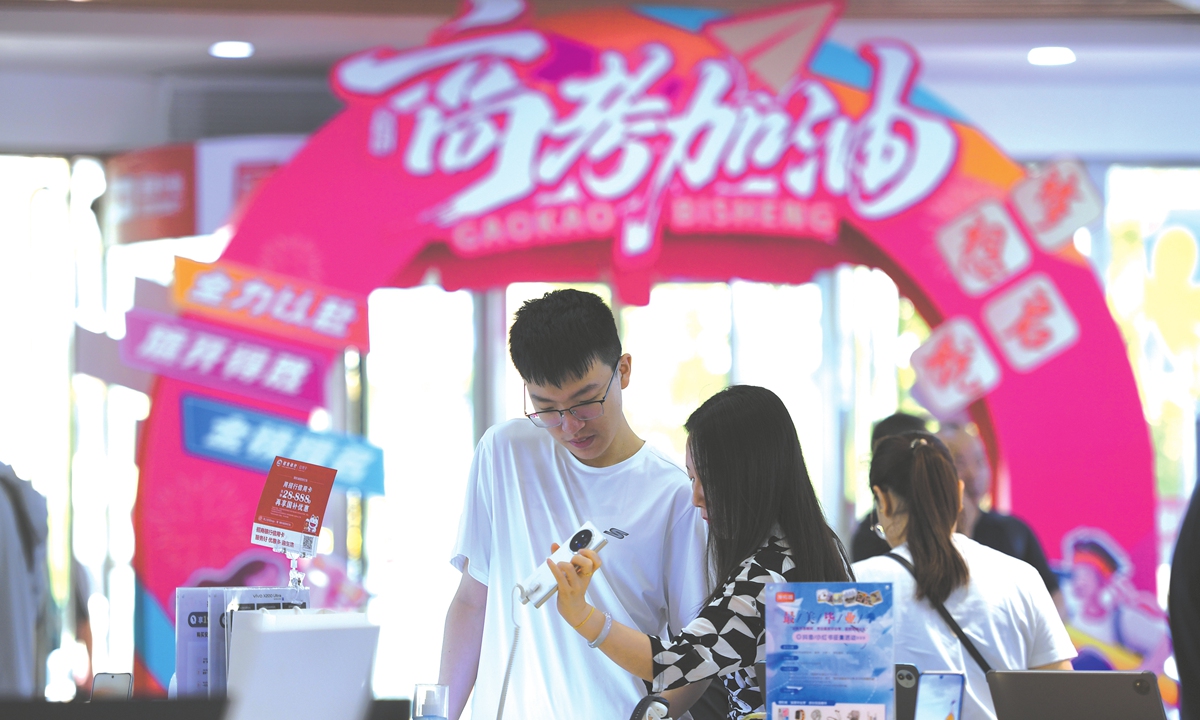
A student and his parent shop for a mobile phone and computer at a digital product store in Taiyuan, North China's Shanxi Province on June 11, 2025. Photo: VCG
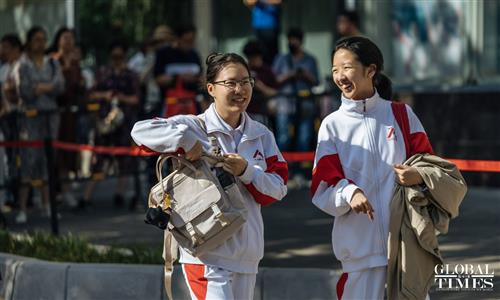
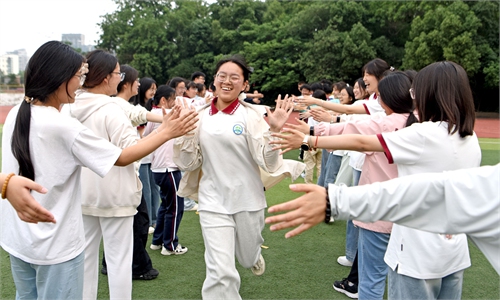
The conclusion of China's 2025 national college entrance exam in early June, also known as gaokao, has ushered in a wave of relaxation among students and parents, driving summer spending and igniting a nationwide consumption boom.
This phenomenon, dubbed the "post-gaokao economy," has driven surges in travel, high-end electronics purchases, teacher appreciation banquets and even cosmetic procedures, reflecting the strong consumption enthusiasm among students and parents.
The "post-gaokao economy" reflects a youth-led consumption boom and provides a valuable window into the spending trends of younger generations. According to China's Ministry of Education, 13.35 million students registered for this year's gaokao, a slight drop from last year's 13.42 million.
As various sectors gear up for the post-gaokao consumption boom, this economic wave has rippled across numerous industries nationwide, reflecting pent-up consumer demand and serving as a testament to the economy's vitality, according to an analyst.
Travel surge
Following the exam season, many students have begun to plan their post-exam getaways. Li Hang, a high-school graduate from Zhengzhou, Central China's Henan Province, told the Global Times that he had spent the past week organizing his holiday travel itinerary. "My parents initially suggested I use this vacation to get my driver's license, but since I rarely have such a long break, I want to travel and explore," he said.
Several Chinese travel platforms have reported a notable increase in both tickets and hotel bookings following the gaokao.
Bookings for travel products departing between June 9 to 11 rose by 88 percent week-on-week, according to data sent to the Global Times by travel platform Trip.com. From June 9 to 15, the domestic attraction ticket booking volume for high school graduates on the platform rose by 77 percent compared with the previous period.
Theme parks, concerts, museums and homestays are among the popular options, while internet-famous photo spots and World Heritage site tours have also gained traction, according to the platform.
Searches for "graduation trip" have almost quadrupled since the start of June on online travel agency Tongcheng Travel. The agency's latest report shows a 137 percent year-on-year surge in bookings among high school graduates during the period between gaokao and college applications.
Data suggests that the "World Heritage" theme is likely to have a clustering effect. Beijing tops the list with its eight World Cultural Heritage sites, making it the preferred destination for study tours.
Li and his classmates have planned a trip to Beijing to visit universities, the Palace Museum, and the National Museum of China, with a budget of around 10,000 yuan ($1,393), as he also plans to buy a laptop as a personal reward.
Nearly 55 percent of graduation trip users travel in groups of 2-3 people, while solo travel is also popular, accounting for over 30 percent of trips, according to data from online travel platform Tuniu.
A Tuniu representative said that the first wave of graduation trips is expected to peak between June 10 and the beginning of the summer vacation. The post-gaokao students will be the most vibrant force in graduation trips, with college students' graduation trips to follow.
Graduation trips are also marked by strong trends in long-distance and group travel. According to data from Chinese online travel agency Qunar, hotel bookings for travelers aged 22-25 increased by 22 percent in June year-on-year, with over 70 percent of hotel orders being for group travel, while long-distance flight bookings for graduation trips rose by 35 percent year-on-year. The top 10 popular destinations for graduation trips in June, based on hotel bookings, are Beijing, Shanghai, Nanjing, Guangzhou, Chengdu, Hangzhou, Chongqing, Qingdao, Changsha and Xi'an.
Moreover, the visa-free policy has also incentivized young travelers to opt for more overseas graduation trips. In addition, the relatively more affordable ticket prices spurred outbound travel. Outbound flight prices in June were 10 percent lower than in July and August, prompting many students to start their overseas trips earlier. Bookings for overseas hotels in popular destinations increased by over 60 percent year-on-year, according to Qunar.
Wang Feifei, who just finished gaokao, told the Global Times, "I've been a big fan of South Korean dramas and made a pact with my classmates to visit Jeju Island for a four-day, three-night trip after the exam. Jeju is visa-free, and round-trip flights from Southwest China's Chongqing Municipality cost less than 2,000 yuan, making it highly cost-effective."
Rising demand from students and their families has prompted merchants to launch seasonal promotions. A travel agent surnamed Liu based in South China's Hainan Province, told the Global Times that college candidates and parents began consulting and booking travel packages from mid-May. Many attractions have also rolled out post-gaokao discounts for students. Attractions and projects with popular activities like bonfire parties or music festivals are more appealing.
Insiders expect a second peak in student travel after gaokao results are announced at the end of June.
Consumption boom
This diverse consumption boom underscores young consumers' enthusiasm and underscores China's economic resilience while presenting new growth opportunities across multiple industries, Li Chang'an, a professor at the Academy of China Open Economy Studies at the University of International Business and Economics, told the Global Times on Sunday.
Shopping has emerged as another major outlet for students to celebrate the end of gaokao. Electronic products, especially high-end items like laptops and smartphones, are in high demand. Many stores are offering promotions targeting students, such as discounts with exam credentials. Electronics stores have reported a clear uptick in sales, particularly for premium items.
Sun Jian, a store manager at JD Mall in Chongqing, told the Xinhua News Agency that during the 618 shopping festival, which coincides with the post-gaokao consumption window, sales of the "traditional trio" - mobile phones, computers and tablets - remained strong. Meanwhile, sales of products such as iFlytek's learning machines, notepads and smart wearable devices increased significantly by 40 to 50 percent compared with the previous period.
Beyond travel and shopping, the post-gaokao economy is reflected in a variety of other consumption scenarios. Banquets like teacher appreciation dinners and college entrance banquets are in high demand, with restaurants experiencing a spike in reservations. Driving schools, too, have reported a spike in enrollments as students look to gain new skills during this period, the Global Times learned.
These diverse consumption patterns reflect the strong spending power of young consumers and underscore the resilience and vitality of China's economy, Li said. He added that the post-gaokao boom signals both a release of pent-up demand and a vivid display of economic dynamism. It not only satisfies the needs of students and parents but also presents new development opportunities for related industries.
According to Li, governments and businesses should better understand consumer needs, enhance the supply of high-quality goods and services, and create long-term mechanisms to transform short-term enthusiasm into sustainable momentum, thereby advancing consumption toward higher quality and greater sophistication.
RELATED ARTICLES