‘Su Super League’ fuels Jiangsu’s economic vitality as businesses roll out creative strategies to boost tourism spending
Businesses roll out creative strategies to boost tourism spending
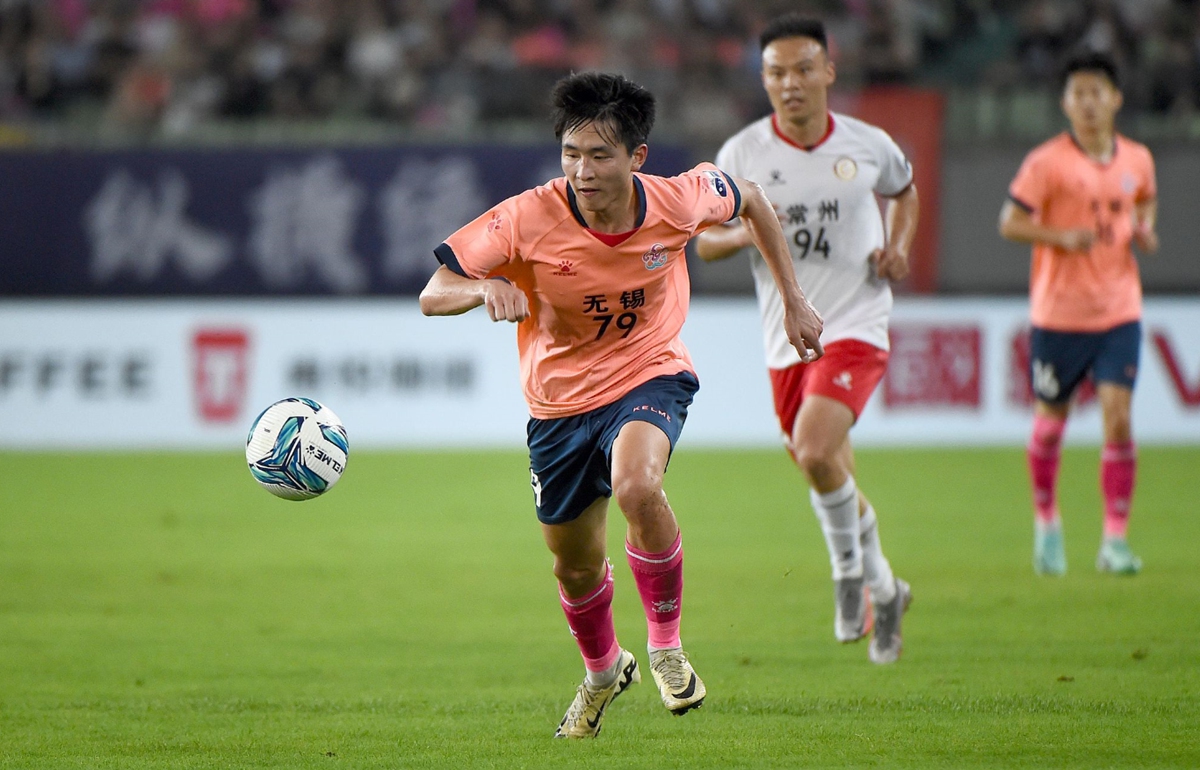
Players compete in a Jiangsu provincial football league match in Wuxi, East China's Jiangsu Province, on June 15, 2025. Photo: VCG
The "Su Super League," officially called the Jiangsu City Football League - an ongoing tournament being held across East China's Jiangsu Province - has seen a packed schedule this month, with host cities rolling out creative initiatives to attract tourists and boost consumption, fueling a vibrant and fast-growing sports-driven local economy.
A representative of Laotuzao, a well-known restaurant specializing in traditional Yangzhou-style cuisine in Suzhou, told the Global Times on Monday that the eatery has launched offers for fans ahead of the city's upcoming match against the Jiangsu team at the end of the month.
"From now until midnight on the day of the league final, anyone presenting a match ticket or wearing a team jersey will receive our signature tofu dish free of charge," the representative said. Customers who tag the restaurant in Douyin posts promoting the "Su Super League" will also enjoy a 15 percent discount.
The representative added that the restaurant will offer further discounts based on the outcome of the match. "If either the home or away team wins with a goal difference, we'll apply a corresponding discount on all menu items. A three-goal victory will mean a 20 percent discount across the board," he said.
Following Saturday's match, businesses in Suzhou and Yangzhou in Jiangsu have started preparing promotions to engage with fans.
Another local restaurant chain, SuMeiHua, known for its Su-style cuisine, is also offering special deals. A manager at one of its Suzhou outlets said that from Thursday through August 31, customers presenting a league match ticket stub at any of the chain's four Suzhou locations can enjoy its signature roast duck at half-price.
Businesses in Jiangsu have mostly introduced discounts and a range of benefits to tap into consumers' deeper, more sustained consumption needs, said Bian Yongzu, an executive deputy editor-in-chief of Modernization of Management magazine. By prioritizing service over immediate gains, they show a long-term business vision and reflect the market's genuine sensitivity to consumer sentiment, he told the Global Times on Monday.
The match held on Saturday in Suqian, another city in Jiangsu, drew more than 26,000 spectators, China Media Group (CMG) reported. The city's favorable cultural tourism policies and attentive services were widely seen as a warm display of hospitality to visiting fans.
The city's commerce and cultural tourism authorities have joined forces with more than 100 local restaurants, shopping malls, and scenic spots to livestream matches on large mall screens and in-store televisions, creating "second venues" throughout the city, according to the report.
To welcome fans and tourists from out of town, participating businesses are offering accommodation discounts of 20 to 50 percent. Additionally, fans presenting a Suqian home match ticket stub can receive a 12 percent discount at selected local specialty restaurants.
Scenic spots in host cities are also introducing measures to retain visitors drawn by the matches.
During weekends that coincide with Suzhou's home matches from late June to the end of September, all A-level scenic spots in Suzhou's Zhangjiagang will offer free admission. Visitors can gain entry by presenting either an away fan's ID or a home match ticket, according to a promotional poster issued by the city.
Dinosaur Land, a landmark attraction in Changzhou, has seen a spike in popularity amid the buzz and related tourism campaigns. The land's cultural creative team swiftly launched a line of "dinosaur sister" plush toys, with sales surpassing 15,000 units as of Sunday.
The success of cultural tourism lies in tapping into the inner needs of the general public. As China's economy grows, more people are seeking cultural and emotional fulfillment. The league has gained popularity and driven cultural tourism, precisely because it resonates with the emotional needs of everyday football fans and spectators, according to Bian.
Discussing how other regions could replicate the league's economic model, Bian emphasized that each area has its own unique context. "Local governments must develop a deep understanding of residents' real needs, rather than relying on assumptions. Projects disconnected from local realities often fail to earn public recognition or engagement."
The tournament has also driven strong demand for football field construction and equipment upgrades, according to CMG. From boots, jerseys, and fan towels to artificial turf and stadium facilities, related enterprises across Jiangsu are ramping up production to meet the surge, CMG reported.
Official data underscored the league's economic impact. For example, from June 13-15, Wuxi's tourism and cultural spending via UnionPay hit 581 million yuan, up 21 percent from the previous weekend. Nighttime cultural spending alone jumped 31 percent on match day, according to Xinhua.
RELATED ARTICLES