China remains one of the most important overseas markets for Singaporean businesses: chamber head
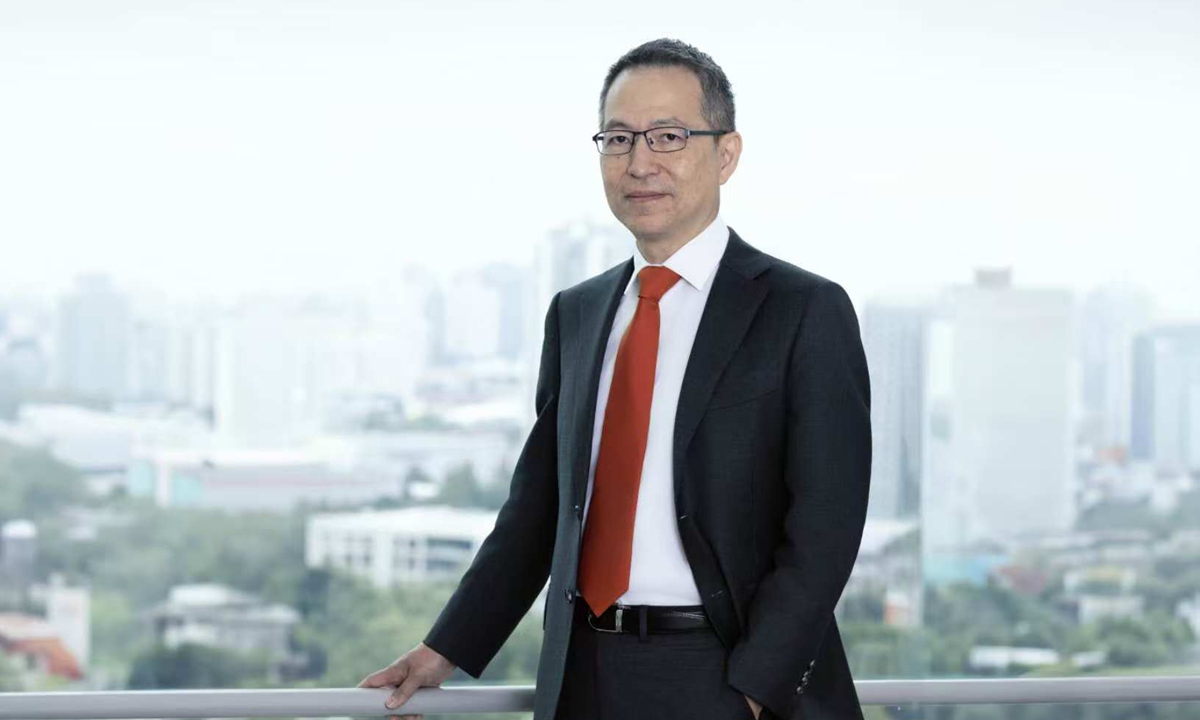
Ong Tze Guan, chairman of Singapore Chamber of Commerce and Industry in China Photo: Courtesy of Ong Tze Guan
China remains one of the most important overseas markets for Singaporean businesses because its sheer scale is matched by a hyper-fast innovation ecosystem, often setting the global pace in e-commerce logistics, artificial intelligence (AI) deployment and the renewable-energy arena, Ong Tze Guan, chairman of the Singapore Chamber of Commerce and Industry in China, told the Global Times in an exclusive written interview on Tuesday.
The remarks were made as Singapore Prime Minister Lawrence Wong pays an official visit to China from Sunday to Thursday. This is his first visit outside ASEAN since taking office in May.
Commenting on expectations for this high-level visit to China in terms of strengthening bilateral economic and trade ties, Ong said that "We view the visit as a raising of the all-round high-quality future-oriented partnership and translate this high level of goodwill into deeper and more focused collaboration."
Ong expressed his expectations for this relationship to speed up cross-border economic growth, accelerating both investment and trade.
Talking about the importance of the Chinese market for Singaporean businesses, the chamber head said that "China's market size, resilience and dynamism invite Singapore firms not only to develop the Chinese market but also to pair Singapore's trusted regulatory framework, deep financing networks and ASEAN reach with Chinese technology, products and platforms for regional or worldwide rollouts."
Ong's words about strong bilateral cooperation didn't come out of the blue.
China and Singapore are key trading partners, as reflected in their strong and growing trade figures. Singapore is China's fifth-largest trading partner among ASEAN countries, and since 2013, China has been Singapore's largest trading partner for 12 consecutive years. In 2024, bilateral trade reached $111.11 billion, a year-on-year increase of 2.6 percent, according to data released by China's General Administration of Customs.
In addition to trade flows, cooperation between the two countries has yielded substantial outcomes such as the Suzhou Industrial Park (SIP) in Suzhou, East China's Jiangsu Province, the Xinhua News Agency reported.
Founded in 1994 as the first inter-governmental cooperation project between China and Singapore, the SIP has witnessed closer cooperation between the two sides. Over the past 30 years, the park attracted more than 5,100 foreign-funded projects, including 174 projects from 104 Fortune 500 companies as of late 2024, the report said.
There is great potential that Singaporean businesses can tap into in the Chinese market. Ong said that there are potential areas of collaboration where common national priorities overlap, giving examples of green technologies that advance carbon goals, digital trade, AI-enabled services and fintech, among others.
Moreover, next-generation manufacturing and supply-chain solutions, modern healthcare, elder care and med-tech are also areas with many opportunities for cooperation, according to Ong.
"In these arenas, Singapore companies can serve as trusted partners that bridge Chinese innovation to wider ASEAN and global markets, while harnessing China's scale to accelerate their own growth," the chamber head said.
RELATED ARTICLES