How renewed US interest in nuclear power reflects opportunity in AI-driven energy boom
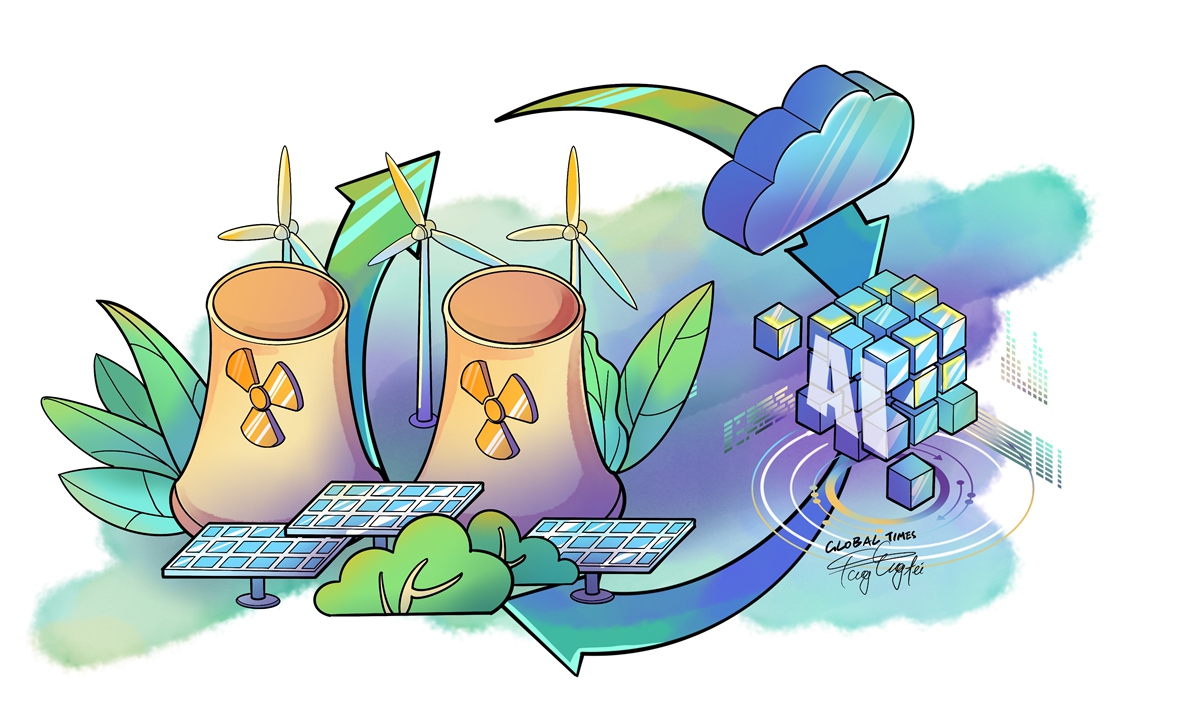
Illustration: Tang Tengfei/GT
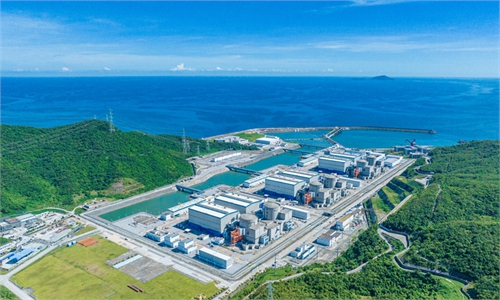
The US state of New York plans to build an advanced nuclear plant with the ability to produce at least 1 gigawatt of power, which would be one of the first new US reactors in a generation, Reuters reported on Monday, citing Governor Kathy Hochul. Currently, there appears to be a renewed interest in nuclear energy development in the US, although some analysts believe that achieving the government's nuclear energy ambitions could prove challenging.Last month, executive orders were signed in the US to spur a "nuclear energy renaissance" by constructing new reactors, which Washington said would satisfy the electricity demand of data centers for artificial intelligence (AI) and other emerging industries, the Guardian reported. This move comes after the US nuclear power industry has experienced decades of stagnation and the closure of reactors.
These executive orders aim to quadruple the domestic production of nuclear power in the US within the next 25 years. However, some experts have expressed skepticism, deeming the goal as highly unlikely to be reached, according to a report by the Associated Press. The report notes that the US lacks any next-generation reactors operating commercially and only two new large reactors have been built from scratch in nearly 50 years.
What pressures are compelling the US to set such ambitious nuclear energy development goals? The reasons behind this move are likely multifaceted. One factor, as reported by the media, is considered to be the potential growth in electricity demand from AI data centers.
Experts and industry insiders are increasingly emphasizing the intertwined relationship between AI development and energy. While electricity support is vital for AI's evolution, the rise of renewable energy industries creates synergies that not only propel AI's growth but also promote sustainability. The electric grid and the utilities managing it have an important role to play in the next industrial revolution that's being driven by AI and accelerated computing, as noted by NVIDIA founder and CEO Jensen Huang.
The Stanford AI Index Report 2025 underscores the growing energy demand from AI models and data centers. Despite significant improvements in the energy efficiency of AI hardware, the overall power consumption required to train AI systems continues to rise rapidly. For instance, training the state-of-the-art AI model Llama 3.1-405B, released in the summer of 2024, required 25.3 million watts - nearly 600 times the energy used by the original Transformer model introduced in 2017.
Global electricity demand from data centers is set to more than double to 945 terawatt-hours by 2030, as AI drives unprecedented growth in the sector's energy needs, according to estimates from the International Energy Agency.
These figures reflect the increasing demand fueled by AI's unprecedented growth and the increasing demand for computational power, as cloud services, AI and digitalization continue to expand globally.
In the era of the booming digital economy, AI has emerged as a potential key driver of industry innovation, deeply integrating into various fields and reshaping market structures. The power sector may be one of the industries transformed by AI, and many people have already recognized the prospects of increasing electricity demand. This could spur rapid growth in power generation, especially in renewable energy, leading to the establishment of new projects, technologies and business models in nuclear energy and other renewable sources such as solar, wind and hydrogen energy.
Against this backdrop, numerous countries have expedited their efforts in advancing new energy sources. In March, data from the International Renewable Energy Agency showed that in 2024, the global increase in renewable power capacity reached 585 gigawatts, representing 92.5 percent of the total capacity expansion worldwide. This was an annual growth rate of 15.1 percent, marking a record high.
We may be on the cusp of an era where AI propels the rapid development of the renewable energy sector. This burgeoning industry is vibrant, marked by continuous technological innovation and development. Embracing this emerging sector with an open mind and strengthening international cooperation could contribute significantly to its overall growth. Take the US nuclear power industry as an example. After decades of stagnation and the closure of reactors, this sector may need fresh ideas and innovation, including mutually beneficial international collaboration, to quickly restore its vitality.
The author is a reporter with the Global Times. bizopinion@globaltimes.com.cn
RELATED ARTICLES