Kevin Kelly, the founding executive editor of the US magazine Wired Photo: Courtesy of Kevin Kelly
Editor's Note:
Kevin Kelly, the founding executive editor of the US magazine Wired, is a legendary figure often regarded as a "technology prophet." As early as 1992, Kelly predicted many of today's popular technologies such as cloud computing, online communities, and virtual currencies in his book Out of Control. Overseas media reported that Keanu Reeves, the star of the 1999 US sci-fi action film The Matrix, revealed that the director required him to read Out of Control before reading the script.
Recently, Kelly, in his new book 2049: The Possibilities of the Next 10,000 Days, emphasized the concept of "Cool China 2049." Kelly, sporting his iconic white beard, noted in an exclusive interview with Global Times reporters Yang Shasha and Ma Mengyang (GT) that there are less than 25 years left until 2049, the 100th anniversary of the founding of the People's Republic of China. He emphasized that this is a very suitable time to think about China's future, to outline various possibilities, to imagine the relationship between China and technological breakthroughs, China's role in the world, and the brand-new future that the country might create. He predicted that 25 years from now, a very "cool China" could export the best games, augmented reality (AR) experiences, music, and art to the world, which will be emulated globally.
GT: In the opening of your new book, you mention that you believe China will be one of the most powerful forces in the future world. You state that this belief is based on your decades of travel in China. In the Chinese version of Out of Control, you introduce that you started traveling between the US and Asia at the age of 20. Could you share the changes you have observed in China over the years?
Kelly: My impression of China has changed over the years. On my most recent visit six months ago, I was struck by the vast scale of development. I drove from Pudong Airport in Shanghai to Suzhou in Jiangsu Province, and it felt like one continuous high-rise city for hours. Another time, I noticed the area around the mouth of a river is incredibly developed on a scale that's hard to appreciate. It's a collection of many cities, forming a mega city. This overwhelming impression of China's modern development is that it is so large, with so many people, and so advanced. There aren't many places in the world like it. The vertical nature of the development is particularly impressive. For me, the overwhelming sensation of China is its scale.
I watched videos of streamer "IshowSpeed," who was visiting China for the first time, becoming very popular as he discovers China.
China has shown signs of becoming "cool" in several fields. The country is producing games that are gaining popularity among players. Additionally, China is making high-production movies. DJI drones, for instance, are world-famous and highly regarded for their quality and innovation. Furthermore, China is on the path to becoming a leader in electric vehicle production. While it may not be there yet, the potential exists for China to create some of the best electric cars in the world, which would contribute to its growing appeal. Overall, while China has made strides in various industries, it still has work to do to produce products that are recognized as the best globally. However, the advancements in areas like DJI drones are already earning China a reputation for being "cool" among those who are familiar with them.
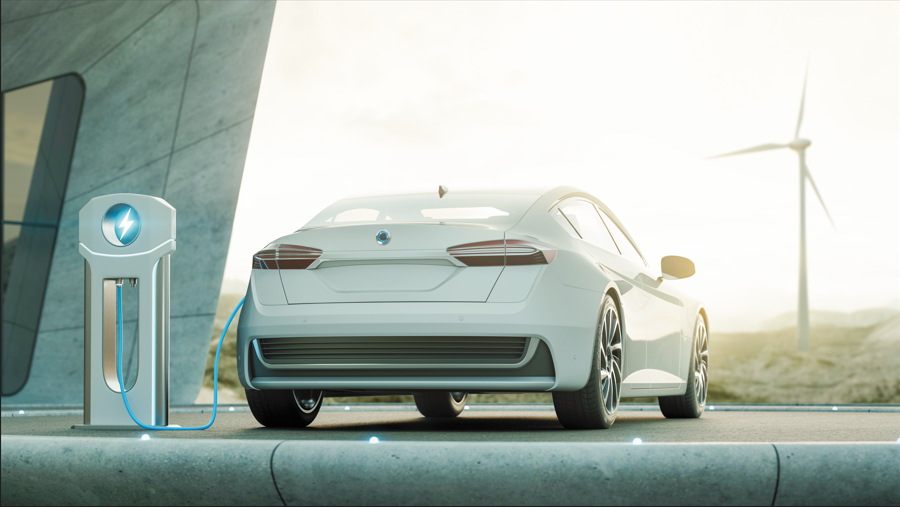
A conceptual image of an electric vehicle charging Photo: VCG
Chinese cars have not yet entered the US market on a large scale. The current US market is still dominated by German, Korean, and Japanese cars. If there is an opportunity in the future, I would choose to buy a Chinese electric vehicle. I think China is going to make the world's best electric car, one that everyone in the world would want to buy, better than a Tesla.
GT: In your book, you envision that the integration of technologies such as AI, brain-computer interfaces, and mirror worlds will completely transform our lives. Could you describe what the world will look like in 2049?
Kelly: This book we're discussing is not about predictions; rather, it presents scenarios. It does not claim to depict how things will be, but rather how they could be. It outlines various paths - multiple different paths that may be contradictory, yet all represent potential futures for China or the world. While there are positive and optimistic scenarios presented, I am not focusing on the negative scenarios. I'm only addressing scenarios that are positive and optimistic. I'm trying to convey that you can't truly have an optimistic future unless you first imagine it.
By 2049, most smartphones will be replaced by smart glasses. If you wear smart glasses in the kitchen, when you look at the cabinets or the refrigerator, you will see the items inside, and the smart glasses will directly display the expiration dates above the items stored inside. For example, by 2049, everyone will have an AI assistant that functions like a personal secretary, which will be as ubiquitous as GPS navigation software on our phones.
GT: In 2049, what will a "cool China" be like?
Kelly: What I'm trying to envision is a world where people from all around the globe would want to live in China - not just the Chinese people, but others as well - because it is so cool and neat. Currently, there are only a few individuals who express a desire to move from America to China, but I imagine a future where many more people feel drawn to live there.
GT: In your book, you envision that smart glasses will replace smartphones and AI assistants will emerge in the next five years. Do you think these changes will reshape the current global industrial landscape?
Kelly: Not immediately. I believe some of the world's largest industries - such as aviation, automotive manufacturing, construction, and retail - will be impacted to some extent. Retail giants like Walmart and Amazon, for instance, may face disruption due to smart technologies that enable new shopping experiences.
The rise of the "mirror world," where people interact through digital avatars, will further facilitate remote work. While not all jobs will transition to virtual environments, I estimate roughly half could shift in this direction. This trend may actually accelerate globalization. India, in particular, may stand to benefit from these changes. Its widespread diaspora creates a strong global network, forming a robust ecosystem for adaptation and growth.
GT: By 2049, do you think fields like robotics, autonomous driving, space exploration, and biotechnology will experience explosive growth? What role will China play globally at that time?
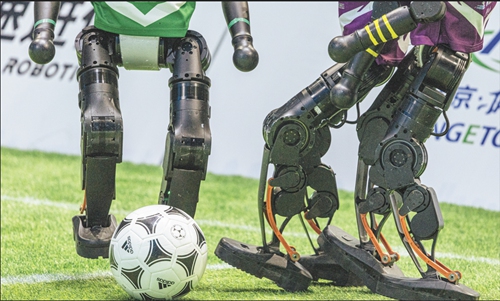
Kelly: It's very obvious that China has the incredible ability to manufacture things like robots. China has the right combination of talents and abilities and skills with AI and then with manufacturing. I think there's a very high likelihood that China could become the best robot designer, not just a manufacturer but designing robots of all kinds.
Additionally, I've noticed breakthroughs in China's life sciences field. Chinese biotech companies are no longer limited to replicating Western drugs; they are developing innovative medications independently.
China has achieved advancements that many still underestimate. They have undeniably become major players in global biopharma - whether they can sustain this momentum remains uncertain, but the potential is certainly there. The trajectory so far presents a good story.
GT: How should China manage its "cool power"?
Kelly: From my perspective, countries like Japan, the US, New Zealand, and the UK currently possess "cool power." For example, Japan, the US, and New Zealand have developed well-established film export industries, producing high-quality cinematic works. The UK also has "cool" elements, such as British music and theater. For a country, having one or two things isn't enough to make it "cool." It might need a hundred things, or even more. You need to produce things that the entire world wants, and they must be the best - not just imitations or copies.
China must continue to create innovative products like electric vehicles, not just tech products such as robots, drugs, or smart glasses, but also cultural products like films and music. Most importantly, these products must be attractive enough to make people want to play with or listen to them. Only then can you create what I call "cool power." To build this "cool power," there also needs to be an entire ecosystem in place. Just as China's manufacturing success has been driven by a complete supply chain system and the collaborative efforts of various market participants, leading to breakthroughs in drones, imaging equipment, smartphones, and other fields, the same is true for the prosperity of the cultural industry. It can't rely on a single group; it needs a diverse, symbiotic "rainforest" ecosystem. This is the key to building true "soft power," or "cool power."
The meaning of "becoming cool" is no longer just about manufacturing high-quality products; it's about the export of high-quality cultural products. China is producing some games that people are starting to play. It tries to make some very high production movies, although these films are currently more popular in the domestic market. I hope to contribute to making China cooler and change some people's entrenched perceptions. Power of cool