GT Voice: Australian officials’ obsession with influence misguides regional devt
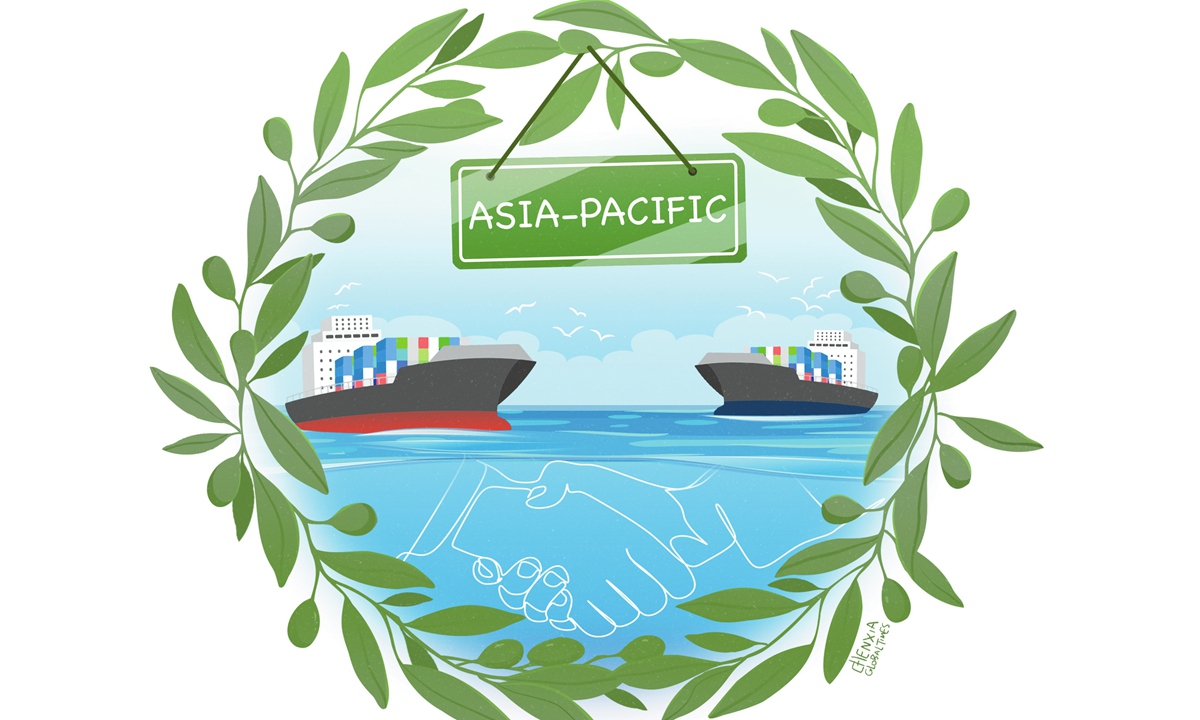
Illustration: Chen Xia/GT
Some Australian officials, who have often voiced dissatisfaction with China's cooperation with Pacific Island countries, seem to have found a new topic for complaint. However, this only highlights their excessive focus on geopolitical influence, which is misguided for regional development.Australia's Pacific Minister Pat Conroy said that China is bolstering its geopolitical influence in the Pacific by "branding" Asian Development Bank (ADB) projects - funded in significant part by Australian taxpayer dollars - as Chinese projects, The Guardian reported on Sunday.
He highlighted an airport upgrade project in Bougainville, an autonomous region of Papua New Guinea, complaining that "people driving past would assume it's funded by China because you see Chinese state-owned enterprise branding everywhere, but it's funded by the taxpayers of countries like Japan and Australia."
Behind Conroy's remarks lies not a genuine concern about project "branding," but the narrow-minded perspectives and geopolitical bias of some Australian politicians. In regional cooperation in the Pacific, they still indulge in zero-sum calculations of "influence," while overlooking the development needs of Pacific Island countries.
ADB projects are a model of multilateral cooperation, with funding contributed by member countries. Chinese enterprises have won project participation through international tenders based on their solid technical expertise, rich project experience, and excellent cost-control capabilities.
Some Australian officials, ignoring the positive contributions of Chinese companies to these projects, focus instead on the issue of "branding," essentially politicizing and putting an ideological cast on normal international cooperation.
China's cooperation with Pacific Island countries has always adhered to the principles of mutual benefit and win-win outcomes, with the core objective of promoting local economic development and improving people's livelihoods. This partnership emphasizes practical development solutions and aims to strengthen the self-development capabilities of these nations. By contrast, Australia's anxiety over influence, while neglecting the most urgent development needs of these countries, is clearly putting the cart before the horse.
Such thinking stems from the long-standing presumption of regarding Pacific Island countries as Australia's "backyard" by Australian politicians. This explains why some Australian politicians feel anxious when China deepens cooperation with Pacific Island countries. However, the essence of international development cooperation lies not in influence rivalry, but in the pursuit of common well-being.
For Pacific Island countries, what truly matters is tangible benefits and progress from international cooperation. These island nations face numerous development challenges, such as weak infrastructure, a single economic structure, and inadequate capacity to cope with climate change. The purpose of international cooperation is to pool resources from all sides to help island countries overcome these difficulties and embark on a path of sustainable development.
Australia possesses significant resources, proximity, and historical ties that allow it to play an active role in contributing to the development of Pacific Island countries, rather than merely countering other partners.
In the ADB projects, Australia is a major fund donor. It should focus on whether the projects can be truly implemented and effectively improve the lives of local people, rather than obsessing over the presence of Chinese enterprise "branding" in the projects. After all, its stated purpose of offering funds to the ADB is to promote the development of Pacific Island countries. These countries need diverse, open, and high-quality cooperation options, not pressure to take sides.
Both financial support and technological input are crucial forces driving the development of Pacific Island countries. If Australian politicians can stop viewing the situation through a distorted lens and fully leverage its strengths to actively cooperate with other countries, including China, in the development of these Pacific Island countries, it will not only inject new impetus into island development but also enhance its influence in the region.
After all, influence gained through cooperation and tangible results is far more valuable than that obtained through baseless accusations.
RELATED ARTICLES