GT Voice: Ensuring developing nations’ voices in WTO crucial to curbing unilateralism
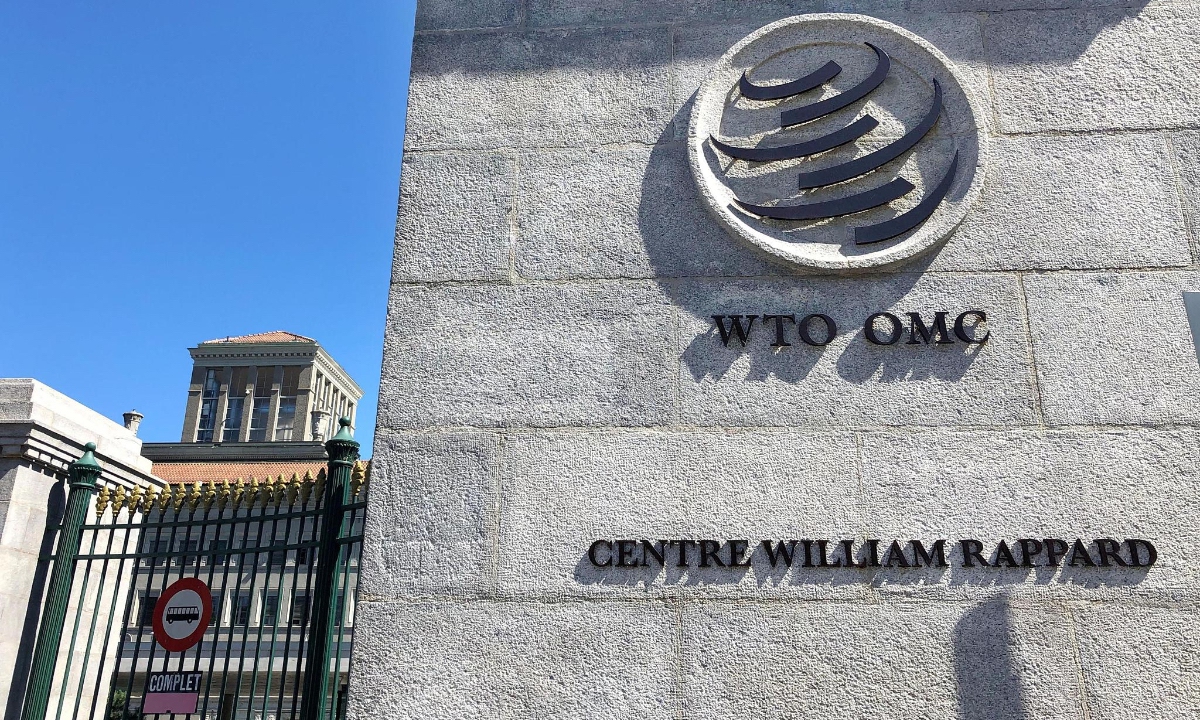
WTO Photo: VCG
At a time when the global economic governance system is facing challenges from increasing unilateralism, China's proactive engagement in the reform of the World Trade Organization (WTO) demonstrates its steadfast commitment to multilateralism.A senior delegate of China's mission to the WTO said that China is ready to have discussions about trade policies that Washington has identified as obstacles to reforming the WTO, Reuters reported on Tuesday.
China heard "every word" the US said at the WTO about its trade practices and is open to discussing tariffs, industrial policy and some benefits it gains from its developing country status, as part of broader conversations on reform ahead of a 2026 ministerial meeting in Cameroon, the delegate said.
The reform of the WTO has drawn increasing attention, particularly in light of the rise of unilateralism. As the central institution governing global trade, whether its multilateral trade mechanism and rules can continue to play an effective role is vital for the world economy and the stability of global supply chains. In this context, the delegate's statement, indicating China's open stance in pursuing WTO reform in a constructive manner, holds positive implications.
One aspect of the WTO reform debate centers on Special and Differential Treatment (SDT) granted to developing countries. The US increasingly views SDT as "an unfair advantage" for developing economies, arguing that it undermines the level playing field, according to media reports.
However, SDT provisions are not privileges but necessary mechanisms designed to address historical imbalances within the trading system. The existence of such provisions is what contributes to a fair global trading environment.
If WTO reform overlooks the legitimate demands of developing countries, unilateralism will become increasingly rampant, further destabilizing the global trade order. Therefore, enhancing the voices of developing countries in international economic governance is not only a matter of fairness but also crucial for curbing unilateralism and preserving the stability of the multilateral trading system.
The global economic landscape is undergoing profound changes. While developing countries have seen a continuous rise in their aggregate economic output and trade shares, their voices and influence within international institutions such as the WTO have not increased proportionately. This structural disparity fuels the spread of unilateralism. If developing countries are further marginalized in the reform of the WTO, they would find it even more difficult to resist trade bullying by developed countries, and the global trading system would become increasingly fragmented.
Therefore, the core of WTO reform should not be to weaken the special treatment of developing countries but to ensure that these nations can participate more effectively in rule-making, thereby making the global trading system more inclusive and sustainable.
The future of multilateralism hinges on recognizing that developed and developing nations share intertwined interests. The Global South now accounts for more than 40 percent of the global economy and contributes 80 percent to world economic growth, making its prosperity essential for global stability. When developing nations gain fair access to technology, investment and markets, they become more capable trading partners rather than perceived threats. If WTO reform neglects the interests of developing countries and tilts the global trading system further toward developed nations, the entire world economy will ultimately get hurt.
The path forward demands recognizing that multilateralism is not a zero-sum game. As Chinese Foreign Minister Wang Yi said during his meeting with WTO Director-General Ngozi Okonjo-Iweala in February this year, China will continue to support the director-general in advancing WTO reform, listening to the voices of countries in the Global South, and keeping pace with the progressive trends of the times, according to the website of the Ministry of Foreign Affairs.
Ultimately, the WTO's future hinges on its ability to adapt to a multipolar world. Only when the voices of developing countries are fully respected can the global trading system be truly established on a fair and reasonable foundation, thereby effectively curbing unilateralism and ensuring the stability of the global trading system.
RELATED ARTICLES