Fig industry flourishes as catalyst for rural revitalization in Xinjiang
Modernized agricultural technology, greenhouses boost yields for farmers in Artux
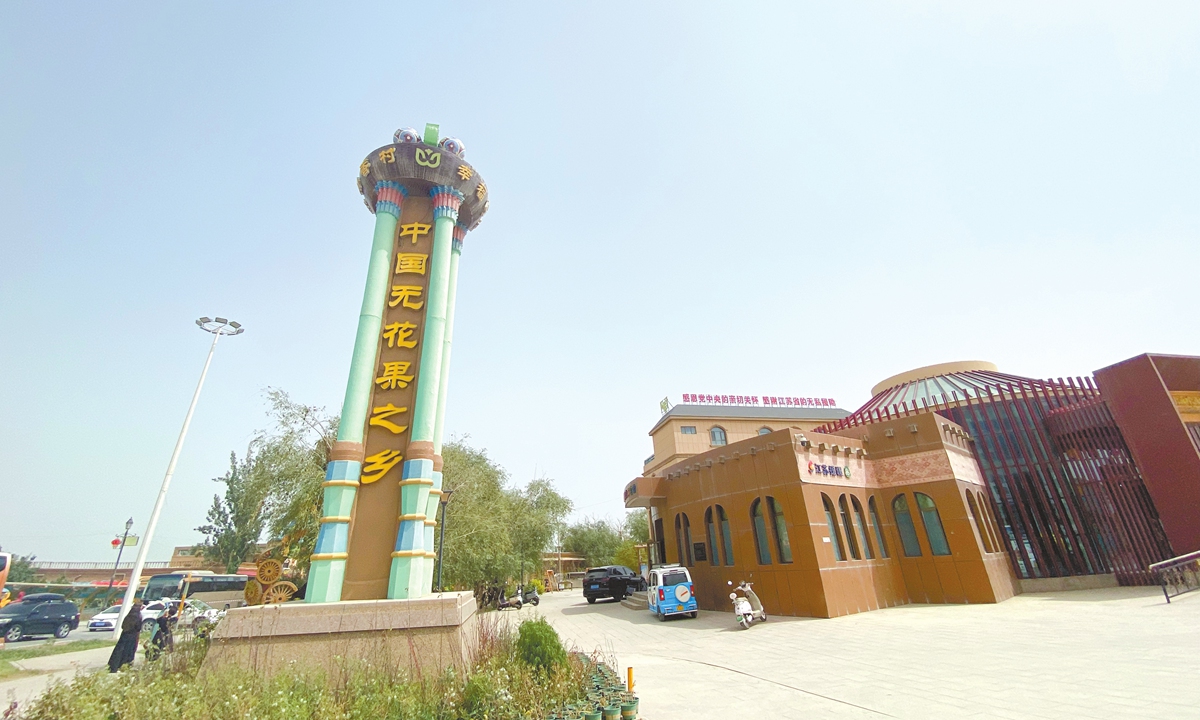
A view of the fig folk culture tourism area in Azihan, Artux city, Kizilsu Kirgiz Autonomous Prefecture, Northwest China's Xinjiang Uygur Autonomous Region, on June 28, 2025. Photo: Zhang Weilan/GT
In the far western reaches of China, the city of Artux, capital of the Kizilsu Kirgiz Autonomous Prefecture in Northwest China's Xinjiang Uygur Autonomous Region, is witnessing a remarkable transformation driven by a small but mighty fruit - the fig. Recent years have seen Artux leverage its reputation as a fig-producing hub, integrating advanced agricultural technologies and innovative business models to build a comprehensive fig industry chain.
Dubbed as "the hometown of fig cultivation," Artux has successfully upgraded its fig plantation from traditional farming to a modernized, large-scale and branded enterprise. The city's experience highlights the potential for modernized facility agriculture to drive economic growth and community prosperity.
The intelligent agricultural base, featuring modern greenhouses and advanced agricultural equipment, has not only revitalized the local agricultural industry but also created new jobs, improving local livelihoods and increasing the supply of fresh fruits that are now reaching markets across the country thanks to modern facilities and advanced cold-chain logistics.
Modernized farming
The Takut village in Artux covers an area of 45.2 square kilometers, with half of its land covered by the Gobi desert. The village boasts a rich tradition of fig cultivation, where nearly every household grows fig trees in their yards. Last year, it attracted investment from fig cultivation company Xinjiang Haidekun Agricultural Technology Co, which is introducing a unique variety called Brook Red figs. Different from typical fig seedlings that take three years to bear fruit, Brook Red figs can produce fruit in the same year they are planted, promising quicker returns for local farmers.
Villager Akbair Kurban, 44, braved the midday sun to inspect the figs in a modernized greenhouse. "This method is excellent," he said. "The figs mature quickly, and with the greenhouse, they can be harvested year-round." Last year, Kurban, a former carpenter, joined Xinjiang Haidekun Agricultural Technology Co, where he learned advanced fig cultivation techniques while working in the company's agriculture base.
"I have learned seedling cultivation, pest control, temperature control and watering," Kurban told the Global Times. He now earns a monthly salary of 4,000 yuan ($558), a decent income in the area.
In 2023, the company introduced fig varieties from East China's Shandong Province, which thrive in Xinjiang's wide day-night temperature swings and abundant sunlight. "Our figs have higher sugar content and are 30 percent heavier than those grown in the original regions," said Wang Shengye, the company's chairman.
"With advanced facility agriculture, we've extended the harvest season to eight months, breaking the seasonal limitations and reducing costs," Wang told the Global Times.
According to Wang, the company's research team introduced 17 new varieties and achieved a breakthrough in filling the seasonal gap in fresh fig supply during winter. "Last year, these figs were priced as high as 10 yuan for each, creating a high demand that resulted in a profit of 28 million yuan, and it's expected to reach 50 million yuan this year," Wang said.
"We plan to expand our planting area to 50,000 acres within five years, set to benefit 20,000 farming households and generate an economic benefit of 2.1 billion yuan," he said.
Golden fruit
Relying on figs, Azihan village lifted itself out of poverty in 2019. "After shaking off poverty, we have done a lot of work centered on figs tailored to local conditions." Zhang Xuehui, Party secretary of the Azihan village, told the Global Times that with the advantage of figs, Azihan has launched the "Figs+" project, which integrates figs with tourism, catering, planting, and processing industries to develop.
Established in 2020, the Azihan fig folk culture tourism area, located 15 kilometers from the fig agricultural industrial base, has become a popular destination, now receiving more than 400,000 visitors annually. The number of shops in the scenic area grew from over 30 in 2020 to 246 in 2024, with the village's collective income reaching more than 1.4 million yuan in 2024, Zhang said.
Besides fig orchards, characteristic homestays, folk customs streets and cultural squares have been built, and the infrastructure in the village has also been improved. Inside the scenic area, a homestay called "Raba's Home" is a popular spot. Run by a middle-aged man from Northeast China, the homestay has 20 rooms, priced between 200 and 400 yuan. It features a café, bar, restaurant and karaoke, with a peak daily revenue of 50,000 yuan. Gu Zaili, a front desk staff member, told the Global Times that all employees are local ethnic minority residents, earning an average monthly salary of 4,000 yuan.
The small fig has indeed become a "golden fruit," symbolizing the successful integration of agriculture and tourism and a bright future for rural revitalization in Xinjiang.
"Staying close to home and starting my fig cultivation career, life is getting sweeter, just like the figs," said Kurban, echoing the sentiments of many in Artux.
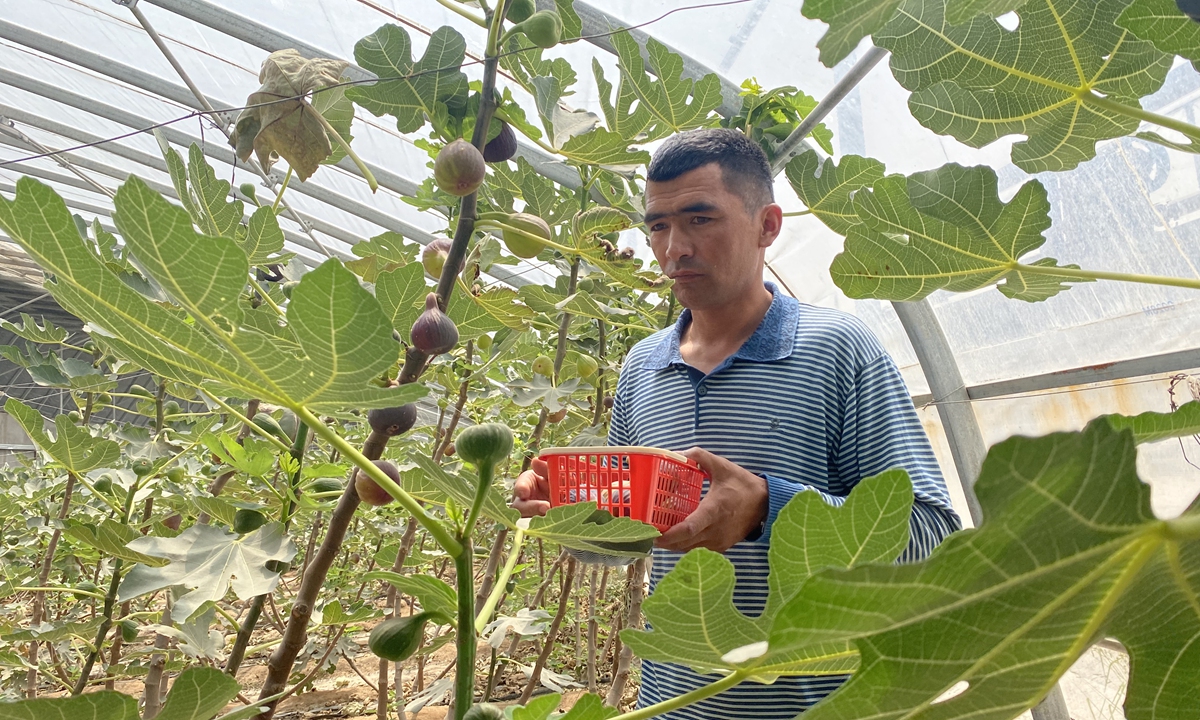
Photo: Zhang Weilan/GT
RELATED ARTICLES