China’s power system devt offers insights for countries in tackling demand surge challenges

Illustration: Liu Xiangya/GT
As summer commences, various regions in China are already grappling with high temperatures, leading to an increased demand for electricity as the power grid enters its peak usage phase. A report from CCTV.com on Monday, citing data from the China Coal Industry Association, indicated that the country ramped up its coal production to 1.99 billion tons in the first five months, up 6.0 percent year-on-year. The report suggests that this increase provides solid support for ensuring energy supply during the peak summer months.On July 4, China's maximum power load reached 1.465 billion kilowatts, significantly rising from the end of June and the same period last year, setting a new record. Maintaining stable power supply during the peak summer months is crucial for people's daily lives.
Recently, heat waves have swept across the world, drawing increased attention to the challenge of meeting rising demand for electricity during high temperatures. In this context, taking a closer look at the development of China's power system might offer valuable insights for the global economy in addressing this challenge.
A spokesperson for the National Development and Reform Commission recently told CCTV News that preliminary estimates indicate China's maximum electricity load during the summer peak is likely to increase by about 100 million kilowatts compared with a year earlier. However, current conditions suggest that proactive and effective measures are being taken to manage the increased demand. As a result, the power supply and demand situation this summer is expected to be better than it was last year, with the overall balance in China generally assured.
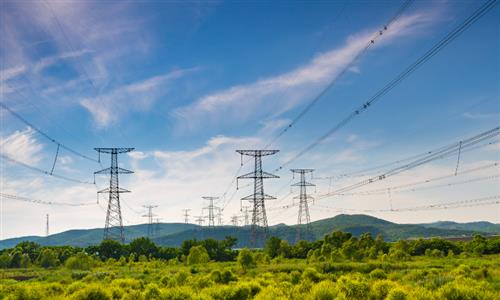
What helps to ensure a stable and orderly power supply during peak summer months? First, the rapid expansion and modernization of China's power infrastructure play an important role. As of the end of May, China's total installed power generation capacity reached 3.61 billion kilowatts, up 18.8 percent year-on-year. This effort is not merely about augmenting capacity; it encompasses a comprehensive strategy that includes enhancing the efficiency and reliability of power sources and grids, improving energy storage and regulation capabilities, and developing long-distance power transmission.
This approach addresses the diversity of China's industrial landscapes and the variability in peak electricity demand across different regions. Through these measures, it effectively optimizes the allocation of power resources, ensuring that supply meets demand efficiently and sustainably.
Second, China's extensive advancements in technology, particularly in areas such as renewable energy deployment, ultra-high-voltage transmission, energy storage systems, and smart grids, have stabilized its power system and accelerated the energy transition. These developments have not only secured domestic supply but have also positioned China as one of the global leaders in green technology, supporting its climate goals and driving sustainable economic growth.
In the coal power sector, China has established the world's largest clean coal power supply system and is continuously improving its technical standards in aspects such as reducing carbon emissions, improving operational efficiency and enhancing intelligent levels. In April, China released an action plan for further upgrades of coal-fired power plants from 2025 to 2027. The new generation of coal-fired power units, after adopting carbon reduction measures, are expected to reduce carbon emissions per kilowatt-hour by 10-20 percent compared with similar units in 2024, according to the Xinhua News Agency.
Third, in recent years, China's new-energy sector has experienced remarkable growth, emerging as a key driver in ensuring stable power supply while accelerating the country's energy transition. This ongoing progress does not only strengthen domestic energy resilience but also demonstrates China's commitment to global climate goals.
According to the National Energy Administration, by the end of 2023, China's installed capacity of renewable energy had reached 1.45 billion kilowatts, accounting for more than 50 percent of China's total power generation capacity and surpassing thermal power for the first time. In 2024, China added 373 million kilowatts of new renewable energy capacity, a year-on-year increase of 23 percent, representing 86 percent of the country's newly installed power capacity in the year.
China's power system, like those around the world, faces challenges, particularly with more frequent heat waves and other uncertainties. In this context, analyzing the strengths and lessons from power development across nations, and identifying opportunities for collaborative efforts to address these challenges, is essential for mutual growth and development.
The author is a reporter with the Global Times. bizopinion@globaltimes.com.cn
RELATED ARTICLES