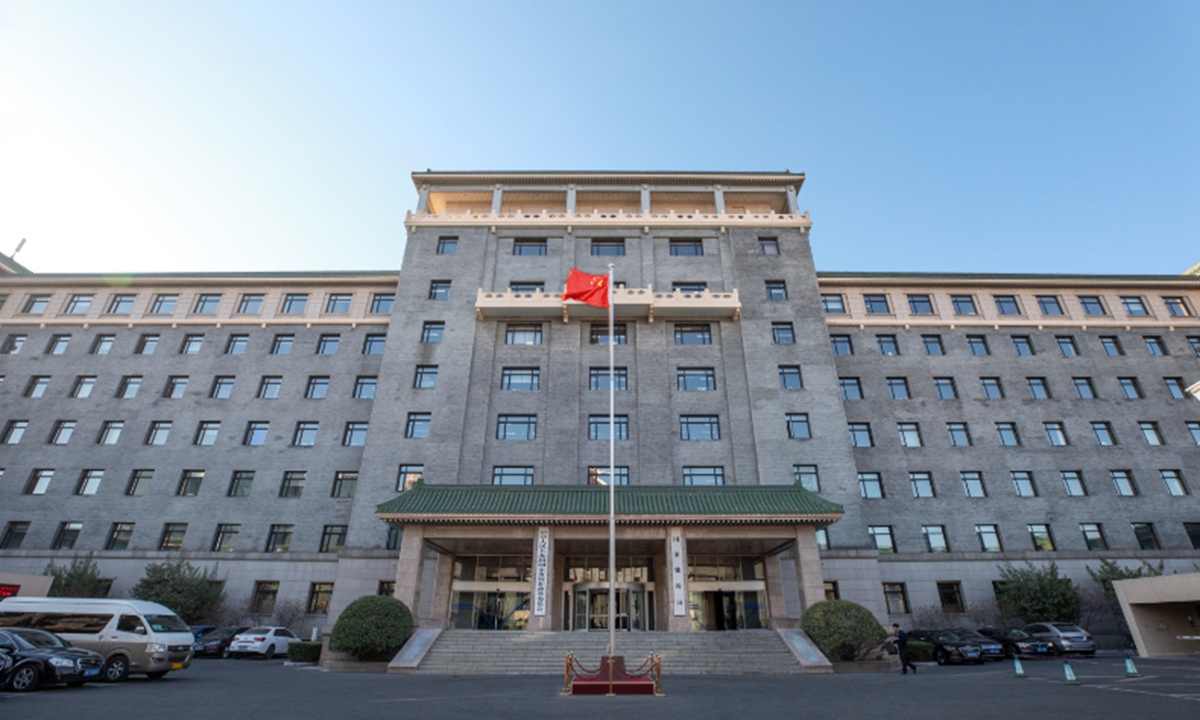
The National Development and Reform Commission File Photo: VCG
China has allocated an additional 10 billion yuan ($1.39 billion) in central budgetary investment to scale up work-relief programs, aiming to boost employment and income growth for key groups, the National Development and Reform Commission (NDRC), the country's top economic planner, said on Tuesday.
The funding will be used to support 1,975 projects and is expected to create job opportunities for 310,000 people from key groups, including those who have been lifted out of poverty, individuals under poverty prevention monitoring, migrant workers and other rural laborers, the NDRC said on its official WeChat account.
A highlight is the high proportion of labor remuneration, which accounts for 45.9 percent of the total investment. The investment prioritizes labor-intensive projects such as village road hardening and small irrigation ditch dredging, which use more manual work and less machinery. Flexible contracting methods and innovative labor organization models are encouraged to increase people's actual earnings.
These projects will improve local living and production conditions, including road upgrades and improvement for farmland, water supply and other infrastructure, benefiting the "last mile" areas which were often overlooked by regular government investment.
As of the end of June, 29.5 billion yuan in central investment for 2025 work-relief programs had been allocated, supporting nearly 6,000 projects. These are expected to help employ more than 700,000 people in need and distribute more than 11 billion yuan in labor remuneration, according to the NDRC.
The NDRC will ensure that construction starts on all funded projects, focus on organizing employment for key groups and distributing labor remuneration, and maintain a rolling reserve of projects to let work-relief programs play a bigger role in stabilizing employment and increasing incomes, it said.
Work relief is an important means to help key groups obtain employment and a crucial channel for using fiscal policies to support employment. Since the early days of reform and opening-up, this system has achieved remarkable results, directly driving the employment of key groups, especially those in rural areas, and increasing their incomes, Li Changan, a professor at the Academy of China Open Economy Studies at the University of International Business and Economics, told the Global Times on Tuesday.
As the projects mainly focus on the construction of small and medium-sized facilities in rural areas, they are of great benefit to improving rural infrastructure, optimizing the local investment environment and enhancing the living conditions of rural residents, Li said.
The move follows the NDRC's release in June of an action plan to strengthen and expand work-relief programs for promoting employment and income growth among key groups.
At a press conference, Li Chao, an NDRC official, emphasized efforts to further expand both the beneficiary groups and projects that are supported under the work-relief programs.
For example, investment projects will be expanded to include building small roads connecting counties or towns with villages, renovating and upgrading internal streets and pipe networks in township, and constructing urban and rural leisure trails — all to create more job opportunities suitable for key groups to work near their homes.
Li also stressed maximizing the participation of local people facing difficulties, increasing the share of labor remuneration in central investment from more than 30 percent to more than 40 percent, providing training to enhance workers' skills and boosting the effectiveness of the work-relief program.
Tian Yun, a veteran economist based in Beijing, said such work-relief programs will improve employment, further narrow the urban-rural income gap and play a significant role in boosting tourism, cultural and creative projects in rural areas.
RELATED ARTICLES