China implements zero-tariff policy for 53 African countries with diplomatic ties: GAC
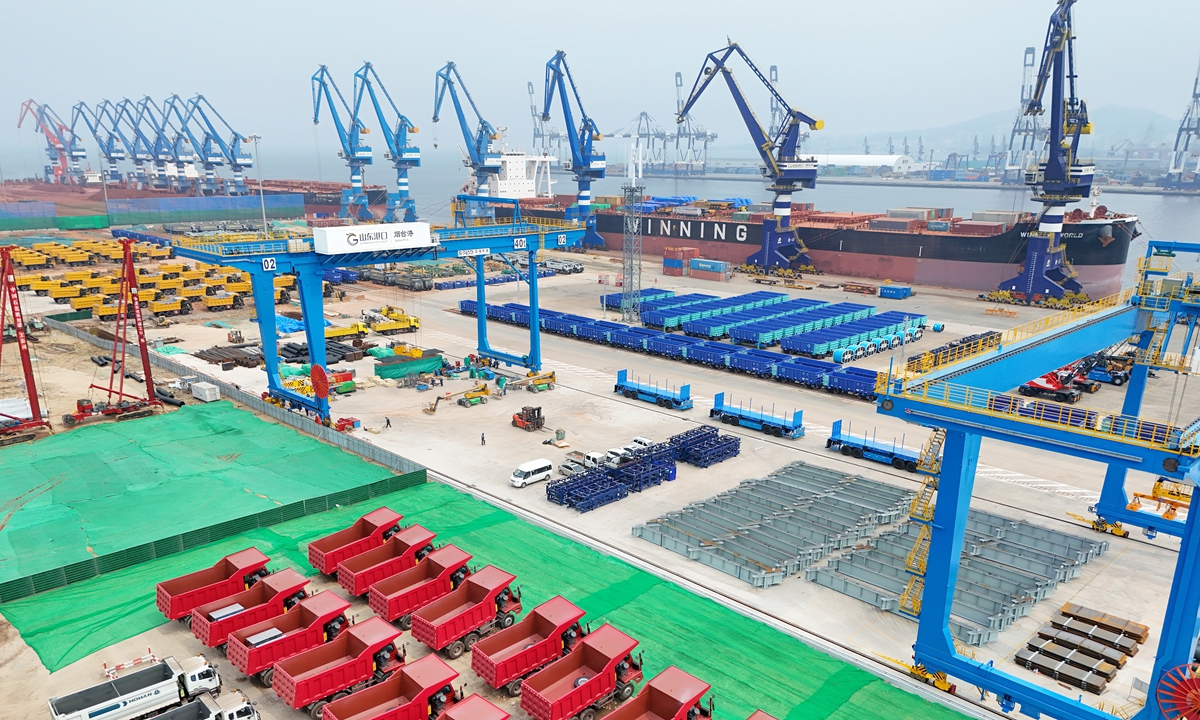
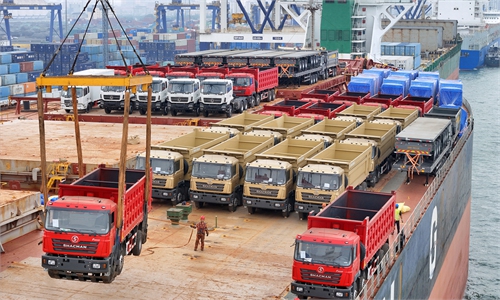
A large batch of goods, including dump trucks, is assembled at the Yantai Port in East China's Shandong Province for export to Africa on July 7, 2025. In the first half of 2025, the port's China-Africa liner service transported 2.858 million tons of equipment and materials to over 20 African countries and regions, up 80.7 percent year-on-year, marking a record high and strengthening China-Africa economic and trade ties. Photo: VCG
Chinese customs will implement zero-tariff treatment for 53 African countries with diplomatic ties to China in a bid to use China's vast market to support shared development, Lü Daliang, spokesperson for the General Administration of Customs (GAC), said on Monday.
This marks China's latest step to support African goods to be imported to the Chinese market.
Lü made the remark at a press conference in Beijing, adding that since December 1, 2024, China has granted zero-tariff treatment on all taxable products from the least-developed countries that have set up diplomatic relations with China. In the first half of this year, imports from these nations registered double-digit growth.
The policy underscores China's role in providing global public goods amid evolving trade dynamics, offering timely support as Africa confronts mounting development challenges, Song Wei, a professor at the School of International Relations and Diplomacy at Beijing Foreign Studies University, told the Global Times on Monday. "In contrast, recent shifts in US trade policy, marked by indiscriminate tariffs, further strain Africa's development prospects."
China had previously granted zero-tariff treatment for 100 percent of taxable products to all the least-developed countries with diplomatic ties to China, including 33 African nations, according to China's Ministry of Commerce (MOFCOM).
Trade plays a crucial role in integrating Africa into global value chains and industrial systems, For African countries, harnessing trade as a development tool can stimulate full industrial chain growth, overcome structural bottlenecks, and strengthen self-sustaining capabilities, Song said, adding that it also helps activate upstream and downstream sectors, allowing Africa to leverage its resource endowments and pursue a sustainable path toward industrialization and modernization.
Building on this, China will offer further trade support for exports to China, supporting African least-developed countries in making full use of the zero-tariff policy, MOFCOM said.
While trade with traditional markets such as the EU, Japan, and the UK continued to grow, emerging markets including Africa accounted for a larger share of the overall increase.
In the first half of the year, China's trade with Africa reached 1.18 trillion yuan ($165 billion), marking a year-on-year rise of 14.4 percent.
In the first half of the year, China's exports to emerging markets—including ASEAN, Central Asia, and Africa—saw double-digit growth, according to GAC. China has supported industrial growth in these regions by exporting equipment and technology.
Notably, exports of machine tools to ASEAN, agricultural machinery to Central Asia, and textile machinery to Africa all recorded marked increases, according to GAC.
China has remained Africa's largest trading partner for 16 straight years. In 2024, bilateral trade between the two sides exceeded the two-trillion-yuan threshold for the first time, reaching 2.1 trillion yuan.
China-Africa economic ties have become increasingly dynamic in recent years, with China rolling out a series of initiatives to enhance the quality of bilateral trade, also actively promoting investment in manufacturing and new energy sectors to strengthen Africa's local production capacity and deepen its integration into global value and supply chains, Song told the Global Times.
"Drawing on its own development experience, China is expected to continue to support Africa in advancing trade facilitation and liberalization, fostering high-quality cooperation to help overcome development bottlenecks and drive industrialization and modernization."
RELATED ARTICLES